
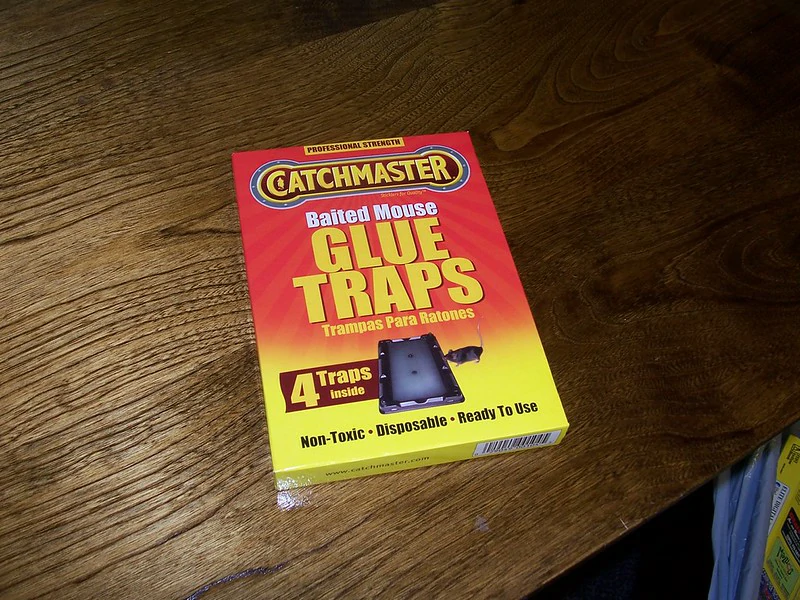
Finding a lizard on your kitchen wall at night can really catch you off guard, and plenty of people grab a glue trap right away since it’s cheap, easy to find, and needs no setup.
But glue traps were made for mice and rats, not lizards. So before you set one down, here’s the real question: are glue traps effective for lizards?
Glue traps can catch small lizards, especially house geckos, but they’re a poor choice. They work unevenly, they trap animals you never meant to catch, and the lizards that get stuck often die slowly. Sealing gaps and cutting down insects works much better.
A glue trap will catch a lizard if the lizard walks onto it, but the trouble is everything that comes with that. That includes how the animal suffers, what else you might catch, and whether the trap even fixes your problem.
How Do Glue Traps Work On A Lizard?
A glue trap (also sold as a glue board or sticky trap) is a flat board covered in very sticky glue. It has no moving parts.
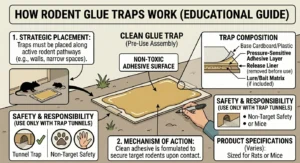
The glue is strong enough to hold a mouse or a rat, so a small lizard doesn’t stand much of a chance once its feet touch it.
A lizard’s best defense is speed. Take that away, and it has very little left to protect itself with.
Once one foot sticks, the lizard pulls harder to get loose, and that drags its belly, its tail, or its other feet onto the board where the glue grabs those too.
Glue boards can also be fussy, since dust, dirt, and cold weather can coat the glue and make it less sticky. An old board might not hold anything at all.
These changes can make glue boards unreliable, especially outdoors, and we’ll get to that in a bit.
Do Glue Traps Actually Catch Lizards?
Yes, they can. If a small lizard walks across a glue board, it will stick, and that’s exactly why people use them.
Researchers have also tested glue traps when studying lizards. In one study, small lizards were caught on bits of glue board stuck to the end of a stick, and the team freed them afterward with corn oil.
Researchers have also tested baited glue traps when studying lizards. This shows that the traps can catch them, but it doesn’t make them a good choice for dealing with lizards around the home.
However, catching a lizard and solving your lizard problem are two very different things.
In that kind of research, someone is standing right there and frees the lizard quickly, but at home the trap usually sits there all night while the lizard struggles.
Glue Traps Work Best On Small House Geckos
House geckos are the usual victims. They’re small, they come out at night, and they hang around the same walls and windows again and again.
The Mediterranean house gecko (a small, pale lizard you’ll often see on porch walls) is a common one in the southern US. It grows up to about five inches long and waits near lights for moths and cockroaches.
The common house gecko and the tropical house gecko act in much the same way, and once they find a spot with plenty of bugs, they tend to come back to it.
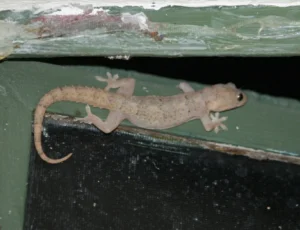
That’s why geckos can come into contact with glue boards placed near lights or windows. Unfortunately, this also puts them at risk in places where they regularly hunt for insects.
Size matters too, since these traps work best on small, tree-climbing lizards under about a foot long.
A bigger lizard can still get stuck, though. That’s a problem, since a large animal can hurt itself badly while it fights to get loose.
Skinks, anoles, and fence lizards spend their days out in the open, so they usually don’t meet a glue board at all. However, if you set one out on a porch or in a garden, they can end up on it.
Why Do Some Lizards Walk Right Past A Glue Trap?
Plenty of people put a glue board down and find it empty the next morning. Usually that’s down to where the board sits, not how smart the lizard is.
Lizards are careful animals, and geckos spend their days hiding in tiny gaps and only come out at night to hunt.
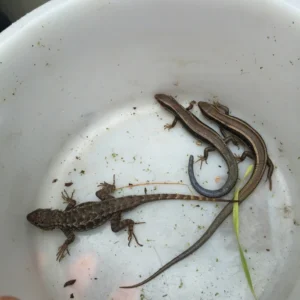
When they do come out, they tend to follow bugs and stick to the same routes, so a board that sits off that path might as well be invisible to them.
Scientists ran into this problem too. In one project, almost all of the geckos were hesitant to step onto the glue trap by themselves, even with the board sitting right in front of them.
The team had to lead each gecko to the edge with bait on a hook and line. That’s a lot more work than you’d ever want to do at home.
A board with a few dead bugs stuck to it can actually draw a gecko in, since it looks like an easy meal, but that doesn’t mean the gecko will walk across it.
So a glue trap can work when the spot is right. However, it’s hit or miss, and you can’t count on it to clear out your lizards on its own.
What Happens To A Lizard Once It Gets Stuck?
This is the part most people don’t picture. A lizard that steps on the glue doesn’t just stop and wait for you, because it panics and fights to get free.
As the lizard struggles to get free, more of its body can come into contact with the glue. Its legs, belly, and tail may become stuck, making it even harder to escape.
Some lizards can drop their tails to escape a predator. Scientists call this autotomy (a long word for dropping a body part on purpose).
On a glue trap, that trick doesn’t help much, since a lizard that drops its tail can still be stuck by its body.
Pulling a lizard off a glue board can cause further injuries, so you should never try to peel it off.
If nobody helps them, lizards stuck on glue boards can suffer from stress, exhaustion, dehydration, and other injuries. Some may eventually die if they remain trapped for too long.
For a small lizard in a warm house, that can take hours, and sometimes longer. There’s a practical side too, since a dying lizard on a board can start to smell, and you’re the one left to deal with it.
Glue Traps Catch Plenty Of Animals You Never Meant To Catch
A glue board can’t tell a gecko from anything else. Whatever steps on it gets stuck, whether you wanted it to or not.
Birds, bats, frogs, and small snakes have all turned up stuck on glue traps, and so have small pets.
In Australia, it took two vets and a rescuer about 90 minutes to free a blue-tongued skink from a glue board. The lizard was so stressed that it nearly had to be put down.
Blue-tongued skinks are big, calm lizards, nothing like a tiny gecko, so that story shows how easily a trap meant for mice can catch something much bigger.
There’s another risk if you live near rare wildlife. Some lizards are protected by law, and you could catch one without ever knowing it was there.
In the US, the Gila monster and certain horned lizards (like the Texas horned lizard) have legal protection in some states, which can turn a pest problem into a legal one.
Canada only has a handful of native lizards. A few of them, like the five-lined skink in parts of Ontario, are species at risk (animals in danger of disappearing).
In the UK, the common lizard and the slow worm (a legless lizard) are protected from being deliberately killed or hurt. In Australia, most native lizards, from skinks to blue-tongues, are protected wildlife too.
Are Glue Traps Safe Around Kids And Pets?
Glue traps aren’t just a risk to wildlife, since they can stick to curious pets and small kids as well.
A cat or small dog that paws at a glue board can end up with glue on its paws, fur, or face, and then it may start licking at it, which makes things worse.
Small pets like birds or hamsters can get stuck too. A bearded dragon (a popular pet lizard) that escapes its tank and walks across a board is in real trouble.
Kids can stick a hand or a knee to one in seconds, and the glue is hard to get off skin and hair. It can turn a quiet afternoon into a stressful scramble.
Cooking oil may help loosen glue from skin or fur, but be careful when using it around pets. Don’t let an animal lick the oil or glue, and contact a veterinarian if your pet gets stuck or has swallowed any of the adhesive.
Better yet, skip glue traps and try one of the safer options below.
Are Glue Traps Legal Where You Live?
It depends on where you are, and the rules are changing fast. In most places in the US and Canada, glue traps are still legal and easy to buy.
There’s no national ban in the US, although a bill to ban them has been put forward in Congress, and local laws are where most of the action is right now.
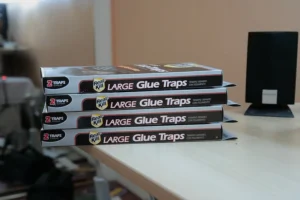
Some cities have banned them on their own, with West Hollywood going first in 2023 and Ojai, California following in 2024.
Some states and provinces are looking at bans too. New York has considered a bill, and people in British Columbia have pushed for one.
Check your city or county rules before you buy one. A quick call to your local animal control office will tell you what’s allowed.
Other countries are stricter, and in England only licensed pest controllers can use glue traps to catch rodents, while Wales and Scotland have banned them.
New Zealand, Ireland, and the Australian state of Victoria have also banned or tightly limited them. A few of those laws mention rodents by name, but the same traps catch lizards, and wildlife or animal cruelty laws may still apply.
Glue Traps Don’t Work Well Outdoors Either
Some people put glue boards on porches, patios, and garden walls, which is the same place a board is most likely to catch things you never planned on.
Rain, dust, leaves, and morning dew can all ruin the glue. A board that looked perfect at sunset may be useless by sunrise.
Hot sun can also soften the glue and make a mess, and then it’s harder to handle and harder to free anything that gets stuck.
Outdoors, you get the full cast of wildlife. Birds, bats, frogs, anoles, and small snakes can all cross a board in the dark.
In Singapore, about a quarter of the animals rescued from glue traps over several years were protected species, including kingfishers, bats, and civets.
Glue boards can catch wildlife outdoors, including birds, bats, frogs, and lizards. That’s another reason to avoid using them outside, where you can’t control which animals might come across them.
Glue Traps Don’t Fix Why Lizards Came Inside
Even a trap that works doesn’t solve your real problem. Lizards come into homes for food, shelter, and warmth, and a glue board doesn’t change any of that.
Mostly, they come for bugs, since moths, cockroaches, and spiders gather around your lights and geckos follow the buffet.
Take one gecko off the wall and another may show up, because if the bugs, the lights, and the gaps are still there, your house stays an easy target.
Geckos hide by day in poorly sealed gaps around the outside of a house. So a small crack near your door can be all the invitation they need.
Bug spray doesn’t help much either, since no pesticide is made for geckos and spraying for insects only trims their food supply a little.
So a glue trap deals with one gecko at a time while the cause keeps feeding the next one. That’s a lot of effort for very little payoff.
What To Do If A Lizard Is Already Stuck On A Glue Trap
If a lizard is already stuck, move quickly but stay calm. Don’t pull it off the board, since that can cause further injuries.
Keep children and pets away, and contact a local wildlife rehabilitator or veterinarian for help. Explain that the lizard is stuck on a glue board so they can advise you on the safest way to handle it.
If you need to move the animal, wear gloves and avoid touching its head, legs, or tail. Don’t try to force it free or apply oil around its eyes, nose, or mouth without professional guidance.
Once the lizard has been freed, it may still need veterinary attention, even if it looks unharmed. Glue residue, stress, and injuries can affect its chances of recovery.
Don’t use nail polish remover, gasoline, or other harsh chemicals, since they can burn its skin. When you’re done, wash your hands well with soap and water, and throw the used trap away so nothing else gets stuck.
Sealing Gaps And Cutting Down Insects Works Better Than Glue Traps
If you want fewer lizards in your house, start with the things that bring them in. It’s more work up front, but it actually lasts.
Seal the gaps first by caulking cracks around pipes, windows, and doors, and add weatherstripping (the soft seal that goes around door frames) or a door sweep along the bottom of your doors.
Check your vents, window screens, and the spots where cables come into the house too, since geckos can squeeze through surprisingly small openings.
Next, cut down the bugs. Take out the trash often, bring pet food bowls inside at night, and fix any spot where water pools.
Then look at your lights, since bright white bulbs draw moths, and moths draw geckos, while warm yellow bulbs tend to pull in fewer bugs.
Turning off lights you don’t need helps too. And if you trim bushes and vines so they don’t touch your walls, lizards lose an easy ladder up to your windows, vents, and roof.
If one is already inside, you can catch it without a glue board. Put a cup over it, slide a stiff piece of cardboard underneath, and carry it outside.
You can also open a door or window and gently guide it out. These methods don’t hurt the lizard, they don’t catch anything by mistake, and they keep working long after you’re done.
Should You Bother Getting Rid Of House Geckos At All?
It’s worth thinking about before you start, because house geckos do a lot of the pest control for you.
A gecko near your porch light eats moths, cockroaches, and other bugs all night, for free, which is the same job you’d pay an exterminator to do.
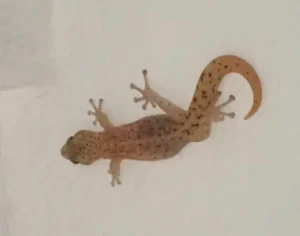
Many people in warm places, like Florida, Texas, and Southeast Asia, just let them stay. Some even see a gecko in the house as good luck.
However, plenty of people don’t want a lizard in the bedroom, and that’s fair.
A good middle ground is to keep them outside. Seal up your house, leave the porch alone, and let them hunt the bugs out there.
Lizards that stay outdoors cost you nothing, and they still help keep the insect numbers down.
When Should You Call A Pest Control Professional?
Most lizard problems are small, but a few situations are worth a phone call.
If you see lots of geckos inside every night, bugs are probably the real problem, and a pest control company can find what’s feeding them and help you shut it down.
Large lizards are a different story. Green iguanas in Florida, for example, can dig burrows, eat garden plants, and be hard to move on your own.
In those cases, a glue trap is the wrong tool, and a professional will know the local rules.
A good company should talk about sealing gaps, cutting down insects, and live capture before it talks about traps. If it jumps straight to glue boards, ask questions.
Conclusion
So, are glue traps effective for lizards? They can catch small ones, especially house geckos near lights and windows, but the results are hit or miss.
They also catch animals you never meant to hurt, and a lizard that gets stuck often dies slowly. In many places, the law is moving against them too.
Worse, they don’t fix what brought the lizards in, so the bugs, the lights, and the gaps stay put and more lizards show up.
If one is already stuck, don’t peel it off. Keep children and pets away, and contact a vet or a wildlife rehabilitator for help.
For everything else, seal the gaps, cut down the insects, and catch strays with a cup and a piece of cardboard. You’ll spend less time dealing with lizards, and nothing gets hurt along the way.
And if a gecko or two hangs out on your porch, that’s fine, because they’re working for you.

Hi, my name is Ezra Mushala, i have been interested animals all my life. I am the main author and editor here at snakeinformer.com.