
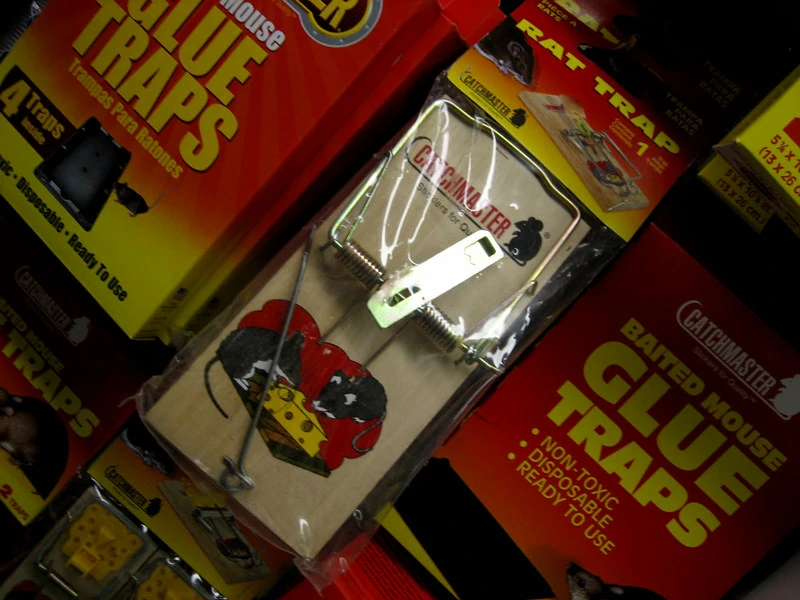
Gtraps are cheap, easy to use, and sold in almost every hardware store, but they’re also one of the most argued about tools in pest control. So, are glue traps ethical?
No, most vets, wildlife rescuers, and animal welfare groups say glue traps aren’t ethical. The trap doesn’t kill the animal, so it can suffer for hours or even days before it dies, and faster options exist that cause far less suffering.
That’s the short answer, but there’s a lot more behind it. Below, you’ll see what really happens to a trapped animal, what the law says where you live, and what you can use instead.
How Glue Traps Work (and Why People Use Them)
A glue trap is a flat tray or board covered in a very sticky adhesive, and you set it along a wall where mice or rats run. When one steps onto it, the animal sticks fast.
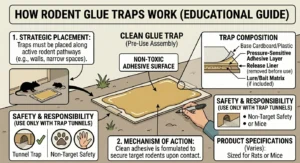
There’s no spring, no poison, and nothing to set off, so the board just sits there and waits for something to walk across it.
It’s easy to see why people like them, because they’re cheap (a four pack of Tomcat glue boards runs about five dollars) and you don’t have to worry about snapping your fingers. For many homeowners, that sounds like a win.
They also feel safer around kids and pets than poison baits do, and you can slide one behind a fridge or into a tight gap where a bigger trap won’t fit.
Pest control pros sometimes use glue boards for a different reason, which is to find out where rodents are running. A board that picks up a few mice shows them exactly where to focus.
Still, a trap that’s cheap and easy isn’t automatically fair to the animal, and that’s where the argument starts.
What Actually Happens to an Animal Stuck on a Glue Trap
When a mouse steps onto the glue, it can’t pull free, so it does what any scared animal would do and struggles harder. The harder it fights, the more of its body ends up stuck.
Fur, feet, belly, and tail all get dragged into the adhesive, and an animal can tear its skin or even break a leg trying to get loose.
Mice and rats can also get glue over the nose and mouth, which makes it hard to breathe.
Here’s the part many people don’t realize. The glue doesn’t hurt the animal on its own, and it doesn’t kill it, because the animal just can’t leave.
Without food or water, it slowly gives out from exhaustion, dehydration, and blood loss from its injuries, and if nobody checks the trap, that can take more than a full day.
Picture being stuck in wet cement (scared, hurt, and thirsty) with no way out. That’s a fair picture of what the animal goes through.
Can Mice and Rats Really Feel Pain and Fear?
Yes, they can, since mice and rats are mammals with the same basic pain system we have, including nociceptors (nerve endings that sense pain and send the signal to the brain).
Scientists even use a “grimace scale” for mice, which scores pain by how tightly the eyes squeeze shut.
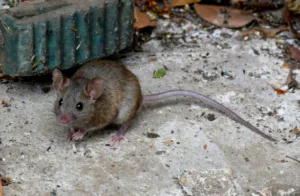
Fear shows up in their behavior too, because a scared rodent will freeze, bolt, or cry out. Many of those cries are too high pitched for you to hear, though a stuck animal can still squeal loudly.
If you’ve ever found a mouse on a glue board, you know the squealing is hard to forget. So it’s no stretch to say a trapped rodent suffers.
The real question is whether that suffering can be justified, and we’ll get to that shortly.
Do Glue Traps Kill Animals Quickly?
No, and that’s the heart of the problem. A snap trap is built to kill in a split second, but a glue trap isn’t built to kill at all.
A wildlife vet at the San Diego Humane Society explains that the traps themselves don’t kill the animal, which just sits there, stuck, until it starves or gives out.
If you check the board often, you’ll find the animal alive, which leaves you with a frightened, injured animal and a hard choice.
If you don’t check the board, the animal suffers until it dies. Either way, the trap does nothing to make the end quick.
That’s why even people who are fine with killing pests often draw the line at glue.
Vets and Animal Welfare Groups Mostly Say No
Welfare scientists who’ve reviewed trapping methods have rated glue traps as very poor, and even when they assumed trained pros were checking the boards often, the rating didn’t get much better.
Vet groups agree, and the British Veterinary Association calls glue traps cruel because they don’t kill right away. It would like to see them banned for the public and for professionals.
Humane societies in the US and Canada take the same side. The Vancouver Humane Society, for one, describes the death as slow and agonizing.
You’ll find some pest control pros who disagree, and we’ll cover their side in a bit. However, most of the argument is about whether the suffering is worth it, not whether it happens.
The Real Debate Is About How, Not Whether
Most people accept that you have to deal with rats and mice, since they chew wires, spoil food, and spread germs. Nobody is asking you to just live with them.
The ethical question is how you do it, because a humane method kills fast and keeps pain and fear as low as possible.
Think of how a vet puts down a sick pet (quick, calm, and without fear). That’s the standard people use to measure other methods.
A glue trap fails that test, because the animal stays awake, scared, and hurt for a long time. A good snap trap passes it much more often, as you’ll see below.
So you can believe in controlling pests and still say glue traps are the wrong tool, and lots of people do.
Glue Traps Catch More Than Just Mice and Rats
A glue trap can’t tell what’s walking across it, so anything small enough to get stuck is fair game (think songbirds and baby animals).
Wildlife rescuers see this all the time. One humane society took in a cardinal with its belly stuck to a trap, and the bird had to be put down.
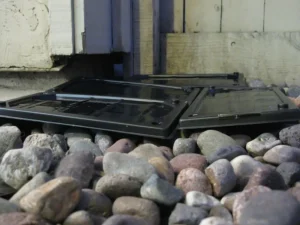
A wildlife center in San Diego treated a barn owl with feathers soaked in glue, plus an orphaned baby opossum stuck to a tray, and both would’ve died slowly without help.
Chipmunks, lizards, snakes, bats, and squirrels get caught too, and even your own pet can step in one if you’re not careful.
Tomcat’s label tells you not to put glue traps where birds or other non-target animals could touch them, which is good advice. Still, you can’t always control what wanders into a garage, shed, or barn.
There’s an irony here as well, since owls and snakes eat rodents, so catching them works against the very problem you’re trying to fix.
What Should You Do If You Find a Live Animal on a Glue Trap?
First, stay calm and don’t yank the animal off, because pulling can rip away skin, fur, or feathers.
If it’s a wild animal (a bird, a bat, or a baby opossum), call a wildlife rehabilitator or a vet right away, since they know how to free these animals safely.
Many rescuers suggest dripping cooking oil onto the glue around the animal, which loosens its grip. You have to work slowly and gently, though.
Tomcat’s label mentions mineral spirits for removing glue, but that’s a harsh solvent. Check with a rehabber or vet before you put anything stronger than cooking oil near an animal.
Wear thick gloves the whole time, since wild animals (even tiny ones) bite and scratch when they’re scared and can carry germs.
If it’s a mouse or rat you didn’t want around, a vet or animal shelter may be able to help it pass quickly and painlessly, so it’s worth a phone call.
Are Glue Traps Legal Where You Live?
It depends on where you are, and the rules are changing fast.
In the US, there’s no nationwide ban, but a few California cities (West Hollywood, Ojai, and Culver City) have banned selling and using them.
Lawmakers in states like New York and California have introduced bills too, and a federal bill went to Congress in 2024.
Canada doesn’t have a national ban either. In 2019, a group called Canadians for Animal Protection took Walmart, Home Depot, and other big retailers to court.
They argued that selling glue traps breaks the Criminal Code’s rules against unnecessary cruelty to animals, and while it was an uphill fight, it shows how heated this debate has become.
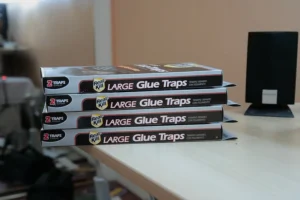
The UK has gone much further. Wales banned glue traps in 2023, Scotland now bans buying and using them, and England banned public use on July 31, 2024.
In England, only licensed pest controllers can use them, and only in rare cases when every other method has failed.
Australia is a mix. Victoria bans selling and using glue traps for animals, even for professional pest controllers, and South Australia bans them with an exception for licensed pros.
New Zealand has banned them too, with tight exceptions, while most other Australian states still allow them.
Whatever your area says, check your city and state rules before you buy one, because they’re changing quickly.
Why Some People Still Choose Glue Traps
Supporters have real reasons, and you should hear them out.
Glue traps use no poison, so you don’t have to worry about a pet or child eating bait. For a family with a curious toddler or a dog that eats everything, that matters a lot.
They also work where other traps can’t, since a glue board fits flat under a stove, behind a washer, or along a narrow gap in a wall.
Some pros say they’re handy for monitoring an infestation, and manufacturers say the glue holds on to fleas that ride on the rodent.
Those points are fair. However, each one has an answer that doesn’t involve a slow death, and we’ll go through those soon.
Do Glue Traps Even Work Well?
They can, especially for a small problem, but they aren’t foolproof. Dust, grease, and water can weaken the glue over time, so a board in a messy spot (like a dusty garage) may not grip like it did on day one.
Mice are also wary of new objects, so you may find them running around a board or even hopping over it. That’s why Tomcat suggests setting two traps side by side.
A strong animal can sometimes tear loose, leaving behind patches of fur and skin, which is a worse outcome for everyone involved.
Most important, a trap only catches the mice that already got in. If you don’t seal the gaps and clean up food, new ones keep coming, and no trap fixes that.
Do Glue Traps Put Your Health at Risk?
They can, because a rodent stuck on a glue board is terrified and may urinate or leave droppings all over the trap.
Rodent urine and droppings can carry germs like hantavirus, salmonella, and the bacteria behind leptospirosis (a serious infection that can hurt the kidneys and liver).
So you’re handling a trapped animal and a dirty trap at the same time.
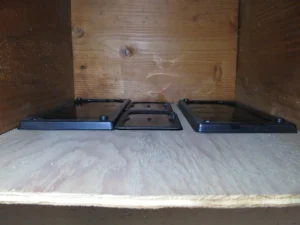
That’s why the CDC’s hantavirus advice points you toward snap traps and away from glue and live traps, since a frightened animal that stays alive for hours makes a bigger mess.
If you use any trap, wear gloves, don’t touch the animal with bare hands, and wash up well afterward.
Never sweep or vacuum up droppings, either, because that can kick germs into the air where you’ll breathe them in.
Why Non-Toxic Doesn’t Mean Humane
Look at a Tomcat glue trap box and you’ll see words like “non-toxic” and “pesticide free,” and both are true. The glue doesn’t poison anyone, which is a real plus for your family.
But those words are about chemicals, not about how the animal feels, so a trap can be non-toxic and still cause a slow, painful death.
Tomcat’s traps are also pre-scented (store listings call them pre-baited), and the brand says you don’t need to add bait. They’re built to draw rodents right onto the glue.
The label also tells you to check the trap daily, which is smart. Even so, a daily check means a mouse can spend many hours stuck before you find it.
If you do use one, check it often, and be ready to deal with a live animal when you find one.
Are Snap Traps More Humane Than Glue Traps?
Usually, yes, when they’re used well. A good snap trap kills in a split second, so the animal doesn’t suffer for long.
University pest experts at UC IPM call snap traps and glue boards the safest and cheapest traps, but that’s about safety and cost for you, not about how the animal feels.
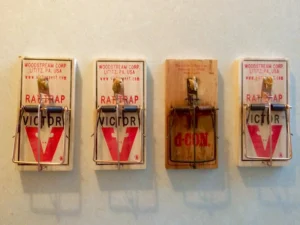
Snap traps aren’t perfect either, because a weak or badly placed trap can hurt an animal without killing it, which is cruel too. And a mouse trap won’t work on a rat.
To get the quick kill you want, match the trap to the animal and set it firmly against a wall where rodents run. A dab of peanut butter about the size of a pencil eraser is plenty.
Tomcat’s Press ‘N Set is one example, a plastic snap trap you set with a single press, and a grab tab lets you toss it without touching the mouse.
Check snap traps daily too, since you want a fast result and you can’t be sure every trap delivers one.
What You Can Use Instead of Glue Traps
The best fix is to make your home a place mice don’t want to live, so seal every crack and hole bigger than about a quarter inch (roughly the width of a pencil). Mice squeeze through gaps you’d never expect.
Store food in hard containers, wipe up crumbs, and clear the clutter where mice like to hide. Trim any plants growing against your walls, since mice climb well.
For mice already inside, a well placed snap trap (set flat against a wall) is the usual choice. Battery powered traps (electronic traps) kill with a quick shock, which many people find cleaner.
If you’d rather not kill at all, a live trap (also called a multi-catch trap) catches mice without hurting them. You’ll have to check it often, though, and releasing wild animals isn’t legal everywhere, so look up your local rules first.
Skip the ultrasonic plug in gadgets too, because university pest experts say they don’t work.
For a big infestation, call a pest control company and ask about their methods, since many now work without glue traps.
Conclusion
Most animal welfare experts, vets, and humane groups say glue traps aren’t ethical, because the animal can suffer for hours or days.
The traps also catch birds, snakes, and pets, and they can put you at risk from germs.
Plenty of people still use them because they’re cheap, easy, and free of poison, and those are real benefits. However, the suffering is real too, and other tools get the job done faster.
If you want to stay on the humane side, seal up your home first, then use a well placed snap trap or a live trap, and check it every day.
Whatever you choose, look up the laws where you live. More places ban glue traps every year, and it’s smart to know where yours stands.

Hi, my name is Ezra Mushala, i have been interested animals all my life. I am the main author and editor here at snakeinformer.com.