
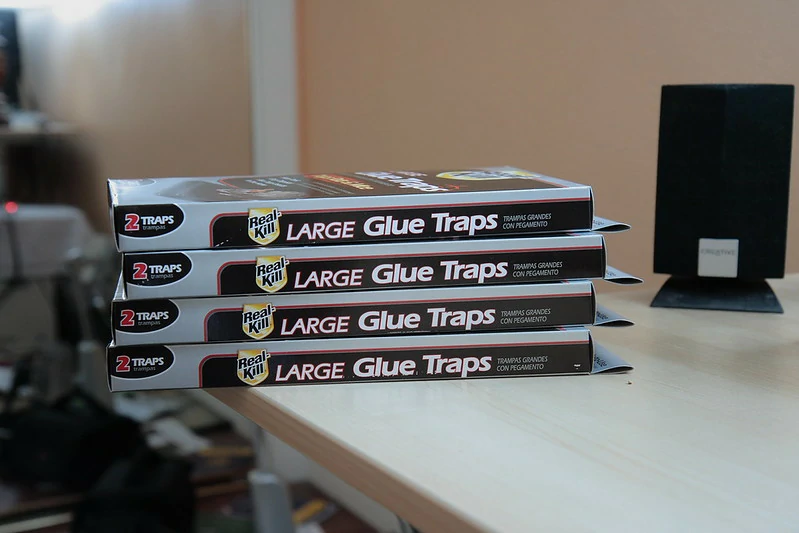
A pack of Tomcat glue boards can sit in a drawer for months, and a board you set out doesn’t always catch a mouse right away. So when is it still working, and when should you toss it: how long do Tomcat glue traps last?
Tomcat glue traps usually stay sticky for a few weeks to a couple of months once you set them out, if they stay clean and dry. Dust, damp, extreme heat or cold, and catching a mouse can wear them out much faster. Check them daily and replace any board that looks dusty or full.
The brand doesn’t print one set number of days on its product pages, so the real answer depends on where the board sits and how clean that spot is.
A board in a quiet, clean corner can last for weeks. The same board in a dusty garage might stop working in a few days.
Tomcat Glue Traps Last Weeks, Not Years, Once You Set Them Out
An unopened board can sit on a shelf for a long time. Once you take it out and put it down, the clock starts running faster.
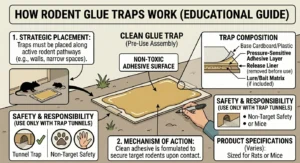
Other glue board makers give a rough idea of the range. Catchmaster says its boards stay effective for about two to three months after you place them, while some pest control suppliers suggest swapping boards about every 30 days.
Tomcat’s product pages don’t spell out a set number of days, so those ranges are a fair guide. In a clean, dry spot you can expect weeks, and sometimes a couple of months.
But that’s the best case. Dust, damp air, and temperature swings can cut it short, and a board that caught something is done, no matter how long it’s been out.
So don’t go by the calendar alone. Go by how the board looks and how well the glue still grabs.
How Long Can You Store Unopened Tomcat Glue Boards?
Unopened boards last a lot longer than boards you’ve set out. Makers of other glue boards say sealed packs can last a year or more, and some sellers say they last indefinitely if stored well.
The Tomcat safety sheet gives no number of days. It does say to store boards in their original container in a cool, clean place, which is good advice for any glue board.
Keep the pack away from direct sun, heat, and freezing cold, since all three can change how the glue behaves. A hot garage in July or an unheated shed in January isn’t a good home for spare boards.
When you do open a pack, use the oldest boards first. If a board feels dry, dull, or oddly runny, replace it with a fresh one.
What Makes a Glue Board Stop Working?
Several things wear down a glue board, and most of them are everyday household stuff. Dust is the biggest one, followed by damp air, strong heat or cold, and anything that gets spilled or sprayed on the glue.
University pest experts note that the grip of glue boards is limited by temperature, moisture, and dust. That matches what most pest pros tell you.
A board can also stop working just because it’s full. Once the surface is covered with bugs, crumbs, or a mouse, there’s no sticky glue left to grab anything new.
Cleaning sprays can cause trouble too. If you wipe down a counter near a board, a bit of spray or oily residue can coat the glue and weaken it.
Think of the glue as a fresh coat of tape. It only works while it’s clean and tacky.
How Dust Wrecks a Glue Trap Faster Than Anything Else
Dust is the quiet enemy of every glue board. A thin layer of dust settles on the glue, and that layer acts like a barrier between the glue and whatever walks across it.
Garages, basements, and the spaces behind appliances are some of the dustiest spots in a home. They’re also where mice like to run, which puts glue boards in the worst possible place.
You’ll often see the problem within a day or two. The board looks gray and flat instead of glossy, and a mouse can walk right over it without getting stuck.
Tomcat boards can be used flat or covered, and a cover helps a lot. A folded board or a small box over the trap (even a bent piece of cardboard works) keeps falling dust off the glue while still letting a mouse run through.
Before you set a board, give the spot a quick sweep or vacuum. It takes a minute and adds days to the life of the trap.
How Hot and Cold Weather Change the Way Glue Grips
Temperature matters more than most people expect. Catchmaster says the best range is roughly 50 to 95 degrees Fahrenheit (10 to 35 Celsius), and it warns that big temperature swings can quickly cut a board’s effectiveness.
That lines up with how glue behaves in general. Very cold glue can turn stiff and lose some of its grab, while very hot glue can turn soft and runny.
If you live somewhere with cold winters, like much of Canada or the northern US, a board in an unheated garage can struggle on freezing nights. In hot places like Texas or Australia, an attic or a sunny window can cook a board.
The fix is simple. Set boards in indoor spots with steady temperatures, like behind the fridge, under the kitchen sink, or along a basement wall that stays mild.
If you have to use a cold or hot space, plan to check and replace the board more often.
How Often Should You Check a Tomcat Glue Trap?
Check it at least once a day, and twice if you can. A quick look in the morning and again before bed is a good habit.
There are two reasons for this. First, a mouse stuck on a board is suffering, and the sooner you deal with it, the better.
Second, you want to know right away when a board stops working. A dusty board that looks fine from across the room might not catch anything at all.
If you can’t check every day, don’t set a glue trap. Pick a different kind of trap instead, like a snap trap in a covered box, which works fast and doesn’t need constant checking.
Daily checks also help you spot whether you’re catching mice or just bugs. That tells you how big the problem really is.
How Long Does It Take a Glue Trap to Catch a Mouse?
Sometimes it takes a few hours, and sometimes it takes several days. Mice are cautious, and they don’t always walk into a new object right away.
Place boards where mice are already running, which means along walls and near droppings, gnaw marks, or greasy rub marks. UC pest experts say droppings, fresh gnaw marks, and tracks show you where mice are active.
The Catchmaster label suggests setting mouse traps every six to ten feet, so use several boards instead of just one. More boards means more chances.
If a board catches nothing after several days, move it. Mice run the same paths over and over, so even a short shift can make a difference.
And keep your food sealed. A mouse that’s well fed in your pantry has little reason to walk across a plain board.
When Should You Replace a Tomcat Glue Trap?
Replace it right after it catches anything, even a bug. A board that caught something has less glue left, and a half-covered board is unreliable.
Replace it when the surface looks dusty or dull. If you see lint, hair, or debris stuck on the glue, that board is losing its grip.
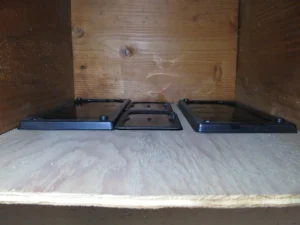
Replace it after it gets damp or spilled on. Moisture and cleaning products can break down the glue.
And replace it about once a month if it’s been out that long, even when it looks clean. Many pest suppliers suggest roughly a 30-day swap, and it’s a good rule of thumb.
When in doubt, swap it out. A fresh board costs very little compared with a mouse that walks past a dead one.
A simple trick is to write the date you set each board on a small sticky note beside it (not on the board itself). That way you’ll know right away which boards are getting old.
How Can You Tell if the Glue Has Lost Its Grip?
Start with a look. Fresh glue is shiny and a bit glossy, while worn glue looks dull, flat, or gray.
Then try a gentle test. Tap the glue with the tip of a pencil or a clean craft stick (not your finger, since the glue will grab you).
If the tip sticks and pulls the glue into a little string, it’s still good. If it barely sticks or leaves the surface clean, the glue is spent.
Also look at the edges. Dust tends to collect first near the sides and corners, and it spreads inward.
If the board fails either test, fold it up and throw it away. Don’t try to liven it up with water or oil, because that can make it worse.
Can You Reuse a Tomcat Glue Trap That Already Caught Something?
No, you shouldn’t. These boards are made for one use, and the glue that touched a mouse or bug is covered and weakened.
Even a board with plenty of clean glue left carries germs from the pest it caught. Mice can carry germs (like salmonella), and pest experts say to wear disposable gloves and wash your hands after handling any trap.
Reusing a board also leaves you open to a surprise. A half-covered board can let a mouse slip away, or hold it just long enough to cause a bigger mess.
Throw used boards away in a sealed bag, wearing gloves. Then wash your hands with soap and warm water.
If you want a trap you can reuse, a snap trap or a multi-catch trap is the better pick.
Can You Make a Tomcat Glue Trap Last Longer?
You can, and it’s mostly about where you set it. Pick a clean, dry, indoor spot with steady temperatures, away from windows, vents, and sunlight.
Use the board covered when you can. A small tunnel or box keeps dust off the glue and keeps pets and kids from touching it.
Keep the board in its package until you’re ready to use it. Once the glue is open to the air, dust and lint start to collect.
Avoid spraying cleaners near the board, and don’t set it where spills happen. A wet kitchen floor or a spot under a leaky pipe is a bad choice.
And keep your fingers off the glue. Oils from your skin can leave marks that weaken the grip.
Do Tomcat Glue Traps Last Outdoors?
Not well. Most glue boards are made for indoor use, and outdoor air is full of rain, dew, dust, leaves, and wide temperature swings.
Even under cover, a porch or shed can get damp and dusty fast. The board can lose its grip in a day or two.
Outdoor boards also catch things you don’t want to catch. Birds, lizards, and other wildlife can get stuck, and a scared animal can bite.
Check your package for the maker’s directions before you use any board outside. If the label says indoors only, take that seriously.
For outdoor mouse problems, covered snap traps or tamper-resistant stations (boxes that pets and kids can’t open) are a safer pick.
How Many Boards Do You Need for a Month?
It depends on how many mice you have and how big the space is. For a small apartment, start with several boards spread out along the walls where you’ve seen signs.
Use the six-to-ten-foot spacing on the label as a guide. A bigger home needs more boards, and a single mouse may only need a few.
Plan to swap out any board that catches something, plus any that gets dusty. Buying a multi-pack saves money, since you’ll go through them faster than you expect.
Keep spare boards in a clean, cool spot, up high and out of reach of pets and kids. A pack left on the floor invites trouble.
If you find yourself using a lot of boards, it’s a sign you should look at how mice are getting in.
Better Options if You’re Tired of Replacing Boards
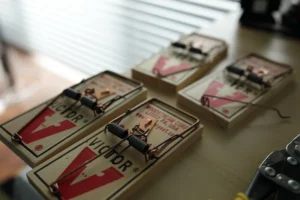
Glue boards need a lot of attention, so it’s worth thinking about what else works. Snap traps can be reused again and again, and a covered box keeps pets and kids safe.
Multi-catch traps (boxes that hold mice alive) let you take the mice outside and release them. They don’t use glue or poison, and you can reuse them too.
The biggest fix is sealing up the holes mice use to get in. They can squeeze through a gap about as wide as a pencil, so check around pipes, vents, and door bottoms with steel wool or metal mesh and caulk.
Also keep food sealed, including pet food. Fewer meals means fewer mice.
If the problem is big, call a pest control company and tell them about your kids and pets.
Conclusion
Tomcat glue traps last weeks to a couple of months once you set them out, as long as the spot is clean, dry, and not too hot or cold. Unopened boards last much longer when you store them in a cool, clean place.
Dust is the biggest enemy, followed by damp air, temperature swings, and cleaning sprays. A board that catches something is done and should be thrown away.
Check your traps every day, replace any board that looks dull or dusty, and plan on a swap about once a month. A quick pencil-tip test tells you whether the glue still grips.
If you’re tired of replacing boards, try covered snap traps or multi-catch traps, and work on sealing entry points.
A little attention each day keeps your traps working and your home safe.

Hi, my name is Ezra Mushala, i have been interested animals all my life. I am the main author and editor here at snakeinformer.com.