
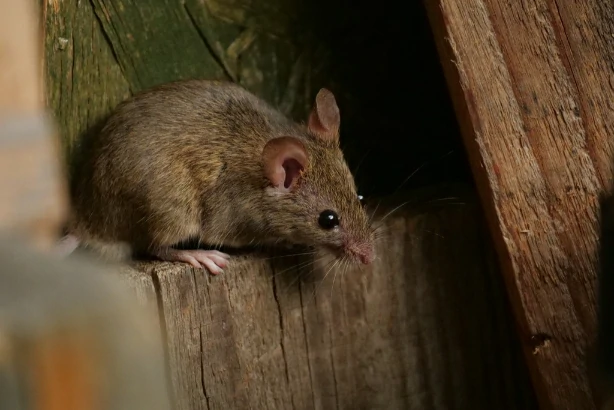
Most people don’t think much about their gutters when it comes to pest problems, but these water drainage systems can actually provide mice with a direct route into your home.
Gutters run along your roofline and connect to various parts of your house, creating pathways that mice can use to reach vulnerable entry points you might not even know exist. So can mice get in through gutters?
Yes, mice can use gutters to get into your house. While gutters themselves aren’t entry points, they provide mice with a safe, hidden pathway to reach weak spots in your roof, fascia, soffit, or walls. Mice climb into gutters and follow them to gaps, holes, or damaged areas where they can enter your home.
Gutters act like highways for mice, letting them travel along your roofline while staying hidden from predators. Once they’re up there, they can find all sorts of ways to actually get inside your house.
How Mice Get Into Gutters
Before mice can use gutters to reach your house, they first need to get up into the gutters themselves.
Mice are surprisingly good climbers. They can climb up rough surfaces like brick, stucco, wood siding, and even some types of vinyl siding. The texture gives their tiny claws something to grip onto.
Downspouts are like ladders for mice. The vertical pipe of your downspout often has enough texture and small gaps for mice to climb up easily. Once they reach the top of the downspout, they’re right at the gutter.
Trees and bushes near your house give mice easy access to your roof and gutters. If you have branches hanging over your roof or touching your house, mice can just walk along the branches and hop into the gutters.
Vines growing on your house create a perfect climbing surface. Ivy, climbing roses, or any other plants growing up your walls give mice an easy way to reach your gutters.
Utility lines (like cable or phone wires) that connect to your house also serve as bridges. Mice can walk along these lines from nearby trees or poles right to your house.
Stacked firewood, sheds, or other structures close to your house give mice a boost. They can climb these objects and then jump or climb the rest of the way to your gutters.
Why Do Mice Travel Through Gutters?
Once mice are in your gutters, they don’t just hang out there randomly. They’re using the gutters to get somewhere specific.
Gutters provide cover from predators. When mice are exposed on the ground or on walls, they’re vulnerable to owls, hawks, cats, and other pre
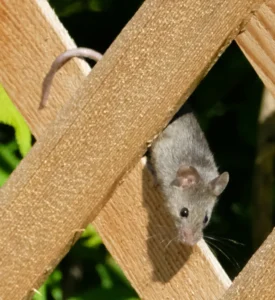
dators. Inside a gutter, they’re hidden and protected.
The gutter system connects to many parts of your house. Mice can follow gutters all the way around your home, checking for entry points along the way without having to climb down and back up repeatedly.
Gutters often lead directly to vulnerable spots. Where gutters connect to your roof, fascia, or downspouts, there are frequently gaps or holes that mice can use to get inside.
Many gutters have debris in them (leaves, twigs, seeds). This organic matter can attract insects, which mice eat. So gutters can be both a pathway and a food source.
Water in gutters might attract thirsty mice, especially during dry weather. While mice don’t need much water, they’ll investigate moisture sources when they’re available.
Where Mice Find Entry Points Along Gutters
Gutters themselves don’t let mice into your house, but they lead mice to spots where they can get in.
Gaps between the gutter and fascia board are common entry points. If your gutter isn’t installed tightly against the fascia, mice can squeeze through these gaps and get behind the gutter, where they can then find openings into your walls or attic.
The soffit (the underside of your roof overhang) often has ventilation holes or gaps. Mice traveling in gutters can easily access the soffit area and slip through these openings into your attic.
Roof edges where the roofing material meets the fascia sometimes have small gaps. Mice can find these spots while traveling along gutters and work their way under the shingles to get into your attic.
Gutter joints where two sections connect often have small openings. Mice can use these to get behind or under the gutter system.
Where the downspout connects to the gutter, there’s sometimes a gap or a hole that mice can squeeze through. From there, they can get into wall cavities or under the siding.
Damaged or rotted fascia boards create obvious entry points. Mice in gutters quickly find these weak spots and chew through or squeeze into them.
What Are the Signs That Mice Are Using Your Gutters?
You might not see mice in your gutters, but there are signs that tell you they’re up there.
If you hear scratching, scurrying, or squeaking sounds coming from your roofline, especially at night, mice are probably in your gutters or nearby areas.
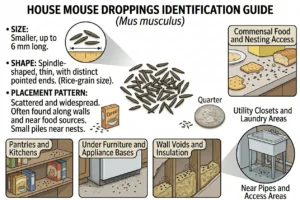
Mouse droppings in or near your gutters are a clear sign. You might see these when you clean your gutters or notice them on the ground below where mice have kicked them out.
Grease marks or rub marks on the outside of your gutters show where mice are traveling. Their oily fur leaves dark smudges on surfaces they repeatedly touch.
Damage to your gutters (like holes gnawed in plastic or thin metal gutters) indicates mice have been chewing on them, either to get through or to wear down their constantly growing teeth.
Nesting material in your gutters (shredded leaves, twigs arranged in a pile, or bits of fabric or paper) means mice might be living right in your gutter system.
If you find mice or signs of mice in your attic, and you have gutters, there’s a good chance the gutters are how they got up there.
How Clogged Gutters Attract Mice
Clogged gutters actually make the mouse problem worse in several ways.
Debris-filled gutters are more attractive to mice. The leaves, twigs, and organic matter provide nesting material and hiding spots. Mice feel safer in gutters full of stuff than in clean, empty gutters.
Clogged gutters often have standing water, which attracts mice looking for water to drink. This is especially true in dry weather when other water sources are scarce.
The weight of debris can pull gutters away from the house, creating gaps between the gutter and fascia. These gaps are perfect entry points for mice.
Clogged gutters can cause water damage to your fascia and soffit. The constant moisture leads to rot, and rotted wood is easy for mice to chew through.
Heavy, clogged gutters can sag or separate at the joints, creating openings mice can use to get behind the gutter system.
Decomposing organic matter in gutters attracts insects, which attract mice. It becomes a whole ecosystem up there that draws rodents in.
How to Clean Gutters to Prevent Mice
Regular gutter cleaning is one of the best ways to make your gutters less attractive to mice.
Clean your gutters at least twice a year (spring and fall), or more often if you have lots of trees near your house. This removes the debris that mice use for nesting and eliminates standing water.
When you clean, really get everything out. Don’t just scoop out the bulk of leaves and call it good. Get down to the bottom of the gutter and remove all the decomposed organic matter.
Flush gutters with a hose after cleaning. This washes out small debris and shows you if your downspouts are clogged or if there are low spots where water pools.
While you’re up there cleaning, inspect everything. Look for damage, check that gutters are secured tightly to the fascia, and look for gaps or holes that mice could use.
Consider installing gutter guards or screens. These covers keep leaves and debris out of your gutters, which means less stuff for mice to nest in and less frequent cleaning for you.
Fix any loose or sagging gutters right away. Make sure they’re firmly attached to your house with no gaps between the gutter and fascia board.
How to Seal Entry Points Around Gutters
Cleaning gutters isn’t enough. You need to seal the actual entry points mice use to get from the gutters into your house.
Inspect the fascia board carefully. Look for cracks, holes, or rotted spots. Fill small holes with caulk, and replace any seriously damaged sections of fascia.
Check the soffit for holes or gaps. Soffit vents need to stay open for attic ventilation, but they should have fine mesh screening that keeps mice out. Replace any damaged screens.
Seal gaps between the gutter and fascia with caulk or expanding foam. Run a bead of caulk along the top edge where the gutter meets the fascia to close any spaces.
Install flashing or trim pieces to cover gaps where downspouts connect to gutters or walls. These metal pieces prevent mice from squeezing into these junction points.
Add screening or hardware cloth over larger openings. If you have areas that need ventilation but are vulnerable to mice, cover them with metal mesh that has openings too small for mice to fit through (1/4 inch or less).
Use steel wool combined with caulk or foam to fill holes in fascia or soffit. Mice can’t chew through steel wool, so this creates a permanent barrier.
How Trees and Vegetation Help Mice Reach Gutters
Cutting back plants near your house makes it harder for mice to reach your gutters in the first place.
Trim tree branches so they’re at least 6-8 feet away from your roof and gutters. This is too far for mice to jump, so it breaks their access route.
Cut back bushes and shrubs so they don’t touch your house. Leave at least a foot of clear space between vegetation and your walls.
Remove climbing vines from your house completely. While they might look nice, they’re basically stairs for mice and other pests. If you love the look, train vines onto a trellis that’s away from your house.
Clear away ivy and ground cover right next to your foundation. These plants give mice cover as they approach your house, and some mice live in the plants themselves.
Keep grass mowed short near your house. Long grass provides cover for mice, while short grass makes them feel exposed and vulnerable.
Don’t plant dense shrubs or bushes right next to your house. If you want foundation plantings, choose smaller plants that don’t create hiding spots for rodents.
Which Gutter Materials Are Hardest for Mice to Damage?
The type of gutters you have can make a difference in how easily mice can use or damage them.
Metal gutters (aluminum, steel, or copper) are harder for mice to chew through than vinyl or plastic gutters. If mice chew on your gutters, consider upgrading to metal.
Copper gutters are the most durable but also the most expensive. Mice definitely can’t chew through copper, and it lasts for decades.
Aluminum gutters are a good middle-ground option. They’re affordable, mice can’t chew through them easily, and they don’t rust like steel.
Vinyl or plastic gutters are the least resistant to mice. While mice would rather get into your house than eat gutters, they can chew through vinyl if they’re trying to enlarge a hole or create an opening.
Seamless gutters have fewer joints and connections where mice can find gaps. Traditional sectional gutters have seams every 10 feet or so, and each seam is a potential weak point.
The size of your gutters doesn’t really matter for mouse prevention. Whether you have 5-inch or 6-inch gutters, mice can travel through both equally well.
How to Protect Downspouts From Mice
Since downspouts are a major climbing route for mice, protecting them is important.
Install downspout guards at the bottom of each downspout. These are cages or covers that allow water out but make it harder for mice to climb up.
Some downspouts have debris guards at the top where they connect to the gutter. These keep leaves out but can also help block mice from entering the downspout from above.
Make sure downspouts extend at least 3-4 feet away from your foundation. This moves water away from your house and also makes downspouts less accessible to mice traveling along the ground.
Consider adding smooth metal collars around downspouts about 2-3 feet up from the ground. These slippery barriers make it hard for mice to climb higher.
Check that downspouts are firmly attached to your wall. Loose downspouts can create gaps between the pipe and the wall that mice can squeeze into.
Some people install one-way valves or flaps at the bottom of downspouts. These let water out but prevent things from climbing up. They work for mice but need occasional cleaning so they don’t get clogged.
When to Call a Professional for Gutter-Related Mouse Problems
Sometimes you need expert help to deal with mice using your gutters.
A professional pest control inspector can spot entry points you might miss. They’re trained to find the small gaps and holes that mice use, and they know where to look based on experience.
Pest control companies can install exclusion devices (one-way doors) that let mice out but not back in. This is helpful if you have mice living in your attic but aren’t sure you’ve found all their entry points yet.
Professional gutter installers can fix structural problems with your gutter system. If your gutters are sagging, poorly attached, or damaged, they have the tools and expertise to repair or replace them properly.
Some pest control services include regular monitoring. They’ll check your property every few months and catch mouse problems before they become serious infestations.
If you’re uncomfortable working on a ladder or climbing onto your roof, professionals can do all the inspection and sealing work safely.
For serious infestations where mice are established in your attic or walls, professional pest control can get rid of them more effectively than DIY methods.
Conclusion
Mice can definitely use your gutters to get into your house. While the gutters themselves aren’t the entry point, they provide mice with a safe, hidden highway along your roofline that leads to vulnerable spots like gaps in the fascia, holes in the soffit, or openings where the roof meets the walls.
Preventing mice from using your gutters requires a combination of approaches. Keep your gutters clean and free of debris, trim back trees and vegetation that give mice access to your roof, and most importantly, seal all the gaps and holes around your roofline that mice can use to actually get inside.
Regular maintenance and inspection are key. Check your gutters and roofline at least twice a year, especially before winter when mice are most motivated to find warm places to live. The effort you put into prevention now will save you from dealing with mice in your attic later.

Hi, my name is Ezra Mushala, i have been interested animals all my life. I am the main author and editor here at snakeinformer.com.