
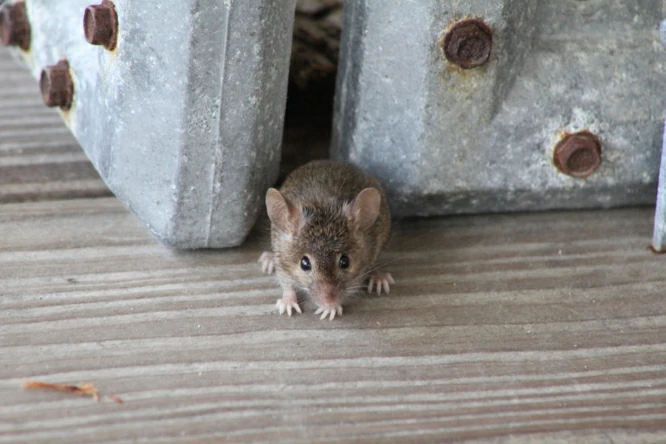
Mice are incredibly resourceful creatures that can access areas of your home you might never imagine. Their small size, flexible bodies, and strong teeth allow them to exploit dozens of potential entry points and hiding spots.
If you’re dealing with a mouse problem or trying to prevent one, understanding all the places mice can get into is the first step toward effective mouse-proofing. So what exactly do mice get into?
Mice can get into almost any part of your home including walls, attics, basements, kitchens, and even appliances. They can squeeze through openings as small as ¼ inch, climb vertical surfaces, and chew through many common building materials. This gives them access to areas through foundation cracks, gaps around utilities, vents, and numerous other entry points.
The range of places mice can access is honestly pretty surprising. They don’t just come in through obvious openings like open doors. They find and exploit vulnerabilities in your home’s structure that most people never think about.
Common Entry Points Mice Use to Get Into Your Home
Foundation cracks are one of the most common ways mice get into homes. Even hairline cracks can widen enough over time for a mouse to squeeze through.
Gaps around utility penetrations (where pipes, wires, and cables enter your home) are often larger than they need to be. Contractors drill these holes with extra space to make installation easier, but that extra space becomes a mouse highway.

Weep holes in brick walls are designed to let moisture drain out, but they’re the perfect size for mice to climb through. They’re typically located right at ground level where mice naturally travel.
Door and window gaps are easy entry points when weatherstripping is worn or damaged. Even a ¼-inch gap under a door is plenty of space for a mouse.
Vents throughout your home (dryer vents, foundation vents, exhaust vents, soffit vents) all provide potential access if they’re not properly screened or if screens are damaged.
Garage door seals wear out over time. The rubber seal at the bottom of your garage door can develop gaps that mice easily slip through.
Which Indoor Areas Can Mice Get Into?
Walls are like highways for mice once they get inside. They travel through wall cavities between studs, moving vertically and horizontally throughout your house.
Attics provide warmth, insulation for nesting, and relatively little human disturbance. Mice love attics and can access them through gaps in eaves, soffit vents, or by climbing through wall cavities.

Basements and crawl spaces are especially vulnerable because they’re at ground level with direct access to foundation walls where most entry points are located.
Drop ceilings (suspended ceilings with removable tiles) give mice easy access to the space above. They can travel across the entire ceiling area and drop down through gaps around light fixtures or air vents.
Behind appliances is a favorite spot. The space behind your refrigerator, stove, dishwasher, or washer and dryer provides warmth, darkness, and access to wall cavities.
Inside cabinets and under sinks, mice find darkness and often food sources. The gaps around plumbing under sinks let them travel between the cabinet and wall cavities.
What Household Items and Storage Areas Attract Mice?
Cardboard boxes are basically mouse condos. Mice love to nest in stored cardboard boxes because they can easily chew through the cardboard to create entry holes.
Furniture with fabric upholstery can become nesting sites. Mice will chew through the fabric underneath couches, chairs, and box springs to nest in the stuffing.

Stored clothing, blankets, and linens provide perfect nesting material. Mice will shred fabric to create soft, warm nests, especially in items that aren’t disturbed often.
Paper products including newspapers, magazines, books, and documents get shredded for nesting material. A stack of old papers is very attractive to nesting mice.
Insulation in walls, attics, and crawl spaces gets pulled apart and used for nesting. You’ll often find tunnels through insulation where mice have been traveling.
Pet food bags are an obvious target. Mice can smell food through packaging and will chew through bags, boxes, and even some plastic containers to access it.
Where Do Mice Hide in Kitchens and Food Storage Areas?
Pantries are prime targets because of concentrated food sources. Mice can smell grains, cereals, and other foods even when they’re in packages.
Inside cabinets, mice find access through gaps in the back panel or around plumbing. Once inside, they have direct access to your dishes and food items.
Behind and under appliances, gaps and openings provide access to wall cavities while being close to food sources and water from the refrigerator drip pan.
Inside stoves and ovens, mice can access the space under the burners or behind the back panel. The warmth from the pilot light or electronic ignition attracts them.
Dishwashers have gaps around the sides and back where they’re installed. These gaps often connect directly to wall cavities and provide access to plumbing spaces.
How Mice Get Into Spaces Around Plumbing and Utilities
Under sinks are common access points because the holes for plumbing are usually much larger than the pipes themselves. The gaps around pipes provide direct routes into wall cavities.
Around toilets, the flange where the toilet meets the floor sometimes has gaps. In older homes especially, these areas might not be sealed properly.

Water heater closets often have gaps at the bottom of the door, around pipes, or where the closet walls meet the floor. These provide access and warmth.
Behind washing machines, the space for water supply lines and drain pipes usually has larger holes than necessary. These connect to wall cavities where mice travel.
Furnace and AC rooms have gaps around ductwork, gas lines, and electrical conduits. These mechanical rooms are often in basements where mice already have easy access.
Which Structural Gaps and Openings Let Mice Inside?
Gaps in siding create pathways for mice to travel around your home’s exterior. They can move between the siding and the house wrap, looking for entry points.
Soffit and fascia areas often have gaps where different materials meet. These areas under your roof overhang provide shelter and access to your attic.
Chimney chases (the framed enclosures around metal chimneys) often have gaps at the bottom where they meet the roof or wall. Mice can climb up these enclosed spaces.
Around windows, the rough opening is often larger than the window frame. If the gaps weren’t sealed properly during installation, mice can exploit them.
Electrical outlets and switch boxes on exterior walls sometimes have gaps that connect to the outdoors. Mice can access these through wall cavities and potentially squeeze through into your rooms.
Can Mice Get Into Outdoor Structures Connected to Your Home?
Attached garages share a wall with your house. Any gaps in that shared wall, around the door between the garage and house, or in the garage foundation let mice into your garage and then potentially your home.
Covered porches and decks create sheltered spaces underneath where mice can nest. From there, they have easy access to your foundation and any gaps in it.

Sheds and outbuildings near your house become staging areas. Mice nest in these structures and then explore your house’s exterior for ways inside.
Crawl space access doors or hatches are often not sealed well. These provide direct entry into the space under your house.
Complete Table of Mouse Entry Points and Access Areas
| Entry Point/Area | Why Mice Can Access It | How Common It Is | Prevention Method |
|---|---|---|---|
| Foundation cracks | Concrete naturally cracks over time; gaps as small as ¼ inch work | Very common | Seal with hydraulic cement and metal mesh |
| Gaps around pipes/utilities | Holes drilled larger than needed during installation | Very common | Fill with steel wool, seal with expanding foam |
| Weep holes in brick | Designed to be open for drainage | Common in brick homes | Install ¼-inch mesh screens or vent covers |
| Window AC units | Gaps around accordion panels and frame | Common in summer | Seal with weatherstripping and caulk |
| Door gaps | Worn weatherstripping and seals | Very common | Replace door sweeps and weatherstripping |
| Dryer vents | Missing or damaged exterior covers | Common | Install vent covers with flaps and screens |
| Foundation vents | Missing screens or rusted covers | Common | Replace with screened vent covers |
| Garage door seals | Rubber wears out over time | Very common | Replace garage door bottom seal |
| Attic vents | Soffit, ridge, and gable vents with damaged screens | Common | Install or replace vent screens |
| Behind appliances | Gaps for installation and utility connections | Very common | Seal gaps behind appliances with steel wool |
| Under sinks | Oversized holes for plumbing | Very common | Seal around pipes with expanding foam |
| Inside walls | Travel through wall cavities via any entry point | Once inside, very common | Seal all exterior entry points |
| Drop ceilings | Gaps around light fixtures and edges | Common in basements | Seal gaps and check above tiles |
| Basement windows | Gaps in frames and window wells | Common | Seal frames, install window well covers |
| Chimney areas | Gaps in chimney chase or around flashing | Moderate | Install chimney caps, seal gaps in chase |
| Electrical outlets (exterior walls) | Gaps between outlet box and exterior | Moderate | Install foam outlet gaskets |
| Bathtub/shower access panels | Often not sealed, provide wall access | Moderate | Seal edges of access panels |
| Behind water heater | Gaps around gas/water lines | Moderate | Seal utility penetrations |
| Range hood vents | Damaged dampers or missing screens | Common in kitchens | Replace vent covers with dampers |
| Crawl space doors | Poor seals or damaged doors | Common | Replace doors, install proper seals |
| Siding gaps | Where different materials meet | Common | Seal with appropriate caulk for materials |
| Around skylights | Installation gaps in framing | Less common | Check and seal around skylight frame |
| HVAC ductwork | Gaps at joints or damaged flexible ducts | Moderate | Seal duct joints with metal foil tape |
| Built-in cabinets | Gaps in back panels | Moderate | Seal gaps with caulk or backing board |
| Stored cardboard boxes | Easy to chew through | Very common | Use plastic bins with lids instead |
| Under dishwashers | Installation gaps on sides | Common | Seal gaps around dishwasher edges |
| Behind refrigerators | Gaps around water lines and electrical | Very common | Seal penetrations behind fridge |
| Floor drains | Dried out traps or missing covers | Moderate | Keep traps filled, use drain covers |
| Roof-wall intersections | Flashing gaps | Moderate | Check and repair flashing |
| Between floors/ceilings | Gaps around pipes going between levels | Common in multi-story homes | Seal penetrations at each floor level |
How Mice Move Through Your Home
Once mice get inside through any entry point, they don’t just stay in one spot. They explore throughout your home using wall cavities as highways.
They can climb vertically inside walls by bracing themselves between studs or by using texture on surfaces. This means a mouse entering your basement can potentially reach your second floor.
Mice follow edges and walls when traveling. They rarely cross open spaces, preferring to stay close to vertical surfaces where they feel safer.
They create regular routes between their nest, food sources, and water. You’ll often find the most droppings and grease marks along these travel routes.
Mice are most active at night, which is why you might hear them in walls or ceilings after dark but rarely see them during the day.
What Attracts Mice to These Areas?
Food is the primary draw. Mice need to eat frequently and will investigate any area where they can smell food, even if it’s in packaging.
Water sources are important. Mice need water daily, so they’re drawn to kitchens, bathrooms, and anywhere else they can find moisture.
Warmth, especially in cold months, drives mice to find shelter inside. They’re attracted to warm areas like behind appliances, in insulation, or near heat sources.
Nesting material availability makes an area attractive. Soft materials like fabric, paper, and insulation are ideal for building nests.
Safety from predators is a big factor. Quiet, undisturbed areas like storage rooms, attics, and spaces behind appliances are perfect.
Existing mouse presence attracts more mice. The scent trails left by one mouse tell others that it’s a safe route with resources available.
Signs of Mouse Activity in These Areas
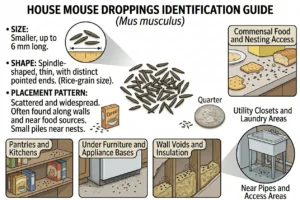
Droppings are the most obvious sign. They’re small (rice-sized), dark, and pellet-shaped. Fresh ones are moist and dark; old ones are gray and crumbly.
Gnaw marks show up on food packaging, cardboard, wood, plastic, and even electrical wires. Fresh marks look lighter than the surrounding material.
Grease marks or rub marks appear along walls, pipes, and edges where mice regularly travel. These dark, oily marks come from their fur.
Nesting material indicates an active nest nearby. You might find shredded paper, fabric, or insulation piled in corners or hidden spaces.
Urine stains and smell are noticeable in heavily trafficked mouse areas. The smell is musty and ammonia-like.
Scratching or scurrying sounds, especially at night, tell you mice are active in walls, ceilings, or attics.
Mouse tracks can sometimes be seen in dust. Look for tiny paw prints (four toes on front feet, five on back).
How to Prevent Mice From Getting Into Your Home
Seal every gap and crack you can find. Focus on openings larger than ¼ inch, but seal smaller ones too. Use appropriate materials for each location.
Store food in hard plastic, glass, or metal containers with tight lids. Mice can chew through cardboard, paper, and thin plastic easily.
Keep your home clean, especially kitchens and dining areas. Don’t leave food out, clean up crumbs promptly, and take out garbage regularly.
Reduce clutter, especially in basements, garages, and storage areas. The more open and organized your spaces are, the less attractive they are to mice.
Use plastic storage bins with lids instead of cardboard boxes. This protects your stored items and eliminates potential nesting sites.
Fix moisture problems including leaky pipes, dripping faucets, and condensation issues. Reducing available water makes your home less attractive.
Trim vegetation away from your house. Keep bushes, trees, and grass cut back so there’s at least a 12-inch clear zone around your foundation.
Don’t store firewood, lumber, or debris against your house. These create shelter for mice and give them cover while they explore for entry points.
When Should You Call a Pest Control Professional?
If you’re finding mice in multiple areas despite your sealing efforts, professionals can identify entry points you’re missing and implement comprehensive solutions.
When you have a large infestation (seeing multiple mice daily or finding droppings everywhere), professional exterminators have the tools and knowledge to handle it effectively.
If mice are getting into areas you can’t access or identify (inside walls, under concrete slabs, in complicated mechanical spaces), professionals have inspection tools like cameras to locate problems.
When you’ve found chewed electrical wiring, call both an electrician and pest control. This is a fire hazard that needs immediate professional attention.
For ongoing problems where mice keep returning despite your efforts, professionals can identify why your prevention methods aren’t working and implement better solutions.
Conclusion
Mice can get into an incredibly wide range of areas in and around your home. From tiny foundation cracks to the space behind your refrigerator, very few areas are truly mouse-proof without proper sealing and prevention.
Understanding all the potential entry points and access areas is the first step toward effective mouse control. You can’t protect what you don’t know about.
The key to keeping mice out is being thorough. It’s not enough to seal one or two obvious entry points. You need to inspect your entire home systematically and address every vulnerability you find.
Regular inspection and maintenance are important because new gaps and entry points develop over time as your house ages and materials deteriorate. Check your home at least twice a year and address any new issues promptly. The effort you put into prevention now will save you from dealing with a much bigger mouse problem later.

Hi, my name is Ezra Mushala, i have been interested animals all my life. I am the main author and editor here at snakeinformer.com.