
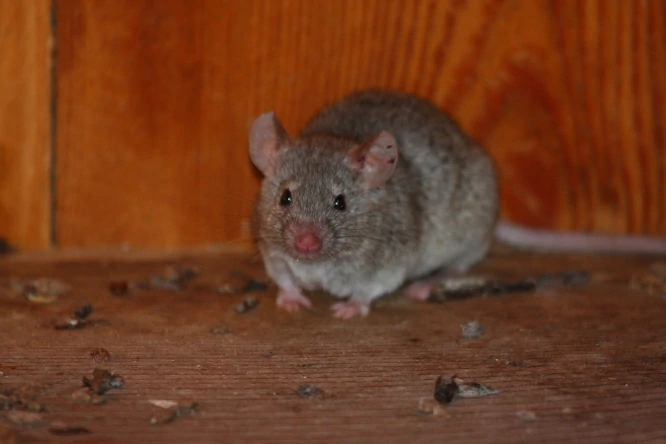
Basements are often the forgotten part of our homes. We use them for storage, laundry, or maybe a workshop, but we don’t spend as much time thinking about their condition as we do the main living areas.
This lack of attention can make your basement the perfect entry point for mice looking for shelter, especially as temperatures drop.
With their proximity to the ground and numerous potential openings, basements offer mice multiple ways to get inside. Can mice get in through the basement?
Yes, mice can definitely get in through the basement. Basements have numerous entry points including foundation cracks, gaps around utility lines, window frames, door seals, floor drains, and vents. Since basements are at or below ground level, they’re easily accessible to mice traveling along your foundation.
Your basement is actually one of the most vulnerable parts of your home when it comes to mouse entry.
The combination of being underground, having multiple penetrations for utilities, and often being less finished than upper floors creates dozens of potential access points.
Why Basements Are So Vulnerable to Mice
Basements are at ground level or below, which is exactly where mice naturally live and travel. They don’t have to climb or work hard to reach basement entry points.
The temperature in basements stays relatively stable year-round. In winter, this warmth is really attractive to mice looking for shelter from the cold.
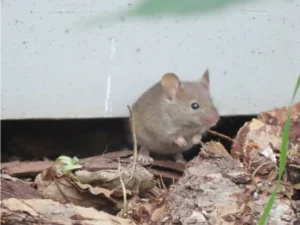
Many basements are damp or have moisture issues. This creates an environment where insects thrive, and insects are a food source for mice.
Basements often have clutter, stored items, and dark corners. These provide perfect hiding spots and nesting areas for mice once they get inside.
The concrete foundation and walls develop cracks over time. Even tiny cracks can let mice through, and these cracks are often hidden behind stored items or in dark corners where you won’t notice them.
Common Entry Points in Basements
Foundation cracks are probably the most common way mice get into basements. Concrete naturally develops cracks as it ages and as your house settles. A crack as thin as ¼ inch is plenty big enough for a mouse.
Gaps around utility penetrations (where water pipes, gas lines, electrical conduits, and cables enter) often have spaces around them. These were drilled larger than needed to make installation easier, and the gaps weren’t always sealed properly.
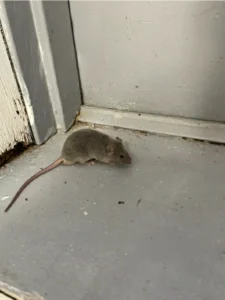
Basement windows are notorious entry points. The frames often have gaps where they meet the foundation, and the window wells create protected areas where mice can work on getting through.
Floor drains can let mice in if they don’t have proper traps or if the traps have dried out. Mice can actually swim through drain pipes if they need to.
The gap where your foundation meets your siding creates a pathway around your house. Mice can travel along this gap and find multiple ways into your basement.
Door seals on exterior basement doors wear out over time. A gap of even ¼ inch under the door is enough for a mouse to squeeze through.
Basement vents (for ventilation or dryer exhaust) might be missing screens or have damaged covers that don’t keep mice out anymore.
How Mice Find and Use These Entry Points
Mice explore along the foundation of your home looking for openings. They use their whiskers to detect gaps and holes in the dark.
When they find a potential entry point, they’ll test it by trying to fit their head through. If their head fits, the rest of their flexible body can follow.
Mice can feel air movement from gaps and cracks. They’re drawn to these spots because the air movement tells them there’s a space behind the opening.
Once they find a small gap, they’ll chew around the edges to make it bigger if needed. They can chew through many building materials including wood, plastic, and even soft concrete.
After one mouse finds a way in, others will follow. Mice leave scent trails that other mice can detect, so one entry point quickly becomes a highway for multiple rodents.
Signs That Mice Are Getting Into Your Basement
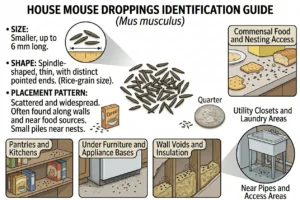
Mouse droppings are the most obvious sign. They’re small (about the size of a grain of rice), dark, and pellet-shaped. You’ll usually find them along walls, in corners, or near food sources.
You might hear scratching, scurrying, or squeaking sounds, especially at night when mice are most active. These sounds often come from walls, ceilings, or from behind stored items.
Finding shredded paper, fabric, or insulation means mice are building nests in your basement. They’ll often nest in stored boxes, old furniture, or in wall cavities.
Gnaw marks on stored items, cardboard boxes, or building materials are clear evidence. Fresh gnaw marks look lighter than the surrounding material.
A musty or ammonia-like smell indicates mouse urine. This smell is often strongest in areas where mice are nesting or traveling regularly.
Grease marks or rub marks along walls and baseboards show where mice regularly travel. These dark, oily marks come from their fur.
How to Find and Seal Foundation Cracks
Inspect your entire foundation, inside and out. Use a bright flashlight and look carefully along the floor, walls, and where the floor meets the walls.
Mark any cracks you find with chalk or tape so you can find them again when you’re ready to seal them. Even hairline cracks should be noted.
For small cracks (less than ½ inch wide), use a concrete crack filler or hydraulic cement. Clean out the crack first to remove loose material, then apply the filler according to the product directions.
For larger cracks, you might need to use expanding foam first to fill the void, then cover it with hydraulic cement. The foam fills the space and the cement provides a hard, mouse-proof surface.
For very large cracks or structural damage, you should call a professional. These might indicate foundation problems that need expert repair.
After sealing, monitor the cracks for a few months. If they reopen, you might have foundation movement that needs professional attention.
How to Seal Gaps Around Pipes, Wires, and Cables
Locate every spot where pipes, wires, or cables enter your basement. This includes water supply lines, drain pipes, electrical conduits, phone and cable lines, and gas pipes.
Check for gaps around each penetration. You’re looking for any space between the utility line and the hole it passes through.
Use expanding foam for gaps larger than ½ inch. Apply it carefully and let it cure completely before trimming off the excess.
For smaller gaps, use caulk that’s designed for both indoor and outdoor use. Apply it around the entire perimeter of the penetration.
For a more durable solution, stuff copper mesh or stainless steel wool into the gap first, then cover it with hydraulic cement or mortar. Mice can’t chew through metal mesh.
Remember that some utilities (like gas lines) need special consideration. If you’re not sure how to seal around a gas line safely, call a professional.
How to Keep Mice Out Through Basement Windows
Inspect every basement window from both inside and outside. Look at the frame, the glass, the window well, and any screens or covers.
Check the caulk around the window frame. If it’s cracked, missing, or pulling away from the wall, remove the old caulk and reapply fresh exterior-grade caulk.
Make sure windows close and latch properly. If they don’t, the gaps can let mice in. Adjust or repair the latching mechanism as needed.
Install or repair window well covers. These clear plastic or metal covers keep debris and animals out of window wells while still allowing light in.
Check for gaps between the window well and your foundation. Fill any gaps with gravel or seal them with concrete.
If your windows have screens, make sure they’re in good condition with no holes or tears. Replace damaged screens immediately.
Can Mice Come Up Through Basement Floor Drains?
Floor drains should have a trap that holds water and prevents sewer gases (and mice) from coming up through the drain. If the trap dries out, it doesn’t work.
Pour water down your floor drains regularly to keep the traps filled. A gallon of water every few months is usually enough.
If you have a floor drain that you never use, consider sealing it. You can install a drain plug or cover specifically designed for this purpose.
For drains you need to keep functional, install a backwater valve or drain cover with very fine mesh that allows water through but keeps mice out.
If you think mice are coming through a drain and you can’t figure out why, call a plumber. There might be a problem with the drain line or trap that needs professional repair.
How to Seal Gaps Around Basement Doors
Check the seal (or sweep) at the bottom of your basement door. If you can see light under the door when it’s closed, mice can get through.
Replace worn door sweeps with new ones. Measure your door width and buy a sweep that’s the right size. Most attach with screws and are easy to install yourself.
Check the weatherstripping around the sides and top of the door frame. Replace any weatherstripping that’s cracked, compressed, or pulling away.
Make sure the door closes fully and latches properly. If it doesn’t, adjust the hinges or strike plate so the door sits tight in the frame.
For doors that lead to exterior bulkhead stairways, inspect the bulkhead doors too. These often have gaps where they meet the foundation or where the two doors meet in the middle.
How to Protect Basement Vents and Other Openings
Locate all vents in your basement including dryer vents, foundation vents, and any other exhaust or intake vents.
Make sure every vent has a cover or screen in good condition. Replace any that are missing, rusted, or damaged.
For dryer vents, use a vent cover with a flap that opens when the dryer is running but closes when it’s not. This keeps mice out while allowing proper dryer ventilation.
Foundation vents should have ¼-inch hardware cloth over them. This fine mesh allows airflow but keeps mice and insects out.
Check that vent covers are securely attached. Mice can push aside covers that are loose or only held on with weak clips.
What to Do If Mice Are Already in Your Basement
Start by identifying and sealing all entry points immediately. Use whatever materials you have available, even if it’s just a temporary fix, to stop more mice from getting in.
Set snap traps along walls where you’ve seen signs of mouse activity. Place them perpendicular to the wall with the trigger end facing the wall.
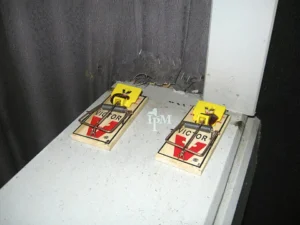
Use peanut butter as bait. It’s more effective than cheese and mice can’t grab it and run like they can with solid foods.
Check traps daily and dispose of any caught mice in sealed plastic bags in your outside trash. Wear gloves when handling traps with dead mice.
Clean up droppings and nesting materials while wearing gloves and a mask. Mouse waste can carry diseases, so take it seriously.
Use a disinfectant solution to clean areas where mice have been. This kills bacteria and removes the scent trails that attract other mice.
If you have a serious infestation or if mice keep coming back despite your efforts, call professional pest control. They have access to stronger tools and can identify entry points you might have missed.
How to Prevent Mice From Returning to Your Basement
Keep your basement clean and organized. The less clutter you have, the fewer places mice have to hide and nest.
Store items in plastic bins with tight lids rather than cardboard boxes. Mice can easily chew through cardboard but hard plastic is much more difficult.
Don’t store food in your basement unless it’s in mouse-proof containers. This includes pet food, bird seed, and even things like holiday decorations that might have food remnants.
Fix any moisture problems in your basement. Use a dehumidifier if needed, fix leaks promptly, and make sure water drains away from your foundation outside.
Inspect your basement at least twice a year for new cracks, gaps, or signs of mice. Catching problems early makes them much easier to fix.
Keep the area around your foundation clear of debris, firewood, and vegetation. This removes shelter and makes mice less likely to explore near your basement.
Conclusion
Your basement is definitely one of the most common ways mice get into homes. The combination of being at ground level, having multiple utility penetrations, and often having foundation cracks creates numerous entry points.
The good news is that most basement entry points can be sealed with some basic materials and tools. Focus on finding and sealing every gap, crack, and opening you can find.
Don’t ignore small cracks or tiny gaps. Remember that mice only need an opening about ¼ inch wide to squeeze through. What looks insignificant to you is a wide-open door to a mouse.
Regular inspection and maintenance are key to keeping mice out of your basement long-term. Check your basement at least twice a year and fix any new problems immediately. Taking the time to mouse-proof your basement now will save you from dealing with an infestation later.

Hi, my name is Ezra Mushala, i have been interested animals all my life. I am the main author and editor here at snakeinformer.com.