
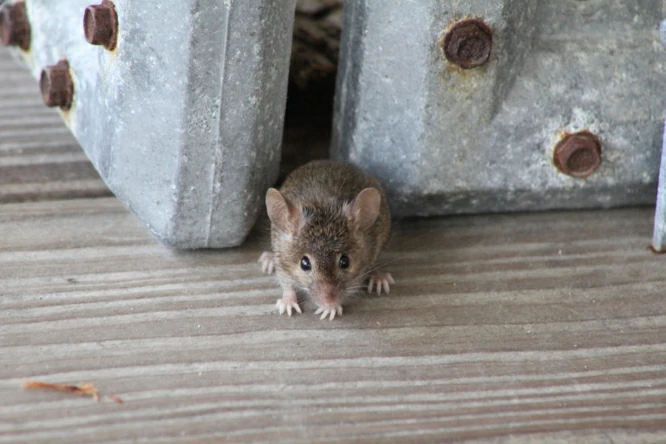
Window air conditioners are a great way to keep your home cool during hot summer months. But if you’ve noticed signs of mice in your home, you might be wondering if these cooling units are giving rodents an easy way inside.
The gaps and openings around window AC units can be really inviting to mice looking for shelter. Can mice get in through window air conditioners?
Yes, mice can definitely get in through window air conditioners. The gaps around the unit, damaged seals, and spaces where the accordion panels meet the window frame create perfect entry points. Mice only need an opening about the size of a dime (roughly ¼ inch) to squeeze through.
Window air conditioners are actually one of the more common ways mice get into homes. The installation process naturally creates small gaps and spaces that are hard to seal completely, and mice are experts at finding and using these openings.
Why Window AC Units Are Easy Entry Points for Mice
Window air conditioners create multiple opportunities for mice to get inside your home. When you install one, you’re basically creating a bridge between the outside and inside of your house.
The accordion panels on the sides of the unit are usually made of thin plastic or foam. These materials are really easy for mice to chew through if they can’t find an existing gap.

Even if you think you’ve sealed everything tight, temperature changes cause the materials to expand and contract. This creates tiny gaps over time that mice can exploit.
Mice are also drawn to the warmth that radiates from the back of the unit during cooling cycles. In cooler months, this warmth is like a beacon telling them there’s a cozy place nearby.
Common Entry Points Around Window AC Units
The most obvious entry point is the space between the accordion panels and the window frame. These panels rarely fit perfectly flush against the frame, leaving small gaps along the edges.
The bottom of the unit is another vulnerable spot. If the AC isn’t level or doesn’t sit flush against the windowsill, mice can slip underneath and get inside.

Where the unit itself meets the window, there’s often a gap. This happens because window AC units are designed to fit a range of window sizes, so they rarely create a perfect seal.
The drain hole at the bottom of many units also provides an entry point. While it’s usually small, mice can sometimes squeeze through or chew around it to make the opening bigger.
Any cracks or damage to the window frame itself become even more accessible when an AC unit is installed. The unit can actually hide these damaged areas, making them harder for you to notice and fix.
How Mice Actually Get Through These Openings
Mice have incredibly flexible bodies that let them squeeze through openings that look way too small. Their skulls are the widest part of their body, and if their head fits, the rest of their body can follow.
They’ll test potential entry points with their whiskers first. If their whiskers fit through an opening, they know their body will fit too.
When they find a gap that’s almost big enough, they’ll chew around the edges to make it larger. The soft foam and plastic materials around window AC units are really easy for them to gnaw through.
Mice are also surprisingly good climbers. They can scale the outside wall of your house, walk along window ledges, and investigate any opening they find around the AC unit.
Once one mouse finds a way in, others will follow. Mice leave scent trails that other mice can detect and follow, so one entry point can quickly become a highway for multiple rodents.
Signs That Mice Are Using Your AC Unit to Get In
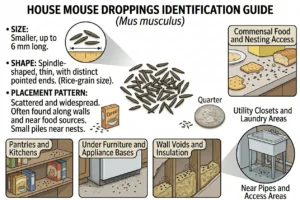
One of the first signs is finding droppings near the window where your AC is installed. Mouse droppings are small, dark, and pellet-shaped (about the size of a grain of rice).
You might hear scratching or scurrying sounds coming from the area around the AC unit, especially at night when mice are most active.
Chew marks around the accordion panels or foam insulation are a clear sign. Fresh chew marks will look lighter in color compared to the surrounding material.
If you notice a musty or urine-like smell near the window, this could mean mice are regularly using that area as an entry point or even nesting nearby.
Finding nesting material like shredded paper, fabric, or insulation near the AC unit is another red flag. Mice often build nests close to their entry points.
How to Seal Window AC Units Against Mice
Start by inspecting the entire perimeter of your AC unit during daylight hours. Look for any gaps, cracks, or openings where light comes through from outside.
Use steel wool to fill smaller gaps around the unit. Mice can’t chew through steel wool, and it’s flexible enough to stuff into irregular spaces.
Apply exterior-grade caulk over the steel wool and along any seams or joints. Make sure you’re using a caulk that’s designed for outdoor use and can handle temperature changes.
For larger gaps, especially on the sides where the accordion panels are, consider using foam board insulation cut to fit. You can secure it with weatherproof tape or additional caulking.
Install a trim kit if your AC unit didn’t come with one. These kits are specifically designed to seal the gaps around window units and make them more secure.
Check the weatherstripping around your window. If it’s old or damaged, replace it to create a better seal when the window is closed against the AC unit.
Additional Protection Measures
Consider installing hardware cloth (a type of metal mesh) over the back of the AC unit where it faces outside. This prevents mice from climbing into the unit itself from the exterior.
Make sure the drain hole has a proper cover or screen. Some units come with these, but if yours doesn’t, you can add a small piece of mesh secured with waterproof adhesive.

Keep the area around the AC unit clean and free of debris. Mice like to hide in clutter, and having a clear area makes it less attractive to them.
Trim any tree branches or vegetation that comes close to your window. Mice use these as highways to reach higher levels of your house.
Apply peppermint oil around the perimeter of the AC unit (on the inside). Mice really don’t like the smell, and it can work as a natural deterrent. You’ll need to reapply it regularly though.
What to Do During Off-Season Months
If you remove your window AC unit during winter, inspect the window carefully after taking it out. Fill any gaps or cracks in the window frame before closing it up.
If you leave the unit in place year-round, the risk actually increases during colder months. Mice are actively looking for warm places to shelter when temperatures drop.
Consider covering the exterior side of the unit with a heavy-duty AC cover during months when you’re not using it. This adds an extra barrier against rodents.
Check your seals at least once a month during off-season. Temperature fluctuations can cause materials to crack or separate, creating new entry points.
When Professional Help Is Needed
If you’re finding signs of mice inside your home despite sealing the AC unit, you might have multiple entry points. A professional pest control inspection can identify all the ways mice are getting in.
If the infestation is really bad (you’re seeing multiple mice or finding droppings daily), professional exterminators can set up a comprehensive treatment plan.

Sometimes the problem isn’t just the AC unit but also damage to the window frame or surrounding wall. A contractor might need to repair structural issues before you can effectively keep mice out.
If you live in an apartment or rental property, contact your landlord or property management immediately. They’re responsible for pest control and sealing entry points in most rental agreements.
Other Ways Mice Might Be Getting In
While you’re checking your window AC unit, it’s worth inspecting other potential entry points around your home. Mice rarely rely on just one way in.
Check where utility lines enter your house. The holes drilled for pipes, cables, and wires often have gaps around them that mice can exploit.
Look at your home’s foundation for any cracks or gaps. Even small foundation cracks can let mice inside, especially if they lead to your basement or crawl space.
Inspect your garage door seal. If there’s a gap at the bottom when the door is closed, mice can walk right in.
Dryer vents, bathroom vents, and kitchen exhaust vents can all be entry points if they don’t have proper covers or if the covers are damaged.
Conclusion
Window air conditioners definitely can let mice into your home if they’re not properly sealed. The gaps around the unit, accordion panels, and connection points create multiple opportunities for these small rodents to squeeze through.
The good news is that with some steel wool, caulk, and regular inspection, you can seal these entry points effectively. Focus on filling every gap you can find, no matter how small it looks.
Remember that mice only need a tiny opening (about ¼ inch) to get inside. What looks like a minor gap to you is a wide-open door to a mouse.
If you’re dealing with an active mouse problem, sealing your window AC unit should be part of a larger strategy that includes checking all potential entry points around your home. Taking the time to do this now will save you from bigger headaches down the road.

Hi, my name is Ezra Mushala, i have been interested animals all my life. I am the main author and editor here at snakeinformer.com.