
Brick vents (also called air bricks or foundation vents) are designed to provide airflow to crawl spaces, basements, and the areas under your floors. They’re an important part of keeping these spaces dry and preventing moisture damage.
But while these vents are doing their job of circulating air, they might also be giving mice an easy way into your home. If you’ve noticed signs of rodents, you might be looking at those brick vents and wondering if they’re the problem. Can mice get in through brick vents?
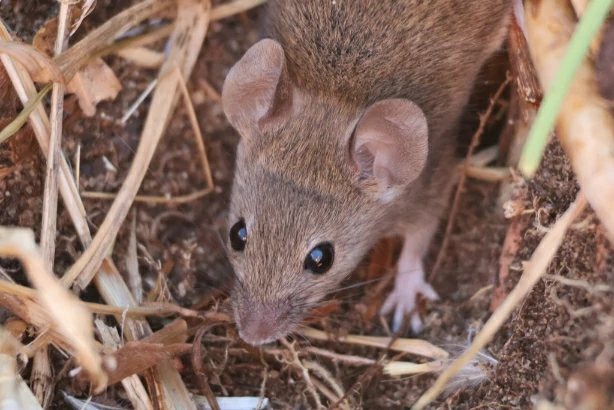
Yes, mice can easily get in through brick vents, especially if the vents are damaged, missing their screens, or have openings larger than ¼ inch. Standard brick vents have multiple openings that are often big enough for mice to squeeze through, and they’re usually located near ground level where mice naturally travel and explore.
Brick vents are actually one of the most common entry points for mice getting into homes. They provide direct access to protected spaces under your house, and many older homes have vents that are damaged or were never properly screened in the first place.
Why Brick Vents Are Easy Entry Points for Mice
Brick vents are designed with multiple openings to allow airflow. These openings, or slots, are often ½ inch to 1 inch wide, which is way more than enough space for a mouse to fit through.
They’re installed at ground level or very close to it. This puts them right in the path that mice naturally follow when they’re exploring around the outside of your home.

Many brick vents face directly into your crawl space or basement. Once a mouse gets through the vent, it’s immediately in a protected area where it can nest or explore further into your home.
Older brick vents often don’t have screens, or the screens have rusted away or been damaged over the years. Even homes built with screens can lose that protection over time.
The vents are usually dark inside, which mice prefer. Mice are most active at night and feel safer in dark, enclosed spaces where predators can’t easily spot them.
How Mice Actually Use Brick Vents to Get Inside
Mice explore the perimeter of buildings looking for food, shelter, and water. When they come across a brick vent, they can immediately tell it’s an opening that leads somewhere protected.
They’ll approach the vent and test the openings with their whiskers. If the space seems large enough, they’ll try to squeeze through.
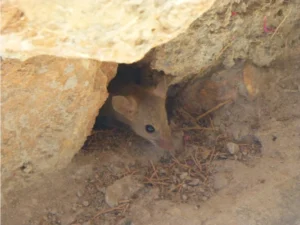
A mouse can fit through any opening that its skull can fit through. Since their bodies are really flexible and their bones can compress slightly, they can squeeze through spaces as small as ¼ inch (about the width of a pencil).
Once inside the vent opening, the mouse has direct access to your crawl space or basement. From there, it can travel through floor joists, find gaps around pipes and wires, and potentially make its way into your main living areas.
Even if the mouse stays in the crawl space, you’ve got a problem. Mice will nest there, leave droppings, and their urine can create odors and health hazards.
Which Types of Brick Vents Are Most Vulnerable to Mice?
Traditional terracotta air bricks have multiple rectangular slots. These are probably the most common type, especially in older homes. The slots are usually ½ inch or wider, making them easy for mice to enter.
Plastic brick vents are more common in newer construction. They’re designed to look like brick but are made from durable plastic. Many come with built-in screens, but the screens can break or warp over time.
Metal brick vents are less common but more durable. However, even metal vents can rust, and the openings can still be large enough for mice if they’re not properly screened.
Louvered brick vents have angled slats instead of rectangular holes. While the design makes it slightly harder for mice to enter, determined rodents can still squeeze through gaps between the slats.
Some brick vents are flush with the wall, while others are recessed. Recessed vents can actually be worse because they create a small sheltered area where mice can hide while they work on getting through.
Signs That Mice Are Using Your Brick Vents
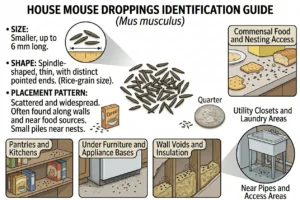
Look for mouse droppings near the vents on both the outside and inside (in your crawl space or basement). Fresh droppings are dark and slightly moist, while older ones are gray and crumbly.
You might see small paw prints in the dust around vents. Mouse tracks are tiny, with four toes visible on front feet and five on back feet.
Rub marks (dark, greasy smudges) along the edges of the vent opening indicate that mice are regularly traveling through that spot. These marks come from oils in their fur.
If you notice a musty or ammonia-like smell near your brick vents, this could be from mouse urine. The smell is often stronger in enclosed spaces like crawl spaces.
Finding nesting material like shredded paper, fabric, or insulation near the vents is a clear sign. Mice often build nests close to their entry points.
Hearing scratching or scurrying sounds in your walls, floors, or basement, especially at night, means mice are likely active in those areas.
How to Secure Brick Vents Against Mice
The most effective solution is installing hardware cloth (metal mesh) over your brick vents. Use ¼-inch mesh, which is small enough to keep mice out while still allowing airflow.
Measure each vent opening and cut the hardware cloth to size. You want pieces that are larger than the vent opening so you can secure them properly.
Attach the hardware cloth using screws and washers, or use construction adhesive designed for outdoor use. Make sure the mesh is pulled tight against the vent with no gaps around the edges.
If your vents already have screens but they’re damaged, replace them completely. Don’t try to patch holes in screens because mice will just find or create new weak spots.
For a more permanent solution, you can replace old brick vents entirely with new ones that have built-in fine mesh screens. This is more work but gives you better long-term protection.
Check that the hardware cloth or screen extends into the vent opening slightly. This prevents mice from squeezing around the edges between the screen and the vent frame.
Temporary and Permanent Ways to Block Mice From Brick Vents
If you need a quick temporary fix, you can stuff steel wool into the vent openings. Mice can’t chew through steel wool, and it still allows some airflow.
However, steel wool will rust over time, especially in damp crawl spaces or areas with high humidity. It’s really only a short-term solution until you can install proper screening.
Copper mesh works better than steel wool because it doesn’t rust. You can stuff it into the vent openings similarly, but it’s more expensive.
For a permanent solution, hardware cloth secured with screws or heavy-duty construction adhesive is your best bet. It won’t rust (if you use galvanized or stainless steel mesh), and it can’t be pushed aside or chewed through.
Some people use expanding foam to seal vents, but this is generally a bad idea. It completely blocks airflow, which can lead to moisture problems. You need ventilation, just protected ventilation.
How to Maintain Proper Ventilation While Keeping Mice Out
Your crawl space or basement needs airflow to prevent moisture buildup, which can lead to mold, wood rot, and structural damage. So you can’t just seal up all your vents completely.
When you screen your vents, make sure you’re using mesh that’s fine enough to keep mice out but open enough to allow good air circulation. ¼-inch hardware cloth is the sweet spot.
Don’t reduce the total open area of your vents by more than 50%. If you’re using really fine mesh, you might need to install additional vents to maintain adequate airflow.
Check your vents seasonally to make sure the screens haven’t become clogged with dirt, leaves, or spider webs. Clogged screens can’t do their job of ventilating your crawl space.
In winter, you might be tempted to cover vents to keep cold air out. Don’t do this unless you have a proper vapor barrier and your crawl space is designed to be sealed. Trapped moisture in winter can cause serious damage.
What to Do If Mice Are Already Coming Through
First, stop any more mice from getting in by securing all your brick vents right away. Use whatever method you can implement quickly, even if it’s temporary like steel wool.
Set snap traps in your crawl space or basement near the vents where you’ve seen signs of activity. Place them along walls with the trigger end facing the wall.
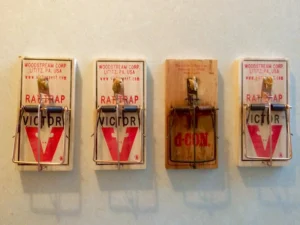
Use peanut butter or a small piece of chocolate as bait. These are more effective than cheese despite what cartoons might have told you.
Check and empty traps daily. Wear gloves when handling dead mice and dispose of them in sealed plastic bags in your outside trash.
After you’ve caught the mice, clean the affected areas. Wear a mask and gloves because mouse droppings can carry diseases. Use a disinfectant solution to clean surfaces.
If you’re dealing with a large number of mice or if they keep coming back despite your efforts, call a professional pest control service. They can identify all entry points and implement a comprehensive solution.
How to Inspect and Replace Old Brick Vents
Walk around your home’s exterior and count all your brick vents. Many people don’t realize how many they actually have until they look.
Inspect each vent closely. Look for cracks in the vent itself, missing screens, rust on metal components, or openings that seem larger than they should be.
Check the mortar around the vents. If the mortar is crumbling or has gaps, mice might be able to squeeze through around the vent rather than through it.
Inside your crawl space or basement, inspect the interior side of the vents. Sometimes the damage or gaps are more visible from the inside.
If a vent is badly damaged, it’s often easier to replace it than to try to repair it. New vents with built-in screens are relatively inexpensive and not too difficult to install.
When installing new vents, use fresh mortar to seal around the edges completely. Make sure there are no gaps between the vent and the surrounding brickwork.
What Other Foundation Entry Points Should You Check?
While you’re inspecting your brick vents, look at the rest of your foundation for other potential entry points. Mice rarely use just one way in.
Check for cracks in the foundation itself. Even small cracks can let mice through, and foundation cracks often get bigger over time.

Look at where utilities (water, gas, electric, cable) enter your home through the foundation. The holes for these utilities often have gaps around them that mice can exploit.
Inspect the gap between your foundation and siding. If there’s a space there, mice can use it as a pathway around your home’s exterior and find multiple entry points.
Check basement windows and window wells. The frames often have gaps, and window wells give mice a protected route to those windows.
Look at your basement door and any exterior crawl space access doors. The seals on these doors wear out over time and can create gaps large enough for mice.
How to Make Your Home Less Attractive to Mice
Keep vegetation trimmed back from your foundation and away from brick vents. Overgrown plants give mice cover when they’re exploring for entry points.
Don’t stack firewood, lumber, or other materials against your house. These create shelter and hiding spots that make mice feel safe while they look for ways inside.
Keep your yard free of debris and clutter. Piles of leaves, old junk, or construction materials give mice places to nest outside before they move into your home.
Remove food sources that might attract mice to your property. Store garbage in sealed cans, clean up fallen fruit from trees, and keep pet food indoors.
Fix any water leaks or drainage problems around your foundation. Standing water attracts insects, which in turn attract mice looking for food.
Consider installing a gravel barrier around your foundation. A 12-inch strip of gravel makes it less comfortable for mice to travel and can discourage them from approaching your vents.
Conclusion
Brick vents are definitely a common way for mice to get into homes. The openings are usually large enough for mice to squeeze through easily, and they’re located exactly where mice naturally travel along foundations.
Securing your brick vents with proper screening is one of the most important steps you can take to keep mice out of your crawl space and basement. Use ¼-inch hardware cloth and make sure it’s attached securely with no gaps.
Remember that you need to maintain ventilation while protecting against mice. Don’t seal vents completely, just screen them properly to allow airflow while keeping rodents out.
Regular inspection and maintenance of your brick vents will help prevent mouse problems before they start. Check your vents at least twice a year and replace any damaged screens or vents immediately. This small investment of time can save you from dealing with a much bigger rodent problem later on.

Hi, my name is Ezra Mushala, i have been interested animals all my life. I am the main author and editor here at snakeinformer.com.