
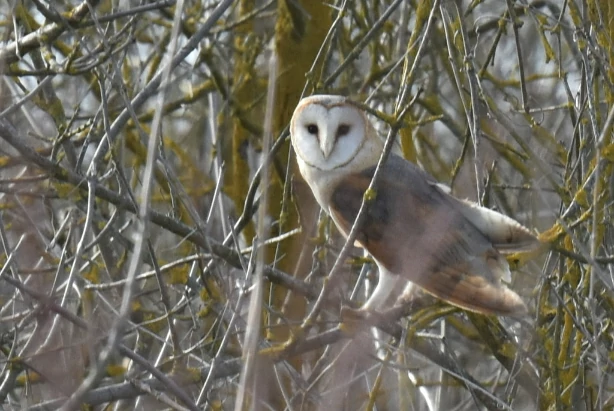
Owls are incredible hunters that help control rat and mouse populations naturally. But when people use rat poison, these helpful birds often become unintended victims.
The poison doesn’t just stay in the rats; it moves up the food chain and can kill the very predators we should be protecting. So what rat poison is safe for owls?
No rat poison is completely safe for owls. However, first-generation anticoagulants like warfarin, chlorophacinone, and diphacinone are the least dangerous options because they break down faster in a rat’s body and are less likely to build up to lethal levels in owls that eat poisoned rats. Snap traps and electronic traps are the only truly owl-safe rat control methods.
If you absolutely must use poison, first-generation anticoagulants give owls the best chance of survival. But even these aren’t truly “safe” because owls can still be poisoned if they eat multiple poisoned rats over a short time.
The safest choice is always to avoid poison altogether and use traps instead.
How Rat Poison Kills Owls
When an owl eats a rat that’s been poisoned, the poison enters the owl’s body. This is called secondary poisoning, and it’s a huge problem for owls, hawks, eagles, and other birds of prey.
Different rat poisons work in different ways, but most modern ones are anticoagulants. These poisons stop blood from clotting properly. The rat starts bleeding internally and eventually dies from blood loss.
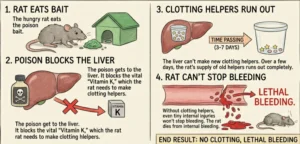
When an owl eats that poisoned rat, the anticoagulant goes into the owl’s system. If the owl eats just one poisoned rat, it might be okay, especially if the poison is a first-generation type that breaks down fairly quickly.
But owls don’t eat just one rat. A barn owl can eat three or four rats in a single night.
Each poisoned rat adds more anticoagulant to the owl’s body. The poison accumulates, building up to dangerous levels. Eventually, the owl starts bleeding internally just like the rats did.
You might find a dead owl with no visible injuries, but inside, it bled to death.
First-Generation vs. Second-Generation Anticoagulants
Not all rat poisons are equally dangerous to owls. Understanding the difference between first-generation and second-generation anticoagulants is really important.
First-generation anticoagulants include warfarin, chlorophacinone, and diphacinone. These were the original rat poisons developed in the 1950s and 1960s. They work, but rats usually need to eat them multiple times over several days to get a lethal dose.
These older poisons also break down in a rat’s body relatively quickly. If an owl eats a rat that consumed first-generation poison three or four days ago, most of the poison has already been metabolized and eliminated. The risk to the owl is much lower.
Second-generation anticoagulants include brodifacoum, bromadiolone, difenacoum, and difethialone. These were developed because many rat populations became resistant to the first-generation poisons.
They’re incredibly potent. A rat only needs to eat them once to get a lethal dose.
The problem is that second-generation anticoagulants persist in an animal’s body for a very long time, sometimes weeks or even months.
When an owl eats a rat poisoned with brodifacoum, that poison stays active in the rat’s liver and other organs. It then accumulates in the owl’s body and doesn’t break down quickly.
Studies have found that over 70% of dead barn owls, great horned owls, and other raptor species have rat poison in their systems. Almost all of this poison is the second-generation type.
Why Most People Use Second-Generation Poisons
If second-generation poisons are so dangerous to owls, why do people use them? The answer is simple: they work better and are more convenient.
With first-generation poisons, rats need to keep coming back to eat the bait over several days. This means you need to maintain the bait stations and make sure there’s always fresh bait available. Many homeowners don’t want to do this maintenance.
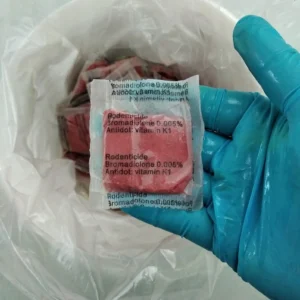
Second-generation poisons kill with a single feeding. You can put out the bait, and rats that eat it just once will die. This seems much easier and more effective.
Also, many rat populations have developed resistance to first-generation anticoagulants. If you use warfarin in an area where rats are resistant, it simply won’t work. You’ll waste time and money, and your rat problem won’t get solved.
Pest control companies often prefer second-generation poisons for these reasons. They’re more reliable and require fewer follow-up visits. But this convenience comes at a huge cost to owl populations and other wildlife.
Products That Are Least Harmful to Owls
If you absolutely must use rat poison and want to minimize harm to owls, look for products containing warfarin, chlorophacinone, or diphacinone as the active ingredient. These are the first-generation anticoagulants.
Some brand names that use these safer active ingredients include JT Eaton Anticoagulant Bait with diphacinone, Rodex Blox with diphacinone, and some formulations of Ramik Green with diphacinone. Always check the label to confirm the active ingredient.
However, even these “safer” options aren’t truly safe. An owl can still be poisoned if it eats enough contaminated rats. The risk is just lower compared to second-generation poisons.
Some areas have actually banned second-generation anticoagulants for residential use because of the harm they cause to wildlife.
California, for example, restricted the use of these poisons in 2021. Check your local regulations to see what’s allowed in your area.
Better Alternatives That Won’t Harm Owls
The only way to truly protect owls is to stop using poison altogether.
Snap traps are highly effective and kill rats instantly without any poison involved. Modern snap traps are much better than the old wooden ones. They’re more sensitive and kill more humanely.
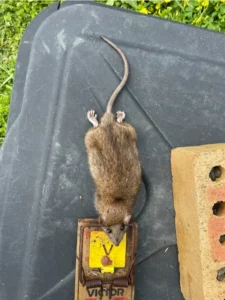
Electronic traps are another great option. These deliver a high-voltage shock that kills rats in seconds. They’re completely enclosed, so you don’t have to see or touch the dead rat. Just empty the trap into the trash and reset it.
Live traps let you catch rats without killing them, then release them far from your property. This method takes more work, and you need to check the traps frequently so trapped rats don’t suffer. But it’s completely safe for wildlife.
Exclusion is the best long-term solution. Find out how rats are getting into your home or building and seal those entry points. Rats can squeeze through holes the size of a quarter, so you need to be thorough. Use steel wool and caulk, or hardware cloth for larger gaps.
Remove food sources that attract rats. Don’t leave pet food outside overnight. Keep garbage in sealed containers. Clean up bird seed that falls from feeders. Pick up fallen fruit from trees. Without easy food access, rats will move somewhere else.
How to Help Owls in Your Area
Even if you don’t use rat poison yourself, you can help protect owls in other ways. Talk to your neighbors about the dangers of rodenticides. Many people genuinely don’t know that rat poison can kill owls and other wildlife.
Support local wildlife rehabilitation centers. These facilities treat poisoned owls and other animals. They need funding, volunteers, and supplies. Even a small donation helps.
Install owl boxes on your property if you have suitable habitat. Barn owls, screech owls, and other species will readily use nest boxes. A single barn owl family can eat thousands of rodents per year. They’re the best pest control you could ask for.
Contact your local representatives and ask them to support restrictions on second-generation anticoagulants. Several states and cities have passed laws limiting these poisons. Public pressure works.
If you find a sick or injured owl, call a licensed wildlife rehabilitator immediately. Don’t try to treat it yourself.
Rat poison symptoms in owls include lethargy, sitting in unusual places during the day, weakness, and sometimes visible bleeding. These birds need professional care.
Signs of Rat Poison in Your Environment
How do you know if rat poison is affecting owls in your area? There are some warning signs to watch for. Finding dead owls, hawks, or other raptors with no obvious cause of death is a red flag. These birds should be reported to your state wildlife agency.
Seeing owls or hawks acting strangely during the day can indicate poisoning. Healthy raptors are usually alert and quick to fly away. A bird that sits still, appears weak, or doesn’t react to your presence might be sick.
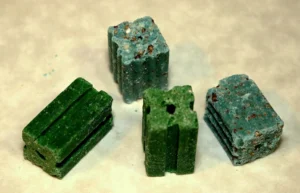
If you see bright blue, green, or red pellets or blocks around your neighborhood, that’s rat poison. Second-generation anticoagulants are almost always dyed these bright colors.
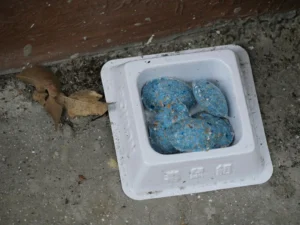
If you find them in places where children or pets could access them, contact your local animal control or health department.
Dead rats lying in the open during the day is another sign. Poisoned rats often become lethargic and less afraid of open spaces. They might die in places where healthy rats would never go.
What Pest Control Companies Should Do
Professional pest control companies have a responsibility to protect wildlife while managing rodent problems. The best companies have moved away from routine use of second-generation anticoagulants.
They should always start with an inspection to find out how rats are getting in and what’s attracting them. Then they should recommend exclusion and sanitation before suggesting poison.
When poison is necessary, they should use first-generation anticoagulants in tamper-resistant bait stations. These stations keep the poison away from non-target animals and reduce but don’t eliminate the risk to owls.
Some forward-thinking pest control companies now offer “raptor-safe” or “wildlife-friendly” pest management programs. These use only traps and exclusion methods, no poison at all. Ask pest control companies in your area if they offer this service.
The Bigger Picture
Rat poison and owls represent a larger problem with how we manage urban and agricultural pests. We’ve become dependent on chemical solutions that seem quick and easy but create cascading problems through the ecosystem.
Owls, hawks, and other predators evolved to control rodent populations naturally. When we poison the prey base, we’re essentially destroying our own pest control workforce. It doesn’t make sense.
Some cities and farms have successfully switched to integrated pest management that relies on natural predators. They install owl boxes, protect habitat for hawks and foxes, and use poison only as a last resort.
These programs work, but they require a shift in thinking. We need to see owls and other predators as partners in pest control, not just wildlife we should try not to harm accidentally.
Conclusion
No rat poison is truly safe for owls, but first-generation anticoagulants like warfarin, chlorophacinone, and diphacinone are far less dangerous than second-generation poisons.
They break down faster and are less likely to build up to lethal levels in owls that eat poisoned rats.
The safest option is to avoid poison completely and use snap traps, electronic traps, and exclusion methods instead. These kill rats effectively without putting owls and other wildlife at risk.
If we want to protect owl populations, we need to change how we think about pest control. Owls are incredibly effective at controlling rats naturally, but only if we stop poisoning their food supply. The choice is really up to us.

Hi, my name is Ezra Mushala, i have been interested animals all my life. I am the main author and editor here at snakeinformer.com.