
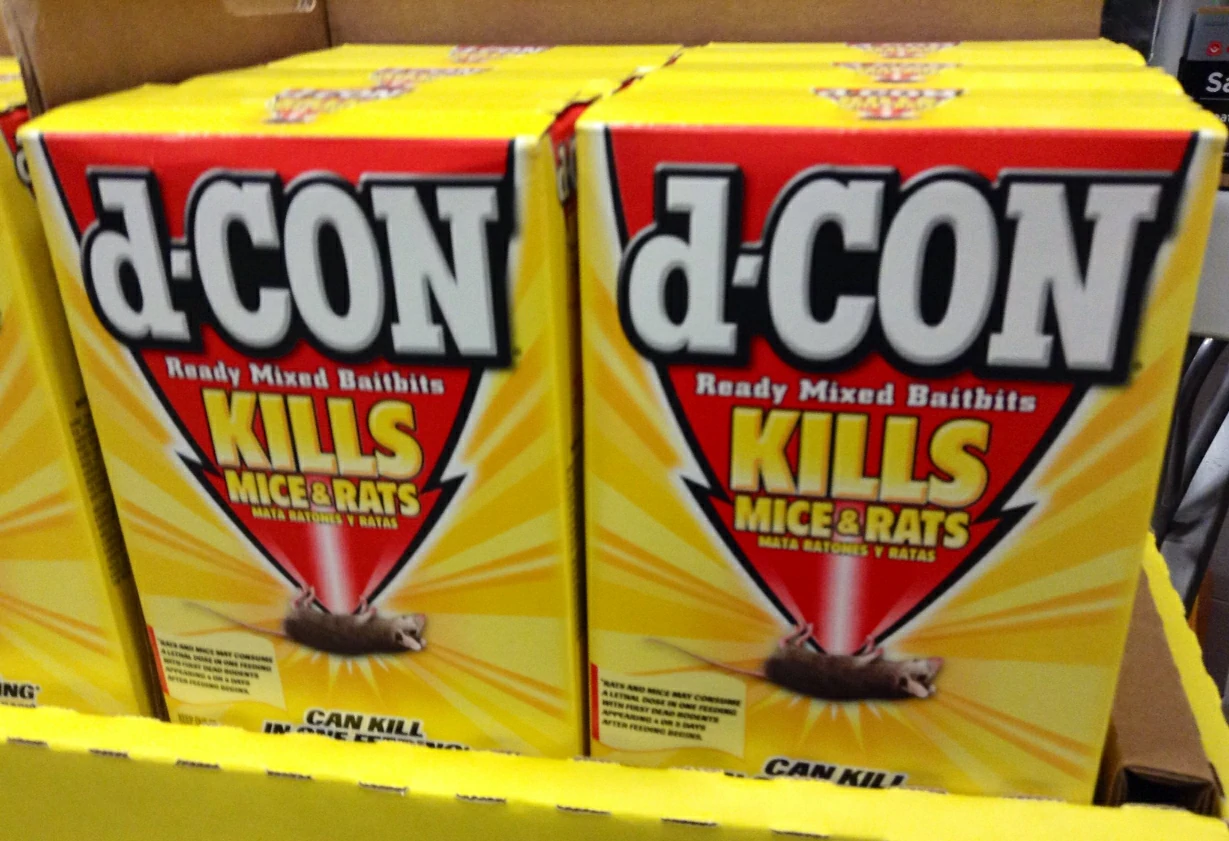
When you open a package of rat poison, one of the first things you’ll notice is the color. Most rat poisons come in bright blue or green, and they’re almost impossible to miss.
It’s not a natural color for food, so it seems like an odd choice for something meant to attract rats. So why is rat poison blue or green?
Rat poison is blue or green to warn humans and pets that the substance is toxic and not safe to eat. The bright, unnatural colors make it easy to spot the poison if it’s spilled or if a child or pet gets into it. Rats, however, don’t see these colors well, so the dye doesn’t stop them from eating the bait.
The color is a safety feature designed for you, not for the rats.
Manufacturers add these bright dyes to prevent accidental poisonings in humans and to make it obvious when poison is present in your home or yard.
How Rats See Color Compared to Humans
Rats don’t see the world the way you do. They have poor color vision and rely much more on their sense of smell and their ability to see in low light.
Rats are basically colorblind to red and green, which means they can’t tell these colors apart from shades of gray.

Blue and green rat poison doesn’t look “bright” or “unnatural” to a rat. It just looks like food. This is exactly what manufacturers want. The color warns you without scaring off the rats.
Research shows that rodents see best in the blue and UV light range, but they still don’t process colors the way humans do.
When a rat looks at a green pellet of poison, it doesn’t register as something dangerous or strange.
Does Rat Poison Color Attract Rats?
The color itself isn’t usually what attracts a rat to the bait. Rats rely heavily on smell and taste when deciding whether something is food.
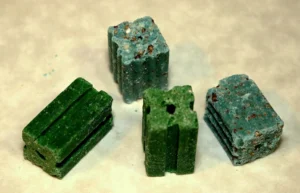
This is important because people sometimes assume that rats are attracted to the bright blue or green color. That’s not really the purpose of the dye.
The color is mainly there to make the bait easier for people to recognize.
A rat can still investigate the bait because it smells and tastes like food even though the color looks unusual to human eyes.
Why Blue and Green Are the Most Common Colors
Blue and green are chosen because they’re colors that don’t appear naturally in most foods that humans eat.
If you see something bright blue or green on your kitchen floor, you immediately know it’s not supposed to be there.
These colors also show up well against most backgrounds. Whether the poison falls on a dark floor, light carpet, or outdoor soil, you can spot it quickly.
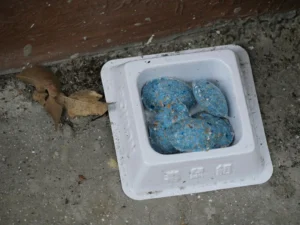
This is important for cleanup and safety.
Some rat poisons are also dyed red or purple, but blue and green are by far the most popular. They’ve become the standard colors people associate with rodent bait.
The Safety Reasons Behind Colored Rat Poison
The main reason rat poison is dyed is to prevent accidental poisonings. If poison looked like regular food pellets, crackers, or candy, someone could easily mistake it for something safe to eat.
This is especially important in homes with young children. Kids put things in their mouths without thinking. A bright blue or green pellet stands out as “weird” and “not food,” which can prevent a child from eating it.
The color also helps pet owners. If your dog gets into rat poison, you’ll likely see blue or green staining around their mouth or in their vomit.
This immediately alerts you to what happened, and you can get them to a vet faster.
How the Dye Helps with Diagnosis
When someone or a pet ingests rat poison, time is everything. The faster you can identify what was eaten, the faster treatment can begin. The bright color of the poison makes diagnosis much easier.
If a child is rushed to the emergency room and there’s blue staining around their mouth, doctors know right away to test for rat poison.
The same goes for veterinarians treating dogs or cats.
Some rat poisons also turn urine or stool blue or green after ingestion. This is another diagnostic clue that helps medical professionals figure out what’s going on quickly.
Why the Color Doesn’t Tell You Which Poison It Is
The color of rat poison isn’t a universal code for a specific chemical. A blue bait isn’t automatically an anticoagulant, and a green bait isn’t automatically a particular type of poison.
Manufacturers can use different dyes and colors for different products. That’s why you should never identify rat poison based only on whether it’s blue, green, red, or another color.
The active ingredient printed on the packaging is what tells you what type of poison you’re dealing with.
Is the Dye Itself Toxic?
The dye used in rat poison is generally not toxic on its own. It’s usually a food-grade coloring agent, similar to what you’d find in candy or drinks. The poison itself (the active ingredient like bromadiolone or diphacinone) is what’s dangerous.
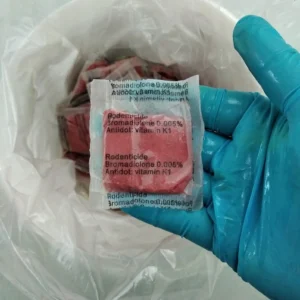
However, you still shouldn’t handle rat poison without gloves or wash your hands immediately after touching it. Even though the dye is harmless, the poison it’s coating is not.
The dye won’t hurt rats either. It passes through their system without causing harm. It’s purely there for human safety and identification purposes.
Do All Rat Poisons Come in Blue or Green?
Most rat poisons sold to consumers are blue or green, but not all of them. Some professional-grade poisons used by pest control companies might be different colors or even undyed.
There are also natural or organic rat poisons that don’t use synthetic dyes. These might be brown, tan, or gray because they’re made from grain-based ingredients without added coloring.
Still, if you’re buying rat poison at a hardware store or online, you can expect it to be bright blue or green. It’s become the industry standard for safety reasons.
Here is a table showing the different colors rat poison can come in:
| Rat Poison Color | How Common Is It? | What It Usually Looks Like | Why It May Be Used |
|---|---|---|---|
| Blue | Very common | Bright blue pellets, blocks, or nuggets | Makes the bait highly visible and clearly different from normal food |
| Green | Very common | Bright green pellets, blocks, or grain-based bait | Common warning color that makes the bait easy to recognize |
| Red | Common | Red, reddish-pink, or brick-red pellets and blocks | Used as a highly visible warning color |
| Pink | Common | Pink or reddish-pink pellets, grains, or blocks | Makes the bait stand out from ordinary food |
| Purple | Less common | Purple or dark violet pellets and blocks | Provides a strong visual warning that the material is not food |
| Teal | Less common | Blue-green or turquoise-colored bait | Used by some manufacturers as an alternative warning color |
| Brown | Less common | Brown grain, pellets, or blocks | May be used when little or no artificial dye is added |
| Tan | Less common | Light brown or beige grain-based bait | Can occur naturally from the ingredients when the bait is not strongly dyed |
| Gray | Less common | Gray pellets, blocks, or grain-based bait | May occur in undyed or naturally colored formulations |
| Yellow | Rare | Yellow pellets or blocks | Used by some products as a distinctive warning color |
| Orange | Rare | Orange or orange-red bait | Provides high visibility and helps distinguish the bait from food |
| Undyed / Natural | Less common | Natural grain, beige, brown, or gray appearance | Some formulations may contain little or no added coloring |
What Happens If Poison Loses Its Color?
Over time, rat poison can fade, especially if it’s exposed to sunlight, moisture, or heat. When the color fades, it becomes harder to spot, which reduces the safety benefit.

Faded poison is still just as toxic, but now it’s more dangerous because it’s less obvious. If you notice your rat poison has turned pale or lost its bright color, replace it with fresh bait.
Old, faded poison also tends to be less effective at attracting rats. The bait dries out, the scent fades, and rats become less interested in eating it.
Why Not Use Other Warning Methods Instead of Color?
You might wonder why manufacturers don’t just make rat poison taste bitter or smell bad to humans instead of relying on color. The problem is, anything that makes poison taste or smell bad to humans will also make it unappealing to rats.
Rats need to want to eat the bait for it to work. If you add a bitter taste to keep kids away, rats will avoid it too. Color is the perfect solution because it warns humans without affecting the rat’s decision to eat.
Some poisons do include bittering agents, but these are used carefully to avoid making the bait completely unpalatable to rodents.
Can Colorblind People Still Identify Rat Poison?
People who are colorblind might have trouble distinguishing blue or green rat poison from other objects, especially in low light. However, most rat poison packaging has clear labels and warnings that don’t rely on color alone.
The pellets or blocks are also usually shaped differently from regular food. They might be chunky, waxy, or have a distinct texture that feels wrong even if the color isn’t obvious.
If you’re colorblind and using rat poison, pay extra attention to where you place it and keep it in clearly labeled containers or bait stations.
Why Some Countries Require Colored Rat Poison by Law
In some countries, it’s actually illegal to sell rat poison that isn’t dyed. Regulations require manufacturers to add color as a safety measure to reduce accidental poisonings.
These laws came about after too many cases of children and pets being poisoned because they couldn’t tell the difference between rat bait and food.
Adding color was a simple fix that saved lives.
Even in places where it’s not required by law, most companies still dye their products because it’s considered a responsible practice.
What to Do If You Find Blue or Green Pellets in Your Home
If you spot blue or green pellets somewhere in your home and you didn’t put them there, treat them as rat poison until proven otherwise. Don’t touch them with bare hands.
It’s possible a previous tenant or homeowner left poison behind, or maybe a pest control company placed it without your knowledge. Either way, you need to handle it carefully.
Put on gloves, pick up the pellets, and dispose of them in a sealed bag. Then wash the area thoroughly. If you have pets or kids, check them for any signs they might’ve eaten the poison (drooling, vomiting, lethargy, blue staining around the mouth).
Does the Color Affect How Well the Poison Works?
The color of rat poison has no effect on how well it kills rats. The active ingredient is what matters, not the dye. A blue pellet works exactly the same as a green one or an undyed one.
Manufacturers choose the color based on safety and visibility, not effectiveness. As long as the poison contains the right active ingredient at the right concentration, it’ll work regardless of color.
Are There Clear or Translucent Rat Poisons?
You won’t find clear rat poison on the market for consumer use. It would defeat the entire purpose of the color coding safety system.

Clear poison would be nearly invisible, making it extremely dangerous.
Some liquid rat poisons might appear clear or pale, but they’re usually still tinted with dye and come in clearly labeled bottles that leave no doubt about what’s inside.
Why You Should Never Rely on Color Alone
The blue or green color is useful because it makes rat poison easier to recognize, but it’s only a warning sign.
It doesn’t tell you which chemical is inside, how dangerous the product is, or whether the bait is still effective.
For that information, you need to look at the product label. The color catches your attention, while the label tells you what you’re actually dealing with.
Conclusion
Rat poison is blue or green to protect you, your family, and your pets. The bright color makes it easy to spot and immediately signals that something toxic is present.
Rats can’t see these colors well, so the dye doesn’t stop them from eating the bait. It’s a simple but effective safety feature that’s saved countless lives by preventing accidental poisonings.
Whenever you use rat poison, the color is there to remind you to handle it with care and keep it away from anyone who might mistake it for food.
That unnatural blue or green isn’t just for show. It’s a critical warning that you should never ignore.

Hi, my name is Ezra Mushala, i have been interested animals all my life. I am the main author and editor here at snakeinformer.com.