
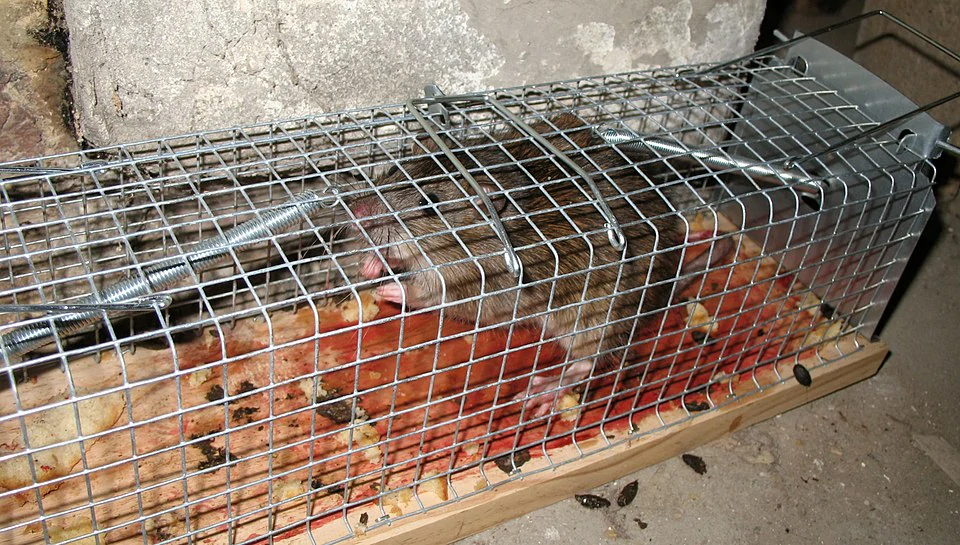
You set up your cage trap perfectly, used great bait, and waited patiently. Finally, you checked the trap and found it triggered with the door closed. Success!
But when you looked closer, there was no rat inside. The bait was gone, the trap was sprung, and somehow the rat got away. This is one of the most frustrating things that can happen when you’re trying to catch rats. Why did the rat escape your cage trap?
Rats escape cage traps through gaps in the cage construction (especially around the door or at seams), by pushing open doors that don’t latch securely, by squeezing through wire mesh with openings larger than 1/2 inch, or occasionally by the door not closing fast enough before the rat backed out. Less commonly, other animals or vibrations can trigger the trap without anything being inside.
A rat escaping your trap means you need to figure out what went wrong and fix it before trying again. Let’s look at all the possible causes and solutions.
How Rats Can Squeeze Through Small Gaps
One of the most common reasons rats escape is because there are gaps in your trap that you didn’t notice. Rats are incredibly flexible and can squeeze through openings that seem impossibly small.
A rat can fit through any gap that its skull can fit through. For most rats, this means openings of about 3/4 inch to 1 inch in diameter. If there’s a gap that size anywhere in your trap, the rat can escape.
Common places where gaps occur include corners where pieces of wire mesh meet, along seams where you’ve wired sections together, and especially around the door frame where the door meets the cage body.
When the door closes, there’s usually a small gap between the edge of the door and the frame. On commercial traps, this gap is minimized through careful manufacturing. On cheaper traps or homemade traps, this gap can be large enough for a rat to squeeze through.
The wire mesh spacing itself can also be a problem. If you’re using mesh with openings larger than 1/2 inch, rats might be able to squeeze between the wires, especially young or small rats.
Check your trap very carefully by looking at it from all angles in good light. Run your fingers along all the seams and joints. Any gap you can fit your pinky finger through is probably large enough for a determined rat to escape.
The Door Didn’t Close Fast Enough
Another common escape scenario is that the door triggered and started to close, but the rat was fast enough to back out before it shut completely.
This usually happens when the door mechanism is weak or slow. The spring that pulls the door shut might not have enough force, or the hinge might be stiff and slow the door’s swing.
Rats are incredibly quick animals with excellent reflexes. From the moment they step on the trigger plate to the moment they realize something is wrong, they can react in a fraction of a second.
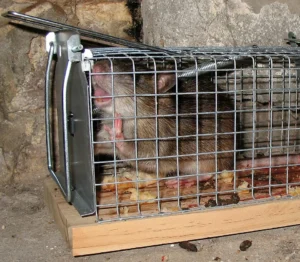
If your door takes more than a half-second to swing completely shut, a rat might be able to scramble backward out of the trap before the door closes on them.
You can test this by setting your trap and triggering it yourself. Watch how fast the door closes. It should slam shut almost instantly with a definite bang. If it swings shut slowly or hesitates, you have a problem.
Some traps have doors that are too light. A heavier door (or adding a small weight to the bottom edge) can increase the closing speed through momentum and gravity.
Problems With the Door Latch
Many cage traps have a latch mechanism that’s supposed to keep the door closed after it springs shut. If this latch doesn’t work properly, rats can push the door back open from inside.
Some latches are just too weak. They catch when the door closes, but a rat pushing against the door from inside can pop them open. Rats are surprisingly strong for their size.
Other latches don’t engage at all because they’re misaligned. The door closes but the latch doesn’t actually hook or click into place. A rat can immediately push the door open again.

Sometimes the latch works fine when the trap is empty, but when a rat is inside thrashing around and pushing on the door, it can work itself loose.
Check your latch by closing the door manually (without triggering the trap) and then trying to push the door open from inside with your finger. If you can push it open easily, a rat definitely can.
If your trap doesn’t have a latch at all (some simpler designs rely on gravity alone to keep the door shut), this could be your problem. Adding a simple hook latch can solve it.
Wire Mesh Issues
The quality and type of wire mesh used in your trap makes a big difference. Cheap or incorrect mesh can allow escapes.
Wire mesh with openings larger than 1/2 inch is risky for rat traps. While adult rats might not fit through the openings, young rats or particularly small adults might be able to squeeze through.
The wire itself can also be too thin or weak. Rats have incredibly strong teeth and can chew through thin wire given enough time. If you left a rat in a trap for hours before checking it, it might have chewed its way out.
Some wire mesh is coated with plastic or vinyl. While this prevents rust, rats can chew through the coating and then the exposed wire underneath is weaker. Bare galvanized steel mesh is actually better for traps.
The wire can also bend or deform over time, especially around areas where rats push against it. This can create gaps that weren’t there originally. Regular inspection of your trap’s condition is important.
The Trap Was Already Broken
Sometimes what seems like an escape is actually a sign that your trap is damaged or defective. This is especially common with cheaper traps or very old traps.
The trigger mechanism itself might be broken. It springs shut, but not because a rat triggered it. Vibrations, temperature changes, or just time can cause a faulty trigger to go off randomly.
Welds or connections on commercial traps can break. If the cage body has a broken connection, there might be a gap you haven’t noticed yet.
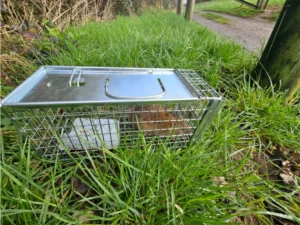
On homemade traps, wire ties can come loose over time, especially if rats have chewed on them or if the trap has been moved around a lot.
The door itself can become warped or bent. This is common if something heavy was placed on the trap during storage. A warped door won’t seal properly against the frame.
Carefully inspect your entire trap for damage. Look for broken welds, loose connections, bent wires, or any deformation in the structure.
Something Else Triggered the Trap
Here’s a possibility people often don’t consider: maybe a rat didn’t escape. Maybe something else triggered your trap and took the bait.
Mice can enter rat traps, eat the bait, and sometimes they’re small and light enough to not trigger the mechanism. But if the trap is sensitive, a mouse might trigger it and then squeeze through the bars to escape.
Other small animals like chipmunks, squirrels (in outdoor settings), or even large insects might interact with your trap. A squirrel could easily reach in from outside, grab bait, and accidentally trigger the mechanism.
Vibrations from footsteps, doors closing, or even wind can sometimes trigger an overly sensitive trap. You might think a rat was caught when actually the trap just went off on its own.
Pets are another possibility. A curious cat or dog might have pawed at the trap, triggering it and possibly eating the bait through the bars.
Look for other clues. Are there different types of droppings near the trap? Scratches or fur caught on the wire? These might tell you what actually interacted with your trap.
What to Do When You Find an Empty Triggered Trap
Finding your trap sprung with no rat inside is frustrating, but it’s also a learning opportunity. You need to investigate and fix the problem.
First, carefully examine the entire trap. Look for gaps, especially around the door. Check all seams and corners. Run your hand along every edge to feel for openings.
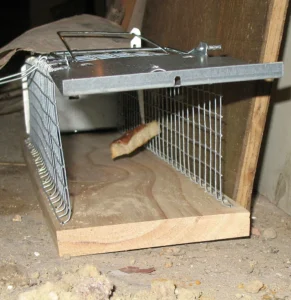
Test the door mechanism. Close it manually and see how well it latches. Try pushing it from inside. Does it stay closed or pop open?
Trigger the trap and watch how the door closes. Is it fast? Does it close completely? Does the latch engage properly?
Look for signs of damage. Bent wires, broken connections, chew marks. Any of these could explain the escape.
Also look around the trap location for clues. Are there rat droppings right next to the trap? Or are there mouse droppings? Different droppings might mean a different animal was involved.
Quick Fixes You Can Try
If you’ve identified the problem with your trap, there are several quick fixes you can try before buying a new trap.
For gaps around the door, you can add a piece of foam weather stripping along the edge. This compresses when the door closes, sealing small gaps without preventing the door from closing.
If the door closes too slowly, try adding a small weight to the bottom edge. A large washer or bolt attached with wire can increase the door’s momentum and make it slam shut faster.
For a weak or broken latch, you can add a simple hook latch from a hardware store. These are cheap and easy to install. Just make sure it engages automatically when the door closes.
If you have gaps in the wire mesh structure, you can patch them with smaller pieces of hardware cloth. Wire these patches securely over any gaps, making sure the patch has smaller openings than 1/2 inch.
For wire mesh that’s too large, you can line the inside of the entire trap with finer mesh. This is time-consuming but effective. Use 1/4 inch or 1/2 inch hardware cloth.
When to Replace Your Trap
Sometimes a trap is too damaged or poorly designed to fix. Knowing when to give up and buy a new trap can save you a lot of frustration.
If your trap has multiple structural problems (broken welds, many bent wires, loose connections), it’s probably not worth fixing. The cost and effort of repairs might exceed the cost of a new trap.
Traps with wire mesh larger than 1/2 inch are really hard to modify effectively. You’d have to essentially rebuild the entire trap with new mesh. At that point, buying a proper trap makes more sense.
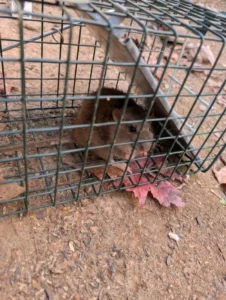
If the trigger mechanism is fundamentally flawed (too insensitive, too sensitive, doesn’t engage the door properly), this is very hard to fix unless you’re skilled with metalwork. A new trap with a better mechanism is a better investment.
Very old traps that have been used for years might just be worn out. Springs lose their tension, hinges get loose, everything gets bent and deformed. Retirement might be the answer.
When buying a replacement, look for traps with these features: wire mesh with 1/2 inch or smaller openings, a strong spring-loaded door, a reliable latch mechanism, and heavy-duty construction. Read reviews to see if other people report escape problems.
Preventing Future Escapes
Once you’ve fixed your trap or bought a new one, there are some best practices that will prevent escapes going forward.
Always check your trap at least twice a day. The longer a rat is in the trap, the more time it has to find weaknesses and escape. Quick checks mean quick action if you catch something.
Before each use, inspect your trap carefully. Look for new damage, test the mechanism, check all seams and connections. Catching problems before you set the trap prevents wasted time.
Don’t leave traps outside in harsh weather if you can avoid it. Rain, wind, and temperature extremes can warp and damage traps over time.
Store traps properly when not in use. Don’t throw them in a pile in your garage where they can get stepped on or crushed. Hang them up or store them in a protected area.
After each catch, clean the trap thoroughly and inspect it for damage. Rats can be rough on traps when they’re panicking, and you might have new gaps or bent wires after each use.
If you’re using homemade traps, reinforce all connections regularly. Re-tighten wire ties, check welds, and add extra support where needed.
Understanding Rat Behavior After an Escape
If a rat escaped your trap, you need to think about how this affects future trapping attempts with that same rat.
Rats are intelligent and learn from experience. A rat that escaped your trap will be much more cautious about entering it again. They associate the trap with danger now.
This means you might need to use a different approach. Try a different type of trap in a different location. If you use the same trap in the same spot, the rat will likely avoid it.

Pre-baiting can help overcome this learned caution. Leave the trap unset with food for several days. Let the rat eat from it safely. This might rebuild their confidence.
Changing the bait type can also help. If the rat associates peanut butter with danger because that’s what was in the trap when it escaped, try bacon or dried fruit instead.
Consider that the rat might have been slightly injured in its escape. A rat with a pinched tail or scraped back is going to be extra cautious about enclosed spaces for a while.
Also remember that where there’s one rat, there are usually more. Even if this particular rat becomes uncatchable due to trap-shyness, you can probably still catch its companions who haven’t had a scary experience yet.
Conclusion
Rats escaping cage traps is usually caused by gaps in the cage construction, doors that don’t close fast enough or latch securely, or wire mesh with openings that are too large. Less commonly, the trap might be defective or something other than a rat triggered it.
The good news is that most escape problems can be fixed. Careful inspection of your trap, testing the mechanism, and making targeted repairs or modifications will usually solve the problem.
If repairs don’t work or if the trap is too damaged, investing in a quality replacement trap with proper construction, a fast-closing door, and a secure latch will give you much better results. The key is learning from the escape, identifying the cause, and taking action to prevent it from happening again.

Hi, my name is Ezra Mushala, i have been interested animals all my life. I am the main author and editor here at snakeinformer.com.