

Rats are found everywhere. You spot them in your backyard, in an alley, or as pets living in a cage. Most people who look closely at a rat for the first time notice something odd about their front feet. So how many fingers and toes do rats actually have?
Rats have 4 fingers on each front foot and 5 toes on each back foot, giving them 18 digits total. The front “thumb” is just a small, nub-like bump, so it doesn’t count as a full finger.
This might seem like a strange setup at first. But it actually makes sense once you understand how rats use their feet.
Their front feet are built for grabbing and holding food. Their back feet are built for balance and running.
Once you start paying attention to this, you’ll notice it in almost every rat you come across.
It doesn’t matter if it’s a wild rat scurrying along a fence or a pet rat exploring your living room floor.
It’s just part of how these animals are built, and it tells you a lot about how they live and move.
Why Rats Only Have 4 Fingers Instead of 5
If you look closely at a rat’s front paw, you’ll notice it looks like it’s missing a finger compared to a human hand. That’s because rats don’t have a real thumb.
Instead, they have what’s called a vestigial thumb. This just means it’s a leftover body part.
It used to serve a purpose a long time ago in an earlier ancestor, but it doesn’t do much anymore. It’s small, doesn’t bend much, and doesn’t have a claw like the other fingers.
You can actually see this little nub if you look closely at the inside edge of a rat’s front paw.
It’s easy to miss at first glance since it’s so small. But once you know what to look for, you’ll spot it every time.
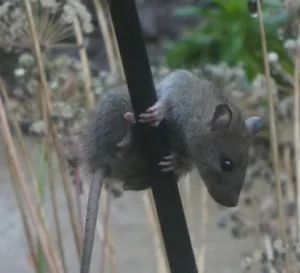
The four full fingers on a rat’s front foot each have a claw, and rats use them constantly. They use these fingers to hold onto food, dig through dirt, climb, and grip onto surfaces.
Even without a full thumb, rats are surprisingly good at holding small objects.
Next time you see a rat eating, watch how it holds food up to its mouth with both front paws. That grip comes from those four fingers working together, almost like a set of small pliers.
This is actually pretty similar to what you see in other rodents too. Mice, squirrels, and hamsters all have this same basic setup.
They’re all part of the same larger animal family, so they share a lot of the same body structure.
What the Rat’s Thumb Nub Is Actually Used For
Even though it’s not a full finger, that small thumb nub still serves a purpose. Rats use it to help stabilize objects while they’re holding onto something with their other fingers.
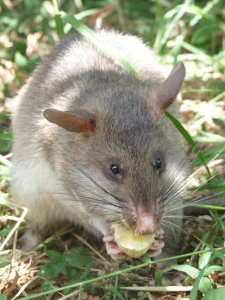
Think of it like a built-in stopper. When a rat is holding a piece of food, that little nub presses against the object.
It keeps the food from sliding out of grip. It’s not doing the heavy lifting, but it’s still playing a small supporting role.
Some researchers who study rodent anatomy believe this small thumb is a leftover trait. Earlier ancestors had a more complete thumb.
Over a very long time, as rats adapted to their environment, this thumb slowly shrank down. It just wasn’t as necessary anymore for the way rats grip and hold things.
How Many Toes Do Rats Have on Their Back Feet?
Unlike their front feet, a rat’s back feet have a full set of 5 toes each. This gives them better balance and more surface area when they’re running, jumping, or standing up on their hind legs.
Rats often stand up on their back legs to sniff the air or look around for danger. That balance comes from having all 5 toes to plant firmly on the ground.
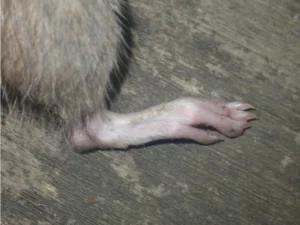
The back feet are also longer and stronger than the front feet. This helps rats jump surprising distances for their size.
Some can leap over a foot in a single jump.
If you watch a rat move, you’ll notice its back legs do most of the work. That’s where the speed and power come from.
The back feet push off the ground with a lot of force, which is part of why rats can run so fast when they feel threatened.
Each toe on the back foot also has its own claw, just like the fingers on the front feet. These claws dig into surfaces and give the rat extra traction.
That comes in handy when it’s climbing something steep or running across a slippery surface.
The middle three toes on each back foot tend to be the longest. The two outer toes are a bit shorter. This uneven length actually helps with balance, kind of like how your own toes aren’t all the same length either.
A Quick Breakdown of Rat Digits
Sometimes it helps to see the numbers laid out simply. Here’s a quick way to picture how a rat’s fingers and toes break down.
Front feet have 4 full fingers plus 1 small thumb nub on each side. That’s 5 total front digits per foot, or 10 across both front feet if you count the thumb nub.
Back feet have 5 full toes on each side, adding up to 10 total back digits across both feet.
Add the 8 full front fingers, the 2 thumb nubs, and the 10 back toes together, and you get 18 digits scattered across all four feet. That’s the number most people land on when they’re asked how many fingers and toes a rat actually has.
Do All Rat Species Have the Same Number of Digits?
Most common rats you’ll come across, like the brown rat (also called the Norway rat) and the black rat, have the same basic finger and toe setup.
That’s 4 fingers and a small thumb nub on the front feet, and 5 toes on the back feet.
This pattern holds true whether you’re looking at a wild rat or a pet rat. A fancy rat, for example, is just a domesticated version of the brown rat.
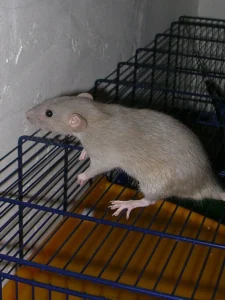
Still, just like people can have small differences in their hands and feet, individual rats can too. This isn’t common, but it can happen due to injury, genetics, or birth defects.
There are actually hundreds of rat species around the world. Most share this same basic paw setup. But a few species that live in very different environments have slightly different feet.
Some rats that live near water have small webbing between their toes, which helps them swim more easily.
Kangaroo rats aren’t true rats, but they’re often grouped in with them because of the name. They actually have much bigger back feet compared to their front feet.
That’s because kangaroo rats hop around like tiny kangaroos instead of running on all four feet like a typical rat.
Even with these small differences between species, the basic pattern holds true for most rats you’d ever come across. Four fingers up front, five toes in back.
That’s true whether you’re dealing with one in your home or just seeing one out in nature.
What Do Rat Paws Feel and Look Like?
Rat paws are covered in a leathery texture, especially on the underside. If you’ve ever felt a pet rat’s foot, you probably noticed how different it feels from the fur covering the rest of its body.
The fingers and toes end in small, sharp claws. These claws aren’t just for looks. Rats use them to dig burrows, climb rough surfaces, and defend themselves if they feel threatened.
Rat feet also have small pads, kind of like the pads on a dog’s paw, but much smaller. These pads help with grip. They also cushion the foot when the rat is running or jumping onto a surface.

If you look even closer, you’ll notice the skin on a rat’s feet is usually pink or grayish. It doesn’t have any fur on it at all. This bare skin is actually really sensitive, and it helps rats feel vibrations and textures as they move around.
That sensitivity plays a bigger role than most people realize. Rats rely heavily on touch to get around, especially in the dark, since they’re mostly active at night.
Their feet basically act like an extra set of sensors. They help the rat figure out what’s around it even when it can’t see very well.
The claws themselves also grow continuously throughout a rat’s life, kind of like fingernails do on a person, just at a faster rate.
Wild rats naturally wear their claws down through everyday digging, climbing, and running on rough surfaces. Pet rats sometimes need their nails trimmed if they aren’t getting enough natural wear.
Why Rats’ Front Feet Are So Important for Survival
A rat’s front feet aren’t just for walking. They’re basically like hands. Rats use them to grab, hold, twist, and manipulate objects in ways a lot of other animals can’t.
This ability plays a huge role in how rats survive and find food. They can hold a piece of food steady while nibbling on it.
They can dig into soil or trash to find something to eat. Some will even open latches or lift small objects if they’re motivated enough.

Anyone who’s dealt with rats getting into a pantry knows how capable these front paws really are. Rats can pull apart packaging, squeeze through gaps, and manipulate small objects with a level of finger dexterity you wouldn’t expect from a rodent.
This same skill also helps rats when it comes to building nests. Rats often gather soft materials like paper, fabric scraps, or dried grass.
They use their front feet to shred and shape these materials into a comfortable, enclosed nest.
It’s actually pretty impressive to watch a rat build a nest if you ever get the chance. They’ll grab a piece of material, turn it over with their front paws, and tear off small pieces.
Then they carefully arrange everything into place. This kind of fine motor skill is part of why rats are considered one of the more intelligent rodent species.
Their front feet also come into play during social behavior. Rats often use their paws to touch and interact with other rats, especially when grooming each other or during play.
If you’ve ever watched two pet rats wrestle or groom one another, you’ve seen just how much they rely on those front paws.
How Rat Feet Compare to Mouse Feet
If you’ve ever tried to tell a rat and a mouse apart, looking at their feet can actually help. Mice have a similar setup. That’s 4 fingers and a small thumb nub on the front feet, and 5 toes on the back feet.
The big difference is size. A rat’s feet and claws are noticeably bigger and more solid-looking than a mouse’s.
That makes sense, since rats themselves are much bigger animals overall.
If you’re trying to identify tracks in dust, mud, or snow, rat tracks will usually be larger, with deeper claw marks. Mouse tracks tend to look smaller and more delicate by comparison.
Do Rats Use Their Feet for Anything Besides Grabbing and Walking?
Rats use their feet for a lot more than most people realize. Aside from grabbing food and walking around, they also use their front feet for grooming.
Watch a rat clean itself and you’ll notice it uses its front paws almost like little hands. It wipes down its face, whiskers, and ears in quick, repetitive motions.

his grooming behavior is actually really important for a rat’s health, since it helps keep their fur and skin clean and free of parasites.
Rats also use their feet to test surfaces before committing to a jump or climb. If a rat is exploring a new area, you might notice it tapping or touching a surface first. It’s almost like it’s checking to see if the surface is safe or stable.
Are Rat Fingers and Toes Involved in How They Communicate?
Believe it or not, a rat’s feet play a role in communication too. Rats have scent glands on their feet. They leave behind small traces of scent everywhere they walk.
This is one of the ways rats communicate with other rats. When a rat walks along a path repeatedly, it’s leaving a scent trail behind. Other rats can pick up on that trail and follow it.
This is part of why you might notice rats using the exact same paths over and over. Along walls, through yards, or inside a home, those paths often become well-worn. That happens because of how many times a rat’s scent-marked feet have crossed that same ground.
Conclusion
Rats have 4 fingers and a small thumb nub on each front foot, plus 5 toes on each back foot. That adds up to 18 digits in total.
It might seem like an odd number at first, but it makes a lot of sense once you look at how rats use their feet daily.
Their front feet work almost like hands. They give the rat the ability to grab, hold, and manipulate food and objects with impressive precision for such a small animal.
Their back feet, with a full set of 5 toes each, give them the balance and power they need to run, jump, and stand upright.
Whether you’re just curious about rat anatomy or trying to understand rat behavior because of an infestation, knowing how their feet work gives you a clearer picture. It shows just how capable and adaptable these animals really are.

Hi, my name is Ezra Mushala, i have been interested animals all my life. I am the main author and editor here at snakeinformer.com.