
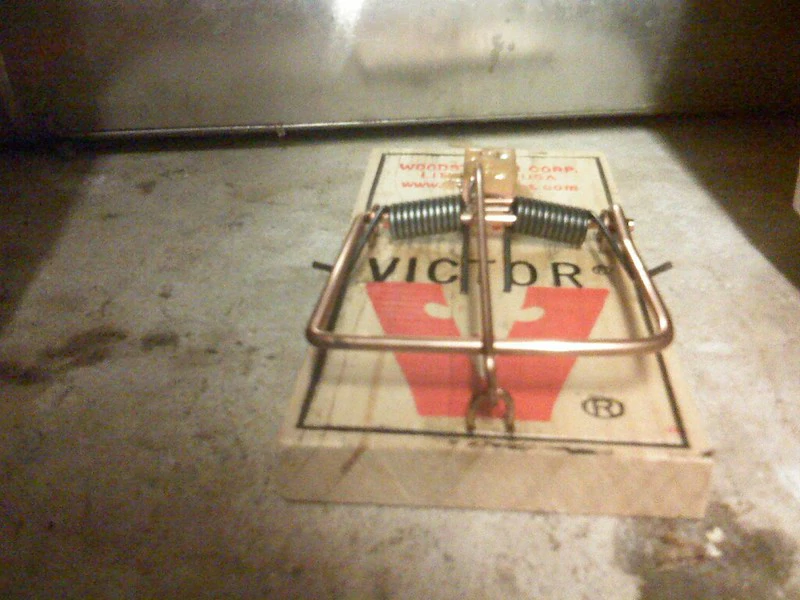
Snap traps are cheap and easy to find, but that doesn’t mean they always work perfectly. If you keep finding sprung traps with no rat in them, can a rat escape a snap trap?
Yes, a rat can escape a snap trap if the bar only catches a leg or tail, if the trap is too small or weak, or if it’s set badly. A rat that gets away is usually hurt and wary of traps afterward.
Most escapes come down to a handful of causes, and almost all of them can be fixed. This post explains why it happens, what to do if you find a live rat, and how to improve your results.
How Snap Traps Are Supposed to Work
A snap trap has a spring-loaded metal bar that’s held back by a trigger. When a rat steps on the trigger plate or pulls at the bait, the bar is released and snaps down with a lot of force.

A good trap, set the right way, is meant to work in seconds. It needs the rat to be in the right position, the bar to land in the right spot, and the spring to be strong enough.
When any one of those goes wrong, the rat may be caught only partly. That’s when an escape becomes possible.
Can a Rat Really Escape a Snap Trap?
Yes, it happens more often than you might expect (and it’s not a sign you did anything wrong). A rat that’s caught by only a foot or the tip of the tail may be able to pull loose before the trap holds it.
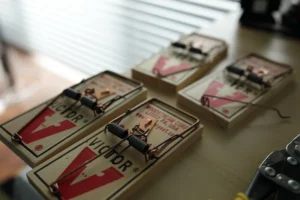
Escapes are more likely with a small or weak trap, a damaged trap, or one that was set at a bad angle. A mouse trap used on a rat is a common example.
A rat that gets away isn’t a good outcome for you or for the rat. It’s usually stressed and may be hurt, and it can end up hiding somewhere you can’t see.
That’s why it’s worth understanding why traps fail, so you can set yours up better next time.
Why Do Rats Sometimes Get Caught in the Wrong Spot?
Rats don’t walk straight up to a trap and put their head in the perfect spot. They’re cautious animals that approach new objects carefully.
A rat may reach for the bait from the side, or try to pull the food off without stepping fully on the trigger. When the trap goes off, the bar can land on the back, a leg, or the tail.
A rat that’s caught in one of those spots can often twist away before the bar holds it. The tail and feet are the most common places where a rat gets caught but not held.
Young or small rats can also fit into spots an adult can’t, so the bar may land differently on them.
None of this means your trap is bad, so don’t be hard on yourself. It means rats are quick, and small changes in how they approach can make a big difference.
Weak, Small, or Damaged Traps Make Escapes More Likely
Not all snap traps are built the same, and some are much weaker than others.
An Oxford University study funded by the RSPCA found that some rat and mouse snap traps hit with a force about eight times weaker than others made for the same animal. Some rat traps were even weaker than the strongest mouse traps.
That’s why you can’t assume a trap is strong enough just because the package says “rat.” Look for a sturdy trap from a maker you trust, and make sure it’s made for rats.
Mouse traps are too small and light for a rat. A rat can be caught by one without being held, and then drag the trap away.
Another study found that most traps worked about the same after being set off 20 times. Still, rust, bent parts, and cracks can cause problems, so replace any trap that looks worn or doesn’t snap firmly.
Are Rats Really That Strong and Flexible?
Rats are stronger and more flexible than you’d think. An adult rat can pull hard, and a frightened one will fight with a lot of energy.
If a trap catches a rat in a way that doesn’t hold it firmly, the rat may thrash around and loosen the bar enough to pull loose.
Rats can also squeeze through very small gaps (about the size of a quarter), because their bodies compress quite a bit. That flexibility can help a partly caught rat slip loose.
Young rats are even more flexible, which is one reason small rats can escape a trap that would hold a bigger one.
This doesn’t mean snap traps don’t work. It just means the trap, the placement, and the bait all need to be right.
Trap Placement Affects Where the Bar Lands
Where and how you place a trap has a big effect on whether it holds a rat or lets it go.
A trap that sits on an uneven surface can rock or tip when a rat steps on it. That can change where the bar lands, so you’ll want to set traps on flat, steady surfaces.
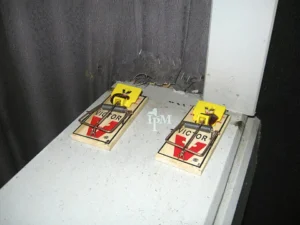
Leave room above and around the trap, too (a low shelf can block the bar). If something is in the way, the bar may lose force before it reaches the rat.
Rats usually run along walls, so set the trap with the long side at a right angle to the wall and the trigger end against it. That puts the trigger right in the rat’s path and makes a clean catch more likely.
A trap set in the middle of a room is often missed altogether, since rats prefer to stay close to walls.
Bait Placement Affects the Catch
How you bait the trap changes where a rat’s body ends up when it goes off.
If you pile on a big chunk of bait, a rat can nibble from the side without stepping fully on the trigger. When the trap finally snaps, the rat isn’t in the right position.
Use a small dab of sticky bait, about the size of a pea, and press it firmly onto the trigger. Peanut butter works well, and it makes the rat work at it.
You can also tie small bits of dried fruit or nuts to the trigger with string, so the rat has to pull on them.
Use fresh bait, since old bait loses its smell (and its pull). And don’t think more is better, because extra bait just gives a rat more ways to approach the trap.
What Happens to a Rat That Escapes?
A rat that gets away doesn’t forget the experience. Rats can become trap shy (meaning they avoid traps they’ve had a bad experience with), and that can make them harder to catch next time.
Rats are also naturally wary of new objects in their space, which is called neophobia (fear of new things). A bad experience can make that wariness even stronger.
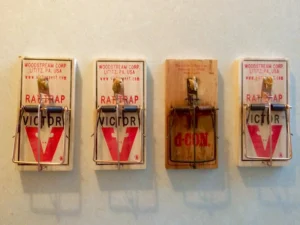
Even if the rat was hurt, it can still survive and keep eating your food and leaving droppings. It may also start using a different path through your home.
That’s why a failed trap is a good moment to change something, not just reset it and hope.
How Can You Tell a Rat Escaped Your Trap?
The most obvious sign is a sprung trap with no rat in it. But a sprung trap can also mean the rat just stole the bait, so you should look for other clues.
If you see fur on the trap or on the floor nearby, that’s a good sign a rat was caught but got away. A trap that has moved a few inches from where you set it is another sign.
If the bait is gone but the trap didn’t go off, the rat took it without being caught. In that case, press the bait on more firmly, or use a stickier kind.
If you see the same thing happening again and again at one trap, a smart rat has probably figured out how to approach it. You’ll need to change something, like the position or the type of trap.
What If You Find a Live Rat in the Trap?
Sometimes a rat doesn’t get away, and you find it still alive in the trap. That’s stressful, but you have clear options.
Put on thick gloves, keep kids and pets away, and gently cover the trap with a towel. Then call a pest control company, animal control, or a vet, and say right away that it’s a live animal.
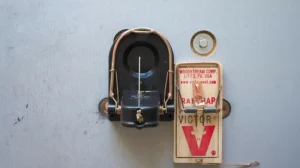
Don’t try to open the trap or free the rat yourself. It’s hurt and frightened, and a bite can spread germs like hantavirus (a virus that can cause a serious lung illness) and rat-bite fever (a bacterial infection).
When you’re stressed and the rat is frightened, it’s easy to reach for a quick fix you saw online. Most of those ideas make things worse, so here’s what to avoid.
Don’t drown it. It’s cruel, and it can also be illegal.
In England, people have been prosecuted under the Animal Welfare Act 2006 for drowning trapped wild animals, such as squirrels. In South Africa, an animal welfare society stopped a rat-drowning program because it said the method was inhumane and illegal.
In the US, the rules vary from state to state, so don’t assume it’s allowed where you live.
Don’t freeze it, either. The cold is slow and stressful, and it isn’t the gentle end some people think it is.
Don’t use blunt force, like hitting the rat with a heavy object. Doing it wrong can be inhumane, because a miss leaves the rat hurt and in more pain.
Don’t use gas, dry ice, fumes, or chemicals. They can cause pain and distress, and they can seriously hurt you too.
Don’t leave the rat to die in the trap, and don’t throw the trap away with the rat still alive. Either way, it suffers slowly where nobody can help.
Don’t touch it with your bare hands, and don’t poke, shake, or squeeze it. A scared rat can bite hard, and its urine and droppings can carry diseases.
Don’t release it outside. A hurt rat may not survive, it can find its way back into your home, and in some places release is against the law.
Better Traps Mean Fewer Escapes
If you’re serious about catching rats, it’s worth using good traps. They cost a little more, but they work much better than the cheapest ones.
You’ll want a trap that’s labeled for rats, not mice. Rat traps are bigger and have stiffer springs.
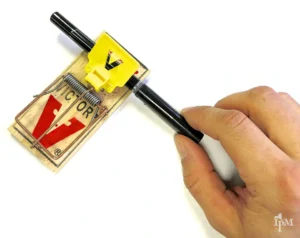
Many pros like traps with an expanded trigger (a larger plastic plate that gives the rat a bigger area to step on). A sturdy build matters too.
Replace any trap you own that’s rusty, bent, or cracked, and don’t reuse one you doubt. A trap that doesn’t snap firmly is more likely to let a rat go.
If a trap fails even once, think about why (was it the size, the placement, or the condition?). Fixing that is cheaper than trying again and hoping.
Should You Use More Than One Trap?
Yes, in most cases. Extension and public health guides say that using too few traps is a common mistake, and that you need enough to catch rats quickly.
Set several traps in a row along the wall where rats run. That gives you more chances before a rat gets wary of all of them.
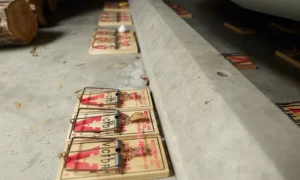
Letting rats get used to the traps first is a good idea too. Leave them in place, baited but unset, for two or three nights, then set them once the bait is being taken.
Make sure all your traps are the same good quality, since a few weak ones can undo the work of the strong ones.
Check all your traps at least once a day, and twice if you can. That way you know which ones are working, and a trap that doesn’t work cleanly won’t leave a rat there for long.
What Other Methods Can You Combine With Snap Traps?
If rats keep escaping your snap traps, you can add other methods.
Electronic traps are made to work in seconds, and they don’t depend on exact positioning as much. They cost more (often around $30 to $60), but many models let you tip the rat into a bag without touching it.
Live traps (wire cages) catch rats without hurting them, but you’ll have to follow local rules about letting the animal go, or call a pro. Many people find that part harder than they expected.
Glue traps are usually a poor choice. Many animal welfare groups and pest control pros say they can leave an animal stuck and frightened for a long time, and some places have banned them.
The most lasting fix is sealing up entry points and removing food sources, so rats have no reason to come in.
How to Clean Up After a Catch
When you do catch a rat that has died, take care of it quickly, since germs can stay behind.
Put on thick rubber gloves, spray the trap and the rat with disinfectant, and let it soak for about five minutes.
Then seal them in a plastic bag, put that bag inside a second one, and place it in an outdoor trash bin with a tight lid.
Wash your gloves with soap and water or disinfectant before you take them off, and wash your hands well afterward.
Clean the spot with disinfectant, or mix 1½ cups of bleach in 1 gallon of cold water (that’s about 1 part bleach to 9 parts water). Never mix bleach with ammonia or other cleaners, because that can make dangerous fumes.
Don’t sweep or vacuum droppings, since that can kick up dust you may breathe in. Wet them with disinfectant first, then wipe them up.
If you want to reuse the trap, clean it well while wearing gloves, let it dry, and set it again with fresh bait.
When Do Repeated Escapes Mean You Need a Different Approach?
If you’ve had more than one rat get away, it’s time to rethink what you’re doing. Maybe the traps are too weak, the placement is off, or snap traps just aren’t the right tool for your situation.
You can switch to a different type of trap, or call a professional pest control service. Pros have better equipment and know techniques that most homeowners don’t.
Sometimes a rat problem is simply too big, or the rats too wary, for home methods to work well.
There’s no shame in asking for help, especially if your current methods are only making rats more cautious. The longer you wait, the harder you may find them to catch.
Conclusion
Yes, a rat can escape a snap trap, especially if the trap only catches a leg or tail, is too small or weak, or is set badly. A rat that gets away is usually hurt and wary of traps afterward.
To cut down on escapes, use a sturdy trap made for rats, set it on a flat surface against a wall, and use a small dab of sticky bait. Set several traps, let rats get used to them first, and check them often.
If you find a live rat, call a pest control company, animal control, or a vet instead of handling it yourself. And if escapes keep happening, a professional can help you solve the problem for good.

Hi, my name is Ezra Mushala, i have been interested animals all my life. I am the main author and editor here at snakeinformer.com.