
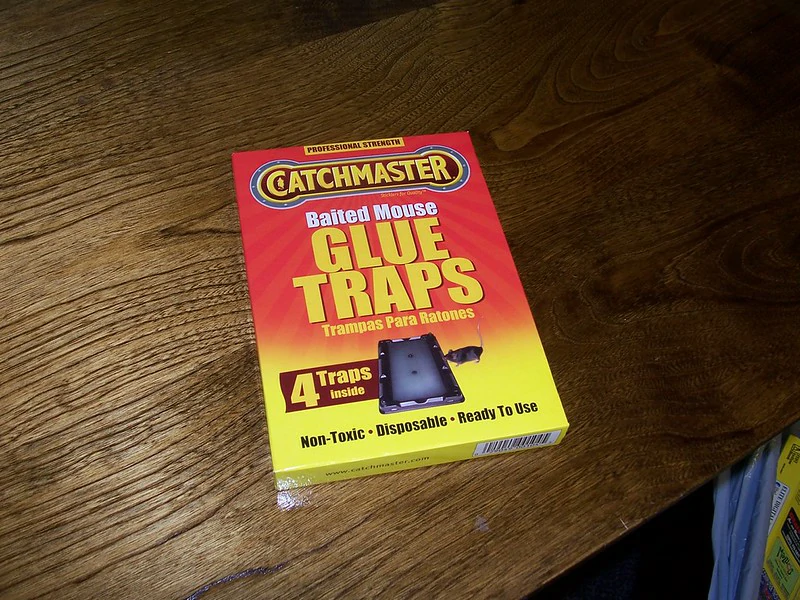
A glue trap for mice looks like plain cardboard, but it’s covered in a thick, sticky coating. If you have kids or pets, it’s fair to ask what’s in it. Are glue traps for mice poisonous?
Most glue traps for mice aren’t poisonous. The glue is usually a sticky coating with no poison in it, and makers say it’s non-toxic. But it isn’t safe to eat, and the real risks come from what gets stuck on it.
That said, “not poisonous” isn’t the same as “safe.” A few details matter, especially if you have a curious dog or a small child, and we’ll go through them one at a time.
Poisonous Means Something Specific (and Glue Traps Mostly Aren’t)
People use the word “poisonous” loosely, but scientists use it for something specific. A poisonous thing harms you when you touch it, breathe it in, or swallow it.
That’s different from venomous, which means an animal injects its toxin, the way a snake does with a bite. A glue trap can’t inject anything, so venom isn’t part of this question.
The word you’ll hear a lot is toxic, which just means a substance can harm the body.
So when you ask if a glue trap is poisonous, you’re really asking whether the glue is toxic if it touches you or gets swallowed.
The short version is that most mouse glue is meant to be free of poison. But a few details matter, and they can change the answer for your home.
Mouse Glue Is Usually a Sticky Coating With No Poison in It
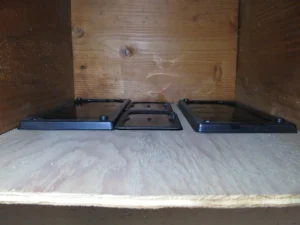
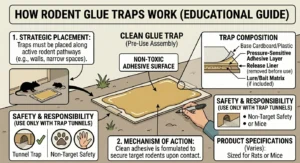
A mouse glue trap is a flat board made of cardboard, paper, or plastic, covered in a thick adhesive that never dries. Many boards also have a food scent, such as peanut butter, to pull mice in.
The glue itself isn’t a poison, and it doesn’t kill the mouse. It just holds the animal in place, so the mouse dies later from stress, thirst, or exhaustion.
Several big makers describe their glue as non-toxic and free of pesticides. That’s a claim from the companies that sell them, so it’s worth reading the label yourself and looking for words like “pesticide free.”
Not every product is the same, though. I found one well-known brand whose safety sheet lists its glue board as a rodenticide (a product sold to kill rodents), so don’t assume every board works the same way.
If the box mentions a pesticide or a poison, treat it very differently. Keep it away from kids and pets, and wear gloves any time you handle it.
Makers Say the Glue Is Non-Toxic, but That Isn’t the Same as Safe to Eat
“Non-toxic” sounds comforting, but it doesn’t mean the glue is food. It just means the product isn’t designed to poison you.
The safety information for one popular glue board says to rinse your mouth if you swallow some, and to call a poison center if you feel unwell.
Skin and eye contact has no known effect, but wash it off anyway.
Notice what that tells you. Swallowing a little isn’t treated as an emergency, but it isn’t treated as nothing either.
The same sheet says to call a poison specialist right away if someone swallows a large amount. It also warns people not to put the board where kids or pets can touch the glue.
That last part is the maker telling you the board isn’t meant for curious hands or mouths.
What If Your Dog or Cat Eats Part of a Glue Trap?
First, take the board away and check that nothing is stuck to your pet’s mouth, tongue, or paws. Then call your vet or a pet poison hotline for advice, even if your pet seems fine.
The glue may not be poisonous, but a swallowed piece of board can still cause trouble. Cardboard and glue can upset a pet’s stomach, and a big chunk may get stuck in the gut, which is an emergency.
Tell the vet what brand it was, and bring the box if you can. The label and the safety sheet help them decide what to do next.
Don’t try to make your pet vomit unless a vet tells you to. If you see vomiting, drooling, or a swollen belly, call a vet right away.
If glue is stuck to the fur or paws, slowly work cooking oil into it until it loosens, then wash with soap and warm water.
Keep your pet from licking the area while you work, since that’s how glue ends up swallowed.
If the fur is badly stuck, trimming it with scissors is better than pulling. A small dog or a scared cat can be easier to handle if you wrap it in a towel and get a second person to help.
What If a Child Touches the Glue or Puts It in Their Mouth?
Stay calm and take the board away. Wipe the glue off with cooking oil or baby oil, then wash the skin with soap and warm water.
If any glue got into their mouth, wipe it out and have them rinse with water. Then call Poison Control (1-800-222-1222 in the US), even if they seem fine.
In Canada, call your provincial poison centre. In the UK you can call NHS 111, and in Australia the Poisons Information Centre is 13 11 26.
Keep glue boards where kids can’t reach them, like behind heavy appliances or inside a covered box. A board on the floor in a hallway is a bad idea, since toddlers will find it.
Cooking Oil Gets Mouse Trap Glue Off Skin and Fur
If glue gets on your hands, don’t scrub it dry. Rub cooking oil, baby oil, or vegetable oil into the glue until it softens, then wash with soap and warm water.
Makers of several glue boards suggest this, and it works because the oil loosens the sticky coating.
One safety sheet mentions mineral spirits for skin contact, but for kids and pets, oil and soap are the gentler choice. If you think you need something stronger, ask a doctor or a vet first.
For a pet’s fur, work slowly. Use oil first, then soap, then warm water, and trim the fur if it’s badly tangled.
Take your time, because pulling is the biggest mistake. It rips skin and fur, and it makes a scared animal fight harder.
If the Glue Isn’t Poison, What Actually Kills the Mouse?
A mouse on a glue trap isn’t poisoned, so it doesn’t die from the glue. It dies from what happens while it’s stuck, and that can take hours or even days.
Animal welfare groups say mice can die from exhaustion, thirst, hunger, being too cold or too hot, or suffocation if their nose or mouth gets stuck in the glue. That’s a long, hard way to die.
Even some pest control operators say the deaths come from suffocation or stress.
That’s why experts say you should check a glue board several times a day if you use one. It’s also why many of them would rather you use a snap trap instead.
The Bigger Danger Is the Mouse, Not the Glue
The glue is the less worrying part. The mouse stuck on it is the bigger health risk, because wild mice can carry germs that make people sick.
One of them is hantavirus, a rare but serious illness that people catch mostly by breathing in dust from mouse pee and droppings. It’s linked mainly to deer mice, which live across North America.
Health agencies in California tested several thousand deer mice and found that around 12 percent had the virus.
You can’t tell an infected mouse from a healthy one by looking, since it takes lab testing, so treat every mouse as if it could be carrying it.
Hantavirus is uncommon, but it’s serious. About 36 percent of the people who’ve caught it in the US have died, according to National Park Service guidance.
A mouse stuck on a glue trap is often stressed, and stressed mice pee and poop. That can spread germs onto the board and around the area where you’re working.
Mice can also carry salmonella (the same kind of bacteria that cause food poisoning), so wear gloves any time you handle a trap.
How to Throw Out a Mouse Glue Trap Safely
Start by putting on rubber, latex, vinyl, or nitrile gloves. The CDC says to spray the dead mouse, the trap, and the area around it with a disinfectant or a mix of bleach and water, and let it soak.
Then bag the mouse and the board, and seal it tightly. Many health departments suggest sealing that bag inside a second bag, just to be safe.
Don’t sweep or vacuum dry droppings, because that kicks dust into the air where you can breathe it in. Wet them down with disinfectant first, then wipe them up with paper towels.
When you’re done, wash your gloved hands, take the gloves off, and wash your bare hands with soap and warm water. Throw the gloves away with the rest.
If the mouse is still alive, don’t just toss the trap in the trash. Call a vet or a local humane group and ask what they can do.
Is Mouse Poison Worse Than a Glue Trap?
If you’re really asking about poison in mouse control, the real poison is rodent bait, not glue. These poisons are called rodenticides, and many of them are anticoagulants (they stop the blood from clotting, so the animal bleeds inside).
Those poisons can hurt more than mice. A pet or a wild animal that eats a poisoned mouse can get sick, which is called secondary poisoning, and owls, hawks, and other animals that hunt mice are at risk.
British Columbia has restricted the strongest kind, called second generation anticoagulants. Other places are looking at limits too.
So glue traps skip the poison problem, but they bring cruelty and the problem of catching other animals. Neither one is a great choice.
Snap traps and sealing up your home avoid both problems, which is why wildlife and humane groups point to them first.
Do Glue Traps Give Off Harmful Fumes?
Under normal use, a glue board isn’t a fume problem. The safety information for one popular brand says only to move to fresh air if you feel unwell.
Some boards smell like peanut butter or other food scents, which is how they attract mice. That smell isn’t a sign of poison, but a strong smell can bother some people, so keep the room ventilated if you notice it.
If you get a headache, a cough, or watery eyes around a new product, take it outside and read the label. If the symptoms don’t go away, call Poison Control or a doctor.
Are Scented Glue Traps Safe for People With Allergies?
Many mouse glue boards are scented with peanut butter, so it’s smart to check the label if anyone in your home has a peanut allergy.
Some makers say nothing about allergies on the box, and I couldn’t find clear guidance. If you’re unsure, ask the maker, or pick a different kind of trap.
Where Can You Put a Mouse Glue Trap Safely?
If you do use one, put it where mice run and where nobody else can reach it. Mice like to travel along walls, so a spot against a wall behind the fridge works well (keep it away from the stove and other hot spots).
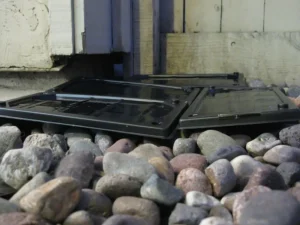
Keep it away from pets, kids, and any place a lizard, bird, or bat could wander in. A garage or shed with the door open is a bad spot, because wildlife can step right onto it.
Some boards fold into a covered tent shape, which protects the glue from dust and keeps it away from larger animals. That’s a better choice than a flat board lying open on the floor.
Never use one outside in the open, since you can’t control what lands on it. And check it more than once a day, because every hour a mouse spends stuck makes things worse for the animal.
What Else Can Get Stuck on a Mouse Glue Trap?
A glue board can’t tell a mouse from anything else that touches it. Lizards, geckos, small birds, bats, chipmunks, and even snakes have been caught, and so have pet cats and small dogs.
It happens a lot in garages, sheds, and basements, where wildlife comes in looking for bugs or shelter. A gecko that steps on a board can even lose its tail trying to get free.
If that happens, put on gloves, don’t pull, and slowly drip cooking oil around the glue. Then call a wildlife rehabilitator or a vet.
Never touch a bat with your bare hands (bats can carry rabies). Call animal control instead.
Glue Traps for Mice Are Legal in Many Places but Not All
In most of the US and Canada, mouse glue traps are legal to buy and use. A few California cities ban them, including West Hollywood, Ojai, Culver City, and Ventura.
In England, Wales, and Scotland, the public can’t use glue traps on mice or rats. Several Australian states ban them too, including Victoria, Tasmania, the ACT, and New South Wales.
Laws are changing quickly, so check your city’s rules before you buy. We’ve covered the rules country by country in our post on whether glue traps for rats are illegal.
What Can You Use Instead of Glue Traps for Mice?
The best fix is keeping mice out. A mouse can squeeze through a hole the width of a pen (about a quarter inch), so check the gaps around pipes, vents, and doors.
Plug holes with steel wool and caulk, or use metal mesh, because mice chew through soft materials like foam and rubber. Store food in glass or hard plastic, and put pet food away at night.
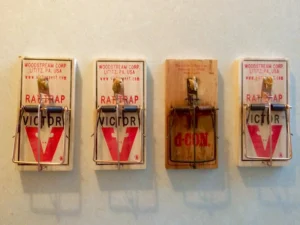
If you still need a trap, a snap trap is a quick option when it’s well made and set along a wall. Many health agencies suggest baiting it with peanut butter and oatmeal, with the bait end touching the wall.
Electric traps work well indoors, and you can empty them without touching the mouse.
Live traps catch a mouse unharmed, but you’ll need a plan for what to do next, and releasing mice outside may not be allowed where you live.
For a big problem, call a pro first.
Conclusion
So, are glue traps for mice poisonous? Usually not. The glue is typically a sticky coating with no poison in it, and the makers say it’s non-toxic.
But that doesn’t make it safe to eat. If a child or a pet swallows some, call Poison Control or your vet, and keep boards well out of reach.
The bigger risks come from the mouse itself, which can carry germs like hantavirus and salmonella, so wear gloves, use disinfectant, and seal everything in a bag.
Glue traps also catch other animals and cause a lot of suffering. Sealing up your home and using a snap trap is a better way to go.

Hi, my name is Ezra Mushala, i have been interested animals all my life. I am the main author and editor here at snakeinformer.com.