
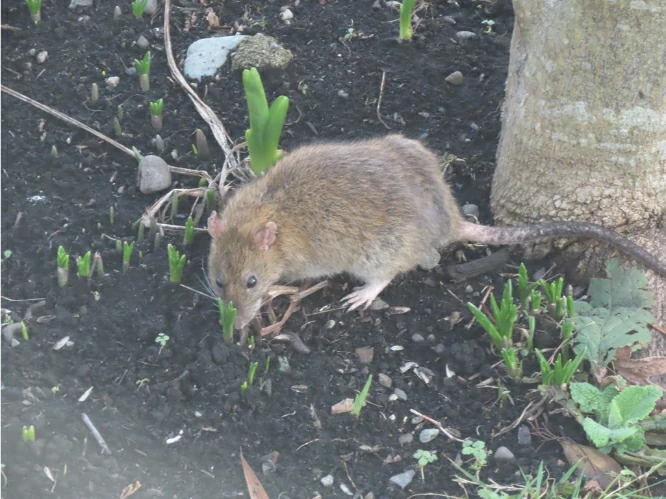
If you’re dealing with a rat problem, you want to know that the poison you’re using will actually work. That means understanding how much poison it takes to kill a rat.
But the answer isn’t as simple as a single number. Different poisons work differently, and rats vary in size. So how much rat poison is lethal to rats?
The lethal dose of rat poison depends on the type of poison and the rat’s body weight. For most anticoagulant poisons, a rat needs to consume around 0.5 to 5 milligrams per kilogram of body weight over several days. For a 300-gram rat, that’s roughly 0.15 to 1.5 milligrams total. Newer, stronger poisons require even less.
Understanding lethal doses helps you figure out if you’re using enough poison and placing it correctly to actually kill the rats in your home.
How Lethal Doses Are Measured
Lethal dose is usually expressed as LD50, which stands for “Lethal Dose 50%.” It tells you how much of a substance is needed to kill 50% of a test population.
LD50 is measured in milligrams of poison per kilogram of body weight (mg/kg). This makes it easier to compare how toxic different poisons are.
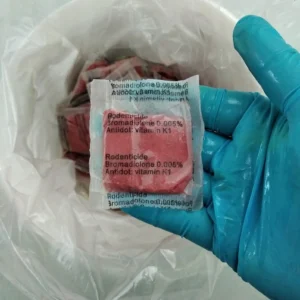
For example, if a poison has an LD50 of 1 mg/kg in rats, it means that a dose of 1 milligram per kilogram of body weight is expected to kill about half of the rats in the test population.
The important thing to remember is that a lower LD50 means a more toxic poison.
A poison with an LD50 of 0.5 mg/kg is more toxic than one with an LD50 of 5 mg/kg because it takes a much smaller amount to produce the same lethal effect.
First generation Vs. Second generation Poisons
There are two main types of anticoagulant poison, first generation and second generation. First generation poisons need to be eaten several times to build up in the rat’s body.
Second generation poisons are much stronger. They can kill after just one feeding.
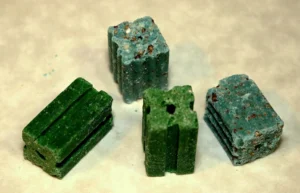
This difference matters when you’re trying to figure out why one bait station seems to work while another doesn’t.
A rat that only nibbles once at a first generation poison may walk away fine. The same nibble of a second generation product could kill it days later.
Lethal Doses by Rat Poison Type
The table below breaks down some common rat poison ingredients and roughly how much of each it takes to kill an average rat weighing about half a pound.
| Poison Type | Active Ingredient | LD50 (mg/kg) | Notes |
|---|---|---|---|
| First-generation anticoagulant | Warfarin | 50-100 | Requires multiple feedings over 5-7 days |
| First-generation anticoagulant | Chlorophacinone | 3-5 | Multiple feedings needed |
| Second-generation anticoagulant | Bromadiolone | 1-2 | Single feeding can be lethal |
| Second-generation anticoagulant | Brodifacoum | 0.3-1 | Extremely toxic, single feeding lethal |
| Second-generation anticoagulant | Difethialone | 0.5-2 | Very potent, single feeding can kill |
| Cholecalciferol | Vitamin D3 | 10-20 | Causes calcium imbalance, takes 2-4 days to kill |
| Bromethalin | Bromethalin | 2.5-5 | Neurotoxin, no antidote |
| Zinc phosphide | Zinc phosphide | 40-50 | Produces toxic gas in stomach, kills quickly |
These numbers are averages. The real amount shifts depending on the size, age, and health of the rat.
A bigger, healthier rat may need more poison than a smaller or sickly one.
Also, individual rats can vary in how sensitive they are to different poisons.
Why Multiple Feedings Matter
Most anticoagulant rat poisons don’t work after just one feeding. Rats usually need to eat the poison several times over a few days to build up enough toxin in their bodies for it to become lethal.
This is actually by design. Rats are naturally suspicious of new foods, so they may only eat a small amount the first time they come across something unfamiliar.
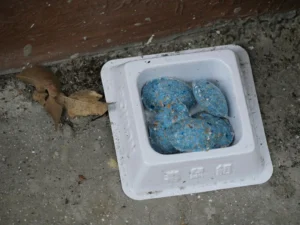
If they ate enough poison in that first feeding to die, they could become sick before eating more and develop bait shyness.
Instead, modern rat poisons are formulated so rats can eat a small amount, feel fine, and come back for more.
After several feedings over 4 to 7 days, they may have consumed enough poison for the dose to become lethal.
Second-generation anticoagulants like brodifacoum and bromadiolone are powerful enough that a single feeding can provide a lethal dose.
However, rats will still usually eat the bait multiple times before they die.
Why Do Some Rat Poisons Work Faster Than Others?
Second generation anticoagulants were made to fix a problem with older poisons. Some rats built up a tolerance to first generation poisons like warfarin.
That meant they could eat it many times without dying.
Second generation poisons got around this by being far more potent. A rat only needs to eat it once, even if it doesn’t die right away.
Non-anticoagulant poisons like bromethalin work differently. Instead of causing internal bleeding, it causes swelling in the brain and nervous system (the network of nerves that carries signals through the body).
This type of poison tends to work faster than anticoagulants.
Zinc phosphide is different again. Once a rat eats it, the poison reacts with stomach acid and releases a toxic gas inside its body.
This is one of the fastest acting rat poisons out there.
Does Body Size Affect How Much Poison Is Needed?
Yes, body size plays a big role. Just like with people and medication, a bigger animal generally needs a larger dose to die.
A smaller animal needs less.
A young rat might weigh 150 grams, while a large adult Norway rat can weigh 500 grams or more.

This size difference matters when calculating lethal doses.
Using the LD50 for bromadiolone (1.5 mg/kg) as an example:
- A 200-gram rat needs 0.3 mg of poison to die
- A 400-gram rat needs 0.6 mg of poison to die
Health plays a role too. A rat that’s already sick, old, or weak may die from a smaller amount than a healthy young rat would need.
In general, larger rats need to consume more poison to reach a lethal dose.
This is why it’s important to make sure there is enough bait available and that all the rats in the infestation can access it.
Common Rat Poison Brands And What They Contain
If you’ve walked down the pest control aisle at a hardware store, you’ve probably seen a few familiar names.
Most of these products use one of the active ingredients listed earlier.
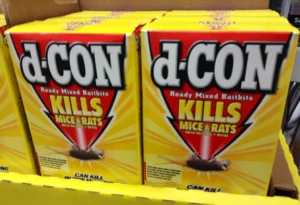
Brands like d-CON have shifted over the years due to regulations, and now mostly use bromethalin instead of older anticoagulants.
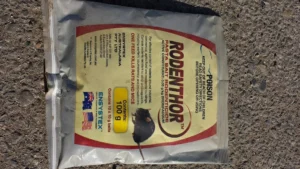
Tomcat and Havoc products commonly use brodifacoum, a strong second generation anticoagulant.
Just One Bite is another common brand, and it typically uses bromadiolone.
Contrac and Final Blend products often use diphacinone or chlorophacinone, which are first generation options.
It’s worth checking the label on any product you buy or find in your garage.
The active ingredient tells you how fast it works and how dangerous it could be to your pets.
That said, its important to not that most commercial rat baits don’t contain pure poison.
Instead, the active ingredient is mixed with food-based carrier materials to make the bait more appealing and easier for rats to eat.
Typical concentrations include:
- Anticoagulant baits: 0.005% to 0.01% active ingredient
- Cholecalciferol baits: 0.075% active ingredient
- Bromethalin baits: 0.01% active ingredient
This means a rat needs to eat a fair amount of bait to consume enough active ingredient for the dose to become lethal.
For example, if a bait contains 0.005% brodifacoum and a rat needs 0.3 mg to die, it would need to eat about 6 grams of bait.
Six grams might not sound like much at first, but for a small rat, that’s a significant amount of food.
This is one reason rats may need to feed multiple times before they consume enough poison.
Why Do Some Rats Survive Poison?
Not every rat that eats poison will die. There are several reasons why a rat might survive after eating rat poison.
First, the rat might not eat enough poison to reach a lethal dose. If it only nibbles on a small amount and then finds other food, it may not consume enough toxin to die.

Second, some rats have genetic resistance to certain poisons, especially first-generation anticoagulants like warfarin. These rats can eat the poison without dying because their bodies process the toxin differently.
Third, the poison might be old or degraded. When this happens, the active ingredient may no longer be at its full strength, which can make the bait less effective.
Fourth, a very large rat might need to consume more poison than an average-sized rat to reach a lethal dose. If there isn’t enough bait available, it may not consume enough to receive a lethal dose.
How Long Does It Takes for Poison to Kill a Rat?
The time from first feeding to death varies by poison type:
- First-generation anticoagulants: 5 to 10 days
- Second-generation anticoagulants: 3 to 7 days
- Cholecalciferol: 2 to 4 days
- Bromethalin: 1 to 3 days
- Zinc phosphide: Hours to 1 day
These are averages. Individual rats might die sooner or later depending on how much they ate, their size, and their overall health.
Why Stronger Isn’t Always Better
You might think the strongest rat poison is always the best choice, but that’s not necessarily true.
Very toxic poisons like brodifacoum can be highly effective against rats, but they can also be more dangerous to non-target animals.
If a dog or cat eats a rat that died from brodifacoum poisoning, the pet can become sick from the poison that is still in the rat’s body.
This is called secondary poisoning, and it’s a serious concern with very potent anticoagulants.
Cholecalciferol and bromethalin are less likely to cause secondary poisoning because they break down faster in the rat’s body.
However, they’re harder to treat in pets if direct poisoning occurs.
How to Make Sure Rats Get a Lethal Dose
To help make sure rats consume enough poison to die, follow these steps:
- Put out plenty of bait. Don’t just use one or two bait stations. Place multiple stations throughout the areas where rats are active.
- Keep bait fresh. Replace old, dried-out bait with fresh product regularly. Rats are less likely to eat stale bait.
- Remove competing food sources. If rats have access to other food, they may not eat enough poison. Seal trash cans, clean up spills, and store pet food indoors.
- Use the right bait type. Match the bait form, such as blocks, pellets, or soft packs, and the flavor to the rat species you’re dealing with.
- Be patient. It takes time for rats to overcome their natural caution and start eating bait regularly. Don’t give up after just a few days.
Should You Try Bait Instead Of Traps?
Choosing between poison bait and traps often comes down to your situation.
Bait works well for larger infestations, since it lets multiple rats feed over time without you resetting traps constantly.
Traps, on the other hand, give you more control. You know exactly when and where a rat got caught.
There’s also no risk of a poisoned rat wandering into a wall void or attic to die.
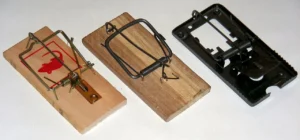
That last point matters more than people expect. A rat that dies from poison inside your walls can create a serious odor problem that lasts for days or even weeks.
Many pest control experts recommend a mix of both.
Use traps where you want tight control, and save bait stations for larger outdoor infestations where trap placement gets harder.
Whatever method you choose, sealing up entry points around your home matters just as much.
Poison and traps only deal with the rats already inside, not the ones that could still get in.
Conclusion
Most modern rat poisons only need a very small amount to be lethal, sometimes well under a gram for the strongest products. Older poisons need repeated feedings.
Fast acting options like zinc phosphide and bromethalin can work within hours.
Because it takes so little to be dangerous, treat rat poison as a serious hazard in any home with pets or kids. Tamper resistant bait stations go a long way.
Knowing the signs of poisoning matters too, since catching it early can make a real difference.
If you’re ever unsure whether your pet or child came into contact with rat poison, it’s always better to be safe.
Reach out to a vet, doctor, or poison control right away. It’s always better to check and find out nothing happened than to wait and regret it.

Hi, my name is Ezra Mushala, i have been interested animals all my life. I am the main author and editor here at snakeinformer.com.