

If you’ve recently gotten a pet rat or you’re dealing with a rat problem in your home, you might be wondering how quickly these animals grow up.
Knowing when rats reach adulthood can help you understand their behavior, plan for breeding (if you have pet rats), or figure out how serious an infestation might be. When are rats considered adults?
Rats are considered adults at around 6 weeks old when they reach sexual maturity and can reproduce. However, they don’t reach full physical maturity until 4 to 5 months old. Most rats are fully grown in size and weight by 6 months of age.
The timeline for rat development is actually pretty fast. Baby rats grow quickly and can start having babies of their own in just over a month.
But there’s a difference between being able to reproduce and being fully mature in every way.
Rat Development Timeline
Rats go through several stages of development from birth to full adulthood. Understanding these stages can help you know what to expect as a rat grows.
Here’s a quick breakdown of how rats develop:
| Age | Development Stage | What’s Happening | Size/Weight |
|---|---|---|---|
| 0-2 weeks | Newborn | Eyes and ears closed, completely dependent on mother | 6-8 grams at birth |
| 2-3 weeks | Early development | Eyes open, starting to explore | 20-30 grams |
| 3-4 weeks | Weaning | Starting to eat solid food, less dependent on mother | 40-60 grams |
| 5-6 weeks | Sexual maturity | Can reproduce, still growing | 100-150 grams |
| 2-3 months | Young adult | Continued growth, behavior patterns established | 200-300 grams |
| 4-5 months | Physical maturity | Reached adult size and weight | 300-500 grams |
| 6+ months | Full adulthood | Fully developed in all ways | 400-650 grams (depending on sex) |
Males (called bucks) are usually bigger than females (called does). A fully grown male rat can weigh up to 650 grams, while females typically max out around 400 grams.
When Do Rats Reach Sexual Maturity?
Rats can start reproducing surprisingly early. Female rats can get pregnant as young as 5 weeks old, and males can father babies at around 6 weeks old.
This is when rats are technically considered sexually mature adults. They have all the hormones and physical development needed to reproduce.
But just because a rat can have babies at this age doesn’t mean it should. Breeding rats that are too young can cause health problems for the mother and lead to smaller, weaker babies.

If you have pet rats, it’s really important to separate males and females by the time they’re 5 weeks old. If you don’t, you could end up with unexpected babies very quickly.
Wild rats don’t wait either. In the wild, rats start breeding as soon as they’re able, which is one reason rat populations can grow so fast.
When Do Rats Reach Physical Maturity?
Sexual maturity and physical maturity are two different things. Just because a rat can reproduce doesn’t mean it’s done growing.
Rats continue to grow for several months after they reach sexual maturity. Most rats reach their full adult size by the time they’re 4 to 5 months old.

During this time, they’re filling out and gaining muscle mass. Young adult rats (around 2 to 3 months old) might look gangly or thin compared to fully mature adults.
By 6 months old, most rats have reached their maximum size and weight. After this point, any weight gain is usually from getting fat rather than growing bigger.
Males take a bit longer to fill out than females. A male rat might not look fully mature until he’s closer to 6 months old, while a female might look fully grown by 4 months.
How Long Does It Take Baby Rats to Grow?
Baby rats (called pups or kittens) grow incredibly fast. When they’re born, they’re tiny, pink, and completely helpless. They can’t see, hear, or regulate their own body temperature.
But within just two weeks, their eyes and ears open. By three weeks, they’re running around, exploring, and starting to nibble on solid food.
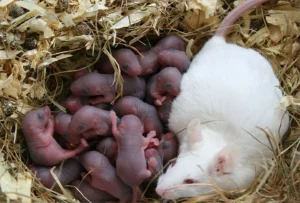
At four weeks old, most rat pups are weaned. This means they don’t need their mother’s milk anymore and can survive on their own.
By five to six weeks, they’re sexually mature and look like miniature versions of adult rats. They’re still smaller and thinner than full adults, but all their features are there.
The growth from newborn to young adult happens in less than two months. It’s one of the fastest development timelines of any mammal.
What’s the Difference Between Young Adult and Mature Adult Rats?
There are some key differences between a rat that just hit sexual maturity and a rat that’s fully mature.
Size is the most obvious difference. Young adult rats (6 weeks to 3 months) are noticeably smaller and lighter than fully mature adults (6 months and older).
Body proportions change too. Young rats often have bigger heads in proportion to their bodies. As they mature, their body catches up and they fill out.
Behavior is another difference. Young adult rats are usually more playful and energetic. They’re curious, active, and sometimes a bit reckless. Mature adult rats tend to be calmer and more settled in their habits.
Coat quality can differ too. Young rats sometimes have softer, fluffier fur. As they mature, their coat becomes sleeker and more uniform.
In males, you’ll notice the testicles become much more prominent as they reach full maturity. Young males have smaller, less noticeable testicles compared to fully mature males.
How Fast Do Rats Reproduce?
Once rats reach sexual maturity, they can reproduce really quickly. This is why rat populations can explode in a short amount of time.
A female rat can get pregnant again just 24 hours after giving birth. She doesn’t need any recovery time between litters.

The pregnancy (called gestation) only lasts about 21 to 23 days. That’s less than a month from conception to birth.
Each litter can have anywhere from 6 to 12 babies, though some litters can be even bigger. The average is around 8 to 10 pups.
A single female rat can have 5 to 7 litters in one year. If you do the math, that’s potentially 40 to 70 babies from just one female in a year.
And remember, those babies can start having their own babies when they’re just 6 weeks old. This means a rat population can grow exponentially in just a few months.
At What Age Should You Adopt a Pet Rat?
If you’re getting a pet rat, you should wait until it’s at least 6 weeks old before taking it home. At this age, the rat is fully weaned and can eat solid food on its own.
Many breeders and pet stores won’t let rats go to new homes until they’re 6 to 8 weeks old. This gives the babies enough time with their mother and siblings to learn important social behaviors.
Rats that are separated from their mother too early can have behavioral problems. They might be more aggressive, nervous, or have trouble getting along with other rats.
If you’re adopting from a rescue or shelter, the rats are usually already adults. This can actually be a good thing because you know exactly what size and temperament you’re getting.
Baby rats are cute, but they require more patience and training. Adult rats (4 to 6 months and older) are often calmer and easier for first-time rat owners.
How Can You Tell How Old a Rat Is?
If you’ve found a wild rat or adopted a rat without knowing its age, there are some ways to estimate how old it might be.
Size is the first clue. Tiny rats (under 100 grams) are probably less than 2 months old. Medium-sized rats (200 to 300 grams) are likely 2 to 4 months old. Full-sized rats (400+ grams) are probably 5 months or older.
Eyes and ears can tell you a lot too. Very young rats (under 2 weeks) have closed eyes and ears. Once the eyes and ears are open, the rat is at least 2 weeks old.

Coat condition matters. Baby rats have sparse, fuzzy fur. Young adults have soft, thick fur. Older rats (over a year) might start to show some thinning or graying of the fur.
Behavior gives clues too. Very young rats are clumsy and uncoordinated. Rats around 3 to 6 months old are super active and playful. Older rats (over a year) are usually calmer and move more slowly.
Teeth can help too, but you’d need to get pretty close. Baby rats have smaller, whiter teeth. Adult rats have larger, yellower teeth (the yellow is normal and healthy, not a sign of poor health).
Do Male and Female Rats Mature at Different Rates?
Yes, there are some differences in how quickly male and female rats mature.
Female rats tend to reach sexual maturity slightly earlier than males. Females can get pregnant as early as 5 weeks old, while males usually aren’t fertile until 6 weeks.
But when it comes to physical size, males take longer to reach their full adult size. Males keep growing for a bit longer than females and end up significantly bigger.
A female rat might reach her full size by 4 months old, while a male might not fill out completely until he’s 6 months old.
Males also develop more prominent features as they mature. Their heads get broader, their bodies get bulkier, and their testicles become very noticeable. Females stay sleeker and more streamlined.
Behaviorally, young male rats tend to be more rough and rowdy when they’re going through puberty (around 6 to 12 weeks old). Females are usually calmer, though they can get moody when they’re in heat (which happens every 4 to 5 days once they’re sexually mature).
How Does Nutrition Affect Rat Development?
Nutrition plays a huge role in how quickly and how well a rat develops. Rats that get good nutrition grow faster and healthier than rats that don’t.
Baby rats that nurse from a well-fed mother grow better than those with a malnourished mother. The mother’s milk quality directly affects how strong and healthy the babies will be.
Once rats are weaned, they need a balanced diet with protein, carbohydrates, vitamins, and minerals. Young rats need more protein than adult rats because they’re still growing.

Rats that don’t get enough food or get poor-quality food might take longer to reach their full size. They might be smaller and weaker than well-fed rats, even as adults.
On the flip side, rats that get too much food (especially fatty or sugary foods) can become overweight. This doesn’t mean they’re more mature. It just means they’re eating more than they need.
If you have pet rats, feeding them a quality rat pellet diet along with fresh fruits and vegetables will help them grow properly and reach their full potential size.
What Happens After Rats Reach Adulthood?
Once a rat reaches full adulthood (around 6 months old), it’s considered a mature adult for the rest of its life. But that doesn’t mean nothing changes.
Rats continue to age, and older rats (over 18 months) start to show signs of getting old. They might slow down, sleep more, and become less active.
Very old rats (over 2 years) often develop health problems like tumors, respiratory issues, or kidney problems. Their fur might thin out or turn gray.
The average lifespan of a pet rat is 2 to 3 years. Wild rats usually don’t live as long because of predators, disease, and lack of reliable food.
So while a rat is considered an adult at 6 months, it still has most of its life ahead of it at that point. A well-cared-for pet rat will stay active and healthy for at least another year or more after reaching adulthood.
Why Does It Matter When Rats Become Adults?
Knowing when rats reach adulthood matters for several reasons, especially if you’re dealing with rats in any capacity.
For pet owners, understanding rat development helps you know what to expect. You’ll know when to separate males and females to prevent breeding, when to switch from kitten food to adult food, and when your rat has reached its full size.

For pest control, knowing how fast rats mature helps you understand how quickly an infestation can grow. If you’ve got rats in your house, those babies you saw last month could already be having babies of their own.
For researchers and breeders, knowing the exact timeline of rat development is important for planning breeding programs and understanding reproductive cycles.
It also matters for anyone trying to identify whether they’re dealing with baby rats or adults. A rat that’s sexually mature but not fully grown might look like a large baby when it’s actually a young adult capable of reproducing.
Conclusion
Rats are considered adults at around 6 weeks old when they reach sexual maturity and can start reproducing. But they don’t reach their full physical size until they’re 4 to 5 months old, and most rats are completely mature by 6 months of age.
The development from newborn to adult happens incredibly fast. Baby rats are born helpless, but within just 6 weeks, they’re capable of having babies of their own.
This fast development timeline is one reason rat populations can grow so quickly, whether you’re talking about pet rats or wild rats in your neighborhood.
If you have pet rats, make sure to separate males and females by 5 weeks old to prevent unwanted litters. And if you’re dealing with a rat infestation, remember that those babies won’t stay babies for long.
Understanding when rats become adults helps you better care for pet rats, manage breeding, or deal with pest problems more effectively.

Hi, my name is Ezra Mushala, i have been interested animals all my life. I am the main author and editor here at snakeinformer.com.