
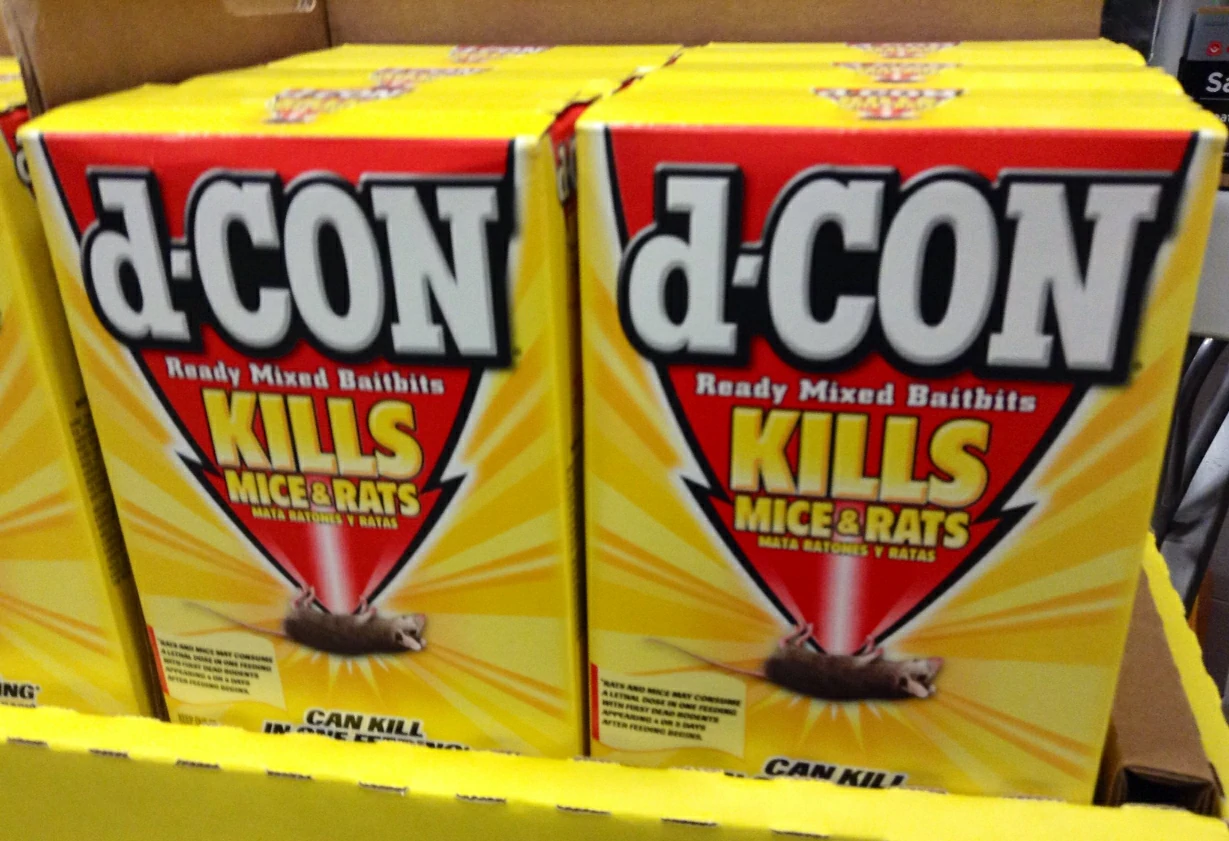
Walking through the pest control aisle at the hardware store, you’ll see rat poisons in many different colors, from bright blue and green to red and yellow.
Each color serves a purpose, and if you’ve found yellow rat poison or are wondering whether to buy it, understanding what that color means is important. So what rat poison is yellow?
Yellow rat poison typically contains diphacinone or chlorophacinone as the active ingredient. Common brands include Ramik Green (which despite its name comes in yellow-tan pellets), Kaput Rat & Mouse Bait (yellow pellets), and some formulations of JT Eaton Bait Blocks (mustard yellow). Yellow usually indicates first-generation anticoagulant poisons, which are less potent than bright blue or green second-generation types.
The yellow color isn’t random. Manufacturers use specific colors to help identify different types of poison and their strength. Understanding what yellow means can help you make safer choices and identify risks if you find yellow poison around your property.
Why Rat Poison Comes in Different Colors
Rat poison manufacturers add dyes to their products for several practical reasons. The bright colors aren’t meant to attract rats. They serve human purposes.
First, color helps differentiate between different types and strengths of poison. If all rat poison looked the same, it would be impossible to tell at a glance whether you’re dealing with a first-generation anticoagulant, a second-generation type, or a completely different poison like bromethalin.
Second, bright colors make the poison visible. If a child or pet gets into rat poison, you want to be able to see it immediately. A bright yellow pellet on the floor is much easier to spot than a brown or gray one that blends in.
Third, color helps prevent accidental ingestion by making the poison clearly not food. No natural food is bright blue or neon green.
Yellow is trickier because some foods are yellow, but the artificial brightness of poison yellow is different from food yellow.
Fourth, color coding helps pest control professionals keep track of what they’re using and where. If they use yellow poison in one area and blue in another, they can tell at a glance which bait stations contain which product.
The specific colors aren’t regulated or standardized across all manufacturers, which can be confusing. One brand’s yellow poison might have different active ingredients than another brand’s yellow poison. You always need to read the label.
Common Yellow Rat Poisons and Their Ingredients
Several popular rat poison products come in yellow or yellowish colors. Knowing these products helps you identify what you’re dealing with.
Ramik Green is confusingly named because the pellets are actually yellow-tan or mustard colored, not green. It contains diphacinone, a first-generation anticoagulant. The pellets are small and grain-based, designed for both indoor and outdoor use.
Kaput Rat & Mouse Bait comes in bright yellow pellets. It also contains diphacinone. This product is popular in agricultural settings and is designed to be weather-resistant for outdoor use.
JT Eaton Bait Blocks in yellow formulations contain diphacinone. These are solid blocks rather than loose pellets, and they’re often used in bait stations.
Some formulations of Contrac and other professional-grade products come in yellow or tan colors. These might contain diphacinone or chlorophacinone.
Yellow grain-based baits, which look like regular seeds or grains but are coated with poison, often contain first-generation anticoagulants. The yellow color comes from the poison coating.
Always check the label to confirm the active ingredient. Don’t assume based on color alone, because different manufacturers use colors differently.First-Generation vs. Second-Generation in Yellow Colors
Understanding the difference between first and second-generation anticoagulants helps you know what you’re dealing with when you find yellow rat poison.
First-generation anticoagulants (diphacinone, chlorophacinone, warfarin) are less potent than second-generation types. Rats need to eat them multiple times over several days to get a lethal dose. These poisons also break down and leave an animal’s body relatively quickly.
Yellow rat poison usually (though not always) contains first-generation anticoagulants. The yellow color has become somewhat associated with these older, less potent formulations.
Second-generation anticoagulants (brodifacoum, bromadiolone, difethialone) are much stronger. Rats only need to eat them once to get a lethal dose. These poisons persist in an animal’s body for weeks or months.
Second-generation poisons are typically bright blue, green, or red rather than yellow. This helps differentiate them from the less potent yellow first-generation types.
However, this color coding isn’t universal. Some manufacturers make second-generation poisons in yellow. You can’t rely on color alone. Always read the label to confirm what active ingredient you’re dealing with.
The practical difference matters for secondary poisoning risk. First-generation anticoagulants are less likely to poison predators that eat poisoned rats because the poison breaks down faster.
Second-generation types persist longer and are more dangerous to wildlife.
Why Yellow Poison Can Be More Dangerous for Children
Yellow rat poison presents a particular danger to young children because the color doesn’t look obviously toxic.
Children learn from a young age that bright blue and green things are often artificial and potentially dangerous. Blue candy is suspect. Green food dye looks obviously fake. But yellow is the color of corn, bananas, cheese, and many natural foods.
When a toddler sees yellow pellets, they might think it’s corn, cereal, or candy. The association with food colors makes yellow poison more tempting than electric blue poison.
Some yellow rat poisons are grain-based, which makes them look even more like food. They might resemble corn kernels, oats, or breakfast cereal. A child doesn’t have the experience to tell the difference.
The smell can also be misleading. Some yellow rat poisons have grain or nutty smells from their base ingredients. They don’t necessarily smell chemical or wrong to a child.
This is why storage is so critical with yellow rat poison. It must be locked away where children absolutely cannot access it. Don’t rely on children being put off by the color or smell. Yellow poison looks too much like food.
If you use yellow rat poison in bait stations, make sure the stations are truly tamper-resistant and locked. Check them frequently to ensure they haven’t been damaged or broken open.
How Yellow Rat Poison Works
Most yellow rat poisons are anticoagulants, and understanding how they work helps you understand their risks and benefits.
When a rat eats anticoagulant poison, the poison interferes with the rat’s ability to use Vitamin K. Vitamin K is essential for producing clotting factors in the blood. Without these factors, blood can’t clot properly.
Over the next few days, the rat develops internal bleeding. This might be in the digestive tract, under the skin, in joints, or in internal organs. The rat becomes weaker as it loses blood internally.
Eventually, the rat dies from blood loss. With first-generation anticoagulants (common in yellow poisons), this process takes 4 to 7 days or longer. The rat needs to eat the poison multiple times during this period for the dose to be lethal.
The slow action is both good and bad. It’s good because it means one accidental exposure is less likely to kill a pet or child. It’s bad because it takes longer to solve your rat problem and because poisoned rats stay active and vulnerable to predators for days.
If a cat, dog, owl, or other predator eats a rat that consumed yellow anticoagulant poison, the predator can also be poisoned. The poison in the rat’s body transfers to whatever eats it.
Identifying Yellow Poison You Find
If you find yellow rat poison somewhere and need to determine what it is, there are several ways to identify it.
First, look for any labeling. Even old, faded containers might have readable portions of the label. Look for the product name and the active ingredient section. The active ingredient tells you exactly what chemical you’re dealing with.
If there’s no label, look at the form of the poison. Is it loose pellets, grain-coated bait, solid blocks, or powder? This narrows down what it might be.
Smell it carefully from a distance (don’t get close enough to breathe it in deeply). Yellow diphacinone products often have a grain or slightly sweet smell from their base ingredients. Don’t confuse this with food smell though.
Look at the exact shade of yellow. Bright artificial yellow suggests commercial rat poison. Dull tan or mustard yellow is common in products like Ramik. Natural grain yellow might indicate grain-based bait.
Check where you found it. If it was in a bait station designed for rodent control, it’s almost certainly rat poison. If it was in an old container in a shed or garage, it might be rat poison left by previous owners.
When in doubt, treat it as rat poison and handle it with full precautions. It’s better to be overly cautious than to assume something is safe and be wrong.
Comparing Yellow Poison to Other Colors
Different colored rat poisons typically contain different active ingredients and have different potencies. Understanding these differences helps you make informed choices.
Bright blue rat poison usually contains bromadiolone or brodifacoum, both second-generation anticoagulants. These are very potent and highly dangerous to wildlife through secondary poisoning.
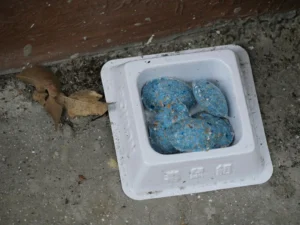
Green rat poison often contains brodifacoum or diphacinone, depending on the brand. Bright neon green typically means second-generation anticoagulant. Dull olive green might be first-generation.
Red or pink rat poison might contain several different ingredients. Some red poisons are second-generation anticoagulants. Others are bromethalin, a neurotoxin that works completely differently from anticoagulants.
Purple or black rat poison sometimes contains zinc phosphide, which creates toxic phosphine gas in the stomach. This works faster than anticoagulants but has different risks.
Yellow or tan rat poison most commonly contains first-generation anticoagulants like diphacinone or chlorophacinone. These are less potent than second-generation types but still dangerous.
The color coding isn’t standardized, so you can’t rely on it completely. Two different brands’ blue poisons might have different ingredients. Always read labels.
Conclusion
Yellow rat poison typically contains first-generation anticoagulants like diphacinone or chlorophacinone. Common brands include Ramik Green (yellow-tan pellets), Kaput Rat & Mouse Bait (yellow pellets), and JT Eaton products in yellow formulations.
Yellow poison is particularly dangerous to children because the color looks more food-like than bright blue or green poisons. Always store yellow poison in locked cabinets, use it only in tamper-resistant bait stations, and keep detailed records of where it’s placed.
The safest approach is to avoid poison altogether and use snap traps, electronic traps, or exclusion methods instead.
If someone eats yellow rat poison, call Poison Control immediately at 1-800-222-1222. Don’t wait for symptoms to appear.

Hi, my name is Ezra Mushala, i have been interested animals all my life. I am the main author and editor here at snakeinformer.com.