
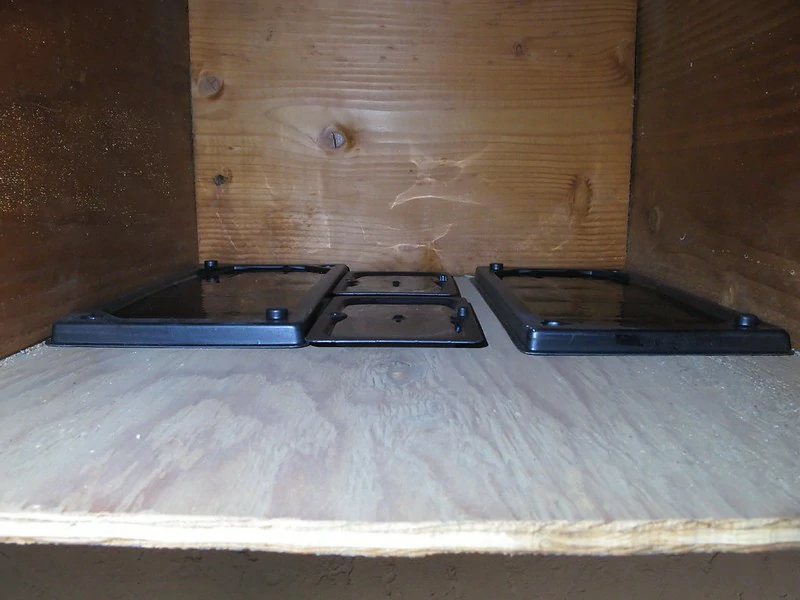
Glue traps are sold in stores all over Maryland, but that doesn’t make them safe or smart. If you have mice, you want to know where the law stands. So are glue traps legal or illegal in Maryland?
Glue traps are legal in Maryland. No statewide law bans buying, selling, or using them. However, Maryland’s animal cruelty law still applies, and it expects pest control to use the most humane method reasonably available.
That’s the short answer, but the details are worth knowing. Maryland’s law leaves some gray areas, and a few things can get you into trouble even when the trap itself is legal.
Glue Traps Are Legal In Maryland
You can buy a glue trap in Maryland and use it in your home without breaking a state law. Stores sell them, and pest control companies can use them too.
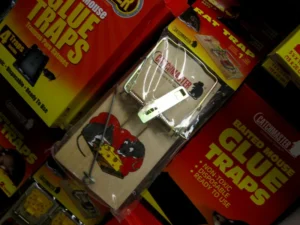
They often sit in the pest aisle right next to the snap traps, so it’s easy to grab one without thinking about it.
That’s the same as most of the US, where only a couple of cities have banned them. England, Wales, and Scotland have much stricter rules, but Maryland has nothing like that.
However, legal doesn’t mean harmless. Glue traps can catch the wrong animals, and Maryland’s cruelty law has wording that could matter if something goes badly wrong.
Why Are Mice So Common In Maryland Homes?
Mice are everywhere in the mid-Atlantic, and Maryland is no exception. The house mouse lives right alongside people, and the white-footed mouse (a native species) often wanders in from woods and fields.
When the weather turns cold in the fall, both look for warm places with food. Basements, crawl spaces, attics, and garages are easy targets, especially in older homes and row houses with gaps around pipes and foundations.
Mice don’t need much room to get in. A gap about the width of a pencil is enough, so even a tidy house can have a problem.
Knowing why they come helps you pick the right fix. Traps catch the mice that are already inside, but sealing holes and removing food stops new ones from showing up.
Does Maryland Have A Law Against Glue Traps?
No. Maryland has no statewide law that bans selling or using glue traps. However, rules can differ by city and county, so it’s smart to check your local rules.
What Maryland does have is a general animal cruelty law in its Criminal Law code. It covers many kinds of animals, including pets, strays, and farm animals.
That law doesn’t name glue traps, so there’s no simple rule that says “glue traps are banned.” Instead, it comes down to how the cruelty law treats pest control.
If you want a firm answer for your own situation, check with a Maryland attorney. Local rules and fine print can change how a law applies to you.
Maryland’s Animal Cruelty Law Has A Pest Control Exception
The cruelty section of the Maryland code (Criminal Law, sections 10-601 through 10-608) doesn’t apply to some activities.
One of them is an activity that may cause unavoidable pain to an animal, like food processing, pest elimination, animal training, and hunting.
There’s a catch, though. That exception only applies if the person uses the most humane method reasonably available.
That wording matters for glue traps. Vets and welfare scientists say snap traps and electronic traps are more humane, so someone could argue a glue board isn’t the most humane method available.
That argument is rarely tested in court, so it’s a gray area, not a clear rule.
What Did Maryland’s Attorney General Say About Glue Traps?
This question has come up before. In 1986, a member of the Maryland House of Delegates asked the Attorney General whether using store-bought glue boards to kill rats and mice broke the state’s cruelty law.
The Attorney General didn’t give a flat yes. His opinion suggested the General Assembly should settle the question directly, instead of leaving it to the cruelty law’s wording.
That was a long time ago, and the law has been updated since then. But the point still stands, since the legislature never passed a clear rule about glue traps.
Think of it like this. The legislature has never passed a clear glue trap ban, so glue traps stay legal unless a local rule says otherwise.
Do Any Maryland Cities Or Counties Ban Glue Traps?
Glue traps aren’t usually banned at the city or county level in Maryland, but local rules can differ. That includes Baltimore, which has its own health department and housing rules.
In Baltimore City, the health department helps enforce the state’s animal cruelty rules. That doesn’t mean glue traps are banned there, but it’s a good reason to ask before you set one.
If you live in a city or county with its own animal control rules, a quick call to your local office can clear things up. Local laws can change faster than state ones.
Outside Maryland, two California cities (Ojai and West Hollywood) have banned glue traps. That shows a city can act first, so Maryland towns could follow someday.
No Federal Law Bans Glue Traps Either
The US doesn’t have a national ban on glue traps. Members of Congress have introduced a bill called the Glue Trap Prohibition Act that would ban selling and using them.
Unless a bill like that passes, glue traps stay legal at the federal level.
The bill’s own text points out that the CDC has cautioned against glue traps. Trapped animals leave urine and droppings on the board, and that can harm human health.
Even without a national ban, the idea is getting more attention. Lawmakers in California and New York have also put forward bills about glue traps.
Which US Cities And States Have Tried To Ban Glue Traps?
West Hollywood was the first US city to ban selling and using glue traps. Ojai followed, and both are in California.
Other places have tried. California lawmakers have proposed a statewide Glue Trap Prohibition Act, and New York lawmakers have introduced bills that would ban glue traps there as well.
Some of these bills would ban sales and use. Others would only ban glue traps in state-owned buildings, which is a smaller step.
Bills like these come and go, and some pass while others stall. Your state legislature’s website shows the current status of any bill.
Vets Say Glue Traps Aren’t Humane
The American Veterinary Medical Association says glue traps aren’t an acceptable way to kill animals. The Canadian Veterinary Medical Association says the same.
An animal on a glue board can stay alive for more than 24 hours. It can die from thirst, hunger, exhaustion, or suffocation.
Trapped animals also hurt themselves trying to get free. They can tear skin, break bones, and pull out fur.
Studies that compare pest control methods place glue traps near the bottom for animal welfare. Snap traps, which usually kill in a split second, score much better.
What Happens If A Glue Trap Catches A Protected Animal In Maryland?
A glue trap can’t tell what it’s catching. Songbirds, bats, snakes, lizards, chipmunks, and even young squirrels can get stuck.
That can be a legal problem. Wild birds in the US are protected under the Migratory Bird Treaty Act, and Maryland has its own protections for many native animals.
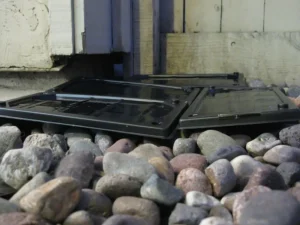
For example, Maryland is home to eastern box turtles and several snake species, and some bats in the state are at risk. Catching one by accident could lead to questions you don’t want to answer.
The risk is highest in garages, sheds, barns, and porches. Animals wander in and out of those spaces all the time.
If it happens to you, don’t ignore it. Free the animal carefully, call a wildlife rehabilitator, and ask Maryland’s Department of Natural Resources if you aren’t sure what to do.
Glue Traps Aren’t Safe Around Pets And Kids
A cat or small dog can step on a glue trap and get stuck. A curious child can put a hand on one just as easily.
Getting glue off fur or skin hurts, and pulling it can tear skin and hair. Call a vet for a pet instead of trying to fix it yourself.
A scared mouse on a board can also bite. And a child who tries to free it could get hurt or touch droppings.
If you have pets or little kids, snap traps inside a covered box are a safer choice. That keeps paws and fingers away from the trap.
What Should You Do If An Animal Is Stuck On A Glue Trap?
First, don’t try to pull the animal off. That can rip its skin or break its legs.
Animal charities often suggest dabbing cooking oil on the glue (a little at a time) to loosen it. Keep the animal warm and quiet while you work.
Then call a vet, a licensed wildlife rehabilitator, or your local humane society as soon as you can. Many can tell you what to do over the phone.
If it’s a mouse or rat, a vet can end its suffering quickly and humanely. That’s much kinder than throwing the trap in the trash with the animal still alive.
Wear gloves the whole time. Wild mice can carry germs, and a stressed animal may leave urine and droppings on the board.
If You Still Plan To Use A Glue Trap, How Can You Cut The Harm?
The kindest advice is don’t, because snap traps and electronic traps are better. But if you’ve already decided, a few steps can cut the harm.
Only use glue traps indoors, and never in a garage, shed, or porch where birds and other wildlife could wander over them. Put the trap inside a box or behind an object so pets and kids can’t reach it.
Check it often, at least every few hours, and don’t leave one down overnight if you can avoid it. The longer an animal is stuck, the worse it suffers.
Decide in advance what you’ll do if something is caught. Keep gloves, cooking oil, and a vet’s phone number handy so you can act fast.
Even with all that care, a trapped mouse can suffer a lot. That’s why most vets and welfare groups say glue traps are the wrong tool.
Snap Traps Usually Work Better Than Glue Traps
Usually not. Dust and dirt can cover the glue so it stops working, and some mice learn to avoid the board.
A glue trap also doesn’t solve why mice came in. If food and shelter are still there, new mice will move in, and you’ll keep buying traps.
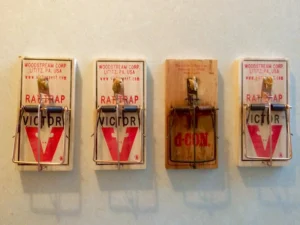
Snap traps tend to work better in homes, and they’re cheap. A well made one usually kills a mouse in a split second.
A good trap also shows you results fast. You can see where mice are active and move your traps to the spots that work.
Snap Traps And Electronic Traps Are Legal In Maryland
If you want to skip glue traps, you’ve got plenty of legal choices. Snap traps are sold in nearly every hardware store, and electronic traps are easy to find online and in many stores.
Both are generally seen as more humane than glue boards. A snap trap usually kills in a split second, and an electronic trap usually does it within seconds.
Poison is a different story. Rodent poisons have to be registered products, and the Maryland Department of Agriculture oversees pesticides in the state.
Poison can also hurt pets and wildlife like owls and hawks, which makes it a risky pick for most homes. For most people, a good snap trap is the simplest legal choice.
Better Ways To Handle Mice In A Maryland Home
Start by keeping mice out, since fewer mice means fewer traps. Mice can squeeze through a gap about 1/4 inch wide, which is about the width of a pencil.
Seal cracks with coarse steel wool or wire mesh, then cover it with caulk. Check around pipes, vents, crawl spaces, and garage doors.
Mice often move indoors when it gets cold, so early fall is a good time to do this. Basements, garages, and attics are common entry points in older Maryland homes.
Next, use snap traps along the walls where you see droppings. Put the trigger end against the wall, and use a pea sized dab of peanut butter as bait.
Electronic traps are another quick option. They give a strong shock that usually kills within seconds, and you don’t have to see the mouse.
Store food in glass or hard plastic containers, and take out the trash often. For a bigger problem, call a licensed pest control company and ask them to skip glue boards.
Can Your Landlord Use Glue Traps In A Maryland Rental?
In most cases, yes, since glue traps are legal. Landlords in Maryland usually have to keep rental homes safe and livable, and many local housing codes cover pests.
That means pest control is often the landlord’s job. However, the law doesn’t say which method they have to use.
If you don’t want glue traps in your home, ask your landlord in writing to use snap traps or seal the entry points. A polite request often works.
If the problem is serious and nothing happens, you can contact your city or county housing office. Tenant rights groups in Maryland can also explain your options.
Pest Control Companies In Maryland Can Still Use Glue Traps
Since no state law bans them, a licensed pest control company can legally use glue boards in Maryland. Some companies still do, especially to monitor where mice are moving.
Monitoring is a different job from killing. A board that shows you where mice are traveling is less cruel than one used to catch them and leave them to die.
Still, you’re allowed to ask. Before the work starts, ask what traps the company uses and tell them you’d like snap traps or electronic traps instead.
Many companies already use snap traps and sealing as their main tools, so you won’t be asking for anything unusual. A good company will have no problem with that. If they push back, you can find another one.
Could Maryland Ban Glue Traps In The Future?
A ban is always possible, since laws change over time. More cities and states have looked at the issue, and England, Wales, and Scotland have already acted.
If a Maryland lawmaker introduced a bill, it would go through the General Assembly like any other. You can contact your state delegate or senator if you’d like to see one.
You can also ask local stores to stop selling glue traps. Stores often listen when enough customers speak up.
The safest move is to use other traps. That way, you won’t need to worry if the rules change.
Conclusion
So, are glue traps legal or illegal in Maryland? In general, they’re legal, and no statewide or federal law bans them.
However, Maryland’s cruelty law expects pest control to use the most humane method reasonably available. That makes glue traps a risky choice, since vets and welfare studies say better options exist.
If you already have one down, check it often and know who to call if an animal gets stuck. If you’re buying new traps, snap traps or electronic traps are kinder and work better.
The best plan is to keep mice out in the first place. Seal gaps, store food well, and keep things clean.
Remember, a legal product can still cause a lot of suffering. Choosing a kinder trap costs about the same, and it protects the birds, pets, and wildlife that could wander over a board.
Laws can change, so check your city and county rules before you buy.

Hi, my name is Ezra Mushala, i have been interested animals all my life. I am the main author and editor here at snakeinformer.com.