
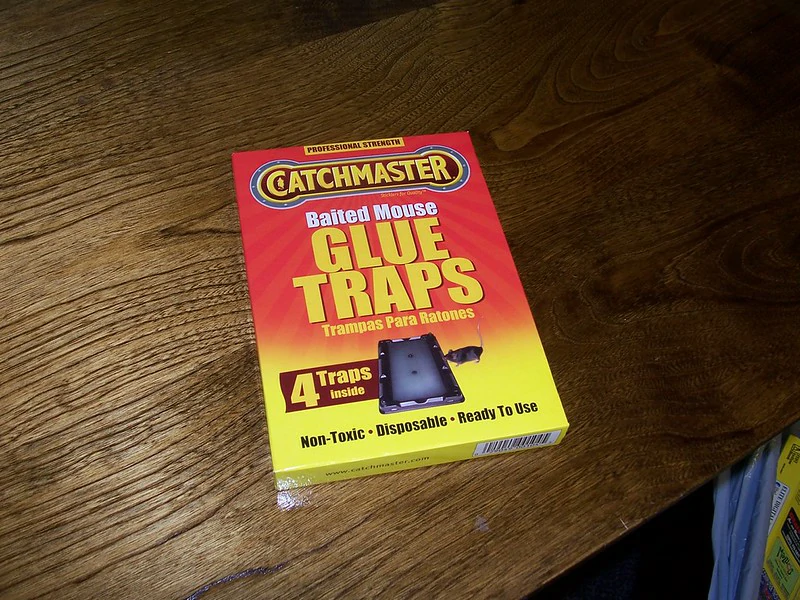
Glue traps for rats are bigger than the ones sold for mice, and a lot of people don’t know what happens to a rat that gets stuck on one. So, do rats die on glue traps?
Yes, rats can die on glue traps if no one frees them. A stuck rat can survive until it dies of dehydration (loss of body water), which usually takes about two to four days. Rats are strong, so some pull free or drag the trap away.
That’s the short answer, but rats aren’t mice, and the details are worth knowing. This post covers what kills them, how long it takes, and what to do instead.
Do Rats Always Die on Glue Traps, or Can They Break Free?
If no one finds them, rats caught on glue traps usually die there, and it takes a while. However, rats are bigger and stronger than mice, so a few can pull loose.
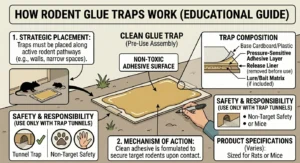
A rat that breaks free may leave patches of fur behind, or it may drag a small glue board away with it.
That’s one reason a rat can seem to vanish after it’s caught. It may hide in a wall or under a shed, still stuck to the board, where you might never find it.
Others are found alive by people, and that’s when things get tricky, because a frightened rat can bite hard.
How Rats Get Stuck on Glue Boards
Rats usually run along walls and edges, and in research on glue traps they’ve been seen running onto the boards without noticing them.
The glue grabs their feet first. As the rat struggles, more of its body gets stuck, including its belly and tail.
Rats can drag a small mouse glue board away with them, so UK guidance said only boards made for rats should be used on rats.
Rat boards are larger, but they work the same way: they hold the animal in place and don’t kill it.
What Kills a Rat on a Glue Trap?
Nothing on the board kills a rat directly, because the glue isn’t poison and the board isn’t a spring. Death comes from what being stuck does to the body over time.
Dehydration is the biggest cause, and exhaustion makes it worse. A rat fights hard at first, then runs out of energy, and without water it weakens fast.
Cold can add to it, especially in a garage, shed, or basement, since a stuck rat can’t move to a warmer spot or curl up in a nest.
Some rats suffocate when glue blocks their nose and makes it difficult to breathe. Experts who rated glue traps for rats described severe distress and breathing problems.
Injuries can also become serious when a rat struggles to get free. The longer it stays stuck, the worse its condition can become.
How Long Can a Rat Survive on a Glue Trap?
A rat stuck on a glue trap can survive until it dies of dehydration (when its body runs out of water). That usually takes about two to four days.
A stuck rat can’t get to food or water, so it can’t get the moisture it normally gets from its food. The clock starts the moment it’s stuck.
A hot, dry spot like an attic or shed can speed things up, and so can hard struggling, since both make a rat lose water faster. A cool, damp spot can stretch it out a little longer.
Some rats die sooner than that from suffocation, injuries, or cold, and bigger, healthier rats may last longer than small or sick ones.
A scientific assessment of rat control methods found rats can survive for hours on glue traps. They can be left that long even when someone checks the traps on a strict schedule.
New Zealand’s standard for humane rat traps asks for the animal to be knocked unconscious within 180 seconds (three minutes). Glue traps are nowhere near that.
Rats Can Hurt Themselves Badly When They’re Stuck
A rat’s feet usually stick first, and as it fights to escape, more of its body gets stuck. That can lead to broken bones, torn skin, and bruising.
Some rats injure themselves while trying to get free. That’s a known risk when animals are held in a trap for a long time.
A stuck rat is also a danger to you. Rats have sharp teeth and strong jaws, and a frightened one can bite through a thin glove in an instant.
There’s another problem to consider. If a mother rat gets stuck while she’s nursing, her pups may be left without food. Researchers who study rat control have also raised this as an animal welfare concern.
Those pups often can’t be found either, since rats usually nest out of sight in walls, burrows, or under sheds.
Why Glue Traps for Rats Are Different From Glue Traps for Mice
The idea is the same, but rats change the picture. They’re many times heavier than a mouse, with strong legs, sharp claws, and teeth that can chew through wood and plastic.
That strength is why rats can sometimes pull free or drag a board away. Because a rat is so strong, it may also fight harder and for longer, which can mean worse injuries.
Bigger animals are also harder and more dangerous to handle, so dealing with a live rat on a glue board is rarely a job for an untrained person.
Why Rats Are Harder to Trap Than Mice
Rats are wary animals, and they often avoid new objects in their territory for days, a habit called neophobia (a fear of new things).
That’s why a rat may walk past a brand new snap trap for several nights without touching it.
Pros often leave traps out unset for a few days so the rats get used to them. Then they set the traps and add bait.
Glue boards seem to dodge that problem, since research suggests rats run onto them without noticing. That’s one reason people reach for glue, even though the cost to the animal is high.
You can beat the wariness without glue by being patient. Put traps out unset first, place them tight against walls, and give the rats time to get comfortable.
Do Pest Controllers Still Use Glue Traps for Rats?
Some do, though many countries limit it. Industry groups in the UK have called glue boards a last resort for trained professionals in places like food factories, where a rat problem can be serious.
One UK pest control group has argued that glue traps are still needed because many rats carry genes that make some rat poisons less effective.
That’s a real challenge, and it’s one reason pros look for other tools like snap traps and sealing entry points. However, animal welfare experts say it doesn’t make glue boards humane.
In Great Britain, glue traps are illegal for the public, with limited exceptions for licensed professionals in some places.
In the US and Canada, pros can still choose them in most places, though some companies and cities are moving away from glue.
How Glue Traps Compare With Other Ways of Catching Rats
A group of rat experts in the UK compared six lethal rat control methods and rated how much each one hurts the animal.
Glue traps landed near the worst end. A review of the research on rat glue boards found the impacts were extreme and lasted for hours.
Cage traps (live traps that hold a rat in a cage) rated lower, with moderate to severe impacts for hours.
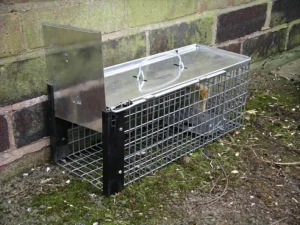
Snap traps varied a lot, from no impact to extreme for seconds or minutes, depending on how well the trap works.
The authors said tested snap traps that knock a rat out very fast could be the best option.
Poison baits were also a concern because they act slowly and can pass to pets and wildlife that eat poisoned rats.
So no method is perfect, but a good snap trap that kills in seconds comes out far ahead of glue.
What Should You Do If You Find a Live Rat on a Glue Trap?
Don’t touch the rat with bare hands, and don’t try to free it yourself. A frightened rat can bite hard, and rats can carry germs.
Call a pest control company, animal control, a wildlife rescue, or a vet right away. Explain that a rat is stuck on a glue trap.
Some wildlife rescues don’t take rats, but many vets can end an animal’s suffering quickly and humanely. A pro can also tell you who to call.
Keep kids and pets away from the board, and put it in a quiet, dark spot (like a closed bathroom) while you wait.
Don’t drown the rat, hit it, or throw the trap away with the rat still alive. Those choices cause more suffering and can break animal cruelty laws in some places.
How to Handle a Dead Rat on a Glue Trap Safely
Wear thick rubber gloves, and let fresh air into the room for a while before you start.
Spray the rat, the board, and the area around it with a disinfectant. A mix of one part bleach to nine parts water works too, and it should soak for about five minutes.
Don’t sweep or vacuum droppings, since that can send germs into the air. Wipe them up with paper towels instead.
Lift the board with paper towels, seal it in a plastic bag, and put that bag inside a second bag before it goes in the outdoor trash.
Clean the spot again, take off your gloves, and wash your hands with soap and water for at least 20 seconds. If you ever get bitten or scratched, wash the wound well and see a doctor.
What Rats Can Carry and Why Handling Matters
Rats can carry germs that make people sick, which is another reason a live or dead rat on a glue board needs careful handling.
They can spread leptospirosis (an infection passed through animal urine that can cause fever and kidney problems) and salmonella. Salmonella causes stomach cramps and diarrhea.
A few other germs, like rat bite fever, can pass through bites and scratches. Most of these germs spread through urine, droppings, or bites.
So the safest rule is simple: don’t touch rats with bare hands, and wash up after any cleanup.
Wear gloves and a mask when you clean in a closed space like an attic or crawl space, and spray droppings with a disinfectant before you wipe them up.
If you get bitten or scratched, wash the area with soap and water and see a doctor, even if the wound looks small.
Pets can pick up these germs too, so keep dogs and cats away from rats, droppings, and traps.
Do Glue Traps Fix a Rat Problem?
Glue traps might catch a rat or two, but they don’t stop more from coming. RSPCA Australia points out that they don’t keep rats away from food, which is why the problem usually returns.
Rats breed quickly, and a single pair can turn into a big group in a few months if food and shelter are around.
That’s why killing a few rats without fixing the cause rarely works. Other rats move in to use the same food, water, and hiding places.
Dust can make glue boards less sticky too, so a board may stop working long before you notice.
The real fix is to take away food, close the entry points, and clear out places where rats can nest.
How Do You Know You Have Rats Instead of Mice?
Size is the biggest clue. Rat droppings are about half an inch long (roughly 1.2 cm) or a bit bigger, while mouse droppings are closer to a quarter inch.
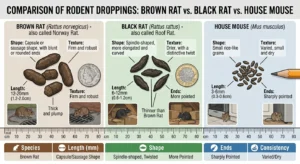
Rat droppings also look like small capsules with blunt ends, and mouse droppings look more like dark grains of rice with pointed ends.
Rubbing marks are another sign. Rats leave dark, greasy smears along walls and pipes where their fur brushes the same path every night.
Where you hear them helps too. Norway rats (also called brown rats) live low, in burrows near foundations, sheds, and garbage, while roof rats climb and nest in attics and trees.
Noises at night can also be a clue. Rats make heavier scratching and thumping than mice, and you may hear gnawing in the walls.
If you’re not sure which animal you have, take photos of the droppings and any damage, and show them to a pest controller.
What Works Better Than Glue Traps on Rats
Start with the gaps. A rat can squeeze through a hole about half an inch wide (roughly 1.2 cm), so check around pipes, vents, doors, and the foundation.
Seal holes with metal, like steel wool packed tight, metal mesh, or sheet metal, and cover them with cement or caulk. Rats can chew through wood, plastic, and foam, but metal and concrete stop them.
Take away food and water. Keep trash in cans with tight lids, store pet food and birdseed in sealed containers, and pick up fallen fruit.
Use snap traps made for rats, since mouse traps are too small and weak. Place them along walls where you see droppings or rub marks, and check them every day.
Enclosed trap stations (sturdy boxes that keep pets and kids out) are a safer choice for homes with other animals around.
For bigger or repeat problems, hire a licensed pest controller who starts with prevention. A good one will find the entry points you missed and explain the plan before they begin.
How to Keep Rats Away From Your Yard and Garbage
Rats come for food first, so start outside. Keep trash cans closed with tight lids, and don’t leave bags sitting out overnight.
Bird feeders and pet bowls are popular rat buffets. Pick up spilled seed each day, bring pet food in at night, and keep seed in a sealed metal bin.
Compost piles with food scraps draw rats too, so use a closed bin with a tight lid and keep meat, dairy, and greasy food out of it.
Rats also like cover, so cut back thick ivy and weeds, and stack firewood and lumber off the ground and away from your walls.
Fix leaky pipes, outdoor taps, and dripping sprinklers, since rats need water every day.
Look for burrow holes along foundations and under sheds, and fill them with gravel or concrete once you’re sure no rat is inside. A tidy yard won’t fix everything, but it takes away the main reasons rats move in.
Where Glue Traps Are Banned or Restricted
Glue traps for rodents are illegal for the public across Great Britain, and England banned them under a 2022 law.
New Zealand banned them from January 1, 2015, with narrow exceptions that need government approval. The Australian state of Victoria banned them in 2019.
Ireland doesn’t list glue traps as approved traps. In the Netherlands, using glue to catch animals outdoors is banned, and indoor use is tightly limited.
In the US and Canada, glue traps are still legal in most places, though a few cities and some stores have moved away from them.
The rules can change, so check your city, county, and state or province before you buy one.
Conclusion
So, do rats die on glue traps? Yes, they can and often do, but it usually isn’t quick, and it usually takes about two to four days.
A stuck rat can die from dehydration, cold, stress, or suffocation. It can also badly hurt itself while it fights to get free.
Rats are strong, so some pull loose or drag the trap away. A frightened rat can also bite, which makes a live one risky to deal with.
If you find a rat stuck on a board, stay back, and call a pest control company, animal control, or a vet.
The better way to deal with rats is to seal the gaps, remove the food, and use snap traps made for rats, so you can skip glue completely.

Hi, my name is Ezra Mushala, i have been interested animals all my life. I am the main author and editor here at snakeinformer.com.