
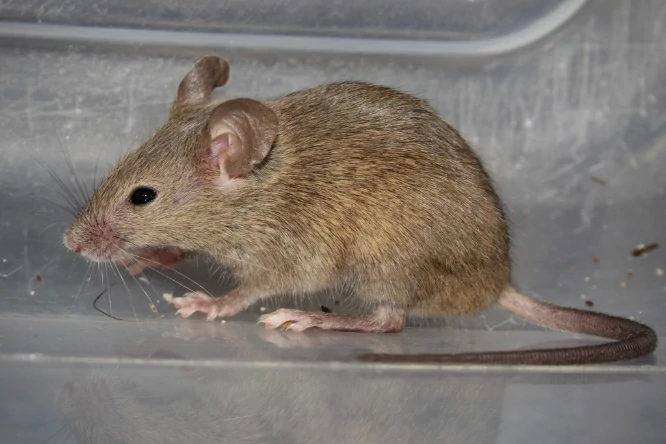
If you’ve spotted a mouse in your house, you might be wondering about their habits and when they’re most active.
Many people think that keeping lights on will keep mice away, while others swear they’ve seen mice running around in bright daylight. Understanding when mice are active can help you deal with an infestation more effectively. So do mice come out if there is light?
Yes, mice will come out even if there’s light, but they prefer darkness. Mice are naturally more active at night and in dark areas, but if they’re hungry, thirsty, or feel safe enough, they’ll come out in lighted areas too. Light alone won’t keep mice away.
While mice prefer to move around in the dark, they’re not strictly nocturnal in the way some people think. They’re actually more flexible than that, and their behavior depends on several things like hunger, safety, and how comfortable they feel in your home.
Why Mice Prefer Darkness
Mice have natural instincts that make them prefer dark environments, and there are good reasons for this.
In the wild, mice are prey animals. This means lots of other animals want to eat them, including owls, hawks, snakes, cats, and foxes. Moving around in darkness gives them better protection from these predators because it’s harder for predators to spot them.

Mice have excellent night vision. Their eyes are adapted to see well in low light conditions, which gives them an advantage over many predators when it’s dark. They can navigate easily in the dark while their predators might struggle.
Darkness also makes mice feel safer. When you turn on a light suddenly, a mouse will usually run and hide. This is because bright light makes them feel exposed and vulnerable to predators, even if there aren’t any predators around.
In your house, mice stick to these same instincts. They feel more comfortable moving around when it’s dark and quiet, usually at night when you’re asleep and not moving around.
Mice Are Actually Crepuscular
Most people think mice are nocturnal, but that’s not exactly right. Mice are actually what scientists call crepuscular, which just means they’re most active during twilight hours.
This means mice are naturally most active at dawn and dusk when the light is dim but not completely dark. These are the times when they feel safest to come out and look for food and water.

In the wild, these twilight hours give mice a good balance. There’s enough light for them to see where they’re going, but it’s dim enough that they’re harder for predators to spot.
In your house, you might notice more mouse activity in the early morning before sunrise or in the evening just after sunset. These are their preferred times to move around.
But here’s the thing: mice in your house don’t have to follow the same patterns as wild mice. If they learn that your house is safe and there are no threats, they’ll adjust their schedule to whenever they feel comfortable.
When Mice Will Come Out in the Light
Even though mice prefer darkness, there are several situations where they’ll come out in lighted areas without hesitation.
If a mouse is really hungry or thirsty, it will risk coming out in the light to find food and water. Survival needs outweigh their fear of light, especially if they haven’t eaten in a while.
When a mouse population gets too large, you’ll start seeing mice during the day more often. This happens because there are too many mice competing for food, so some have to come out at less ideal times to find enough to eat.
If mice have been living in your house for a while without any threats, they get bolder. They learn that nothing bad happens when they come out, so they stop being as cautious. You might see these confident mice running around even in well-lit rooms.
Mice with nests near food sources will make quick trips out for food even when lights are on. If they only have to run a short distance to grab food and get back to safety, the light doesn’t bother them as much.
Young mice that are still learning can be less cautious than adults. They might wander out into lighted areas simply because they haven’t learned to be as careful yet.
Why Leaving Lights On Doesn’t Keep Mice Away
Many people try leaving lights on to keep mice away, but this doesn’t actually work as a long-term solution.
Mice can adapt to light pretty quickly. After a few days of constant light, they’ll realize there’s no real danger and start coming out anyway. The light becomes part of their normal environment.
If there’s food available, mice will come out no matter what. Their need to eat is stronger than their dislike of light. A mouse would rather risk the light than starve.

Leaving lights on all the time can actually make the problem worse in some ways. It prevents you from spotting mice because you’re not seeing them at their most active times. It also wastes electricity and can mess up your own sleep schedule.
Mice also learn patterns. If you leave certain lights on all the time, they’ll just avoid those areas and use darker paths through your house instead. They’re smart enough to work around obstacles like this.
The only time light might help a little is if you suddenly turn lights on and surprise a mouse. But even then, it will just run and hide, and come back out later when things are quiet again.
What Actually Makes Mice Feel Safe or Unsafe?
Understanding what really affects mouse behavior can help you deal with them more effectively than just playing with light switches.
Noise and movement matter more than light. Mice are sensitive to vibrations and sounds. If you’re walking around, talking, or making noise, mice will stay hidden regardless of whether lights are on or off.
Consistent activity in an area keeps mice away better than light does. If you regularly use a room and move around in it, mice will avoid that area even if it gets dark at night.
The smell of predators scares mice much more than light. If you have a cat or dog, their scent alone can make mice more cautious. Even if the pet never catches a mouse, just knowing a predator is around changes mouse behavior.
Access to food is the biggest factor. Mice will take bigger risks in areas where they know food is available. If you leave crumbs, open food containers, or pet food out, mice will come for it even in broad daylight.
Safe hiding spots nearby make mice bolder. If a mouse can quickly run to a hole in the wall, behind a refrigerator, or under cabinets, it will take more risks in that area because it knows it can escape quickly.
How Mice Find Their Way Around in the Dark
Mice don’t rely on sight as much as you might think, which is another reason why light doesn’t bother them that much.
Mice use their whiskers to feel their way around. Their whiskers are very sensitive and can detect tiny changes in air currents, textures, and obstacles. This lets them navigate easily even in complete darkness.

They have an excellent sense of smell. Mice use scent to find food, identify safe paths, and avoid danger. They can smell food from far away and will follow the scent even if they have to cross through lighted areas to get to it.
Mice create regular paths through your house. Once they find a safe route between their nest and food sources, they’ll use the same path over and over. They memorize these routes and can run them quickly without much visual input.
They also use their hearing to avoid danger. Mice can hear much better than humans, including sounds at frequencies we can’t detect. They’re listening for threats constantly, and they rely on this more than watching for movement or light changes.
This combination of senses means that mice don’t really need to see well to get around. Light or darkness doesn’t affect their ability to navigate nearly as much as it would affect us.
What Are The Best Times to Spot Mice?
If you want to catch mice or just confirm you have them, there are better times to look than others.
The middle of the night (around 1-3 AM) is when mice are usually most active. This is when your house is quietest, darkest, and mice feel safest coming out.
Early morning just before sunrise is another peak time. If you get up early or have trouble sleeping, this is when you might spot mice activity.
Right after you turn off the lights and settle in for the night, mice often wait 30-60 minutes and then come out. They’re making sure the coast is clear before they start looking for food.
In a heavy infestation, you’ll see mice during the day too. If you’re seeing mice in broad daylight regularly, it means you have way more mice than you realize. The population is so large that some have to come out during less safe times.
If you want to spot mice, sit quietly in the kitchen or another area where you’ve seen signs of mice. Don’t move or make noise. Eventually, if mice are there, they’ll come out because they don’t know you’re watching.
Signs of Mouse Activity (Besides Seeing Them)
You don’t have to actually see a mouse to know they’re coming out in your house.
Mouse droppings are the most obvious sign. These look like small, dark pellets about the size of a rice grain. You’ll find them along walls, in cabinets, and near food sources. Fresh droppings are soft and dark, while old ones are hard and gray.

Gnaw marks show where mice have been chewing. Mice need to chew constantly to keep their teeth from getting too long, so they chew on wood, plastic, cardboard, and even electrical wires. Look for small tooth marks on food packages, baseboards, and furniture.
Greasy rub marks appear along walls and edges where mice travel. Mice have oily fur, and when they run along the same path repeatedly, they leave dark, greasy smears on surfaces.
You might hear scratching, scurrying, or squeaking sounds, especially at night. These sounds usually come from inside walls, ceilings, or under floors where mice are traveling or nesting.
Nests made from shredded paper, fabric, or insulation show where mice are living. You might find these in quiet, hidden spots like inside boxes, behind appliances, or in wall voids.
A strange, musty odor can mean you have mice. Mouse urine has a strong ammonia-like smell, and if you have many mice, you’ll notice this smell in areas where they’re active.
Does Light Color Matter?
Some people wonder if different colors of light affect mice differently, and there’s actually some science behind this.
Mice are less bothered by red light than white or blue light. This is because their eyes don’t detect red wavelengths as well. Some people who want to watch mice without disturbing them use red lights.
Bright white light or blue light is more likely to make mice cautious because they can see these wavelengths clearly and it signals “daytime” to them.
But honestly, for practical pest control purposes, light color doesn’t matter much. Whether you use white, yellow, or red lights, hungry mice will still come out if they need food.
The brightness matters more than the color. Very bright lights might slow mice down temporarily, but they’ll adapt. Dim lights won’t bother them at all.
What Actually Keeps Mice Away?
Since light doesn’t work well to keep mice away, here’s what does actually help.
Remove food sources completely. Store all food in sealed glass or metal containers, don’t leave crumbs or spills, clean up pet food right away, and take trash out regularly. Without food, mice have no reason to stick around.
Seal entry points so mice can’t get in. Mice can fit through openings as small as a dime, so you need to check your house carefully for gaps and seal them with steel wool, caulk, or hardware cloth.

Use proper mouse traps in areas where you’ve seen mouse activity. Snap traps, electronic traps, and catch-and-release traps can all work if you use them correctly and put them in the right spots.
Get rid of clutter that gives mice places to hide and nest. The more open and clean your spaces are, the less comfortable mice will feel. They like cluttered, messy areas where they can hide easily.
Consider getting a cat if you’re able to. Even if your cat never catches a mouse, the smell of a predator in the house makes mice much more cautious and can reduce their activity significantly.
Conclusion
Mice will come out even when there’s light, although they naturally prefer darkness and quiet times. Light alone won’t keep mice away from your house, especially if there’s food available and they feel safe.
Mice are more flexible in their habits than most people realize. While they’re naturally most active at dawn and dusk, they’ll adjust their schedule based on when they can safely find food. In a house with a large mouse population or lots of available food, you’ll see mice active at all hours, including in well-lit areas during the day.
Instead of relying on lights to deter mice, focus on removing food sources, sealing entry points, and using effective traps or professional pest control. These methods actually work to get rid of mice, while leaving lights on is mostly just a waste of electricity.
If you’re seeing mice during the day or in lighted areas regularly, it’s a sign you have a significant infestation that needs immediate attention. The sooner you deal with the problem properly, the easier it will be to get rid of the mice for good.

Hi, my name is Ezra Mushala, i have been interested animals all my life. I am the main author and editor here at snakeinformer.com.