
Your home’s foundation is the concrete base that everything else sits on. It’s designed to be solid, strong, and watertight.
But concrete naturally develops cracks over time as your house settles, as the ground shifts beneath it, and as temperature changes cause expansion and contraction.
These cracks might seem small and insignificant when you notice them, but they can create serious problems beyond just structural concerns.
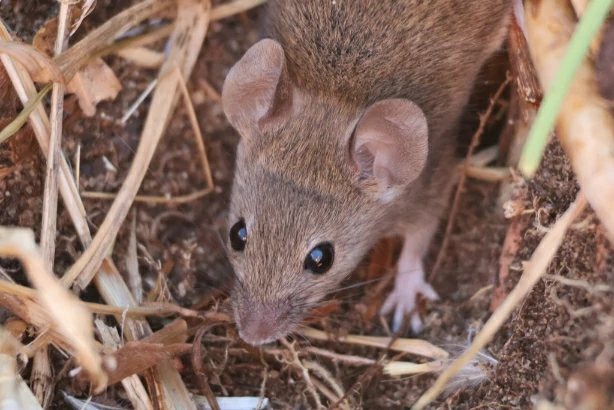
If you’ve spotted cracks in your foundation and you’re dealing with mice, you’re probably wondering if there’s a connection. Can mice get in through foundation cracks?
Yes, mice can absolutely get in through foundation cracks. They only need an opening about ¼ inch wide (roughly the diameter of a pencil) to squeeze through. Even hairline cracks can widen over time or connect with other small gaps to create pathways that mice can exploit to enter your home.
Foundation cracks are actually one of the most common ways mice get into homes.
Since foundations are at ground level where mice naturally travel, and since most foundations develop at least some small cracks over time, these openings provide easy access points.
Why Foundation Cracks Happen
All concrete foundations develop cracks eventually. It’s just part of how concrete behaves over time. As concrete cures and ages, it naturally shrinks slightly, which can create small cracks.
Settlement is another major cause. As your house settles into the ground over months and years, the foundation shifts slightly. This movement creates stress points that can crack.
Temperature changes cause concrete to expand when it’s warm and contract when it’s cold. This constant cycle of expansion and contraction puts stress on the foundation and eventually causes cracks to form.
Moisture in the soil around your foundation creates pressure. When soil gets wet, it expands and pushes against the foundation. When it dries out, it contracts and pulls away. This ongoing pressure cycle can crack concrete.
Poor drainage around your home makes crack problems worse. If water doesn’t drain away from your foundation properly, it saturates the soil, creating even more pressure.
Tree roots growing near your foundation can push against it and create cracks. Even small roots can exert surprising force over time.
Why Are Mice Drawn to Foundation Cracks?
Mice travel along the edges of buildings looking for shelter, food, and water. Your foundation is naturally part of their travel route as they explore around your home.
Foundation cracks often have air movement through them. Mice can detect this airflow with their sensitive whiskers, which tells them there’s a space on the other side worth investigating.
In winter, foundation cracks that lead to your basement or crawl space allow warm air to escape. Mice can sense this warmth and know it means shelter from the cold.
The cracks are already at ground level, so mice don’t have to climb or work hard to reach them. They’re conveniently located exactly where mice are already traveling.
Once one mouse finds and uses a foundation crack, others will follow. Mice leave scent trails that other mice can detect and follow to successful entry points.
How Small a Crack Can Mice Use?
The general rule is that mice can fit through any opening about ¼ inch wide. That’s roughly the diameter of a standard pencil or about the width of your little finger.
Their skulls are the widest part of their body. If they can get their head through an opening, their flexible body and collapsible ribcage can squeeze through behind it.
Mice use their whiskers to test openings. If their whiskers fit comfortably through a gap, they know their head (and therefore their whole body) will fit too.
Even cracks that start out smaller than ¼ inch can be enlarged by mice. They’ll gnaw around the edges of a crack to make it bigger, especially if it’s already close to the size they need.
Multiple small cracks near each other can effectively combine to create a larger entry point. Mice can exploit this by working their way through connected cracks.
Which Types of Foundation Cracks Let Mice Inside?
Vertical cracks run up and down your foundation wall. These often form from settlement or shrinkage and can be wide enough for mice to enter.
Horizontal cracks run side to side across your foundation. These can indicate more serious structural problems and often provide openings for mice.
Diagonal cracks run at an angle. These typically result from differential settlement (one part of your foundation settling more than another) and can create gaps for mice.
Cracks where the foundation meets the footing (the base that the foundation walls sit on) are common and often overlooked. These can create a pathway all the way around your foundation.
Control joints (intentional weak points designed to control where cracks form) can widen over time and become entry points if they weren’t sealed properly.
Cracks around basement windows or doors are especially problematic because they’re often in areas where you store items or spend time, making mouse activity more noticeable and concerning.
How to Find Cracks in Your Foundation
Start by inspecting the entire foundation from outside. Walk around your house looking at the exposed foundation walls, paying special attention to corners and areas near downspouts.
Use a bright flashlight to see into cracks. Some cracks are hard to see in normal light but become obvious with strong direct lighting.
Check inside your basement or crawl space too. Some cracks are only visible from the inside, and the interior side of a crack might be larger than what you see outside.
Look along the floor where the foundation wall meets the basement floor. This joint is a common place for cracks and gaps to develop.
Pay attention to areas that stay damp or have water stains. These spots often have cracks that allow water (and mice) to enter.
Don’t forget to check behind stored items, appliances, and shelving. Foundation cracks in hidden areas can go unnoticed for years while mice use them regularly.
Signs That Mice Are Using Foundation Cracks
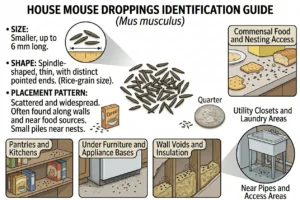
Finding mouse droppings near foundation cracks (either inside or outside) is a clear sign. Fresh droppings are dark and slightly moist, while older ones are gray and crumbly.
Grease marks or rub marks along the foundation near cracks show where mice are regularly traveling. These dark, oily smudges come from oils in mouse fur.
Small piles of concrete dust or debris near cracks might indicate that mice have been gnawing to enlarge the opening.
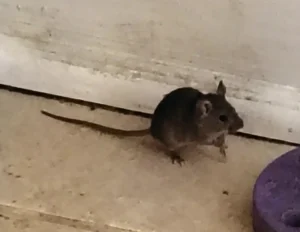
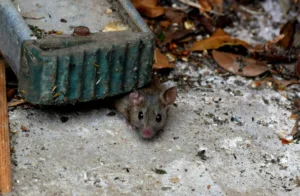
Seeing an actual mouse near a foundation crack, especially if it disappears into or emerges from the crack, confirms that it’s being used as an entry point.
Hearing scratching sounds in your walls or basement that seem to come from the foundation area can indicate mice traveling through cracks and into your wall cavities.
Finding nesting material (shredded paper, fabric, insulation) near foundation cracks means mice are not just passing through but might be nesting nearby.
How to Seal Foundation Cracks to Keep Mice Out
Start by cleaning out the crack. Use a wire brush, vacuum, or compressed air to remove loose concrete, dirt, and debris. The sealing material needs clean surfaces to stick to.
For small cracks (less than ⅛ inch wide), use a concrete crack filler or hydraulic cement. These products come in tubes or small containers and are easy to apply.
For medium cracks (⅛ to ½ inch), use hydraulic cement, which expands as it sets to fill the space completely. Mix according to package directions and apply with a putty knife or trowel.
For large cracks (over ½ inch), you might need to fill the crack with backing rod (foam rope) first, then seal over it with hydraulic cement or concrete patching compound.
Apply the sealing material to slightly overfill the crack, then smooth it level with the surrounding concrete. This ensures you’re not leaving any low spots where the crack could reopen.
For a more mouse-proof seal, stuff copper mesh or stainless steel wool into the crack first, then seal over it with hydraulic cement. Mice can’t chew through metal mesh.
When Do Foundation Cracks Indicate Bigger Problems?
Some foundation cracks are just cosmetic or minor settling issues. Others indicate serious structural problems that need professional attention.
Horizontal cracks, especially those wider than ¼ inch, can indicate foundation failure or excessive soil pressure. These need professional evaluation.
Cracks that are getting wider over time are active cracks. Mark the ends of the crack with pencil and date the marks, then check monthly to see if it’s growing.
Cracks that have significant displacement (one side is higher or pushed out compared to the other side) indicate serious structural movement.
Multiple cracks in the same area or cracks that form a pattern might indicate foundation problems that sealing alone won’t fix.
If you have water leaking through cracks, especially under pressure during heavy rain, you might need waterproofing work in addition to crack sealing.
Stair-step cracks in block foundations can indicate serious settling issues that need professional foundation repair.
When to Hire a Professional for Foundation Repairs
For serious cracks or structural issues, hire a foundation repair specialist. They can assess whether you need simple sealing or major repairs like underpinning or wall stabilization.
Professional injection methods can seal cracks from inside your basement. This involves drilling holes and injecting epoxy or polyurethane foam under pressure to fill the entire crack.
Carbon fiber straps or steel reinforcement can be applied to walls with serious cracks to prevent further movement while the cracks are sealed.
Some foundation problems require exterior excavation to repair properly. This is expensive but might be necessary for long-term stability.
Get multiple opinions if you’re told you need major foundation work. Some companies oversell their services, so it’s worth getting second or third opinions.
How to Prevent New Foundation Cracks
Fix drainage problems around your home. Make sure gutters are clean and downspouts direct water at least 5 feet away from your foundation.
Grade the soil around your foundation so it slopes away from the house. Water should flow away, not toward or along your foundation walls.
Keep soil moisture relatively consistent. Big swings from very wet to very dry cause soil movement that stresses your foundation. Water during very dry periods.
Don’t plant trees too close to your house. Keep large trees at least 15-20 feet from your foundation to prevent root problems.
Maintain consistent indoor humidity if you have a basement. Very dry conditions can cause concrete shrinkage and cracking.
Install or maintain a sump pump if you have water issues. Keeping water levels down around your foundation reduces pressure that causes cracks.
What Other Foundation Entry Points Should You Check?
While inspecting for cracks, look at other potential entry points in your foundation. Mice might be using multiple ways to get in.
Check where utilities (water, gas, electric, cable) penetrate your foundation. The holes for these are often larger than the pipes themselves, leaving gaps around them.
Inspect foundation vents. Many crawl spaces have vents that should be screened to keep mice out. Check that screens are intact and properly secured.
Look at the joint between your foundation and siding. This area often has gaps that mice can travel along to find entry points.
Check basement windows and window wells. Frames often have gaps, and window wells can give mice protected access to those gaps.
Inspect any exterior basement doors. The seals and weatherstripping around these doors can deteriorate and create gaps large enough for mice.
What to Do After Sealing Foundation Cracks
Monitor the sealed cracks for a few months. Check to see if they’re holding or if new cracks are forming nearby.
Set snap traps along foundation walls inside your basement or crawl space. This will catch any mice that were already inside before you sealed the cracks.
Keep the area around your foundation clear of debris, vegetation, and stored items. This makes it easier to inspect for new cracks and mouse activity.
Consider applying a concrete sealer to your foundation after repairs. This helps prevent water infiltration and can make the concrete more resistant to cracking.
Do regular inspections (at least twice a year) to catch new cracks early. Small cracks are much easier and cheaper to seal than large ones.
Conclusion
Foundation cracks absolutely can let mice into your home. Even small cracks that seem insignificant are more than large enough for mice to squeeze through.
The good news is that most foundation cracks can be sealed effectively with the right materials and techniques. Hydraulic cement combined with metal mesh provides excellent protection against mice.
Don’t ignore small cracks thinking they’re too small to matter. Mice can use surprisingly tiny openings, and small cracks tend to get bigger over time. Sealing them promptly prevents both mouse problems and potential water issues.
Regular inspection and maintenance of your foundation is important for more than just keeping mice out. It also prevents water damage and catches structural problems before they become serious. Taking the time to properly seal foundation cracks is an investment in your home’s integrity and your peace of mind.

Hi, my name is Ezra Mushala, i have been interested animals all my life. I am the main author and editor here at snakeinformer.com.