
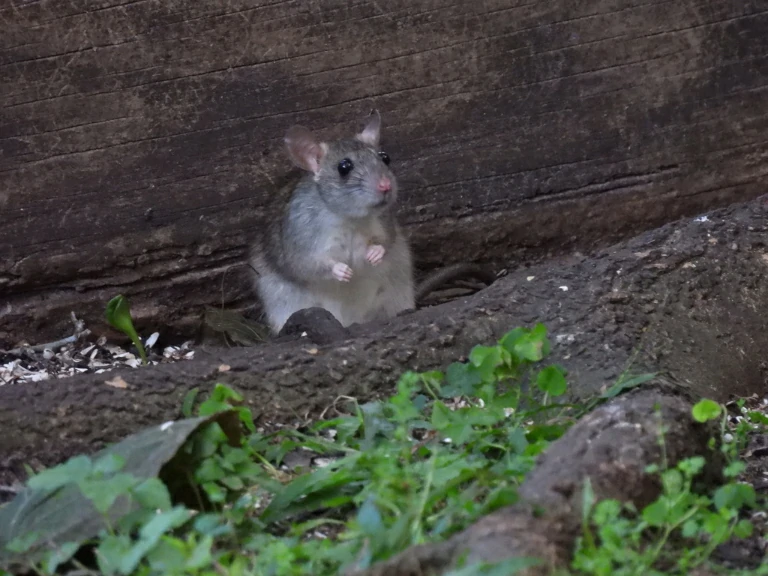
If you’ve caught a rat and you’re thinking about releasing it far from your home, you might be wondering if it’ll just find its way back.
Many people try humane catch-and-release methods for dealing with rats, but the effectiveness depends a lot on rats’ ability to navigate back to familiar territory.
Understanding how rats navigate and remember locations can help you decide the best approach. But can rats find their way back?
Yes, rats can find their way back if released too close to their home territory. Rats have excellent spatial memory and can navigate back to familiar areas from distances of up to several miles. However, if you release them far enough away (at least 2-3 miles), in unfamiliar territory with barriers like roads or water, they’re unlikely to return.
Rats are surprisingly smart when it comes to navigation. They create mental maps of their environment and can remember routes, landmarks, and food locations for long periods.
This impressive ability helps them survive in the wild, but it also means that simply catching and releasing them nearby won’t solve your rat problem. They’ll just come right back.
How Rats Navigate Their Environment
Rats use multiple senses to navigate and remember locations. Their primary navigation tool is their sense of smell.
Rats leave scent trails everywhere they go using urine and pheromones from glands on their bodies. These scent markers create chemical maps that rats can follow even in complete darkness.

They also use their excellent sense of hearing. Rats can hear ultrasonic sounds and use them to build a picture of their surroundings, similar to how bats use echolocation (though not as sophisticated).
Their whiskers are incredibly sensitive and help them detect changes in air currents, nearby objects, and the texture of surfaces. In familiar territory, rats also use visual landmarks.
While their eyesight isn’t great (they see best in dim light and are somewhat colorblind), they can recognize large objects, openings, and the general layout of an area. They combine all these senses to create detailed mental maps of their environment.
How Far Can Rats Travel From Their Nests?
In the wild, a rat’s home range (the area it regularly travels) varies depending on food availability and habitat. In urban areas with abundant food, a rat might have a home range of only 100-150 feet from its nest.
In rural or resource-poor areas, rats might travel up to several hundred feet daily looking for food. But their ability to navigate extends far beyond their daily home range.

Rats can find their way back from distances much greater than where they normally travel. Studies have shown rats can return to familiar territory from distances of two to three miles or more.
This ability varies between individual rats, with some being better navigators than others. The exact distance depends on factors like how familiar the rat is with its starting territory, how motivated it is to return (like if it has babies in a nest), and what barriers exist between the release point and home.
How Rats Use Scent Trails to Find Their Way Back
One of the most important ways rats find their way back is by following scent trails. As rats move through their environment, they constantly mark surfaces with small amounts of urine.
These urine marks contain pheromones that other rats can detect, but the rat that made them can also use them as a trail back to important locations.
If you catch a rat and release it nearby (within a few hundred feet), it can easily follow its own scent trail right back to your home.

The scent markers are strong enough to last for days or even weeks, depending on weather conditions. Rain can wash away outdoor scent trails, but trails in protected areas like under structures or inside buildings can last much longer.
This is why releasing rats in your yard or even a few blocks away doesn’t work. The rat will just follow its chemical breadcrumbs back to where it started.
To effectively prevent a rat from returning via scent trails, you need to release it far enough away that it can’t pick up its own trails and in an area where it has no established markers.
Rats Have Strong Spatial Memory
Beyond scent trails, rats have impressive spatial memory. They remember the layout of their territory, where food sources are located, where dangers exist, and the fastest routes between important spots.
This mental map is stored in a part of the brain called the hippocampus. Research shows that rats have specialized “place cells” in their brains that activate when the rat is in specific locations.
These cells help the rat know where it is and navigate to where it wants to go. If you release a rat in an area it’s been before (even weeks or months ago), it can access these stored memories and find its way back.
Young rats and adults both have this ability, though adult rats generally have more detailed mental maps because they’ve had more time to explore. Once a rat has learned a route or territory, it doesn’t forget easily.
This is similar to how you can still navigate your childhood neighborhood even if you haven’t been there in years. The memories persist.
Which Barriers Can Stop Rats From Returning?
While rats are good navigators, certain barriers can prevent them from finding their way back. Large bodies of water are effective barriers.
Most rats can swim, but they won’t swim long distances across rivers or lakes to return to familiar territory. Wide roads with heavy traffic can also deter rats.

While rats can cross roads, busy highways with constant traffic are dangerous and many rats won’t attempt the crossing. Physical barriers like tall walls or fences can slow rats down, though they’re good climbers and can often find ways over or around these obstacles.
The most effective barrier is simply distance combined with unfamiliar territory. If you release a rat three or more miles away in an area it’s never been, it has no scent trails to follow, no mental map to reference, and no familiar landmarks to guide it.
At that distance, finding its way back becomes extremely unlikely. The rat is more likely to establish a new territory wherever you released it.
Why Do Released Rats Often Come Back?
When people try catch-and-release for rats and see the same rat return (or at least, another rat very quickly), they usually made one or more mistakes. The most common mistake is not releasing the rat far enough away.
Releasing a rat a few blocks from your home or in a nearby park isn’t enough. The rat can easily navigate back from these distances.
Another mistake is releasing the rat without addressing what attracted it in the first place. If your home has accessible food, water, and entry points, rats will keep coming whether it’s the same rat returning or new rats discovering the same resources.
Some people also release rats in good habitat with lots of food and shelter. This seems humane, but it means you’ve just introduced a rat to a new food source.
If that location is still close to your home, the rat might actually expand its range to include both areas, traveling back and forth. You need to release rats in areas that are far away, not particularly attractive to rats, and ideally separated from your home by natural barriers.
The Problem With Catch and Release
Even if you release a rat far enough away that it can’t return to your specific home, catch-and-release has other problems. First, you’re just making the rat someone else’s problem.
That rat will look for food and shelter in its new location, which likely means someone else’s home or property. This isn’t really solving the rat problem, just moving it.
Second, releasing a domesticated or urban rat into the wild can be a death sentence for the rat. Urban rats have adapted to live around humans and might not survive well in truly wild areas.

They could starve, fall victim to predators, or struggle to compete with established wild rat populations. Third, you might be breaking local laws.
Many areas have regulations against releasing rodents because of concerns about spreading disease or disrupting ecosystems. Some places specifically prohibit releasing trapped animals, and you could face fines.
Finally, catch-and-release doesn’t address the root cause of your rat problem, which is why rats are getting into your home in the first place.
Better Ways to Keep Rats Out of Your Home
If you’re concerned about rats but want to handle the situation humanely, there are better approaches than catch-and-release. The most effective long-term solution is exclusion, which means sealing all entry points so rats can’t get into your home.
Rats can squeeze through holes as small as a quarter, so you need to be thorough. Use steel wool, hardware cloth, or metal flashing to seal gaps around pipes, under doors, in foundations, and anywhere else rats might enter.
Once your home is sealed, any rats currently inside can be trapped and removed (whether through lethal or live traps), and new rats won’t be able to get in. Removing food sources is also critical.
Store all food in sealed metal or glass containers, clean up spills immediately, take garbage out regularly, and don’t leave pet food out overnight. Without food, your home becomes much less attractive to rats.
Eliminating water sources (like leaky pipes or pet water bowls left out) and removing nesting materials (like stored cardboard boxes or piles of fabric) also helps. If you do use traps, snap traps are generally considered more humane than glue traps or poison.
They kill quickly rather than causing prolonged suffering. Live traps are an option, but then you face the question of what to do with the caught rat, which brings us back to the problems with release.
What Happens When You Release a Rat?
If you do release a rat far from your home, what’s likely to happen to it? Rats are adaptable, and many can establish new territories successfully if released in suitable habitat.
The rat will immediately start looking for food, water, and shelter in its new location. If it finds these resources, it’ll settle in and start marking the area as its new territory.

But the rat faces real challenges. It doesn’t know the area, so it doesn’t know where food sources are or where dangers lurk.
Local predators like cats, dogs, owls, hawks, and snakes will be hunting in the area. If there are already rats established in that location, the new rat will have to compete with them for resources or fight to establish territory.
Released rats have lower survival rates than rats born in an area because they lack the local knowledge that helps rats avoid threats and find resources efficiently. During the breeding season, this is especially problematic because established rats aggressively defend their territories.
A released rat might face attacks from resident rats. Still, some released rats do survive and reproduce, which is why releasing rats can contribute to the overall rat population in an area.
Do All Rats Have the Same Navigation Skills?
Different rat species and populations have varying navigation abilities. Norway rats (the most common urban rat) are excellent navigators with strong homing instincts.
They’re the ones most likely to find their way back from significant distances. Roof rats (also called black rats) are also good navigators but rely more on familiar structures and trees.
They’re less likely to cross open ground to return to familiar territory. Wild rats generally have better navigation skills than rats born in captivity because they’ve had more experience exploring and building mental maps.
Rats in rural areas might have larger mental maps because they travel greater distances daily to find food compared to urban rats with abundant nearby food sources. The age of the rat matters too.
Young rats are still learning their environment and might not navigate back as successfully as adults with established territories. But young rats are also more adaptable and might be more willing to accept a new location rather than attempting to return home.
How to Tell If Rats Have Returned to Your Home
If you’ve released a rat and you’re worried it might have come back, there are signs to look for. Fresh droppings in the same locations where you had rat activity before suggest a rat is back.
Rat droppings are about 1/2 to 3/4 inch long, dark brown or black, and capsule-shaped with blunt ends. New gnaw marks on food packages, baseboards, or wires indicate current rat activity.
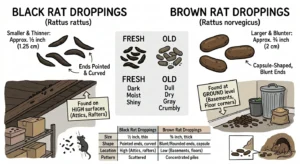
Fresh gnaw marks look lighter in color than old ones. You might hear scratching or scurrying sounds in walls or ceilings, especially at night when rats are most active.
Smudge marks along walls where rats travel repeatedly can appear or get darker with continued use. These are caused by oils and dirt on the rat’s fur rubbing off on surfaces.
If you’re seeing these signs shortly after releasing a rat, it could be the same rat returning, or it could be a different rat that found the same entry points and food sources. This is why sealing entry points is so important.
Is Catch-and-Release Humane?
Beyond the practical questions of whether rats can find their way back, there are ethical considerations to think about. Releasing a rat into unfamiliar territory subjects it to stress, potential starvation, predation, and conflict with established rat populations.
Some people argue that quick lethal trapping is more humane than releasing a rat to face these challenges. Others believe that giving the rat a chance, even a small one, is better than killing it.
There’s no perfect answer. If you choose to release rats, you should do it responsibly by releasing them far from homes (to avoid making them someone else’s problem), in suitable habitat with food and water available, and in compliance with local laws.
If you choose lethal control, using quick-kill traps rather than slow-acting poisons or glue traps minimizes suffering. The most important ethical consideration might actually be prevention.
By maintaining your home properly to exclude rats in the first place, you avoid having to make these difficult choices about how to deal with them once they’re inside.
Conclusion
Rats can definitely find their way back if you release them too close to your home. Their excellent spatial memory, ability to follow scent trails, and strong motivation to return to familiar territory (especially if they have young there) mean that releases within a mile or two often fail.
To prevent a rat from returning, you’d need to release it at least two to three miles away, across natural barriers, in unfamiliar territory. But even then, you’re facing other problems: making the rat someone else’s problem, potentially violating local laws, and not addressing why rats got into your home in the first place.
The better long-term solution is exclusion. Seal all entry points, remove food and water sources, and eliminate nesting sites.
This prevents both released rats from returning and new rats from entering. If you must remove rats that are already inside, either quick-kill traps or professional pest control services are typically more effective and often more humane than catch-and-release approaches.

Hi, my name is Ezra Mushala, i have been interested animals all my life. I am the main author and editor here at snakeinformer.com.