
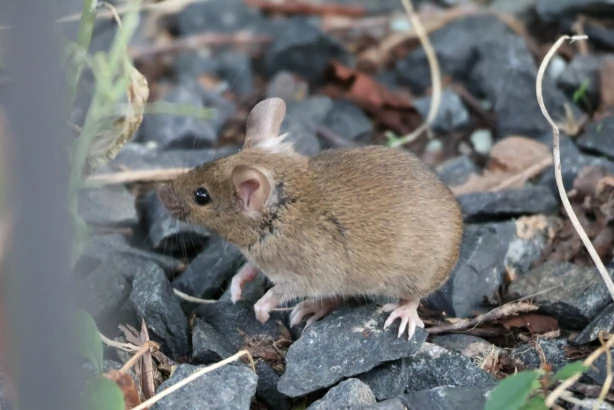
If you’ve found a mouse nest in your home with babies inside, you might be wondering what happens if the mother gets separated from her young. Understanding mouse maternal behavior can help you make better decisions about how to handle an infestation. But do mice come back for their babies?
Yes, mother mice will come back for their babies if they’re separated. Female mice have strong maternal instincts and will search for their young if they get displaced. They can smell and hear their babies from a distance and will risk danger to return to them.
Mother mice are actually very dedicated parents. They’ll keep coming back to check on their nest, even if you’ve disturbed it or tried to relocate it.
This means that just removing the babies won’t solve your mouse problem. The mother will keep returning to look for them.
Why Mother Mice Always Return to Their Young
Female mice don’t abandon their babies easily. In the wild, a mother mouse’s survival depends on successfully raising her young to continue her genetic line.
This instinct is so strong that it overrides most other concerns, including fear of predators or humans.
When a mother mouse has babies, she’s completely focused on their survival. She’ll nurse them every few hours, keep them warm, and protect them from threats.
If she gets separated from her nest, she’ll use her sense of smell to track them down. Baby mice give off a specific scent that their mother can detect from quite far away.
They also make high-pitched sounds (often too high for humans to hear) that call out to her. Even if you move the nest to another location in your home, the mother will follow these signals to find her babies.
How Long Do Mother Mice Stay With Their Babies?
Mother mice don’t leave their young until they’re ready to survive on their own. Baby mice are born completely helpless, with no fur, closed eyes, and no ability to regulate their body temperature.
For the first two weeks of life, they depend entirely on their mother for warmth and food. She’ll stay in or very close to the nest during this time, only leaving briefly to find food and water for herself.
After about two weeks, the babies start to grow fur and open their eyes. They become more active and start exploring outside the nest.
But even at this stage, the mother still nurses them and keeps watch over them. She won’t fully leave them until they’re about three to four weeks old.
At that point, the young mice are weaned and can eat solid food on their own. But here’s the thing: even after the babies are independent, they often stay close to their mother and siblings.
Mice are social animals, and young mice will usually stay in the same general area as their family group. This is why mouse infestations can grow so quickly if you don’t take care of them early.
What Happens If You Remove Baby Mice?
If you find a nest and remove just the babies, the mother will absolutely come back looking for them. She’ll search the area, follow their scent trails, and check the nest repeatedly.
This can actually make your mouse problem worse in some ways. The distressed mother might become more active in your home as she searches.
She might also start building a new nest nearby if she can’t find her babies. And if she’s pregnant again (which is likely, since mice can get pregnant immediately after giving birth), she’ll just start a new family in a different spot in your home.
Removing only the babies also doesn’t address the real problem. Adult mice are the ones causing damage, contaminating food, and potentially spreading disease.
The babies aren’t mobile enough yet to cause these issues. So if you want to solve a mouse infestation, you need to focus on catching or excluding the adult mice, not just their young.
Do Mice Abandon Nests If You Touch Them?
There’s a common belief that if you touch a mouse nest or the babies, the mother will smell human scent and abandon them. This isn’t really true for mice.
Unlike some wild animals, mice living in human homes are already used to human smells. They’ve adapted to live in our spaces, so the scent of humans doesn’t automatically make them abandon their young.
That said, if you disturb a nest too much, the mother might move her babies to a new location. She won’t abandon them, but she might decide the current spot is too dangerous.
Mother mice can carry their babies one at a time to a new nest if they feel threatened. She’ll grip each baby gently in her mouth and transport it to what she thinks is a safer location.
This could be just a few feet away or in a completely different part of your home. So disturbing a nest doesn’t make the mother leave her babies, it just makes her relocate them somewhere you might not find them as easily.
The Cycle Continues Without Intervention
Here’s why understanding maternal behavior matters for dealing with infestations. A single female mouse can have five to ten litters per year, with each litter containing five to six babies on average.
That’s 25 to 60 babies from just one female in a single year. And those babies become sexually mature in just six to eight weeks.
So if you have a mother mouse in your home who successfully raises even one or two litters, you’ll quickly have a much bigger problem. The babies she raises will start having their own babies within a couple of months.

This is how a small mouse problem can turn into a serious infestation in just a few months. The mother’s strong instinct to protect and raise her young is actually what makes mice such successful pests.
She’ll keep coming back, keep having babies, and keep building nests until you take action to remove the adults and seal up entry points.
What to Do If You Find a Mouse Nest With Babies
If you discover a mouse nest in your home, you need to deal with both the babies and the adults. Just removing one or the other won’t solve the problem.
The most effective approach is to use traps to catch the adult mice while also removing the nest. Place traps near the nest location and along the paths you’ve seen mice travel.
Snap traps work quickly and are generally considered more humane than glue traps or poison. When you set traps, use bait like peanut butter, chocolate, or dried fruit.
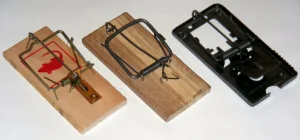
Check the traps daily and dispose of any caught mice promptly. While you’re trapping the adults, you can remove the nest with the babies.
Wear gloves when handling the nest, not because the mother will smell you and abandon them, but to protect yourself from potential diseases. Put the entire nest in a sealed plastic bag and dispose of it in your outdoor trash.
Some people prefer to release baby mice outside, but this usually isn’t successful. Baby mice that are still nursing won’t survive without their mother, and even older babies have a low survival rate in the wild if they weren’t raised there.
Preventing Mother Mice From Coming Back
Once you’ve dealt with the current nest and caught the adult mice, you need to make sure they can’t come back. Mice can squeeze through openings as small as a dime, so you need to be thorough when sealing entry points.
Check your home’s foundation, walls, and roof for any cracks or gaps. Look around pipes, vents, utility lines, and where different building materials meet.
Use steel wool, caulk, or expanding foam to seal these openings. Mice can’t chew through steel wool, so it’s particularly effective for blocking their entry.
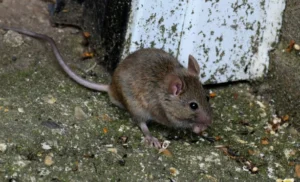
Pay special attention to areas where you found the nest. Mice tend to use the same routes and locations repeatedly, so if one mouse nested there, another might try to as well.
Also clean the area thoroughly to remove scent trails. Mice use pheromones and scent markers to navigate, so cleaning with a strong cleaner can help discourage new mice from following the same paths.
Why Mice Keep Coming Back to the Same Spots
Mice have excellent spatial memory and will return to places where they’ve found food, water, or good nesting sites before. If a mother mouse successfully raised a litter in your home, she’s likely to try nesting there again.
Female mice can get pregnant again within 24 hours of giving birth. So even if you remove one litter, the same mother might be pregnant with the next one already.
This is why catching the adult mice is so important. As long as breeding adults are in your home, you’ll keep finding new nests.
Mice also leave scent trails that other mice can follow. So even if you remove the original family, the scent markers they left behind can attract new mice to the same location.
This is especially true if the conditions that attracted the first mice are still there. Things like accessible food, clutter for hiding, and easy entry points will keep bringing mice back.
Signs a Mother Mouse Is Active in Your Home
If you haven’t found a nest yet but suspect you have mice, there are specific signs that point to a breeding female. Fresh droppings are the most obvious sign.
Mouse droppings are small, dark, and pellet-shaped, about the size of a rice grain. If you’re seeing a lot of droppings in one area, there’s probably a nest nearby.
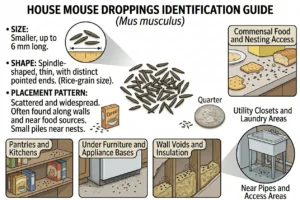
You might also hear scratching or squeaking sounds, especially at night when mice are most active. If you hear very high-pitched sounds, those could be baby mice calling for their mother.
Look for shredded paper, fabric, or insulation. Mother mice collect soft materials to build nests for their babies.
You might find small piles of this material in hidden spots like behind appliances, in wall voids, or in storage boxes. Gnaw marks on food packaging, baseboards, or wires also indicate active mice.
Fresh gnaw marks look lighter in color, while old ones are darker. If you’re seeing fresh marks, it means mice are currently active in that area.
The Reality of Mouse Maternal Instincts
Understanding that mother mice will always come back for their babies helps you see why half-measures don’t work for mouse control. You can’t just scare them away or remove the nest and hope they leave.
The mother’s drive to protect and raise her young is stronger than her fear of humans. She’ll keep coming back, keep searching, and keep trying to nest in your home.
This is why effective mouse control requires a complete approach. You need to trap or exclude the adults, remove any nests, seal entry points, and remove food sources.
Just doing one or two of these things won’t be enough. The mother’s strong maternal instincts mean she’ll find ways to adapt and survive if you don’t address all aspects of the problem.
Conclusion
Mother mice will absolutely come back for their babies if they get separated. Their maternal instincts are strong, and they’ll search persistently to find their young.
This means that simply removing a nest or trying to scare mice away won’t solve an infestation. The mother will keep returning, and if she’s pregnant (which is very likely), she’ll just start another family elsewhere in your home.
The only effective solution is to trap the adult mice, remove any nests you find, and seal up all the entry points they’re using to get inside. Without addressing all these factors, you’ll just keep seeing mice come back.
Their ability to reproduce quickly, combined with their strong parental instincts, is what makes them such persistent pests. But with the right approach, you can break the cycle and keep them out for good.

Hi, my name is Ezra Mushala, i have been interested animals all my life. I am the main author and editor here at snakeinformer.com.