
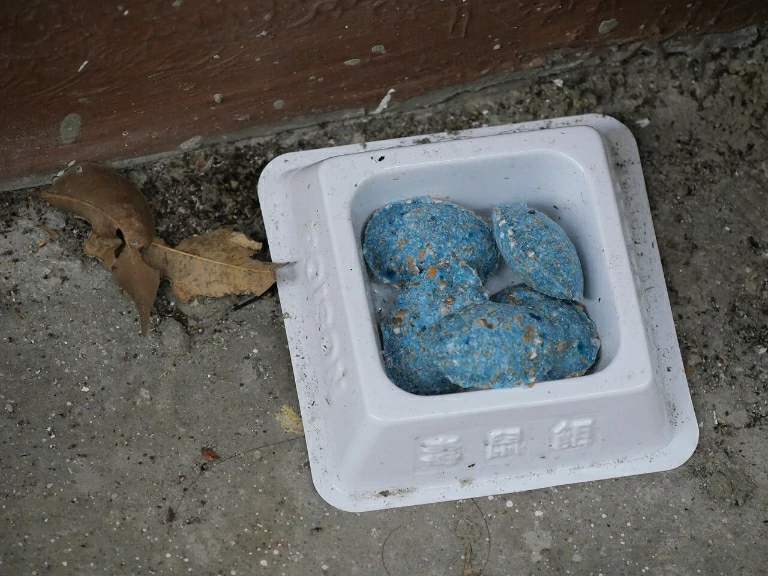
If you’ve ever looked at a block of rat poison and wondered what it actually tastes like, you’re not alone.
It’s a strange thing to think about. But it matters more than you’d expect.
After all, rat poison only works if a rat is actually willing to eat it. So does rat poison have any taste at all, and if so, what kind?
Yes, rat poison has taste, and it’s actually designed with taste in mind on purpose. Manufacturers add food-like flavors, like peanut butter, grain, or sugar, to make bait appealing to rats. Many products also add a bittering agent to make the poison taste bad to humans and pets.
So there are really two tastes going on here, working in opposite directions.
One is meant to attract rodents.
The other is meant to repel everyone else. Let’s get into how both actually work.
Why Rat Poison Needs to Taste Good to Rats
Rat poison isn’t a trap in the mechanical sense. It relies entirely on a rat choosing to eat it, willingly, over and over if needed.
If the bait tasted bad or seemed off, a rat would just avoid it and go eat something else instead.

This is actually a well known problem in pest control called bait shyness. That’s when rats learn to avoid a food source that made them or another rat sick.
Because of this, manufacturers put real effort into making rat poison bait taste and smell appealing.
The poison itself gets mixed into something that resembles normal rat food, rather than being some standalone chemical pellet.
What Rat Poison Bait Actually Tastes Like
Most rat poison bait is built around a base of grain, corn meal, or seeds. These closely match what rats already eat in the wild and around human homes.
On top of that base, manufacturers commonly add flavoring ingredients to boost how appealing the bait is.
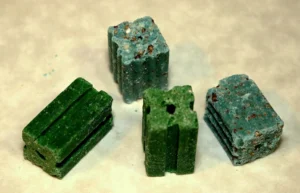
Peanut butter is one of the most popular choices. You’ll see it listed right on the packaging of well known brands, including several JT Eaton products.
Other common additions include sugar, molasses, and various oils. These help the bait smell and taste closer to something a rat would actively seek out, rather than just tolerate.
Some formulations get even more specific. Research on rodenticide development has tested ingredients like shrimp paste, egg flavoring, and caramel.
These can noticeably boost how much bait a rat actually eats, compared to plain grain alone.
The bait is also usually held together with a wax binder, especially in block form. That helps it survive outdoor conditions without falling apart or going stale as quickly.
So in a real sense, rat poison is engineered food. The poison itself is just one ingredient hidden inside something built to taste good to a rat.
Why Does Rat Poison Sometimes Taste Bad to Humans and Pets?
Here’s where things get interesting. A lot of rat poison products contain something called a bittering agent.
Its whole purpose is the opposite of the food flavoring described above.
The most common bittering agent is called denatonium benzoate, often sold under the brand name Bitrex. It’s considered the most bitter substance known to science.
Humans can detect it at incredibly tiny amounts, as low as a few parts per billion.
Manufacturers add Bitrex specifically to cut down the chances of a child or pet accidentally eating a harmful amount of poison.
Even a tiny taste triggers such a strong bitter reaction that most people, especially kids, will spit it out right away.
Studies testing this on children found that only a small handful out of dozens tested would take more than a single sip of a Bitrex-treated liquid.
That same reaction is the whole reason it gets added to rat poison bait too.
Why the Bitter Taste Doesn’t Stop Rats
This is the part that makes the whole system actually work: rats don’t react to Bitrex the same way humans do.
Rodents just don’t respond to bitter tastes the way people do, at least not at the low amounts used in rat poison formulas.
Studies on rats and mice have found they’ll still readily eat bait containing Bitrex at the levels typically added to rodenticides.
This isn’t some accident or gap in the science. It’s actually the entire point of using Bitrex in the first place.
It takes advantage of a real difference in how rodent and human taste buds respond to bitterness.
So the same chemical that makes a child spit out a taste test can sit right there in bait a rat is happily chewing through.
It does basically nothing to slow the rat down at all.
Does Every Rat Poison Contain a Bittering Agent?
Not necessarily. Adding Bitrex or something similar isn’t required in every rodenticide product, though it’s become increasingly common.
This is especially true in consumer products meant for home use.
Some regions have pushed manufacturers toward including it as a safety measure. Rat poison sitting around a house poses a real risk to curious kids and pets.
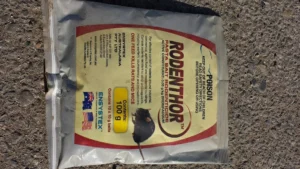
If you want to know whether your specific product contains a bittering agent, check the ingredient list or safety data sheet.
Not every brand lists it prominently on the front of the packaging.
Either way, whether a bittering agent is present shouldn’t change how carefully you store and handle the product.
A bitter taste might cut down how much a child or pet swallows by accident. It doesn’t make the poison safe.
Can Taste Alone Keep Kids and Pets Safe?
It’s worth being clear about something here. A bittering agent is a backup safety layer, not a real substitute for actually keeping poison out of reach.
Bitrex reduces how much a curious child or pet is likely to swallow before reacting to the taste.
It doesn’t prevent that first taste from happening though. A determined pet, especially a dog, might still eat a real amount before the bitterness fully registers.
This is actually a well documented issue with dogs specifically. Dogs tend to be less put off by bitter tastes than humans are.
Some dogs will still eat a surprising amount of bait even with a bittering agent mixed in.
So while it’s a genuinely useful safety feature, it should be treated as one layer of protection among several.
It’s not the main thing standing between your pet and a trip to the vet. Locked bait stations and keeping poison out of reach still matter just as much.
Does the Taste of Rat Poison Change How Fast It Works?
This is worth clearing up, since it’s a common mix-up. Taste has nothing to do with how quickly or effectively the actual poison works once it’s eaten.
The flavoring exists purely to get the rat to eat the bait in the first place.
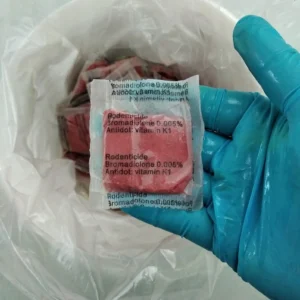
Once that happens, how fast the rat dies depends entirely on the active ingredient itself, like brodifacoum or bromadiolone.
It has nothing to do with whether the bait tasted like peanut butter or plain grain.
A tastier bait might mean rats eat more of it, or eat it faster. That can speed up how quickly a population gets exposed to a lethal dose overall.
But the actual killing mechanism inside a rat’s body works exactly the same either way.
How This Affects Bait Shyness and Rat Behavior
Taste plays a bigger role in long term pest control success than people often realize, mostly because of bait shyness.
If a rat eats a small, non-lethal amount of poison and gets sick without dying, it can learn to link that taste with feeling unwell.
Once that happens, the rat, and often other rats nearby, will avoid that bait entirely going forward.
This is actually one reason single-feed, second generation poisons like brodifacoum became so popular. A single feeding is enough to be lethal.
That leaves less room for a rat to survive a smaller dose and learn to avoid the bait afterward.
Good flavoring helps here too, since an appealing bait competes better against whatever other food is available nearby.
If a rat has tastier alternatives close by, even a technically effective poison might get ignored in favor of easier, safer food.
What This Means for You Practically
If you’re setting out rat poison at home, understanding the taste angle actually explains a few practical things.
If rats seem to be ignoring your bait entirely, it might not be about the poison’s strength at all.
It could just mean there’s more appealing food available elsewhere. Switching to a more strongly flavored bait, like a peanut butter formula, might get better results.
If you have kids or pets in the house, it’s worth checking whether your product contains a bittering agent like Bitrex.
Just don’t rely on that alone. Locked bait stations and out-of-reach placement still do the real work of keeping your household safe.
And if a rat seems to be avoiding bait it previously ate, bait shyness from an earlier sublethal dose is worth considering.
This is especially true with older, weaker anticoagulants that need multiple feedings to actually work.
Conclusion
Rat poison absolutely has taste, and that taste is one of the most carefully engineered parts of the whole product.
Flavoring ingredients like peanut butter, grain, and sugar get added specifically to make the bait appealing enough for a rat to eat it willingly, often more than once.
At the same time, many products also include a bittering agent like Bitrex. It tastes intensely unpleasant to humans and pets, but barely registers to rats at the amounts used.
This dual approach exists because rat poison has to solve two problems at once. It needs to be attractive enough for rats to eat.
It also needs to be off-putting enough that a curious kid or pet won’t want to keep eating it. Neither side of that is an accident.
Understanding both helps explain why rat poison looks and smells the way it does.
Still, taste alone was never meant to be a complete safety plan.
Locked bait stations, careful placement, and keeping poison out of reach remain just as important as anything happening on the flavor side.

Hi, my name is Ezra Mushala, i have been interested animals all my life. I am the main author and editor here at snakeinformer.com.