
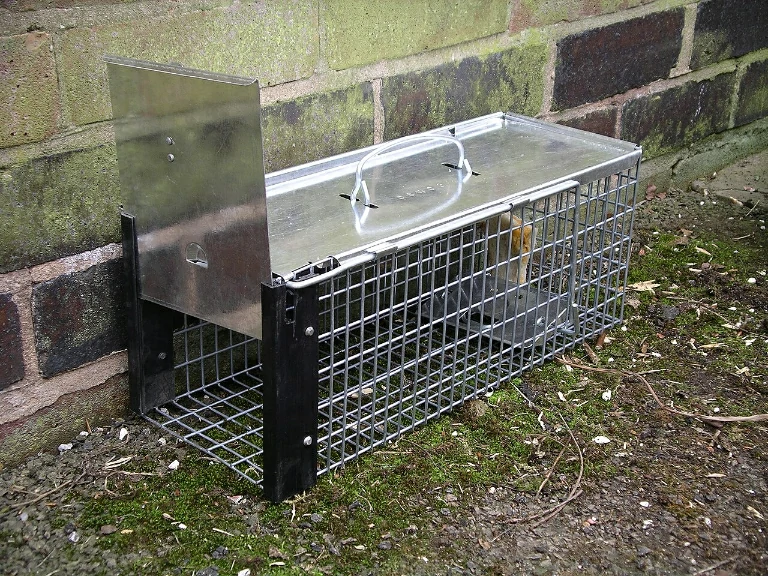
You’ve caught a rat in a live trap, and now you’re facing a hard decision.
Letting it go might just move the problem to someone else’s yard, and the rat may not survive anyway. So what’s the best way to kill rats in a live trap?
The most humane way is to let a vet or a pest control professional do it. They use trained methods that are quick and painless, and home setups don’t meet veterinary standards. Trying to do it on your own is a bad. Cover the trap, wear gloves, and call them.
This is something a lot of people struggle with, and it’s smart to get it right. The rat is alive and scared, and you want to end things as kindly as you can.
The good news is that you don’t have to figure it out alone. Trained people do this every day, and one phone call can save you and the rat a lot of trouble.
In this post, you’ll see why letting the rat go usually backfires, why home methods go wrong, who to call, and how to avoid this next time.
Why Releasing a Rat You’ve Trapped Usually Backfires
Many people think they’re being kind by letting the rat go far from home, but it often leads to more suffering, not less.
A rat knows its own area well, including where to find food, water, and a safe place to hide. In an unfamiliar spot, it has none of that.

It may go hungry or thirsty, or end up as a meal for a hawk, an owl, a cat, or a snake. Animal welfare groups say relocated animals often don’t survive.
A rat you release is also still a rat, so it can become a problem for your neighbors or find its way back to you.
Pest control experts don’t recommend releasing rats, and in many places it’s against the law to move wild animals. Check your local rules before you try it.
What Is the Most Humane Way to End a Trapped Rat’s Life?
The most humane option is to have a trained person do it, which means a vet or a pest control professional.
They use quick, painless methods, and they’ve been taught how to do it right. This is called euthanasia (a gentle, painless end to an animal’s life, done by trained people).

One method vets and research labs use is carbon dioxide gas, which comes from a regulated tank with a controlled flow so the animal falls asleep quickly and calmly.
The American Veterinary Medical Association publishes the guidelines for this. They say the gas has to come from a compressed gas cylinder, because that lets the flow be controlled exactly.
If you call a pest control company, ask how they do it. Choose one that uses quick, approved methods.
Why Home Gas Setups Don’t Meet Veterinary Standards
You’ll see advice online about using dry ice or a soda canister in a plastic bin. That isn’t safe, and it isn’t humane.
Veterinary guidelines say CO2 from dry ice, fire extinguishers, or chemical mixes isn’t acceptable, because it’s too hard to control how fast the gas builds up.
If it builds up too fast, the animal can be stressed and uncomfortable before it falls asleep. A controlled flow is there to prevent exactly that.
There’s a risk to you too. Dry ice in a sealed container can build up pressure, and CO2 can collect in a closed room, where it isn’t safe to breathe.
Professionals also use a second step to confirm the animal has died. Most people at home can’t do that reliably.
Why Are Hands-On Methods So Hard to Do Right?
Some people look at methods like breaking the neck or striking the head, which can be quick in trained hands but take real training and practice.
Vets and lab workers learn them with supervision, and even then, many find it hard. For most people, the chance of a mistake is high.
A mistake leaves the rat hurt and in more pain than before, which is the opposite of what you want.
You also have to get very close to a scared animal that can bite. That’s one more reason to leave it to someone trained.
Videos online can make it look simple, but they don’t show the practice behind it.
Which Methods Should You Never Use on a Trapped Rat?
- Don’t drown it. Pest control experts and scientists agree that drowning isn’t humane, and in some places it’s illegal.
- Don’t freeze it. The cold is stressful and slow, and it isn’t the gentle end some people think it is.
- Don’t leave it in the trap to die, and don’t throw the trap away with the rat still alive. Either way, the rat suffers slowly where nobody can help.
- Don’t use a firearm, since it’s unsafe in a yard or neighborhood and against the rules in many towns.
Don’t handle the rat with bare hands, and don’t ask kids to help or watch. Bites and germs are a real risk, and it’s upsetting for children.
Vets and Pest Control Companies Can Do This for You
Start with a local vet. Many will put down a pest animal like a rat, though not all do, so call ahead and ask about the fee.
Even better, call before you set the trap. Animal welfare groups suggest checking that a clinic can do this first, so you’re not scrambling later.
A pest control company is another good choice. Many will come out quickly and take care of the rat, and they can also find how the rats are getting in.
Local animal control might help, but policies differ a lot, so ask before you drive over.
A licensed wildlife rehabilitator is another option. However, many only take native wildlife and may turn down a rat, so call first.
When you call, say you have a live rat in a trap and need help today. Then ask how soon they can take it and what it costs.
What Will a Vet Actually Do With a Trapped Rat?
A vet’s office can handle this quietly and quickly, and vets deal with all kinds of animals, so don’t feel embarrassed to ask.
They use medical methods that leave the animal unaware and free of pain before it dies, such as anesthesia (medicine that puts an animal into a deep sleep).
Some vets charge a small fee, and some may ask you to leave the trap with them. It’s smart to ask about both when you call.
If a clinic says no, ask who they’d call instead. Vets often know a wildlife group or a pest professional who can help.
If you feel sad afterward, that’s normal. It means you cared about doing right by the animal, and you did.
What to Do While You Wait for Help
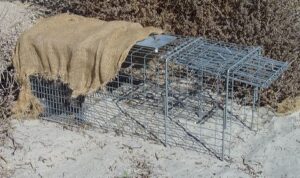
Put on thick gloves and cover the trap with a towel or blanket. The dark helps calm the rat down.
Move it somewhere quiet, cool, and out of the sun, like a garage or a bathroom with the door closed. Keep kids and pets away.
Don’t poke at it or shake the trap, because less handling means less stress for the rat.
If you’re driving it to a vet, keep the trap covered and level. Set it where it can’t slide or tip.
A calm, covered trap is much better than rushing into something you’ll regret.
How Long Can You Leave a Rat in a Live Trap?
A rat in a trap can’t last long, since it can’t get food or water, and it can get too hot or too cold faster than you’d think.
Animal welfare groups say to check any trap at least every 12 hours. Checking twice a day, morning and evening, is better.
If you can’t check it that often, don’t set it. A trap you forget about is much worse than no trap at all.
Have your plan ready before you set the trap. Know who you’ll call, and save the numbers in your phone.
How to Set a Live Trap So You Don’t Catch the Wrong Animal
If you still want to use a live trap, a few simple habits make it safer for the rat and for you. Pick a sturdy trap that’s big enough for an adult rat to move around in.
Rats like to run along walls, so put the trap close to a wall where you’ve seen droppings or chewed spots.
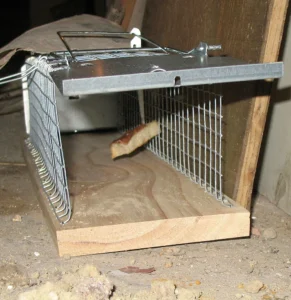
Put a little peanut butter inside, and wedge the door open for a few days first so the rats get used to the trap before you set it.
Set it in the evening and check it first thing in the morning. That keeps songbirds and other wildlife from getting caught.
Keep it away from pets and kids, and put it somewhere shaded, since a trap sitting in the sun can get dangerously hot.
How to Stay Safe Around a Rat in a Trap
Rats can spread germs through bites, scratches, and contact with their urine, droppings, and saliva.
Salmonella is one of them (a stomach bug that causes cramps, diarrhea, and fever). Leptospirosis is another (a bacterial infection spread through the urine of infected animals).
Rat-bite fever is a third (an illness that can follow a bite or scratch). However, most people who follow basic safety steps stay healthy.
Wear thick leather gloves, because a scared rat can bite through thin latex or nitrile ones. Never touch the rat or the trap with bare hands.
Keep your face away from the trap, and don’t touch your eyes, nose, or mouth until you’ve washed up with soap and warm water for at least 20 seconds.
If you get bitten or scratched, wash the spot with soap and warm water right away. Then call your doctor, since rat bites can get infected.
How to Clean and Disinfect the Trap Afterward
Once the rat is gone, put on rubber, latex, or vinyl gloves and wash the trap with hot, soapy water.
Next, spray it with a bleach mix made from 1.5 cups of bleach in a gallon of water, and mix it fresh each time.
Let it soak for about five minutes, then rinse it well and let it dry somewhere with fresh air.
Clean the floor or ground where the trap sat the same way. Don’t sweep or vacuum, because that can kick germs into the air.
Wipe up wet with paper towels, put them in a plastic bag, and tie it shut. Then put that inside a second bag before it goes in your outdoor trash.
Wash your hands well when you’re done. If a vet or pest control company took the rat, they’ll handle the body.
What if You Find the Rat Already Dead in the Trap?
Sometimes a rat doesn’t make it through the night, especially if it was hurt or stressed. It’s sad, but it happens, and you’ll need to handle it safely.
Put on thick gloves and spray the trap and the rat with a disinfectant or the bleach mix from above. Let it sit for about five minutes.
Then put the rat in a plastic bag and tie it shut. Put that bag inside a second one and toss it in your outdoor trash.
Check your local rules, since some areas have special rules for pest animals. Then wash your hands well and clean the trap.
What if the Rat Is Weak, Hurt, or Not Moving?
A rat that’s weak or barely moving is an emergency. Call a vet right away and tell them how it looks.
Keep it in the covered trap somewhere quiet and warm, and handle it as little as you can.
Don’t try to nurse it back to health at home, because a wild rat stresses easily and a hurt one needs real medical care.
Can You Skip Live Traps and Use Something Quicker?
Yes, and for most people it’s the kinder choice. Snap traps are the safest, most effective, and cheapest way to trap rats, and you don’t have to decide anything afterward.
Animal welfare groups agree that a well-made snap trap is faster and kinder than trapping a rat alive and then killing it.
Rats are cautious about anything new. So put the traps out for a few days without setting them, with a little peanut butter on them, then set them along walls, where rats like to run.
Use several traps at once, and stake or tie them down so a rat can’t drag one off.
Set them in the evening and check them in the morning. That keeps songbirds and other wildlife from getting caught.
Electronic traps are another option. They cost more, but they’re easy to empty and you have less contact with the rat.
Why Sealing Entry Points Works Better Than Trapping Alone
Traps only deal with the rats you already have. To stop new ones, you need to close up their way in.
Seal any crack or gap bigger than a quarter inch around your home. Steel wool, metal mesh (called hardware cloth), and caulk all work well.
Check where pipes and wires enter the house, and look around vents, doors, windows, and the foundation.
Then take away what attracts them. Store pantry food in sealed containers, don’t leave pet food out overnight, and keep trash cans tightly closed.
Clean up fallen fruit, and don’t leave birdseed where rats can reach it. Fix leaking pipes and faucets, since rats need water as much as food.
Keep your yard tidy and clear away piles of wood and clutter. Trim bushes and tree branches back from the house, so rats can’t use them to reach your roof.
Local Laws Can Limit How You Deal With a Trapped Rat
The rules vary a lot. Some places limit moving wild animals, some limit which methods you can use, and some have rules about firearms in town.
In the UK, for example, a trapped rat is protected by animal welfare law, so causing it needless suffering can be a crime.
Your local animal control office or state wildlife agency can tell you what applies where you live. A quick call can save you a lot of trouble.
When Is It Time to Call a Pest Control Company?
Call a professional if you keep seeing rats after a week or two of trapping. It’s also time if you hear scratching in the walls or attic.
The same goes for droppings in several rooms, or if you can’t find how they’re getting in, since a pro can track down entry points you’d likely miss.
You can also call one if you just don’t want to deal with traps, and there’s no shame in that.
Many companies do an inspection first, then give you a plan and a price. Ask what methods they use, and ask about humane options.
Conclusion
The most humane way to end a trapped rat’s life is to let a vet or a pest control professional do it. They have the training and the right tools, and home methods can go wrong.
Cover the trap, wear thick gloves, keep it somewhere quiet, and call for help right away. Don’t use drowning, freezing, or other home methods.
Check your traps at least twice a day, and have your plan ready before you ever set one. Clean the trap well and wash your hands afterward.
For the long run, seal the entry points, remove food and water, and consider a snap trap next time. It’s the kindest and simplest way to stop a rat problem.

Hi, my name is Ezra Mushala, i have been interested animals all my life. I am the main author and editor here at snakeinformer.com.