
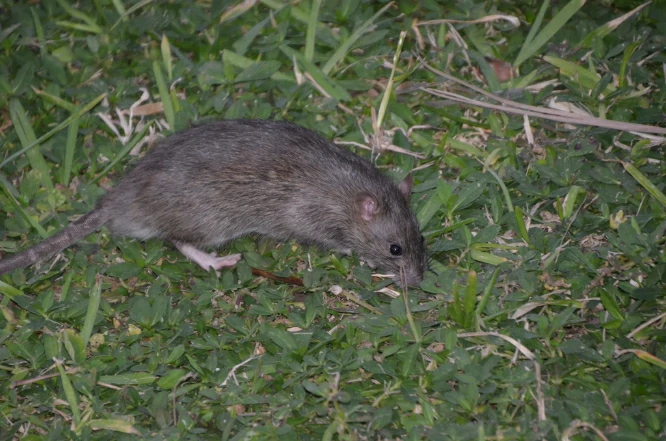
Glue traps are one of the most common methods people use to catch rats, but many don’t really understand how these traps actually work.
Unlike snap traps that kill instantly, glue traps don’t have a quick killing mechanism built in.
The way these traps lead to a rat’s death is quite different from what most people imagine, and it raises some serious questions about how humane this method really is. So how does a glue trap actually kill a rat?
Glue traps don’t kill rats directly. Instead, rats die from exhaustion, dehydration, or starvation after being stuck for hours or days. Some rats also die from stress-induced heart attacks or suffocation if their nose and mouth get stuck in the glue. The process is slow and considered inhumane by most animal welfare experts.
Understanding how glue traps work helps you make better decisions about whether to use them and how to handle trapped rats if you do.
The reality of what happens is pretty grim and might change your mind about using this trapping method.
What Happens When a Rat Gets Stuck
The first moments after a rat touches a glue trap set off a chain of events that eventually lead to its death. The initial panic response is just the beginning.
When a rat steps onto the trap, the glue immediately sticks to its feet. The rat’s first instinct is to pull away, but this just makes things worse. The more it struggles, the more of its body comes in contact with the adhesive.
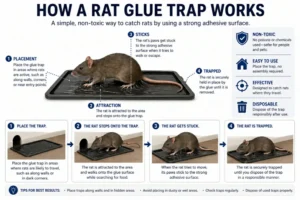
Within seconds, the rat realizes it can’t escape. This triggers complete panic. The rat will thrash, twist, turn, and pull with all its strength. Its heart rate shoots up dramatically as adrenaline floods its system.
As the rat struggles, more body parts get stuck. If one foot was stuck initially, the struggling causes the other feet to touch the glue. The rat might also get its belly, tail, or even its face stuck as it writhes around.
The violent struggling exhausts the rat quickly. Rats aren’t built for sustained physical exertion like this. After several minutes of thrashing, the rat starts to tire. Its movements become less frantic but it keeps trying to escape.
During all this struggle, the rat is also experiencing extreme psychological stress. Being trapped goes against every survival instinct the rat has. The combination of physical exhaustion and mental terror is already taking a serious toll on the animal’s body.
Why Death From Exhaustion Happens
One of the main ways glue traps kill rats is through pure exhaustion. The rat literally wears itself out trying to escape, and its body can’t handle the strain.
Rats are small animals with fast metabolisms. Their bodies burn through energy quickly, especially during intense activity. The violent struggling that happens when a rat is stuck uses up energy at an incredible rate.
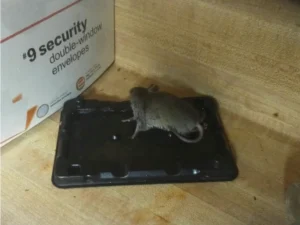
As the rat fights against the trap, its muscles produce lactic acid faster than the body can clear it away. This is the same stuff that makes your muscles burn when you exercise too hard. In rats, this buildup contributes to muscle failure and exhaustion.
The rat’s body temperature rises from all the exertion. Rats can’t sweat like humans do, so they have a harder time cooling down. Overheating adds to the physical stress and drains energy even faster.
Eventually, the rat’s muscles simply give out. After anywhere from 30 minutes to several hours of struggling, the rat becomes too weak to keep fighting. It might still be alive at this point, but it can barely move.
The exhaustion is so severe that the rat’s breathing becomes labored. Its heart is beating incredibly fast, trying to pump oxygen to exhausted muscles. This strain on the cardiovascular system can lead to heart failure, especially in older rats or rats that weren’t healthy to begin with.
Some rats literally die from the physical stress of struggling. Their hearts give out under the combination of exhaustion, panic, and overheating. This can happen relatively quickly in some cases, within a few hours of getting trapped.
How Dehydration Leads to Death
If the rat survives the initial exhaustion phase, dehydration becomes the next major threat to its survival. Rats need water regularly, and being stuck on a trap means they can’t access it.
A healthy rat needs to drink water several times a day. In normal circumstances, rats visit water sources every few hours. When trapped on glue, the rat obviously can’t reach water no matter how thirsty it gets.

The physical exertion of struggling makes dehydration happen even faster. All that movement causes the rat to lose moisture through its breath and body heat. The rat is using up water without any way to replace it.
Rats start showing signs of dehydration within 6 to 12 hours of being stuck. Their mouth and nose become dry. Their eyes might start to look sunken. The rat becomes increasingly weak and lethargic.
As dehydration worsens, the rat’s blood becomes thicker. This makes it harder for the heart to pump blood through the body. Organs start to struggle without proper blood flow, and the rat’s condition goes downhill fast.
Severe dehydration causes the rat’s body temperature regulation to fail. The animal can’t maintain a normal temperature anymore. It might get too hot or too cold depending on the environment.
Death from dehydration usually takes 24 to 48 hours. By the time the rat dies, it’s been through incredible suffering. The process is slow and painful, with the rat becoming progressively weaker until its organs shut down completely.
The Role of Starvation in Rat Deaths
Along with dehydration, starvation plays a part in killing trapped rats, though it usually takes longer than dehydration to become fatal.
Rats have high metabolic rates and need to eat frequently. In the wild, rats typically feed multiple times per day. Going without food is harder on rats than it would be on larger animals with slower metabolisms.
The energy burned during the initial struggle depletes the rat’s reserves quickly. All that thrashing uses up the glucose in its bloodstream and the glycogen stored in its muscles and liver.
Once these immediate energy sources are gone, the rat’s body starts breaking down fat.
After about 24 hours without food, the rat enters a state of starvation. Its body is desperately trying to find energy to keep vital organs running. Muscles start breaking down to provide fuel. The rat becomes increasingly weak and unresponsive.
The combination of starvation and dehydration is worse than either one alone. When a rat is both starving and dehydrated, its body shuts down much faster than it would from just one of these conditions.
Most rats will die from dehydration before starvation becomes the main cause of death. But starvation contributes to their decline, especially in the later stages. The rat’s body is failing on multiple fronts at once.
When Suffocation Becomes the Cause of Death
In some cases, rats actually suffocate while stuck on glue traps. This happens when the rat’s nose, mouth, or chest get stuck to the adhesive in a way that prevents breathing.
During the panic and struggling, a rat might thrash its head around and get its face pressed into the glue. If the nose and mouth end up stuck against the sticky surface, the rat can’t breathe properly.
Some rats try to bite or gnaw at the trap in an attempt to escape. When they open their mouth against the glue, the adhesive can stick to their lips, tongue, and the inside of their mouth. This makes breathing very difficult.
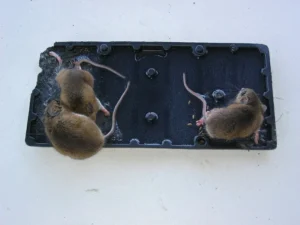
If the rat’s chest gets pressed down firmly against the glue, it might not be able to expand its rib cage enough to take deep breaths. Shallow breathing doesn’t bring in enough oxygen, and the rat slowly suffocates.
Suffocation is actually one of the faster ways a rat might die on a glue trap. Depending on exactly how the rat is positioned, death could occur within minutes to a couple of hours rather than days.
The rat is fully conscious during suffocation, struggling desperately to breathe. This makes it an especially cruel way to die. The panic of not being able to breathe adds to the already extreme stress the animal is experiencing.
How Stress and Panic Contribute to Death
The psychological impact of being trapped shouldn’t be underestimated. The extreme stress and panic a rat experiences can directly contribute to its death.
Being trapped triggers a massive stress response in the rat’s body. Stress hormones like cortisol and adrenaline flood its system.
In the short term, these hormones help the rat fight or flee, but prolonged exposure causes serious damage.
High stress levels can trigger heart attacks in rats, especially in older animals or those with pre-existing health issues. The combination of physical exertion and extreme fear puts enormous strain on the cardiovascular system.
Stress also suppresses the immune system. While this doesn’t kill the rat directly, it makes the animal more vulnerable to any other health issues.
A rat that might normally survive a few hours without water could die faster because stress has weakened its body.
Some rats appear to go into shock from the trauma of being trapped. Shock is a serious medical condition where blood flow to vital organs decreases.
Rats in shock become cold, unresponsive, and can die even if they haven’t been trapped very long.
The constant state of panic and fear exhausts the rat mentally as well as physically. There’s no relief, no escape from the terror. This psychological torture contributes to how quickly the animal’s condition goes downhill.
Why Some Rats Die Faster Than Others
Not all rats die at the same rate on glue traps. Several factors affect how long it takes and what ultimately kills each individual rat.
The rat’s size and age make a big difference. Young, small rats have less body mass and smaller energy reserves. They dehydrate faster and succumb to exhaustion quicker than large adult rats.
Health condition before getting trapped is critical. A rat that was already sick, injured, or weakened will die much faster than a healthy rat. Strong, healthy rats might survive for 24 hours or more, while weak ones might die in just a few hours.
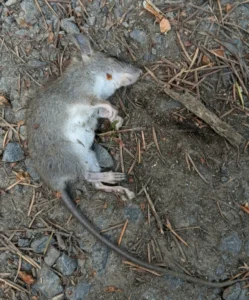
How much of the rat’s body gets stuck matters too. If only the feet are caught, the rat might survive longer because it can still breathe easily and isn’t as physically stressed. If the face, chest, or large portions of the body are stuck, death comes much faster.
Environmental temperature affects survival time. In hot environments, rats overheat and dehydrate faster. In very cold environments, hypothermia becomes another danger on top of everything else.
The specific position the rat ends up in makes a difference. A rat stuck on its belly with its face up can breathe easily and might survive longer.
A rat twisted sideways or with its face pressed down has a much harder time and will likely die faster.
Individual rats also have different tolerance levels for stress and pain. Some rats panic more intensely than others. Some keep struggling for hours while others give up relatively quickly. These personality differences affect how the death process unfolds.
What Happens to the Rat’s Body After Death?
Understanding what happens after the rat dies is important, especially if you’re the one who has to deal with the trap.
Right after death, the rat’s body goes through several changes. The muscles relax completely, and the body might release urine and feces. This is a natural part of death as the muscles that control these functions stop working.
Within a few hours, the body starts to stiffen due to rigor mortis. This is a temporary stiffening of the muscles that begins a few hours after death and can last for 24 to 48 hours. The rat’s body will feel rigid and hard to manipulate during this time.
Decomposition begins pretty quickly, especially in warm environments. Bacteria that were already in the rat’s body start breaking down tissues. Within 12 to 24 hours, you might notice an odor starting to develop.
The smell gets progressively worse as decomposition continues. In warm conditions, a dead rat can start to smell really bad within a day or two. The odor is from gases produced by bacteria breaking down the body’s tissues.
Flies are attracted to dead animals very quickly. If the trap is in an area where flies can reach it, you might see them landing on the dead rat within hours. They’ll lay eggs that hatch into maggots, speeding up decomposition.
The rat’s body will also start to leak fluids as tissues break down. This is particularly gross on glue traps because the fluids mix with the adhesive, creating a nasty mess that’s even harder to clean up than usual.
Why This Method Is Considered Inhumane
Most animal welfare organizations and veterinary professionals consider glue traps to be one of the most inhumane ways to kill rodents.
Understanding why helps explain the growing movement to ban these traps.
The death process is extremely slow. Unlike snap traps that kill in a fraction of a second, or even poison that might take hours, glue traps can take days to kill. The animal suffers the entire time with no relief.
The rat is fully conscious during most or all of the dying process. It knows it’s trapped, it feels pain from injuries sustained during struggling, and it experiences the slow progression of dehydration and starvation.
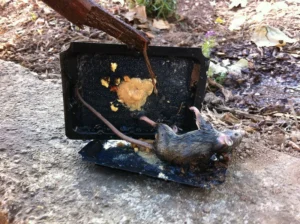
There’s no quick or painless end. Even in the best-case scenario, the rat dies from heart failure after hours of panic and exhaustion. In the worst case, it slowly suffocates or dies from dehydration over days while stuck to the trap.
Glue traps can also catch non-target animals. People find birds, squirrels, and even pets stuck on these traps. Any animal that gets caught goes through the same horrible process, even if it wasn’t the intended target.
The person setting the trap rarely checks it frequently enough to minimize suffering. Many people set glue traps and then check them once a day or even less often.
This means trapped rats could be suffering for 24 hours or more before anyone even knows they’re there.
Even when people do find trapped rats quickly, most don’t know how to humanely end the animal’s suffering. They might not want to kill it themselves, leading to the rat staying stuck and suffering until it dies naturally.
Alternatives That Are More Humane
If you’re concerned about the suffering glue traps cause, several alternatives kill rats much more quickly and humanely.
Snap traps are considered more humane than glue traps by most experts. When set properly, snap traps kill rats in a fraction of a second by breaking the neck or crushing the skull. Death is essentially instant, with little to no suffering.
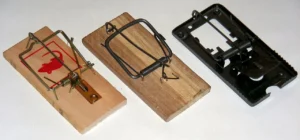
Electronic traps deliver a high-voltage shock that kills in just a few seconds. These traps are very effective and humane. The rat enters the trap to get the bait, and the shock kills it almost immediately.
Live traps catch rats without harming them at all. You can then release the rat far from your home, or you can humanely end its life yourself using a method recommended by veterinarians. This gives you control over what happens and how much the rat suffers.
If you absolutely must use glue traps for some reason, the humane thing to do is check them very frequently. Check every few hours, and if you find a trapped rat, end its suffering immediately rather than leaving it to die slowly.
Methods for humanely ending the life of a trapped rat include placing the entire trap in a sealed bag and then in a freezer.
This puts the rat to sleep gradually and is considered one of the better at-home methods. Taking the rat to a vet is another option, though not practical for most people.
Conclusion
Glue traps kill rats through a slow, painful process involving exhaustion, dehydration, starvation, and sometimes suffocation. The rat can suffer for hours or even days before dying, making this one of the most inhumane pest control methods available.
Understanding how these traps actually work reveals why so many animal welfare experts oppose their use. The death process is neither quick nor painless, and trapped rats experience extreme physical and psychological distress before dying.
If you care about minimizing animal suffering, snap traps, electronic traps, or live traps are much better choices. These alternatives are just as effective at catching rats while causing far less suffering.
If you do use glue traps, the most humane thing you can do is check them very frequently and take immediate action when you find a trapped rat, either by releasing it or humanely ending its life rather than leaving it to die slowly on the trap.

Hi, my name is Ezra Mushala, i have been interested animals all my life. I am the main author and editor here at snakeinformer.com.