
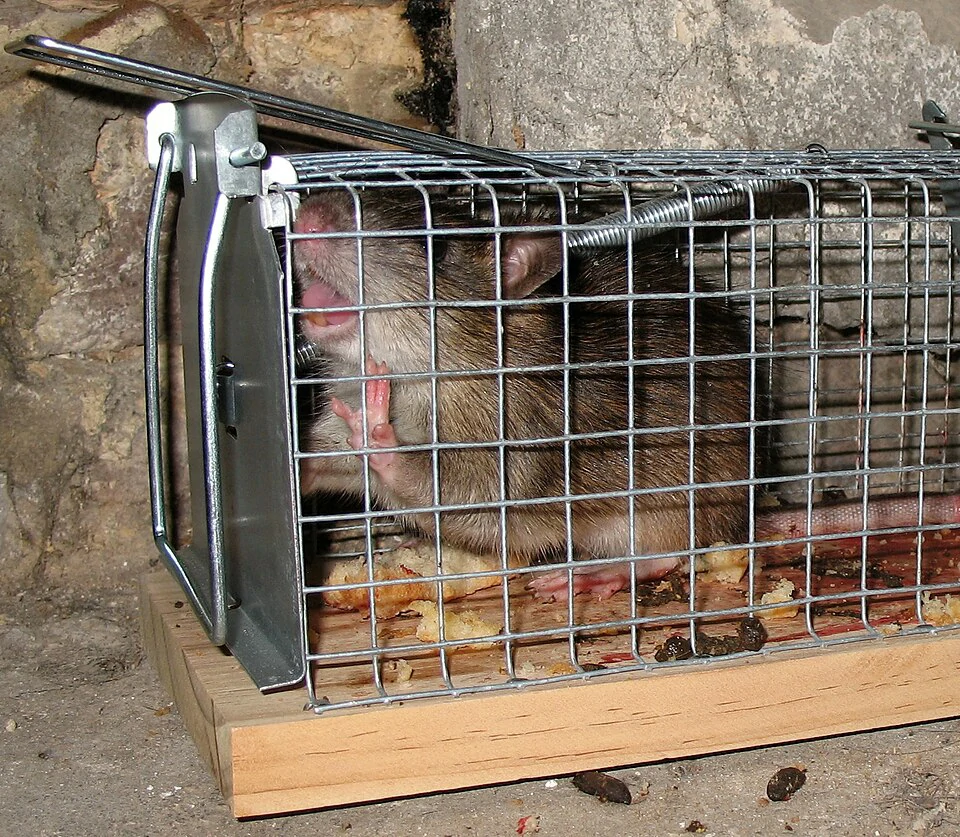
If you’ve got both rats and mice in your home, you might be wondering if you can just use one type of trap for both. Rat traps are bigger and more powerful than mouse traps, so it seems like they should work on the smaller pests too. Can a rat trap be used for mice?
Yes, you can use a rat trap to catch mice, but it’s not ideal. Rat traps are designed for larger animals and might be too insensitive to trigger when a lightweight mouse steps on them. Even if the trap does go off, it can completely destroy the mouse’s body, making cleanup messy and unpleasant.
While rat traps can technically catch mice, there are better options available. Using the right tool for the job makes pest control easier and more effective.
Why Rat Traps Aren’t Designed for Mice
Rat traps are built to catch animals that weigh between 5 to 16 ounces or more. The trigger mechanism needs enough weight to release the spring, which means it’s calibrated for a rat’s body weight.
Mice, on the other hand, typically weigh less than an ounce. That’s a huge difference in size and weight.
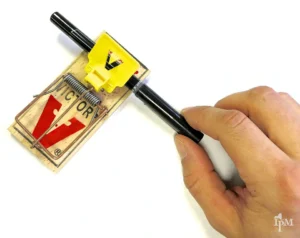
The trigger plate on a rat trap requires more pressure to activate than a mouse can usually provide. A mouse might walk right across a rat trap, eat the bait, and leave without ever setting it off.
The spring on a rat trap is also much stronger than what you need for mice. It’s designed to deliver enough force to quickly kill a rat, which is a much tougher animal than a mouse.
This extra power is complete overkill for a tiny mouse. When a rat trap does catch a mouse, the result is often pretty gruesome.
What Happens When a Mouse Triggers a Rat Trap?
If a mouse does manage to trigger a rat trap, the powerful spring will hit it with way more force than necessary. Rats traps are designed to deliver a killing blow to an animal that might weigh 10 or 15 times what a mouse weighs.
The metal bar will often completely crush the mouse’s body. Instead of a quick, clean kill, you might end up with a mouse that’s been flattened or even torn apart.
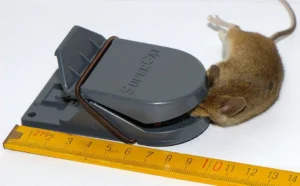
This makes cleanup much more difficult and unpleasant. With a properly sized mouse trap, the mouse is killed quickly and remains mostly intact, making it easier to dispose of.
Blood and tissue can get spread across the trap and the surrounding area when the force is too strong. You’ll spend more time cleaning up the mess than you would if you’d just used the right trap in the first place.
From a humane standpoint, using equipment that’s properly sized for the animal you’re catching is important. While both rat and mouse traps are designed to kill quickly, using an oversized trap creates unnecessary violence.
The Weight and Sensitivity Problem
The main issue with using rat traps for mice is the weight difference. Mice are so light that they often can’t trigger the mechanism.
Think about it this way: if you set a trap that needs 2 or 3 ounces of pressure to trigger, and a mouse that weighs less than an ounce walks on it, nothing happens.

The mouse can carefully approach the trap, eat the bait, and leave without any danger. You’ll come back to find the bait gone and the trap still set, which is frustrating when you’re trying to solve a mouse problem.
Some mice might jump onto the trigger plate, which creates a quick impact that could set off the trap. But most mice will just step on it normally, and their weight won’t be enough.
You could try to make the trap more sensitive by adjusting how it’s set, but this can backfire. A rat trap that’s too sensitive might go off from vibrations or air movement instead of when an actual mouse steps on it.
When Rat Traps Might Actually Catch Mice
There are some situations where a rat trap could catch a mouse, even though it’s not designed for it. If you have a larger-than-average mouse, it might be heavy enough to trigger the mechanism.
Pregnant female mice weigh more than normal, so they’re more likely to set off a rat trap. The extra weight from carrying babies can be just enough to reach the trigger threshold.
If multiple mice approach the trap at once and step on the trigger plate together, their combined weight might be enough. But this is pretty rare since mice are usually cautious around traps.
Some rats traps have more sensitive trigger mechanisms than others. If you happen to have one that’s on the sensitive side, it might catch mice more reliably.
Cage-style rat traps (live traps) can work for mice because they don’t rely on weight alone. The mouse enters the cage and triggers a door mechanism, which can work regardless of the animal’s size.
The Better Alternative: Mouse-Specific Traps
Mouse traps are specifically designed for small rodents. They have lighter springs, smaller trigger plates, and are calibrated to work with an animal that weighs less than an ounce.
The trigger mechanism on a mouse trap is much more sensitive. Even a small mouse can easily set it off by stepping on the plate or tugging at bait.
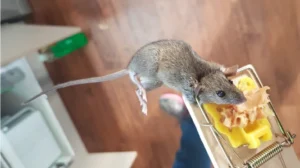
The spring delivers just enough force to kill a mouse quickly without destroying its body. This makes cleanup simpler and less messy.
Mouse traps are also cheaper than rat traps. Since they’re smaller and use less material, you can buy several for the price of one rat trap.
This is helpful because dealing with mice usually requires setting multiple traps. Mice reproduce quickly and travel in groups, so you’ll need more traps out at once.
Using Both Types of Traps at the Same Time
If you’re dealing with both rats and mice, the best approach is to use both types of traps. This might seem like more work, but it’s actually more effective.
Set rat traps in areas where you’ve seen rat activity or droppings. Rats leave larger droppings (about the size of a raisin) and tend to stick to the same paths along walls and in corners.
Place mouse traps in areas where you’ve found mouse droppings, which are much smaller (about the size of a grain of rice). Mice can fit through much smaller openings than rats, so they might be in areas rats can’t reach.
Using the right trap in the right location increases your success rate. You won’t waste time checking rat traps that mice can’t trigger, and you won’t accidentally destroy mice with oversized traps.
Label or keep track of which traps are which if you’re using several. It’s easy to forget what you’ve set where, especially if you’re dealing with a large infestation.
Do Electronic Rat Traps Work for Mice?
Electronic traps are a bit different from traditional snap traps. They use sensors to detect when an animal enters, then deliver a lethal electric shock.
Many electronic rat traps will work on mice because the sensor detects movement or body heat rather than relying purely on weight. Once a mouse enters the chamber, the trap activates.
However, electronic rat traps are much more expensive than regular mouse traps. You’re paying for technology that’s designed to handle larger animals, which is overkill if you only have mice.
The chamber on an electronic rat trap is also sized for rats. A small mouse might not make good contact with the electrified plates, which means it might not get killed quickly or at all.
If you already own electronic rat traps and want to try them for mice, go ahead. But if you’re buying new equipment specifically for mice, regular mouse traps or mouse-sized electronic traps are better choices.
The Size Difference Between Mice and Rats
Understanding how different these animals are helps explain why you need different traps. An adult mouse is typically 2.5 to 4 inches long, not counting the tail, and weighs about 0.5 to 1 ounce.
An adult rat is much bigger, usually 7 to 10 inches long (again, not counting the tail) and weighing anywhere from 5 to 16 ounces or more. That’s 5 to 30 times heavier than a mouse.

Their behavior is different too. Rats are more cautious and neophobic, meaning they’re scared of new objects in their environment. They might avoid a trap for days before approaching it.
Mice are more curious and less cautious. They’ll investigate new objects pretty quickly, which is why mouse traps often work faster than rat traps.
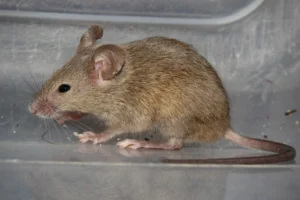
Because of these differences in size and behavior, pest control equipment is designed specifically for each animal. Using the wrong size is like trying to catch a goldfish with a fishing rod meant for sharks.
Can You Modify a Rat Trap for Mice?
Some people try to make rat traps more sensitive so they’ll work for mice. You can adjust how the trigger bar catches the spring, making it easier to release.
The problem is that making a rat trap sensitive enough for mice usually makes it too sensitive overall. It’ll go off from vibrations, air currents, or even just settling on an uneven surface.
You’ll end up with a trap that snaps randomly without catching anything, which defeats the whole purpose. The time you spend adjusting and resetting it would be better spent just buying proper mouse traps.
Another issue is that even if you get the sensitivity right, the spring is still way too powerful. You haven’t solved the problem of the trap destroying the mouse’s body when it goes off.
If you’re determined to make it work, you could try reducing the spring tension somehow, but at that point you’re putting in a lot of effort to avoid spending a few dollars on the right equipment.
The Cost Factor: Is It Worth It?
Rat traps cost more than mouse traps, so using what you already have makes sense from a budget perspective. But if the traps don’t actually catch the mice, you’re not saving money.
A basic mouse trap costs about 50 cents to a dollar. Even if you need to buy 10 of them, you’re only spending $5 to $10 total.
Compare that to the frustration of dealing with mice that keep stealing bait from rat traps without getting caught. The time and effort you waste checking traps that aren’t working costs you more than just buying the right equipment.
Plus, mouse problems tend to get worse quickly if you don’t deal with them. Mice reproduce fast, with females having 5 to 10 litters per year. Each litter can have 3 to 14 babies.
Every day you spend trying to make rat traps work for mice is a day the mouse population is growing. Spending a few extra dollars upfront saves you from dealing with a much bigger problem later.
What About Glue Traps for Both
Glue traps are one type of trap that can work for both rats and mice. The size of the animal doesn’t matter as much since they just need to step on the sticky surface.
Larger glue traps marketed for rats will definitely catch mice. Smaller glue traps for mice will also catch young rats or smaller rat species.
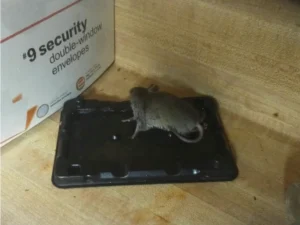
The downside is that glue traps aren’t the most humane option. Animals stuck to them can take a long time to die, and it’s a stressful way to go.
Some people prefer to avoid glue traps for this reason, even though they’re effective. If you do use them, check them frequently so you can dispose of caught animals quickly.
Glue traps also catch other things besides rodents. You might accidentally trap lizards, spiders, or even small pets, which is another reason many people avoid them.
Cage Traps: A Better Multi-Purpose Option
If you want one type of trap that works for both mice and rats, cage traps (live traps) are your best bet. They come in different sizes, but a rat-sized cage trap will catch mice just fine.
The mouse enters the cage to get the bait, steps on a trigger plate, and the door closes behind it. The mechanism works the same regardless of the animal’s weight.
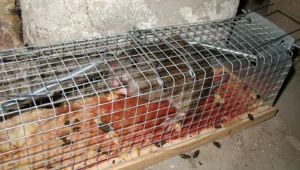
The advantage is that you can then release the animal far from your home if you want. Some people prefer this humane approach to killing.
The disadvantage is that you have to deal with a live, possibly scared and aggressive rodent. Releasing it requires transporting it somewhere else, which can be tricky.
Cage traps are also more expensive than snap traps, usually costing $15 to $40 depending on size and quality. But if you want versatility, they’re worth considering.
Conclusion
While you can technically use a rat trap to catch mice, it’s not the best approach. Rat traps are designed for much larger, heavier animals, and mice often can’t trigger them. When they do, the result is usually messy and more violent than necessary.
Mouse traps are inexpensive and specifically designed to work with small rodents. They’re more sensitive, appropriately sized, and make cleanup easier. If you’re dealing with both rats and mice, using both types of traps in the appropriate locations gives you the best results.
Save yourself the frustration and use the right tool for the job. A few dollars spent on proper mouse traps will solve your problem faster and more effectively than trying to make rat traps work for something they weren’t designed to catch.

Hi, my name is Ezra Mushala, i have been interested animals all my life. I am the main author and editor here at snakeinformer.com.