

You’ve got a rat problem, but you don’t want to kill them. Maybe you’re trying to be humane, or you have pets and kids around and don’t want dangerous snap traps lying around. This brings up an important question: can you catch a rat in a live trap?
Yes, you can definitely catch a rat in a live trap. Live traps work well for rats when they’re properly sized, baited correctly, and placed in the right locations. The trap needs to be big enough for a rat to fully enter, and you’ll need patience because rats are cautious about new objects in their environment.
Live traps offer a no-kill solution to rat problems, though you’ll need a plan for what to do with the rats once you catch them.
How Live Traps Work for Rats
Live traps are designed to catch animals without harming them. The basic concept is simple: the rat goes in for bait, and a door closes behind them.
The most common design is a box-style trap with a door on one or both ends. When the rat steps on a trigger plate inside, the door snaps shut.
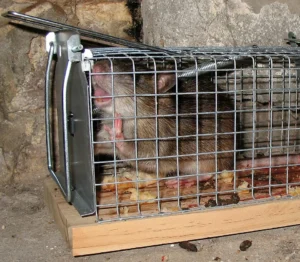
Some live traps have a see-saw mechanism. When the rat walks far enough into the trap to get the bait, their weight tips the platform and the door closes.
Wire mesh traps let you see the rat inside, which helps you know when you’ve caught something. Solid-sided traps hide the rat, which might be less stressful for the animal.
The trap must be big enough for an adult rat to fully enter. If the trap is too small, rats won’t go in far enough to trigger the door.
Quality matters with live traps. Cheap traps might have doors that don’t close reliably or triggers that are too sensitive or not sensitive enough.
Choosing the Right Size Live Trap
Size is really important when buying a live trap for rats. Get it wrong and you won’t catch anything.
For Norway rats (the most common type), you’ll want a trap that’s at least 10 to 12 inches long. These rats are chunky, and they need room to move inside.
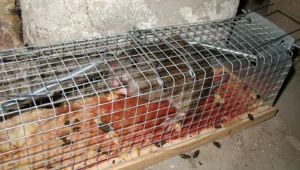
Roof rats are smaller and more slender. A trap that’s 9 to 10 inches long works for them, but going bigger doesn’t hurt.
The width and height matter too. A trap should be at least 4 inches wide and 4 to 5 inches tall to comfortably fit a rat.
Traps marketed for squirrels or rabbits often work well for rats. These are usually in the right size range and built sturdy enough.
Avoid mouse-sized live traps. These are way too small for rats. The rat might stick their head in to grab bait but won’t enter far enough to trigger the trap.
Two-door traps can be more effective than one-door traps. Rats feel safer entering a trap they can see through, and they’re less likely to think it’s a dead end.
Best Baits for Live Trapping Rats
The bait you use makes a huge difference in whether rats will enter your trap. You need something they can’t resist.
Peanut butter is the classic choice and works really well. It’s smelly, high in protein and fat, and rats love it.
Nuts work great too. Whole peanuts, walnuts, or almonds attract rats. They’ll work hard to get at these food sources.
Chocolate is another strong option. Pieces of chocolate bar or chocolate chips can lure rats into traps.
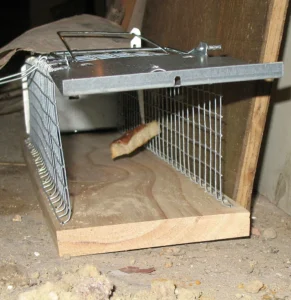
Bacon or other fatty meats are highly attractive to rats. Use small pieces so the smell carries but the rat has to fully enter the trap to reach it.
Dried fruit like raisins or dried cranberries work well. These are sweet and concentrated, giving off a strong scent.
Some people have success with nesting material like cotton balls or shredded paper, especially during colder months when rats are looking for bedding.
Whatever bait you choose, place it at the back of the trap. The rat needs to walk all the way in to trigger the door mechanism.
Where to Place Live Traps for Rats
Location is just as important as the trap itself. You need to put traps where rats actually travel.
Rats follow walls and edges. They don’t like crossing open spaces. Place traps against walls, in corners, or along paths you’ve seen rats using.
Look for signs of rat activity: droppings, gnaw marks, grease stains on walls, or damaged food containers. Put traps in these high-activity areas.
Near food sources is smart. If rats are getting into your pantry, put a trap nearby. Same for garbage areas, pet food storage, or anywhere else they’re finding meals.
Entry points are good spots. If you know where rats are getting into your home, place a trap near that hole or gap.
Dark, quiet areas work better than busy, noisy spots. Rats feel safer in places where they won’t be disturbed.
Multiple traps increase your chances. Set 3 to 5 traps in different locations rather than putting all your hopes on one trap in one spot.
Why Rats Are Hard to Live Trap
Rats are smart and naturally suspicious, which makes them challenging to catch in any trap, including live traps.
They have neophobia, which means fear of new things. When you put out a trap, rats might avoid it for days just because it’s unfamiliar.
They learn from experience. If a rat has been caught and released before, they’ll be much harder to catch again.
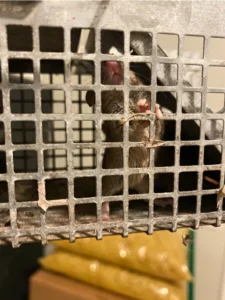
Rats can smell human scent on traps. Always wear gloves when handling traps and bait to minimize your scent.
They’re cautious eaters. A rat might nibble a tiny bit of new food and wait to see if they get sick before eating more.
If there are multiple rats, they might wait to see what happens to the first one that enters the trap. Social learning makes the rest harder to catch.
These behaviors evolved to keep rats safe from predators and poisoned food. Unfortunately for us, it makes them harder to trap.
Pre-Baiting to Increase Success
Pre-baiting is a technique that makes rats comfortable with your trap before you actually set it to catch them.
Start by placing the trap where you want it but leaving the door open or blocked so it can’t close. This lets rats explore without getting caught.
Put bait inside the trap. When rats can take the bait without consequences for several days, they learn the trap is a food source.
After 3 to 5 days of successful free feeding, set the trap normally. The rats are now used to entering, so they’re less suspicious.
This takes patience, but it significantly improves your catch rate. The investment of a few extra days is worth it.
Some people skip pre-baiting and still catch rats, but if you’ve tried and failed, this technique can make the difference.
You can also scatter some bait outside the trap initially, creating a trail that leads into the trap. This gradually gets rats comfortable approaching and entering.
What to Do When You Catch a Rat
Once you’ve successfully caught a rat, you need a plan. You can’t just open the door in your house and let it go.
Check your traps at least twice daily. Rats can become stressed, dehydrated, or overheated if left in a trap too long.
Don’t handle the trap roughly or make sudden movements. This stresses the rat and could cause them to hurt themselves thrashing around.

If you’re going to release the rat, you need to take it far from your home. At least 2 to 3 miles away, or they might find their way back.
Release in appropriate habitat: wooded areas, fields, or parks where rats can find food and shelter. Don’t release them in someone else’s neighborhood.
Some areas have laws about releasing captured wildlife. Check local regulations before you release rats anywhere.
Be aware that released rats face tough odds. They’re in unfamiliar territory and might not survive. This is an uncomfortable reality of live trapping.
When you open the trap to release the rat, stand back and let them leave on their own. Don’t try to shake them out or handle them.
The Reality of Relocating Rats
While live trapping sounds humane, relocation isn’t always as kind as it seems. There are some hard truths to consider.
Relocated rats have low survival rates. They don’t know where to find food, water, or shelter in the new area.
They might encounter territorial rats already living there. Rats can be aggressive toward intruders, and fights can be deadly.
Without established burrows, relocated rats are vulnerable to predators. They don’t have safe places to hide.
In unfamiliar territory, rats might struggle to find water, especially in hot weather. Dehydration can kill quickly.
Some people argue that relocating rats is less humane than quick-kill traps because of these factors. It’s a valid ethical debate.
If you do choose to relocate, releasing rats in suitable habitat during mild weather gives them the best chance at survival.
Legal Considerations for Live Trapping and Release
Laws about trapping and relocating wild animals vary by location. You need to know what’s legal where you live.
Some states and municipalities prohibit releasing trapped animals anywhere except on the property where they were caught. This makes live trapping pointless for pest control.
Other areas require permits to trap certain animals, even on your own property. Rats usually aren’t protected, but it’s worth checking.

Releasing animals on public land might be illegal without permission. This includes parks, nature reserves, and other government-owned property.
Releasing rats on private property that isn’t yours is definitely illegal without the landowner’s permission. You’re essentially dumping your pest problem on someone else.
Some areas have specific rules about how far from human dwellings you must release animals. Research local wildlife regulations.
Breaking these laws can result in fines. The penalties vary but can be significant, especially if you’re caught repeatedly.
Alternatives to Release
If you can’t or don’t want to release trapped rats, you have other options. Some are more palatable than others.
You can take the rat to a veterinarian who can euthanize it humanely. This costs money but ensures a quick, painless death.
Some animal control agencies will take trapped rats. Call ahead to ask; policies vary.
Wildlife rehabilitation centers might accept rats in some cases, though most focus on native wildlife, not pest species.
Some people choose to euthanize rats themselves using approved methods. Carbon dioxide chambers are considered humane if done correctly, but this requires equipment and knowledge.
The least humane option is releasing the rat in an unsuitable location where death is certain but slow. If the rat won’t survive anyway, quicker methods are kinder.
This is where many people realize that live trapping isn’t as simple as it seems. The “what next?” question has no perfect answer.
Keeping Rats Alive in the Trap
If you can’t immediately release or deal with a trapped rat, you need to keep them alive and comfortable until you can.
Provide water if the rat will be in the trap for more than a few hours. Use a small dish or a water bottle attached to the cage.
Keep the trap in a cool, shaded area. Rats can overheat quickly in direct sun or hot environments.
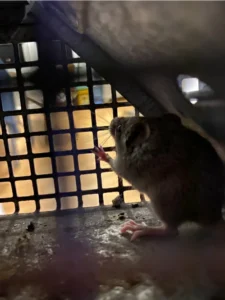
Don’t put the trap somewhere your pets can reach it. A dog or cat could terrify the rat or even hurt them through the cage.
Cover the trap with a light cloth to reduce stress. Rats feel safer when they can’t see movement and activity around them.
Don’t try to feed the rat beyond the original bait. Focus on getting them released or dealt with as quickly as possible.
Check on trapped rats frequently. If they seem distressed, injured, or ill, you’ll need to act faster.
Preventing Rats from Returning
Live trapping only solves part of the problem. If you don’t address why rats are there, more will come.
Find and seal entry points. Rats can squeeze through holes the size of a quarter. Check your foundation, roof, pipes, and vents.
Remove food sources. Store food in sealed containers, clean up spills promptly, and don’t leave pet food out overnight.
Eliminate water sources. Fix leaky pipes, don’t leave standing water, and make sure outdoor areas drain properly.
Reduce clutter and hiding spots. Rats love piles of junk, dense vegetation, and cluttered storage areas.
Trim trees and bushes away from your house. Rats use these as highways to access your roof and upper levels.
If you catch rats but don’t fix what’s attracting them, you’ll be trapping rats indefinitely. Prevention is the real solution.
Live Traps vs. Snap Traps: Making the Choice
There’s an ongoing debate about whether live traps or kill traps are more humane. Both sides have valid points.
Live traps avoid immediate death, which feels more humane on the surface. You’re not killing the rat directly.
However, if the released rat dies slowly from starvation, predation, or exposure, is that actually more humane than instant death from a snap trap?
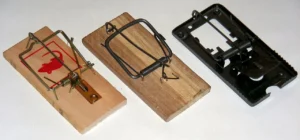
Kill traps, when they work correctly, cause death in seconds. There’s no prolonged suffering, no relocation stress, no uncertain fate.
Live traps require more time and effort. You have to check them frequently and deal with live animals.
For people who absolutely can’t bring themselves to kill animals, live traps offer an option even if it’s not perfect.
The most humane approach overall might be preventing rats from being a problem in the first place through exclusion and sanitation.
Common Mistakes When Using Live Traps
People make several common errors when trying to catch rats in live traps. Avoiding these improves your success rate.
Using a trap that’s too small is mistake number one. Rats won’t fully enter a cramped space.
Not checking traps often enough causes suffering. Rats can become dehydrated or stressed after just a day in a trap.
Placing bait too close to the entrance means rats can grab it without triggering the door. Put bait all the way at the back.
Setting traps in the wrong locations wastes time. You need to trap where rats actually travel, not where it’s convenient for you.
Not wearing gloves when handling traps leaves human scent, which can make rats suspicious.
Giving up too soon is another mistake. Rats might avoid a new trap for several days before they trust it enough to enter.
Using old, stale bait doesn’t work as well. Fresh, smelly bait is much more attractive to rats.
How Long Does It Take to Catch a Rat?
There’s no definite answer, but knowing what to expect helps you stay patient.
In ideal conditions with a trap-naive rat and good bait placement, you might catch a rat the first night.
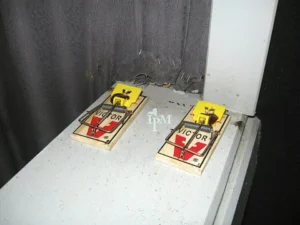
More commonly, it takes 3 to 7 days for rats to overcome their natural caution and enter a new trap.
If you’re dealing with particularly wary rats or rats that have been trapped before, it could take two weeks or more.
Pre-baiting speeds up the process by making rats comfortable with the trap before you set it to catch them.
During this time, keep the trap clean and the bait fresh. Old, moldy bait won’t attract rats.
Don’t move the trap around. Rats learn locations, and constantly changing where the trap is resets their learning process.
Conclusion
You can absolutely catch a rat in a live trap. When properly sized, baited, and placed, live traps work well for capturing rats without killing them.
The key is choosing a trap that’s big enough (at least 10 to 12 inches long for Norway rats), using attractive bait, and putting it where rats actually travel.
Patience is essential because rats are naturally cautious about new objects. Pre-baiting the trap for several days before setting it dramatically improves your success rate.
Once you catch a rat, you face the challenge of what to do with it. Relocation has legal and ethical considerations that you need to think through carefully.
Live trapping requires more time and effort than kill traps, but it offers a no-kill option for people who want to avoid directly causing death.
For the best results, combine live trapping with prevention methods like sealing entry points and removing food sources. This addresses the root of the problem and keeps rats from coming back.

Hi, my name is Ezra Mushala, i have been interested animals all my life. I am the main author and editor here at snakeinformer.com.