
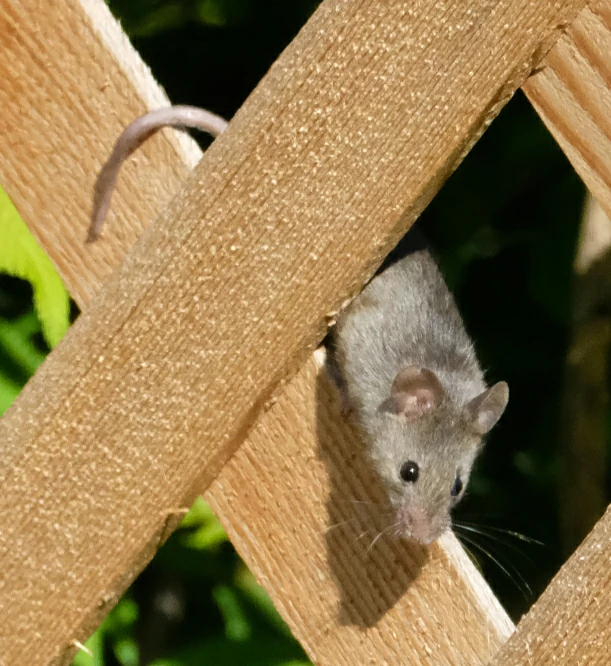
Finding a mouse in your bathroom is disturbing enough, but discovering one near your shower drain can make you wonder about some truly unsettling possibilities. You might be asking yourself if mice can actually travel through your plumbing.
Drains lead down into your plumbing system, and if mice can squeeze through tiny spaces, does that mean they can climb up through your pipes? Can mice come up through the shower drain?
In most cases, mice can’t come up through a functioning shower drain because the P-trap (the curved section of pipe under the drain) is filled with water, which blocks their path. However, if your drain is rarely used and the P-trap dries out, or if there are cracks or gaps in the pipes, mice might be able to access the drain area.
While it’s uncommon for mice to come directly up through shower drains, it’s not completely impossible in certain situations. The bigger concern is usually mice getting into bathrooms through other openings and just happening to be near the drain.
How Shower Drains Are Designed to Block Animals
Shower drains have a built-in feature that’s designed to keep sewer gases out, and it also happens to block mice.
This feature is called a P-trap. It’s a U-shaped or P-shaped section of pipe located directly under your drain. You can usually see it if you look under your sink, though the one under your shower is hidden in your floor or wall.
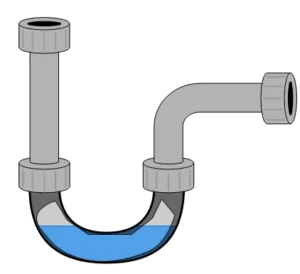
The P-trap holds water in its curved section. This standing water creates a seal that prevents sewer gases from coming up through your drain and into your bathroom.
This same water seal also blocks mice. A mouse can’t swim underwater through the P-trap. Even though mice can swim, they can’t hold their breath long enough to make it through several inches of water in a curved pipe.
For a mouse to come up through your shower drain, it would have to somehow get past this water barrier, which is nearly impossible.
When Shower Drains Might Let Mice Through
While P-traps normally keep mice out, there are situations where they might fail to do their job.
If your shower hasn’t been used in a long time (weeks or months), the water in the P-trap can evaporate. Without water, there’s no barrier, and technically a mouse could climb up through the dry pipe.
This is most common in vacation homes, guest bathrooms that rarely get used, or homes that are sitting empty.
Damaged or disconnected pipes are another issue. If there are cracks in your drain pipes or if sections have separated, mice might be able to enter the pipe system through these openings. They might not climb all the way through the drain, but they could be in the pipes near your drain.
Incorrectly installed plumbing can also be a problem. If your shower drain wasn’t plumbed correctly and doesn’t have a proper P-trap, or if the trap is too shallow, it might not hold enough water to block mice.
In older homes with damaged plumbing, there might be holes or gaps in the pipes that mice can squeeze through to access the area around your drain.
More Likely Ways Mice Get Into Bathrooms
If you see a mouse near your shower drain, it probably didn’t come up through the drain itself. There are much more likely entry points.
Gaps around pipes where they enter your bathroom through walls or floors are common entry points. Your shower has supply pipes (that bring water to the showerhead) and a drain pipe, and these all go through your walls or floor.
The holes cut for these pipes are often larger than necessary, leaving gaps.
Mice can squeeze through these gaps from the spaces inside your walls or from your basement or crawl space.
Gaps under your bathroom door are easy entry points. Many bathroom doors have a gap at the bottom for air circulation, and this is often large enough for a mouse to squeeze under.
Bathroom cabinets and vanities often have openings in the back where pipes pass through. These openings can provide access from wall cavities into your bathroom.
Holes around fixtures like toilets, tubs, and showers can let mice in. Where your shower pan meets the floor, or where your toilet connects to the floor, there might be small gaps.
Bathroom exhaust fan vents can be entry points if they’re not properly screened or if the exterior vent cover is damaged.
Cracks in walls, floors, or along baseboards provide pathways for mice.
Signs You Have Mice in Your Bathroom
If mice are getting into your bathroom (whether through the drain area or elsewhere), you’ll usually notice clear signs.
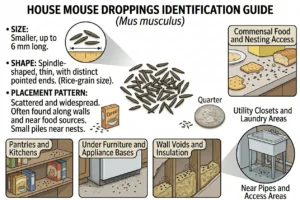
Mouse droppings are the most obvious evidence. Look in corners, under sinks, behind toilets, and along baseboards. Mouse droppings are small (about the size of a rice grain), dark, and pellet-shaped.
Gnaw marks on items in your bathroom can indicate mice. They might chew on toilet paper, tissue boxes, cardboard, soap packaging, or even plastic items.
You might hear scratching or scurrying sounds, especially at night. These sounds could come from inside your walls, under your floor, or from behind cabinets.
A musty or ammonia-like smell can indicate mice. Mouse urine has a strong odor, and if mice are using your bathroom regularly, you’ll probably smell it.
Smudge marks (dark, greasy streaks) along walls and baseboards show where mice travel frequently.
Shredded materials like toilet paper, tissues, or paper products can indicate mice are building nests nearby.
If you actually see a mouse in your bathroom, that’s obviously a clear sign you have a problem.
Why Mice Might Be Attracted to Bathrooms
You might wonder why mice would want to be in a bathroom in the first place.
Water is the main attraction. Mice need water to survive, and bathrooms provide easy access to it. They might drink from condensation on pipes, from drips under sinks, or even from water left in sinks or tubs.
Toiletries and personal care products can be food sources. Mice will eat soap (especially natural soaps), toothpaste, and other bathroom products if they can access them.
Bathrooms are often warm and humid, which mice find comfortable, especially during cold weather.
Bathrooms often have less activity at night (when mice are most active) compared to kitchens and living rooms, making them safer spaces for mice to explore.
The spaces behind bathroom walls and under bathroom floors often contain plumbing, which creates voids and pathways that mice can use to travel through your home.
How to Check if Mice Could Access Your Shower Drain
If you’re concerned about mice coming through your shower drain, there are ways to check if it’s possible.
First, think about how often you use your shower. If you use it daily or even several times a week, your P-trap definitely has water in it and mice can’t get through.
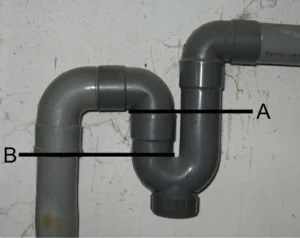
If you have a shower you rarely use, run water down the drain for a few minutes. This will refill the P-trap. Make it a habit to run water in rarely-used drains at least once a month to keep the P-traps full.
If you have access to the plumbing under your shower (through a basement or crawl space), inspect the pipes with a flashlight. Look for cracks, gaps, or disconnected sections.
Pour some water mixed with food coloring down the drain, then check underneath to see if it leaks anywhere. Leaks might indicate cracks that mice could use.
Check around your shower pan (the base of your shower) for any gaps or cracks where it meets the floor or walls.
Listen carefully near your shower drain. If you hear scratching or movement sounds coming from the drain area, there might be mice in the pipes or walls near the drain (though probably not in the drain itself).
How to Keep Mice Out of Your Bathroom
Whether mice could theoretically come through your drain or not, you should take steps to keep them out of your bathroom entirely.
Seal all gaps around pipes where they enter your bathroom. Use steel wool stuffed into the gaps, then seal over it with caulk or expanding foam. Mice can’t chew through steel wool.
- Fix gaps under your bathroom door. Install or replace door sweeps to close the gap at the bottom of the door.
- Seal holes in cabinets where pipes pass through. Use steel wool and caulk for this too.
- Check and seal any cracks in walls, floors, or along baseboards.
- Make sure your bathroom exhaust fan vent is properly screened on the outside.
- For rarely-used drains, run water through them at least once a month to keep the P-traps full.
- If you find any leaking pipes, fix them right away. Standing water attracts mice.
- Don’t leave pet food or water bowls in your bathroom if you can avoid it.
- Keep bathroom products in sealed containers when possible, and don’t leave soap bars sitting out where mice can easily gnaw on them.
What to Do if You Find Mice in Your Bathroom
If you’ve actually seen mice in your bathroom or found clear evidence of them, you need to take action.
Set traps in your bathroom in areas where you’ve seen mice or droppings. Snap traps or live traps work well. Place them along walls and in corners since mice tend to travel along edges.
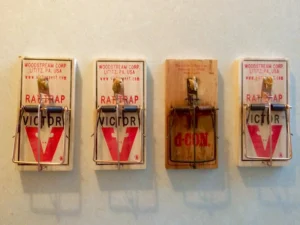
Bait the traps with peanut butter, chocolate, or small pieces of bacon. These work better than cheese.
Check traps daily and remove any caught mice right away.
Look for the entry points mice are using to get into your bathroom. Check all the areas mentioned earlier (gaps around pipes, under doors, cracks in walls, etc.).
Seal all entry points you find. Use appropriate materials (steel wool, caulk, expanding foam) depending on the size and location of the gap.
Clean up mouse droppings carefully. Wear gloves and a mask. Spray the droppings with disinfectant before cleaning them up to avoid spreading particles into the air.
Disinfect surfaces where you’ve seen mice or found droppings.
If you have a persistent problem (catching multiple mice or continuing to find new droppings after sealing entry points), you might need to call a pest control professional.
When to Worry About Your Drain Plumbing
In most cases, your shower drain is not the problem, but there are situations where you might need to have your plumbing inspected.
If you consistently smell sewer gases in your bathroom, your P-trap might not be working correctly. This could mean it’s not holding water, which could theoretically allow mice through (though sewer gases are the more immediate concern).
If you hear sounds coming from your drain pipes (and you’ve ruled out normal drain noises), there might be something in the pipes.
If you have frequent drain backups or slow drainage, there might be damage to your pipes that could also provide access for mice.
In older homes with cast iron or galvanized steel pipes, corrosion can create holes that mice might use.
If you see water damage or signs of leaking around your shower, get it checked out. Leaking pipes often mean cracks or gaps that need to be fixed.
A plumber can inspect your drain system with a camera if necessary to check for damage or obstructions.
Special Considerations for Rarely-Used Bathrooms
If you have a guest bathroom, vacation home, or any bathroom that sits unused for long periods, take extra precautions.
Run water in all drains (shower, sink, toilet) at least once a month. This keeps P-traps filled and prevents sewer gases and potentially mice from getting through.
If you’re going to be away from a vacation home for an extended period, consider adding a small amount of mineral oil to your drains. Pour about a tablespoon down each drain after running water. The oil floats on top of the water and slows evaporation.
Keep bathroom doors closed in rarely-used rooms to limit access.
Check these bathrooms regularly for signs of mice, even if you’re not using them.
Consider setting traps in rarely-used bathrooms as a precaution, especially during fall and winter when mice are actively looking for places to stay.
Conclusion
Mice usually can’t come up through your shower drain because the P-trap (the curved pipe under the drain) holds water that blocks their path. Mice can’t swim through this water barrier to reach your bathroom.
However, if your shower is rarely used and the P-trap dries out, or if there are cracks or gaps in your drain pipes, mice might potentially access the drain area. This is uncommon but not impossible.
If you see mice near your shower drain, they most likely entered your bathroom through other openings like gaps around pipes, cracks in walls, or the space under your door, not through the drain itself.
You can keep mice out of your bathroom by sealing gaps around pipes, fixing door sweeps, closing cracks in walls, and making sure rarely-used drains have water run through them regularly.
If you have concerns about your plumbing or consistently smell sewer gases, have a plumber inspect your drain system. Otherwise, focus on sealing the more common entry points that mice actually use to get into bathrooms.
With proper maintenance and sealing of entry points, you can keep your bathroom mouse-free, and you won’t have to worry about anything coming up through your shower drain.

Hi, my name is Ezra Mushala, i have been interested animals all my life. I am the main author and editor here at snakeinformer.com.