
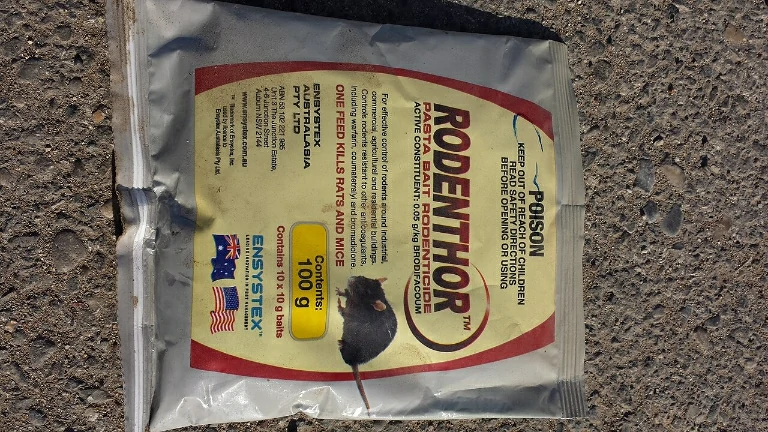
If you’re dealing with a mouse problem and you have rat poison on hand, or you’re at the store trying to decide which product to buy, you might wonder if rat poison works on mice too.
After all, rats and mice are both rodents and seem pretty similar. Does rat poison kill mice?
Yes, rat poison does kill mice. Rats and mice are both rodents with similar biology, so the same poisons that kill rats will also kill mice. However, mice are much smaller than rats, so they need less poison to die.
The main difference is that mice will die faster than rats from the same amount of poison because of their smaller size.
Most products labeled as “rat poison” will work fine on mice, and many products are actually marketed for both rats and mice.
Why Rat Poison Works on Mice
Rats and mice are both rodents. They belong to the same family of animals and have very similar biology. Their internal organs work the same way, they have the same type of blood, and their nervous systems function similarly.
The active ingredients in rat poison target mammalian biology. Anticoagulants stop blood from clotting. This works the same way in rats and mice.
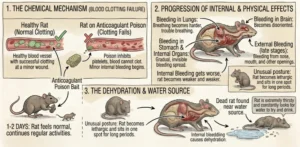
Bromethalin attacks the nervous system in the same way for both animals. Zinc phosphide releases toxic gas in the stomach of both rats and mice.
Because the biology is so similar, the poison doesn’t “know” the difference between a rat and a mouse. The chemicals do the same thing to both animals.
The only real difference is dosage due to size.
Most rat poisons are actually labeled for both rats and mice. If you read the package carefully, it often says “for control of rats and mice” or something similar.
Manufacturers test their products on both animals and market them for both.
The bait materials attract both rats and mice. Peanut butter, grains, and seeds appeal to both species.
They have similar food preferences, so the same bait works to draw them in.
How Size Affects the Lethal Dose
The main difference between using rat poison on rats versus mice is how much poison it takes to kill them. Size matters when it comes to toxic doses.
Mice are much smaller than rats. An adult mouse weighs about half an ounce to one ounce.
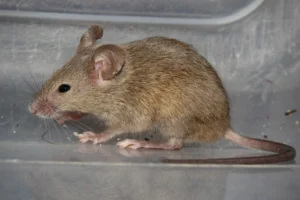
An adult rat weighs anywhere from six ounces to over a pound. That’s a huge size difference.

The lethal dose of poison is based on body weight. A larger animal needs more poison to die. A smaller animal needs less. This is true for all animals, including humans.
A mouse only needs to eat a tiny amount of rat poison to get a lethal dose. Just a few nibbles of a poison block might be enough to kill a mouse. A rat would need to eat much more of that same block.
This means mice will often die faster than rats when using the same poison.
The mouse reaches its lethal dose quickly, while a rat might need to eat the poison over several days to accumulate enough.
Some rat poisons are designed for multiple feedings. The idea is that the rat eats a little bit over several days, and the poison builds up in its system.
For mice, even that “little bit” from one feeding might be a lethal dose.
Will Mice Eat Rat Poison?
Just because rat poison can kill mice doesn’t mean mice will necessarily eat it. The bait needs to be attractive enough that mice actually want to eat it.
Most rat poison baits are designed to appeal to rodents in general, not just rats specifically. The ingredients (grains, peanut butter, seeds) are things that both rats and mice like to eat.
Mice have slightly different preferences than rats sometimes. Mice tend to prefer sweeter foods and seeds more than rats do.
But the overlap in their diets is large enough that most rat poison baits work fine for mice.
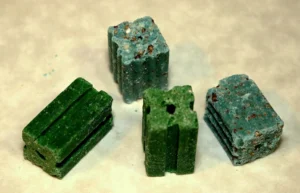
The size and texture of the bait matter. Some rat poison comes in large blocks that might be harder for a mouse to chew on. Mice have smaller mouths and teeth.
Pellet or grain-based rat poisons might be easier for mice to eat than big hard blocks.
Mice are more willing to try new foods than rats are. Rats are neophobic, meaning they’re suspicious of new things. Mice are more adventurous.
This actually makes it easier to poison mice than rats in some cases.
If you put out rat poison and mice are in the area, they’ll usually find it and eat it. The smell attracts them, and the bait tastes good to them.
As long as they can physically manage the size and texture of the bait, they’ll eat it.
Products Marketed for Both Rats and Mice
Most modern rodent poisons are actually marketed for both rats and mice. Understanding this helps you choose the right product.
Look at the label of any rat poison package. Most will say something like “kills rats and mice” or “for control of Norway rats, roof rats, and house mice.”
This tells you the manufacturer has tested and approved the product for both.
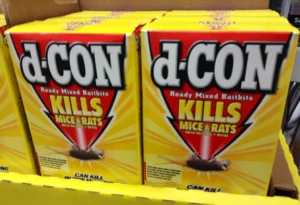
The active ingredients are the same whether it says “rat poison” or “rat and mouse poison.” A product with brodifacoum will work the same on both animals.
The marketing might emphasize rats or mice depending on what the manufacturer thinks will sell better, but the actual poison is the same.
Some products are labeled specifically as “mouse poison,” but even these will work on rats. The only real difference might be the size of the bait pieces.
Mouse poison might come in smaller pellets that are easier for mice to eat, but rats can eat these too.
Block versus pellet formulations matter more for the size of the rodent than whether it’s technically “rat poison” or “mouse poison.” Small pellets work well for mice but also work for rats. Large blocks work for rats but might be harder for mice to manage.
Don’t overthink the marketing. If you see “rat poison” and you have mice, it’ll probably work fine. If you see “mouse poison” and you have rats, that’ll probably work too.
The biology is similar enough that these products are largely interchangeable.
Differences in How Fast Mice Die
Because mice are smaller and need less poison, they often die faster than rats do. This timing difference is important to understand.
With anticoagulant rat poisons, rats typically die in three to seven days. Mice eating the same poison might die in two to four days.
They reach their lethal dose faster because they don’t need as much.
With bromethalin-based poisons, rats usually die within one to two days. Mice might die within hours to one day. The smaller body size means the effects happen faster.
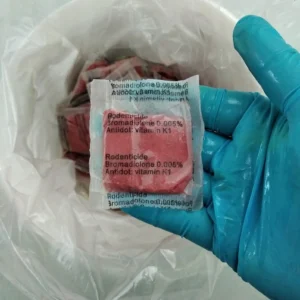
Zinc phosphide acts quickly on both animals, but mice might die within a few hours while rats take half a day or longer. Again, the size difference means the dose hits the mouse harder and faster.
This faster death in mice can actually be an advantage. Your mouse problem gets solved more quickly.
But it also means you need to be extra careful if you have pets, because the poison that kills mice so quickly could also harm small pets very rapidly.
The faster timeline doesn’t change how you use the poison. You still put it out in the same places and check it regularly. You just might see results sooner with mice than you would with rats.
Using Rat Poison for a Mouse Problem
If you have mice and you’re considering using rat poison to deal with them, there are some practical considerations beyond just “will it work?”
Rat poison will definitely kill mice. That’s not the question. The question is whether it’s the best approach for your specific mouse problem.
The main advantage is that poison can kill multiple mice at once. If you have several mice, they can all eat the poison and die. With traps, you catch one at a time.
The disadvantage is that mice can die in walls, attics, or other hard-to-reach places. When this happens, you’re stuck with the decomposition smell until the body fully breaks down.
This is the same problem you get with poisoning rats, but it applies to mice too.
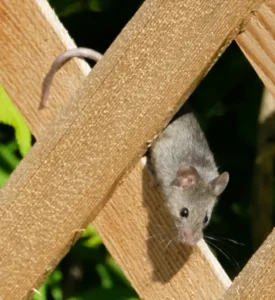
Mice are often easier to trap than rats because they’re less suspicious of new objects. Good quality snap traps can be very effective for mice.
You catch and remove the mouse immediately, avoiding the dead mouse smell problem.
If you do use poison for mice, use bait stations. These protect the poison from pets and children while allowing mice to access it. The stations also help contain the smell of the bait.
Put out less poison than you would for rats. Mice don’t eat as much, so a little bit of poison goes a long way. You don’t need large amounts.
Can You Use Mouse Poison for Rats?
This is the reverse question, but it’s worth addressing. If you have mouse poison, will it work on rats?
Yes, mouse poison will kill rats. It’s the same active ingredients. A rat just needs to eat more of it to get a lethal dose.
The main challenge is that rats are bigger and need more poison. If you put out a small amount of mouse poison (the amount you’d use for mice), a rat might eat it all and not get enough to die.
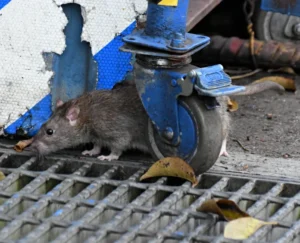
Rats might also be less interested in bait that’s designed with mice in mind. If the bait pieces are too small or the formula is optimized for mouse preferences, rats might not find it as attractive.
If mouse poison is all you have and you need to deal with rats, it can work. Just put out more of it.
Keep the bait stations well-stocked so the rats can eat as much as they need to get a lethal dose.
It’s more efficient to just buy rat poison if you have rats. It’s formulated with rats in mind, with appropriate bait sizes and enough active ingredient per piece. But in a pinch, mouse poison will work if you use enough of it.
Safety Considerations for Pets
The fact that rat poison kills mice so effectively means it can also harm small pets very quickly. This is an important safety consideration.
Small pets like hamsters, guinea pigs, or pet mice are at serious risk around rat poison. They’re the same size as the wild mice you’re trying to kill, so the poison affects them just as quickly.
Small dogs and cats can also be harmed by rat poison. Even though they’re larger than mice, they’re still small enough that a relatively small amount of poison can make them very sick or kill them.

If you have small pets, you need to be extremely careful about where and how you use rat poison. Bait stations are critical. Make sure your pets can’t possibly access the poison.
Consider alternatives to poison if you have small pets. Snap traps or electronic traps for mice might be safer options. These kill the mouse immediately, and you remove it right away, so there’s no risk of your pet finding and eating a poisoned mouse.
If your pet does eat rat poison, get to a veterinarian immediately. The smaller the pet, the less time you have before serious harm occurs.
Don’t wait to see if symptoms develop.
Keep the rat poison package so you can show the vet exactly what your pet ingested. Different poisons require different treatments, and having this information speeds up care.
How Much Poison Do Mice Actually Eat?
Understanding how much poison mice eat helps you judge how much to put out and how quickly you’ll see results.
A mouse eats about 10 to 15 percent of its body weight per day. For a one-ounce mouse, that’s only about 0.1 to 0.15 ounces of food per day. That’s a tiny amount.
Mice don’t eat an entire poison block in one sitting. They take nibbles here and there. A single poison block might provide enough for several mice or might be visited by the same mouse multiple times over several days.
With anticoagulant poisons that require multiple feedings, a mouse might eat a little bit each night for two or three nights before dying.
The total amount consumed might be less than a quarter of a poison block.
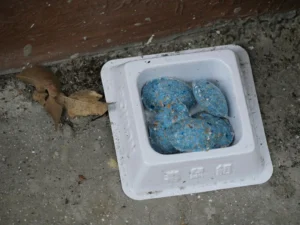
With single-feed poisons like second-generation anticoagulants, a mouse might only need to eat once. One good feeding, maybe 10 to 20 nibbles, could be enough for a lethal dose.
This small consumption means a little bit of poison goes a long way with mice. You don’t need to put out huge amounts. A few blocks or bait stations should be enough for even a moderate mouse infestation.
Check the poison regularly to see how much is being eaten. If it’s disappearing quickly, you have active mouse feeding.
If nothing’s being eaten after a few days, the mice either aren’t finding it, aren’t interested in the bait, or you might not have as many mice as you thought.
Conclusion
Does rat poison kill mice? Yes, rat poison is very effective at killing mice. Rats and mice have similar biology, so the same poisons work on both species.
The main difference is that mice are much smaller than rats, so they need less poison to die. This means mice often die faster than rats when eating the same poison.
It also means rat poison can be dangerous to small pets even more quickly than it is to rats.
Most rat poisons are actually marketed for both rats and mice because the products work equally well on both.
If you have mice and you have rat poison, or you’re shopping for mouse control products and see rat poison, it’ll work fine.
The choice between poison and traps for mice depends on your specific situation.
Poison can kill multiple mice at once but comes with the risk of mice dying in inaccessible places.
Traps require more effort but let you remove each mouse immediately. Both approaches use basically the same products whether you’re targeting rats or mice.

Hi, my name is Ezra Mushala, i have been interested animals all my life. I am the main author and editor here at snakeinformer.com.