
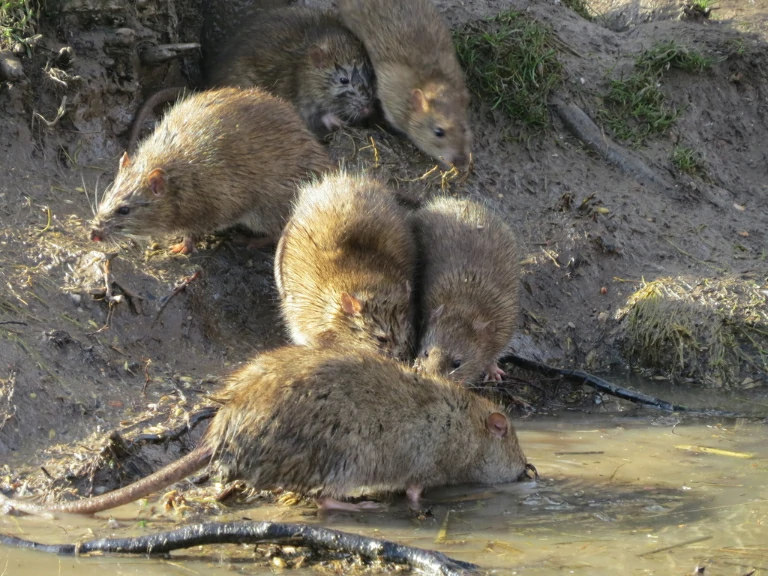
Rats are one of the most widespread mammals on Earth. They live on every continent except Antarctica, thrive in almost every environment humans inhabit, and have followed us from ancient civilizations to modern megacities.
While most wild animals struggle to adapt to human-dominated environments and many species are going extinct, rats are actually doing better than ever.
Their populations are growing in cities worldwide, they’re adapting to our pest control efforts faster than we can develop new ones, and they show no signs of slowing down. So why are rats so successful?
Rats are incredibly successful because they reproduce at astonishing rates, eat basically anything, adapt quickly to new environments and threats, are highly intelligent problem-solvers, thrive in human-created environments, can squeeze through tiny spaces to access resources, and have strong social structures that help them survive and learn.
Understanding why rats are so successful isn’t just interesting from a scientific perspective, it’s actually important for figuring out how to control them.
The same traits that make rats successful are the ones that make them so difficult to eliminate once they’ve moved in.
They Reproduce at Incredible Speed
A single female rat can have up to 7 litters per year, with each litter containing 6 to 12 babies. That means one female could theoretically produce over 80 offspring in just one year.
But it gets worse. Those babies reach sexual maturity in just 3 to 4 months, which means they can start having their own babies while their mother is still producing more litters.

Do the math, and a single pair of rats could produce thousands of descendants in just one year if conditions are ideal (and cities often provide ideal conditions).
This reproductive speed means rats can recover from population losses incredibly quickly. Even if you kill half the rats in an area, they can bounce back to full numbers within months.
The short time between generations also means rats evolve and adapt faster than animals with longer reproductive cycles. Traits that help survival (like poison resistance) spread through populations in just a few years.
Female rats can also store sperm and delay pregnancy until conditions are right. This means they can wait for the best time to have babies, increasing the survival chances of their offspring.
Rats Eat Almost Anything
Rats are true omnivores, which means they’ll eat plant matter, meat, grains, insects, garbage, and basically anything with nutritional value. This dietary flexibility is a huge survival advantage.
While specialist animals starve when their specific food source disappears, rats just switch to something else. No food preference means no vulnerability.
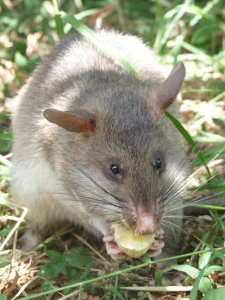
In cities, rats have access to an incredible variety of food. Restaurant waste, garbage, pet food, bird seed, garden vegetables, compost, you name it. They’re not picky about freshness either, rats will eat rotting food that other animals won’t touch.
Rats need very little food to survive, just 1 to 2 ounces per day. This small requirement means they can thrive even in environments where food seems scarce to humans.
Their digestive systems can handle foods that would make other animals sick. Rats can eat spoiled food, moldy grains, and other contaminated sources without major problems.
They’re also efficient at extracting nutrients. Rats practice coprophagy (eating their own feces) to extract additional nutrition from food they’ve already digested once. While disgusting to humans, it’s an effective survival strategy.
They’re Highly Intelligent and Learn Quickly
Rats are among the smartest rodents. They can solve complex puzzles, remember paths through mazes, learn from experience, and even demonstrate forms of reasoning that scientists previously thought were limited to primates.
This intelligence allows rats to avoid dangers that would kill less smart animals. They learn which foods are poisoned, which traps are dangerous, and which routes are safe to travel.

Rats can also innovate and solve new problems. If a food source is in a hard-to-reach place, rats will figure out how to get to it. They’ll stack objects, chew through barriers, or find alternative routes.
Memory is another huge advantage. Rats remember the layout of their territory, locations of food and water, dangerous areas, and safe routes. This mental map allows them to navigate complex environments efficiently.
Young rats learn from older rats through observation and social interaction. A baby rat doesn’t have to learn everything by trial and error, it can watch adult rats and copy their successful behaviors.
Rats can even demonstrate what looks like planning and delayed gratification. They’ll pass up small immediate rewards if they know a larger reward is coming later, showing cognitive abilities once thought to be uniquely human.
They Adapt to New Environments Incredibly Fast
When rats encounter a new environment, they don’t need years to adapt. They can figure out where to find food, water, and shelter within days.
This rapid adaptation means rats can successfully colonize new areas that other animals would struggle with. Whether it’s a newly built warehouse, a renovated apartment building, or a different climate zone, rats figure it out.
Physical adaptations happen quickly too. Rats in cold climates develop thicker fur within a few generations. Rats in areas with lots of poison develop resistance within years.
Behavioral adaptations spread even faster. If one rat learns a new way to access food or avoid danger, that knowledge can spread through the population through social learning.
Rats have colonized every type of environment humans live in: tropical islands, arctic research stations, desert cities, coastal areas, mountains, you name it. This environmental flexibility is almost unmatched in the mammal world.
When environmental conditions change (new pest control methods, changes in food availability, new predators), rats don’t need time to evolve solutions. They start adapting immediately.
They Thrive in Human-Created Environments
Unlike most wild animals that suffer when humans alter environments, rats actually do better around human activity. We create perfect habitats for them without meaning to.
Cities provide everything rats need: abundant food (garbage and waste), water (in sewers and drains), shelter (in buildings and infrastructure), and warm temperatures (from heating systems and underground spaces).

The complexity of urban infrastructure creates countless hiding spots and nesting areas. Sewers, subway tunnels, building foundations, wall voids, and underground utility systems all provide protected spaces where rats can live safely.
Human activity creates disturbance and chaos that many animals can’t handle, but rats have adapted to it. The constant noise, light, and movement in cities don’t bother them at all.
We also eliminate many of their natural predators. Cities have fewer hawks, owls, foxes, and snakes than natural environments. This allows rat populations to grow without natural checks.
Even our pest control efforts sometimes help rats in the long run. When we use poison or traps, we kill the most vulnerable rats and leave the smartest, most resistant ones to breed. This creates stronger, harder-to-control rat populations over time.
They Can Squeeze Through Impossibly Small Spaces
Rats have collapsible skeletons that allow them to squeeze through holes as small as a quarter (about the size of their skull). This ability to compress their bodies gives them access to spaces that seem completely sealed to humans.
This skill means that “rat-proofing” a building is incredibly difficult. You’d need to seal every single gap, crack, or hole larger than a quarter, which is nearly impossible in older buildings.
Rats can also climb extremely well. They can scale vertical brick walls, climb inside pipes, and travel along electrical wires. This three-dimensional mobility gives them access to resources other ground-dwelling animals can’t reach.
Swimming is another skill rats have mastered. They can swim for days without drowning, tread water for up to three days, and even swim up through drain pipes to emerge in toilets. This aquatic ability opens up additional pathways through sewer systems.
Their flexible bodies combined with strong teeth mean they can make small holes bigger. If a gap is almost big enough, rats will just chew the edges until they can fit through.
They Have Strong Social Structures
Rats aren’t solitary animals, they live in colonies with complex social hierarchies. This social structure provides survival advantages that solitary animals don’t have.
Colony living means more eyes watching for danger. If one rat spots a threat, it can warn the whole group through vocalizations and scent signals.

Rats share information about food sources, dangers, and safe routes. A rat that discovers a new food source doesn’t keep that knowledge to itself, other colony members learn about it.
They also cooperate in ways that benefit the group. Rats will share food, help injured colony members, and work together to solve problems that would be impossible for a single rat.
Dominant rats in the hierarchy test new foods first. If they get sick or die, subordinate rats learn to avoid that food source. This social structure basically uses some rats as “testers” to keep the rest of the colony safe.
Young rats raised in colonies learn faster and have higher survival rates than orphaned rats. The social environment provides education and protection.
They’re Cautious but Not Paralyzed by Fear
Rats have an instinctive wariness of new things (neophobia), which helps them avoid dangers like traps and poison. But they balance this caution with curiosity and the need to find resources.
This careful approach means rats don’t rush into obviously dangerous situations, but they also don’t hide forever. They’ll watch and wait, then investigate when they think it’s safe.
Over time, rats lose their fear of things that prove to be harmless. This is why they eventually ignore traps that have been in place for a while without catching anything, the traps become part of the familiar environment.
Their caution is selective rather than blanket fear. Rats will avoid things that seem dangerous while still exploring and seeking new opportunities.
In urban environments, rats have learned that humans themselves aren’t usually a direct threat. This has allowed them to become bolder and operate even when people are nearby.
They’re Resistant to Many Toxins and Diseases
Rats have remarkably strong immune systems and can survive exposure to bacteria, viruses, and toxins that would kill other animals of similar size.
This resistance allows them to live in sewers, garbage dumps, and other highly contaminated environments without getting sick. They can eat spoiled food, drink dirty water, and expose themselves to pathogens constantly.
Many rat populations have also developed genetic resistance to common rat poisons. This resistance spreads quickly through populations because rats breed so fast.
Even diseases that rats do carry often don’t make the rats themselves sick. They serve as carriers without suffering the effects, which allows them to continue reproducing and spreading while harboring dangerous pathogens.
This resilience extends to physical injuries too. Rats can survive injuries that would be fatal to other small mammals and often recover from wounds quickly.
They Have Excellent Senses for Survival
While rats have poor eyesight, they compensate with exceptional senses of smell, hearing, and touch. These senses help them navigate, find food, and avoid danger.
Their whiskers are incredibly sensitive and allow them to navigate in complete darkness by feeling air currents and touching surfaces. This is why they can move confidently through pitch-black sewers and wall voids.
Rats can hear ultrasonic frequencies that humans can’t detect. This allows them to communicate with each other in ways we can’t even perceive and to hear predators approaching from far away.
Their sense of smell is so acute that they can detect food from great distances and identify individual rats by scent. They use this ability to mark territory, find mates, and locate resources.
Rats also have an excellent sense of balance and spatial awareness. They can run along narrow pipes, climb vertical surfaces, and navigate complex three-dimensional environments with ease.
They’re Active Year-Round
Unlike animals that hibernate or have reduced activity during certain seasons, rats stay active all year long. This constant activity means they’re always finding food, reproducing, and expanding their territories.

In warm urban environments, rats don’t even experience a slowdown during winter. Heated buildings and subway systems provide year-round warmth, allowing rats to breed even in December.
This lack of seasonal restriction means rat populations don’t experience natural die-offs during harsh weather. Every season is equally good for rats in cities.
Year-round activity also means rats are constantly learning and adapting. They don’t lose several months per year to hibernation like some other species.
They Benefit From Lack of Natural Predators
In natural environments, rats face predation from hawks, owls, foxes, snakes, and large cats. But in cities, most of these predators are absent or in very low numbers.
The few predators that do exist in cities (like hawks or house cats) can’t make a meaningful dent in rat populations of millions. There just aren’t enough predators to matter.
Rats have also learned to avoid the predators that do exist. They stick to covered areas, move quickly when exposed, and use their intelligence to outsmart slower-thinking predators.
Without significant predation pressure, the main limits on rat populations are disease, lack of resources, and human pest control. In cities where food and shelter are abundant, this leaves only disease and human intervention, neither of which is sufficient to control populations.
They Use Human Infrastructure as Highways
Rats don’t just live in human structures, they use our infrastructure as a transportation network. Sewer systems, subway tunnels, electrical conduits, and wall voids all serve as rat highways.
These protected routes allow rats to travel long distances without being exposed to weather, predators, or human activity. They can move from one part of a city to another completely underground.
The connectivity of urban infrastructure means rats can quickly colonize new areas. If there’s a new food source or nesting site anywhere in the connected network, rats will find it.
This use of infrastructure also makes rat control incredibly difficult. You can’t just treat one building, because rats can travel through connected structures to avoid treated areas.
Conclusion
Rats are successful because they’ve mastered basically every survival skill that matters. They reproduce faster than almost any other mammal their size, eat anything, adapt to new situations quickly, and have intelligence that rivals many animals much larger than them.
They’ve turned human civilization into their greatest asset. Everything we build to make our lives better (sewers, subways, buildings, garbage systems) also makes life better for rats.
The more complex and interconnected our cities become, the more opportunities we create for rats to thrive.
Their physical abilities (squeezing through tiny spaces, climbing, swimming) combine with behavioral traits (caution, social learning, problem-solving) to create an almost perfect urban survival machine.
The traits that make rats successful are the same ones that make them nearly impossible to eliminate. Their intelligence means they learn to avoid our traps and poisons.
Their reproductive speed means they recover from population losses almost instantly. Their adaptability means they overcome every new method we try.
Unless we fundamentally change how we design cities, manage waste, and construct buildings, rats will continue to be one of humanity’s most successful co-habitants. They’ve evolved alongside us for thousands of years, and they’re not going anywhere.

Hi, my name is Ezra Mushala, i have been interested animals all my life. I am the main author and editor here at snakeinformer.com.