
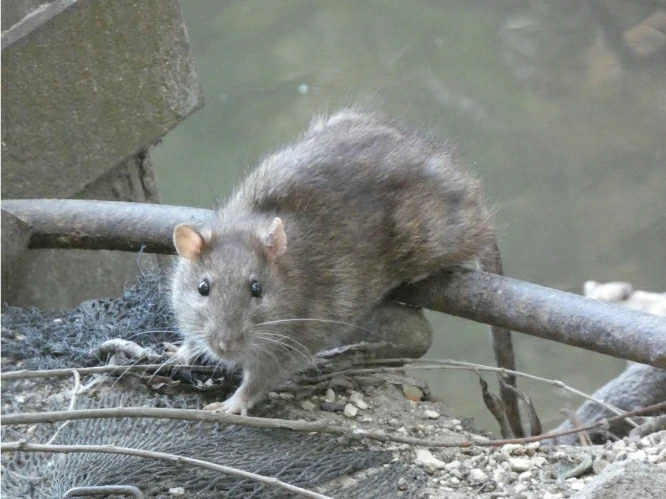
Most wild animals run away when they see or hear humans approaching. It’s a natural survival instinct that’s kept them alive for thousands of years.
But if you’ve ever encountered a rat in your home, on a city street, or in a subway station, you might have noticed something unsettling.
The rat didn’t run. It might have paused for a second, looked at you, and then just continued doing whatever it was doing. Some rats will even walk right past you like you’re not even there.
This bold behavior is completely different from how wild animals typically react to humans, and it’s actually becoming more common in urban areas. So why are some rats not scared of humans?
Rats living in cities aren’t scared of humans because they’ve adapted to urban life over many generations, learned that humans rarely pose a direct threat, become desensitized through constant exposure, associate humans with food sources, and have evolved behavioral changes that favor bold individuals who can access more resources.
This lack of fear isn’t just interesting from a scientific standpoint, it’s actually a problem.
Rats that don’t fear humans are harder to control, more likely to invade homes and businesses, and can pose greater health risks because they’re willing to be active even when people are around.
Urban Rats Have Adapted Over Many Generations
The rats you see in cities today aren’t the same as their ancestors who first arrived there. Over hundreds of rat generations (which doesn’t take that long since rats breed so quickly), they’ve undergone what scientists call “urban adaptation.”
When rats first moved into cities, the ones that were terrified of humans probably didn’t survive as well. They’d hide all the time, miss feeding opportunities, and struggle to find mates because they were too afraid to venture into productive areas.

The bolder rats, on the other hand, had access to more food because they were willing to feed in areas with human activity. They found better nesting sites in buildings and structures. They had more opportunities to reproduce.
Over time, this natural selection process favored bold behavior. The fearful rats had fewer babies (or their babies didn’t survive as well), while the bold rats thrived and passed on their genetics.
This adaptation happens faster than you might think. Rat populations can change significantly in just a few years because they reproduce so quickly and environmental pressures in cities are strong.
They’ve Learned That Humans Rarely Attack Them
Most wild animals fear humans because we’ve historically hunted them, but rats have learned through experience that modern city dwellers rarely pose a direct physical threat.
Think about it. When you see a rat, what do you usually do? You probably jump back, maybe scream, and then try to get away from it. You don’t chase it down and try to kill it with your bare hands.
Rats notice patterns. They’ve observed that humans mostly just react with fear or disgust, but don’t actually attack. This observation gets reinforced thousands of times across a rat’s lifetime.
Even when humans do try to kill rats (with traps or poison), it’s usually done when the rats aren’t watching. From the rat’s perspective, a human’s presence itself isn’t the danger, it’s the traps and poisons we leave behind.
Young rats learn from older rats. If a baby rat grows up watching adult rats forage near humans without being attacked, it learns that humans aren’t something to run from.
In some cities, rats have lived alongside humans for so long that fear of humans has almost completely disappeared from the population. These rats treat humans the same way they’d treat a large, slow-moving object, just something to navigate around.
Constant Exposure Has Desensitized Them
Desensitization is a powerful psychological process that affects all animals, including rats. When you’re exposed to something repeatedly without negative consequences, you stop reacting to it.
Rats in cities encounter humans constantly. Every single day, multiple times per day, they see people, hear people, smell people. If they ran and hid every time, they’d spend their entire lives hiding and never get anything done.
This is completely different from wild rats living in rural areas. A rat in a field might encounter a human once a month or even less. Each encounter is a rare, potentially dangerous event, so the fear response stays strong.
City rats encounter so many humans that their fear response has basically worn out. It’s not useful anymore, so it fades away.
The same thing happens with noise. Wild rats startle at sudden sounds, but city rats have learned to ignore car horns, sirens, loud voices, and all the other constant noise of urban environments.
Over time, rats become so desensitized that they can feed, groom, and even sleep in areas where humans are walking just a few feet away.
They Associate Humans With Food
Here’s where things get really interesting. For many urban rats, humans don’t just represent a neutral presence, they actually signal that food is nearby.
Rats have learned that areas with lots of human activity usually have lots of food. Restaurants, garbage cans, outdoor dining areas, food vendors, subway platforms where people eat snacks, all these places have both humans and food together.
Some rats have made an even more specific connection. They’ve learned that when humans appear, food often follows. Think about someone eating lunch on a park bench who drops crumbs, or a restaurant worker who comes outside to throw away garbage.
This positive association with food can actually override natural fear responses. Even if a rat has some instinctive wariness of large creatures, the promise of food is a powerful motivator.
In extreme cases, rats in some cities have become so bold that they’ll approach humans who are eating, essentially begging for food like pigeons do. This behavior shows just how completely they’ve lost their fear.
Young rats growing up in cities learn from day one that humans equal food. This association gets reinforced constantly and becomes a core part of how they understand their environment.
Bold Rats Have Better Survival and Reproduction
In urban environments, being bold isn’t just about personality, it’s a survival advantage. Rats that overcome their fear of humans simply do better in cities.
Bold rats get access to the best food sources. They can feed at garbage cans near busy sidewalks, scavenge from outdoor restaurant areas, and explore inside buildings where food is stored. Fearful rats miss out on all of this.

Better nutrition means bold rats are healthier, stronger, and more likely to survive. It also means female rats can produce more babies and take better care of them.
Bold rats also get better nesting sites. The safest, warmest places in a city are often inside buildings or near human infrastructure. A rat that’s too afraid to venture into these areas has to settle for less ideal nesting spots.
When it comes to mating, bold rats have advantages there too. They can travel more freely to find mates, defend territories in productive areas, and provide better resources for their offspring.
Over time, this means bold rats have more babies, and those babies inherit both the genetic predisposition and learned behaviors that make them bold too.
They’re More Intelligent Than We Give Them Credit For
Rats are actually remarkably smart animals. They can learn, remember, problem-solve, and even make complex decisions based on cost-benefit analysis.
This intelligence allows them to assess situations and determine that humans aren’t actually a threat. They’re not just mindlessly unafraid, they’ve actively figured out that we’re not dangerous to them.
Rats can distinguish between humans who might harm them (like pest control workers) and regular people who ignore them. Some populations of rats have learned to recognize exterminators by their clothing, equipment, or behavior patterns.
They also understand cause and effect. If a rat sees a human and then nothing bad happens, it remembers that. If this happens repeatedly, the rat learns that humans are safe to be around.
Rats can communicate warnings to each other through scent marking and vocalizations. But in cities, you don’t see rats warning each other about humans because they’ve collectively learned there’s no danger.
Their intelligence also helps them exploit human behavior. They’ve learned our schedules, our habits, and our patterns. They know when garbage goes out, when people are least active, and when it’s safest to forage.
Urban Environments Provide Too Many Hiding Spots
Even when rats aren’t actively afraid of humans, they still like having escape routes nearby. Cities provide countless hiding spots that make rats feel secure even when they’re out in the open near people.
A rat foraging on a city sidewalk might be just a few feet from a storm drain, a gap under a building, or a pile of trash it can dive into if needed. This proximity to safety reduces stress and makes them more willing to be active around humans.
In natural environments, escape routes are limited. Open fields don’t offer many places to hide, so rats there have to be much more cautious.
City infrastructure creates a three-dimensional maze of hiding spots. Rats can escape upward (into buildings), downward (into sewers), or sideways (into walls and tight spaces). This abundance of options makes them braver.
The knowledge that safety is always nearby allows rats to take risks they wouldn’t take otherwise. They can afford to be bold because they can disappear instantly if they need to.
They’ve Observed That Humans Are Slow and Predictable
From a rat’s perspective, humans are big, slow, and incredibly predictable. We don’t move with the quick, darting motions that predators use. We follow the same paths, keep the same schedules, and react the same ways.
Rats are much faster than humans. They can accelerate to full speed almost instantly and change direction in a split second. This speed advantage makes them confident that they can escape if they need to.
They’ve also learned that humans are loud and easy to detect. We stomp around, talk, and make all kinds of noise. Rats can hear us coming from far away, which gives them plenty of time to decide whether to hide or just keep doing what they’re doing.
Our predictability is another factor. Rats learn the patterns of human activity in their territory. They know when people walk by, when areas get busy, when things quiet down. This predictability makes humans seem less threatening.
Natural predators like cats, hawks, or snakes are silent, fast, and unpredictable. Humans don’t hunt like predators, we lumber around making noise. To a rat, that doesn’t seem very dangerous.
Competition for Resources Overcomes Fear
In areas with dense rat populations, competition for food and territory is fierce. Rats that hesitate because of fear lose out to bolder rats who grab resources first.
This competitive pressure basically forces rats to overcome any remaining fear of humans. A rat that waits for all the humans to leave before feeding might find that other rats have already eaten all the available food.

In cities with millions of rats competing for the same garbage, the timid ones simply don’t survive as well. Evolution doesn’t care about fear, it cares about who reproduces successfully.
Young rats growing up in competitive environments learn quickly that they have to be bold to get enough food. Fear becomes a luxury they can’t afford.
This creates a feedback loop where each generation of rats is bolder than the last because the fearful ones are being out-competed and leaving fewer offspring.
Rats in Different Cities Show Different Fear Levels
Interestingly, not all city rats are equally fearless. Rats in some cities are noticeably bolder than rats in others, which suggests that local conditions and how long rats have lived there play a role.
Cities with longer histories of rat infestations (like New York, London, or Paris) tend to have bolder rats. These populations have had more generations to adapt to humans.
Newer cities, or cities that have only recently developed serious rat problems, often have rats that are still somewhat cautious around people. These populations haven’t undergone as many generations of selection for boldness.
Cities that have aggressive rat control programs might also have somewhat more fearful rats, because the bold ones are more likely to encounter and die from traps or poison.
Cultural differences in how humans react to rats might matter too. In cities where people commonly try to kill rats on sight, the rats might maintain more wariness. In cities where people mostly just ignore them, rats become very bold.
Human Behavior Reinforces Rat Boldness
We’ve actually trained rats to not fear us through our own behavior. Every time we react to a rat by running away or just leaving the area, we’re teaching them that they can make humans retreat.
When we leave food waste accessible, we’re showing rats that being near humans leads to rewards. When we fail to properly seal buildings, we’re giving them safe access to shelter even in areas with high human activity.
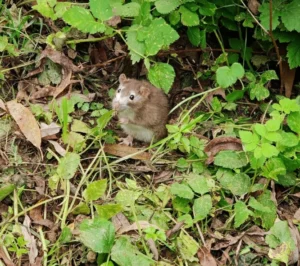
Our tendency to ignore rats unless they’re directly in our space has taught them that they can operate freely as long as they stay just a few feet away from us.
In some areas, people even feed rats (either intentionally or by leaving food out for other animals like birds or stray cats). This creates rats that actively approach humans expecting to be fed.
The way we’ve designed cities, with abundant food waste and countless hiding spots, has created an environment where fear of humans is actually disadvantageous for rats.
Lack of Consequences Eliminates Fear
Fear exists to protect animals from danger. But if there’s no actual danger, fear fades away because it serves no purpose.
Most rats in cities live their entire lives without ever being directly harmed by a human. They see thousands of people, and none of those encounters end badly for them.
The dangers rats do face (traps, poison, cats, being hit by cars) aren’t directly associated with human presence in the rat’s mind. Poison doesn’t chase them, traps don’t run after them, and they don’t connect these dangers with the humans they see every day.
From the rat’s perspective, the humans themselves aren’t the problem. It’s specific objects or situations that are dangerous, and rats learn to avoid those while remaining comfortable around people.
Without consequences for being near humans, there’s no evolutionary or learned reason for rats to maintain fear of us.
Conclusion
Rats aren’t scared of humans anymore because they’ve adapted to city life over many generations and learned through constant experience that we don’t pose a direct threat.
They’ve associated us with food, developed bold behaviors that help them survive in competitive urban environments, and simply been exposed to us so much that fear has become pointless.
Their intelligence allows them to accurately assess the risk we pose (very little), while the urban environment provides so many hiding spots and resources that rats can afford to be bold.
Competition with other rats makes fearful behavior a disadvantage, and the lack of actual consequences for being near humans has eliminated the evolutionary pressure to maintain fear.
This fearlessness is getting worse over time as each new generation of rats is born into environments where humans are just part of the landscape.
Unless we fundamentally change how cities operate and make ourselves actual threats to rats again (which isn’t practical or desirable), we’ll continue to see rats becoming even bolder in the years ahead.

Hi, my name is Ezra Mushala, i have been interested animals all my life. I am the main author and editor here at snakeinformer.com.