

Mice are small, soft, and can even look cute in the right circumstances. Some people keep them as beloved pets and find them charming. So why do most people consider them pests that need to be eliminated? Why are mice considered vermin?
Mice are considered vermin because they spread diseases to humans through their droppings and urine, contaminate food supplies, reproduce incredibly fast (a single female can have 5-10 litters per year), and cause extensive property damage by chewing through wires, insulation, and structures. Their ability to thrive in human environments while creating serious health and safety risks has earned them their status as pests.
The classification of mice as vermin isn’t just based on fear or disgust. It comes from real problems they cause when they invade homes, businesses, and agricultural areas.
Understanding these issues helps explain why mice control is such an important part of public health and property management.
Mice Spread Dangerous Diseases
The biggest reason mice are considered vermin is the health risk they create. Mice carry and spread over 35 different diseases that can infect humans. Some of these diseases are mild, but others can be serious or even fatal if not treated quickly.
Hantavirus is one of the most dangerous diseases mice carry. It’s spread mainly through breathing in dust contaminated with mouse droppings or urine.
Hantavirus Pulmonary Syndrome starts with flu-like symptoms but can quickly progress to severe breathing problems. The death rate is around 38%, making it one of the deadliest rodent-borne diseases.
Salmonellosis is a bacterial infection that mice spread through their droppings. When mice run through kitchens and pantries, they leave droppings everywhere.

If these droppings contaminate food or food preparation surfaces, people can get infected. Symptoms include diarrhea, fever, and stomach cramps that can last several days.
Leptospirosis spreads through mouse urine. The bacteria can survive in water or soil contaminated by infected urine.
If you come in contact with contaminated water and have any cuts on your skin, or if contaminated water gets in your eyes or mouth, you can get infected. Severe cases can cause kidney damage, liver failure, or death.
Lymphocytic choriomeningitis (LCMV) is a viral infection that house mice commonly carry.
Most people get mild flu-like symptoms, but pregnant women who get infected can have serious complications including miscarriage.
People with weakened immune systems can develop severe brain inflammation.
Mice also carry parasites like fleas, mites, and ticks that can spread additional diseases. When mice infest a building, these parasites can jump off the mice and bite humans or pets.
Deer ticks that carry Lyme disease often hitch rides on mice before dropping off in areas where people can encounter them.
The disease risk isn’t just theoretical. There are documented cases every year of people getting seriously ill from mouse-borne diseases.
Restaurants, food processing plants, and homes with mouse infestations have to be thoroughly cleaned and sanitized because of the health risks.
How Fast Mice Reproduce Creates Infestations
Mice breed at an absolutely incredible rate, which is a major reason they’re such problematic pests.
A single female mouse reaches sexual maturity at just 6 weeks old and can immediately start having babies. She can have 5 to 10 litters per year, with each litter containing 5 to 6 babies on average.
This means one female mouse can produce 25 to 60 babies in a single year. But it gets worse. Those babies can start breeding at 6 weeks old too.

If you do the math, a single pregnant female that gets into your house in January could lead to hundreds or even thousands of mice by the end of the year if left unchecked.
The gestation period for mice is only about 19 to 21 days. That’s less than three weeks from mating to birth. Compare this to humans with 9 months or even cats and dogs with 2 months. This short gestation means mice can pump out generation after generation incredibly quickly.
Female mice can get pregnant again within 24 hours of giving birth. She can literally be nursing one litter while already pregnant with the next one. This continuous breeding cycle means mouse populations can explode before you even realize you have a problem.
This rapid reproduction is exactly why pest control experts say you should never ignore signs of mice. If you see one mouse, there are probably already more hiding that you haven’t seen.
And if you wait even a few weeks to deal with the problem, that small group can turn into a serious infestation.
In ideal conditions (plenty of food, water, warmth, and shelter), mice populations double every three months. This is why infestations can seem to appear out of nowhere.
You might not notice a few mice, but when those few become dozens or hundreds, suddenly you’re seeing droppings everywhere, hearing them in the walls, and finding damage throughout your home.
The Damage Mice Cause to Property
Mice are incredibly destructive to buildings and property. Their front teeth never stop growing throughout their lives, which means they have to constantly gnaw on things to wear down their teeth. If they don’t gnaw, their teeth will grow too long and they won’t be able to eat.
This constant need to chew means mice will gnaw on absolutely everything. They chew through wood, drywall, plastic, rubber, fabric, cardboard, and even soft metals like aluminum.
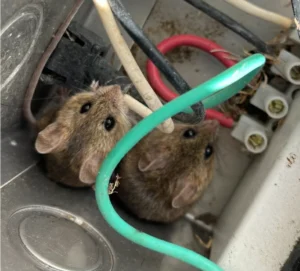
They’ll chew electrical wiring, which creates a serious fire hazard. House fires caused by rodents chewing through wires are more common than most people realize.
When mice chew through electrical wires, they can cause short circuits, power outages, and sparks that can ignite nearby flammable materials.
The insulation on wires is particularly attractive to mice because it’s easy to chew and makes good nesting material. Insurance claims for mouse damage run into the millions of dollars every year.
Mice also damage insulation in walls and attics. They pull apart insulation to build nests, and they urinate and defecate on it, which ruins its effectiveness and creates terrible odors. Contaminated insulation often has to be completely removed and replaced, which is expensive and time-consuming.
In cars, mice are notorious for getting into engine compartments and chewing wires and hoses. They’re attracted to the warmth and shelter under the hood.
A mouse in your car can cause thousands of dollars in damage by chewing through important wiring or even building nests in air filters or other engine components.
Mice create holes in walls, floors, and foundations as they move around and build nests. These holes let cold air in during winter, allow moisture to seep in and cause water damage, and create entry points for other pests. T
he structural damage from mice can be significant in older buildings or long-term infestations.
How Mice Contaminate Food Supplies
Food contamination is one of the main reasons mice are considered serious pests, especially in commercial settings like restaurants, grocery stores, and food processing plants.
Mice don’t just eat food; they contaminate huge amounts of it by leaving droppings, urine, and hair everywhere they go.
A single mouse produces 50 to 75 droppings per day. These droppings are small (about the size of a rice grain), but they add up quickly.
In a pantry or storage area, mice will leave droppings on shelves, in food containers, on dishes, and anywhere else they travel. Even one mouse can contaminate multiple shelves of food in a single night.

Mouse urine is even worse than droppings for contamination because it’s harder to see. Mice dribble urine constantly as they move around, marking their trails and territory.
They’ll urinate on food packages, dishes, countertops, and anywhere else they walk. The urine can soak through cardboard and paper packaging.
Mice also have very poor eyesight, so they navigate by smell and touch. They create established runways along walls and edges, and they’ll use the same paths over and over. These runways become coated with grease from their fur, urine, and droppings, creating visible dark streaks on surfaces.
When mice get into food, they don’t eat it all. They nibble a little here and there, contaminating way more food than they actually consume.
A mouse might take a bite from a loaf of bread, then move to the cereal box, then check out the pasta, leaving traces of saliva, droppings, and bacteria at each stop.
In commercial food settings, even one mouse sighting can result in failed health inspections, mandatory closures, expensive cleanup efforts, and destroyed inventory.
Restaurants can lose their licenses, and food manufacturers can face lawsuits and recalls. This is why commercial kitchens take mouse control so seriously.
At home, discovering mice have gotten into your pantry usually means throwing away a lot of food. Any food in packaging that mice could chew through (cardboard, paper, thin plastic) has to be considered contaminated and discarded.
Even if you don’t see visible damage, mice could have been on it or near it.
Mice Adapt Easily to Human Environments
Part of why mice are such successful pests is how well they’ve adapted to living alongside humans. House mice have been living with humans for thousands of years. They’ve evolved to thrive in the exact conditions we create in our homes and buildings.
Mice are incredibly small and flexible. An adult mouse can squeeze through a gap the size of a dime (about 6 millimeters).
This means they can get into buildings through tiny cracks under doors, gaps around pipes, holes in walls, or spaces where different building materials meet. Even small imperfections in a building’s construction can let mice in.
They’re also excellent climbers. Mice can scale rough vertical surfaces like brick, concrete, or wood. They can climb inside walls using pipes or wires as ladders.

They can jump up to about 12 inches high, which lets them get onto counters, shelves, or other elevated areas. This climbing ability means nowhere in your house is truly safe from mice.
Mice are comfortable living in very small spaces. They can build nests in wall voids, inside appliances, in storage boxes, or any little hidden spot.
They don’t need much room, which makes them hard to find even when you know they’re there. A mouse nest might be tucked behind your refrigerator or inside a box of old clothes in the attic.
They’re also active mainly at night, which means they can live in a building for a while before people notice them.
You might hear scratching sounds at night or find droppings in the morning, but you rarely see the actual mice unless the infestation is severe. This nocturnal lifestyle helps them avoid detection.
Mice eat almost anything. They prefer grains and seeds, but they’ll eat meat, chocolate, pet food, birdseed, garbage, and basically anything edible they find.
This flexibility means they can survive in almost any human environment. Even homes that are kept relatively clean have enough crumbs and food traces to support mice.
The Economic Impact of Mice
The economic damage caused by mice runs into billions of dollars globally every year. This includes direct property damage, contaminated food, health care costs from mouse-borne diseases, and the cost of pest control and prevention efforts.
In agriculture, mice damage grain crops both in the field and in storage. They eat seeds, contaminate harvested grain, and damage equipment.
Farmers and grain storage facilities spend huge amounts on mouse-proof storage and control measures. Even with these efforts, mice still cause significant crop losses.
In the food industry, mice contamination can shut down facilities, require massive cleanup efforts, and result in destroyed inventory worth thousands or millions of dollars.
Food recalls due to rodent contamination happen regularly, affecting everything from flour to packaged snacks to frozen foods.
Homeowners spend hundreds of millions on mouse control products every year, including traps, poisons, repellents, and professional pest control services. They also pay for repairs to damage caused by mice, including electrical work, insulation replacement, and structural fixes.

Businesses lose money from damaged inventory, lost productivity when dealing with mouse problems, and potential lawsuits if customers or employees get sick from mouse-borne diseases. Insurance companies pay out millions in claims related to mouse damage annually.
The healthcare costs are also significant. People who get sick from mouse-borne diseases require medical treatment, lab tests, and sometimes hospitalization.
Hantavirus treatment, for example, often requires intensive care and extended hospital stays.
Governments and public health agencies spend money on mouse surveillance, control programs, and public education about mouse-borne diseases. In cities, municipal pest control programs specifically target mouse populations to protect public health.
Why Pet Mice Are Different
You might wonder why pet mice aren’t considered vermin when wild house mice are such problematic pests. The difference comes down to several important factors that make pet mice fundamentally different from wild mice.
Pet mice are bred specifically to be pets. They’ve been selectively bred for generations to have docile temperaments, interesting colors and patterns, and to be comfortable around humans.
Wild mice are naturally fearful and skittish, avoiding human contact whenever possible.
Pet mice are kept in controlled environments (cages) where they can’t spread diseases to humans, contaminate food, or damage property.

They’re also typically bred in disease-free conditions and don’t carry many of the pathogens that wild mice spread. Responsible pet stores and breeders test for and eliminate common mouse diseases from their breeding stock.
The living conditions matter too. Pet mice have clean cages that get changed regularly, fresh food and water provided daily, and veterinary care when needed.
Wild mice live in sewers, walls, garbage dumps, and other filthy places where they’re exposed to all sorts of bacteria, viruses, and parasites.
A pet mouse in a cage poses virtually no health or property risk. It can’t get into your pantry, chew your wires, or leave droppings on your counter.
It’s confined to its designated space where you choose to keep it. Wild mice go wherever they want in your home, which is why they’re problematic.
Still, people who are allergic to rodents can react to pet mice just like they would to wild ones. And pet mice can carry some diseases, so proper hygiene (washing hands after handling, keeping cages clean) is still important.
But the controlled nature of pet keeping makes them completely different from wild mouse infestations.
Cultural and Historical Perspectives on Mice as Pests
Humans have considered mice to be pests for thousands of years. Archaeological evidence shows that cats were domesticated in part because they killed mice and protected grain stores.
Ancient Egyptian paintings and writings mention mice as pests that damaged crops and stored food.
During the Middle Ages, mice were associated with plague and disease, though rats were actually the main culprits in spreading bubonic plague. Still, mice were seen as dirty creatures that spread sickness. This association between mice and disease has persisted in many cultures.
In many languages, the word “vermin” or its equivalents specifically includes mice. The term comes from Latin and refers to animals that are harmful, annoying, or difficult to control. Mice fit this definition perfectly because of their destructive habits and rapid reproduction.

Different cultures have different relationships with mice. In some Asian cultures, mice appear in folklore and mythology, sometimes as clever characters.
The Chinese zodiac includes the rat/mouse as the first sign. But even in cultures where mice have symbolic importance, they’re still considered pests in practical, everyday life.
Modern pest control as an industry exists largely because of mice and rats. The development of better traps, poisons, and control methods has been driven by the ongoing need to protect human food supplies and living spaces from rodent damage and disease.
Public health regulations around the world specifically mention rodent control. Health codes for restaurants, food processing, and housing include requirements for keeping mice out. Building codes often include specifications designed to make structures less accessible to mice.
Conclusion
Mice are considered vermin because they spread over 35 diseases to humans, contaminate food with their constant droppings and urine, reproduce at an explosive rate that creates serious infestations quickly, and cause extensive property damage through their relentless chewing.
Their ability to thrive in human environments while creating significant health and safety risks makes them one of the most problematic pests worldwide.
The classification isn’t about being mean to cute animals. It’s based on real, documented problems that mice cause
. The billions of dollars in damage, the diseases spread, the food contaminated, and the fires started from chewed wires all justify the serious approach to mouse control in homes, businesses, and public health.
Understanding why mice are considered vermin helps people take appropriate action when they discover signs of mice. Quick response to mouse problems protects health, property, and food supplies from the very real risks that mice infestations create.

Hi, my name is Ezra Mushala, i have been interested animals all my life. I am the main author and editor here at snakeinformer.com.