

Newts are small, colorful amphibians that you might find in ponds, streams, or damp forests. When you come across one of these interesting creatures, it’s natural to want to pick it up and get a closer look.
Maybe you want to move it out of harm’s way, or maybe you just think it’s cute. But before you reach down to grab that newt, you should know: are newts safe to touch or handle?
Most newts are not safe to touch or handle without precautions. Many newt species produce toxic skin secretions that can irritate your skin, eyes, and mouth. Some species like the rough-skinned newt are extremely poisonous and can be deadly if you touch them and then touch your mouth or eyes. Even less toxic newts can carry bacteria like salmonella. If you must handle a newt, wear gloves, don’t touch your face, and wash your hands thoroughly afterward.
The safety of touching a newt depends on which species it is, but since most people can’t identify newt species on sight, it’s safest to assume any newt could be toxic.
The toxins won’t absorb through intact skin, but they can easily get into your body through your eyes, mouth, nose, or any cuts on your hands.
Why Newts Produce Toxins
Newts produce toxins as a defense against predators. These small amphibians are slow-moving and can’t run away or fight back, so their main defense is to taste terrible and make predators sick.
The toxins are concentrated in glands in their skin.
When a newt feels threatened, it secretes these toxins onto its skin surface. The toxins make the newt taste bitter and foul, and they can cause numbness, irritation, or worse in anything that tries to eat the newt.
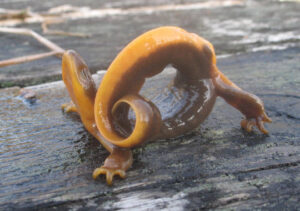
This convinces most predators to spit out the newt and leave it alone.
Different newt species produce different amounts and types of toxins. Some are only mildly toxic and just taste bad.
Others produce incredibly powerful toxins that can kill predators (and potentially humans) if ingested. The bright colors on many newts serve as a warning to predators that they’re poisonous.
The toxins serve a second purpose too. They have antibacterial and antifungal properties that help protect the newt’s permeable skin from infections.
Since newts breathe partly through their skin, keeping it healthy is critical for their survival.
What Are The Most Dangerous Newts to Touch?
The rough-skinned newt is the most poisonous newt in the world and the most dangerous to touch.

This species, found along the Pacific Coast of North America, produces tetrodotoxin, one of the deadliest natural toxins known. Just one rough-skinned newt contains enough poison to kill several adult humans.
California newts are also extremely toxic. They produce tetrodotoxin just like their rough-skinned cousins. These newts are found throughout California and parts of southern Oregon.

Both species look fairly similar with brown or tan backs and orange or yellow bellies.
Japanese fire-bellied newts and Chinese fire-bellied newts are also highly toxic. These are the colorful newts you often see in pet stores, with black backs and bright orange or red bellies.

Even captive-bred ones can be toxic, though they’re usually less toxic than wild-caught ones.
If you touch any of these highly toxic newts and then touch your mouth, eyes, or nose before washing your hands, you could get very sick or even die.
The toxin causes numbness, paralysis, and respiratory failure. There’s no antidote, so treatment is just keeping you alive until the toxin wears off.
Less Toxic Newt Species
Not all newts are deadly, but almost all produce at least some toxins. Eastern newts (also called red-spotted newts) are mildly toxic. Their skin secretions can cause irritation if you get them in your mouth or eyes, but they won’t kill you.
Great crested newts in Europe are moderately toxic. They produce skin secretions that taste bad and can cause mouth irritation, but they’re not dangerous to healthy humans. However, they could make pets or small children sick if ingested.
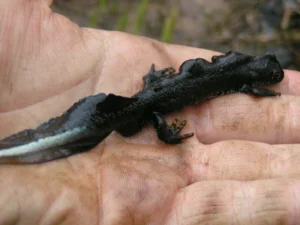
Smooth newts and palmate newts, also common in Europe, are only mildly toxic. Their skin secretions are mostly just irritating and foul-tasting.

Still, you shouldn’t handle them with bare hands and then touch your face.
Even the least toxic newt species can cause problems if you’re sensitive or allergic to their secretions.
Some people get rashes or irritation from handling newts that don’t bother other people at all. Everyone’s sensitivity is different.
How Newt Toxins Get Into Your Body
Newt toxins won’t absorb through normal, intact skin on your hands. Your skin is actually pretty good at keeping things out, and as long as you don’t have cuts or scrapes, just touching a newt won’t poison you.
The danger comes when you touch your face after handling a newt. If you rub your eyes, the toxins can be absorbed through the mucous membranes in your eyes.
This causes intense burning, irritation, and pain. Your eyes might swell up and you’ll produce a lot of tears.
Touching your mouth or nose is even worse. The mucous membranes there absorb toxins easily. If you lick your fingers after handling a toxic newt, or eat something without washing your hands first, the toxin gets into your digestive system.
Open cuts, scrapes, or hangnails on your hands can also absorb toxins. If you have any breaks in your skin and you handle a toxic newt, the toxin can get directly into your bloodstream through these openings.
This is more direct and potentially more dangerous than getting it in your mouth.
What Are The Symptoms of Newt Toxin Exposure?
The symptoms you get from newt toxin exposure depend on which species you touched and how the toxin got into your body. With highly toxic species like rough-skinned newts, symptoms can start within minutes if you ingest enough toxin.
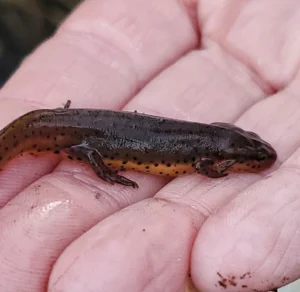
Early symptoms include numbness and tingling around your mouth and lips. You might feel a weird sensation like your lips are going numb, similar to when you get a shot of novocaine at the dentist. This can progress to your whole face feeling numb.
If you got toxin in your eyes, you’ll feel intense burning and stinging. Your eyes will water heavily, turn red, and might swell. The pain can be pretty severe, like getting hot sauce or chili pepper in your eyes.
With more serious poisoning, you’ll develop weakness, dizziness, and difficulty moving. You might feel like your muscles aren’t responding properly.
This can progress to actual paralysis if you’ve ingested a lot of toxin.
The most severe symptom is respiratory difficulty. As the paralysis spreads to your breathing muscles, you’ll have trouble breathing.
This is how tetrodotoxin kills people. Your lungs stop working even though you’re still conscious. This is a medical emergency requiring immediate hospital care.
Salmonella and Other Bacteria
Beyond toxins, newts can carry bacteria that make you sick. Like most amphibians, newts often carry salmonella bacteria in their digestive tracts.
They can shed these bacteria in their waste or onto their skin, and you can pick it up by touching them.

Salmonella doesn’t harm the newt, but it can make humans very sick. If you handle a newt and then touch your mouth or eat something without washing your hands, you can ingest the bacteria.
This leads to salmonellosis, an infection that causes diarrhea, stomach cramps, fever, and vomiting.
Most people recover from salmonella infections within a week, but young children, elderly people, and anyone with a weakened immune system can get seriously ill.
In rare cases, the bacteria can get into the bloodstream and cause life-threatening complications.
The risk of salmonella is why you should always wash your hands thoroughly after touching any amphibian, even if it’s not a toxic species.
Regular soap and water for at least 20 seconds is enough to wash away the bacteria.
How to Safely Handle a Newt If You Need To
Sometimes you need to handle a newt, maybe to move it off a road or out of a pool where it might drown. If you absolutely must touch a newt, there are ways to do it more safely.
First, wear gloves. Disposable nitrile gloves are perfect because they protect you from toxins and bacteria while also protecting the newt from oils and chemicals on your hands. If you don’t have gloves, you can use a plastic bag as a barrier.

Keep the newt away from your face at all times. Don’t hold it near your eyes, nose, or mouth. Don’t touch your face while handling the newt or immediately afterward. This is really important and where most people mess up.
Handle the newt as gently and briefly as possible. Cup it gently in your hands rather than squeezing or gripping it. Stressed newts produce more toxins, so calm, gentle handling is safer for both you and the newt.
After you’ve moved the newt and let it go, remove the gloves carefully without touching the outside surface.
If you didn’t have gloves, wash your hands immediately and thoroughly with soap and water. Scrub for at least 20 seconds, making sure to get under your nails and between your fingers.
Special Risks for Children
Children are at higher risk from newt toxins and bacteria than adults. Kids are more likely to put their hands in their mouths without thinking, which is how toxins and bacteria get ingested.
They also have smaller body weights, so the same amount of toxin affects them more severely.
Young children shouldn’t handle newts at all. Even with supervision, it’s too easy for a child to touch a newt and then stick their fingers in their mouth before you can stop them. It’s just not worth the risk, especially with potentially toxic species.
If children want to observe newts, teach them to look without touching. You can watch newts in a pond or stream without picking them up.
This is actually a better way to observe natural behavior anyway, since handling disturbs the animals.
If a child does touch a newt, immediately help them wash their hands thoroughly. Make them wash before touching anything else, especially before eating or touching their face. Watch for any symptoms of toxin exposure or illness over the next few hours.
Risks for People With Compromised Skin
People with eczema, psoriasis, or other skin conditions that cause breaks in the skin are at higher risk. The toxins can enter through these breaks more easily than through intact skin.
If you have any skin condition that compromises your skin barrier, don’t handle newts even with gloves.

People with cuts, scrapes, hangnails, or cracked dry skin should also avoid handling newts. Even small breaks in the skin can allow toxin absorption.
If you must handle a newt and have damaged skin, make absolutely sure you wear gloves and that the gloves don’t have any holes.
Anyone with a weakened immune system (from chemotherapy, HIV, organ transplants, etc.) should avoid all contact with amphibians.
The risk of serious infection from bacteria like salmonella is much higher for immunocompromised people.
Pregnant women should also be cautious about handling newts. Salmonella infections can be more severe during pregnancy, and the infection can potentially affect the developing baby in rare cases.
What About Captive Pet Newts?
Even captive-bred pet newts can be toxic, though they’re usually less toxic than wild ones. Newts raised in captivity don’t have access to the bacteria that help them produce tetrodotoxin, so they become less poisonous over generations in captivity.
However, you still shouldn’t handle pet newts with bare hands. They can still produce some toxins, and they can still carry salmonella.
The same safety rules apply: wear gloves, don’t touch your face, and wash your hands afterward.
Many newt owners never handle their pets at all. Newts are more of an “observe only” pet rather than something to hold and cuddle.
They’re stressed by handling anyway, so it’s better for the newt if you just watch it rather than touching it.
If you need to move a pet newt (like when cleaning its tank), use a soft net or container rather than your hands. Scoop it up gently and transfer it to a temporary holding container. This is safer for both you and the newt.
What to Do If You’re Exposed to Newt Toxins
If you touch a newt and then accidentally touch your mouth or eyes before washing your hands, don’t panic but do take it seriously. Rinse the affected area immediately with lots of clean water. If it’s your eyes, flush them for at least 15 minutes with water.
If you only got a small amount of toxin in your mouth (like if you briefly touched your lip), rinse your mouth out thoroughly with water.

Spit out the water, don’t swallow it. Monitor yourself for symptoms like numbness or tingling.
If you actually swallowed part of a newt or licked your fingers after handling a highly toxic species, go to the hospital immediately.
Don’t wait to see if symptoms develop. Call poison control or 911 and tell them you may have tetrodotoxin poisoning.
Bring the newt with you if possible (in a secure container), or at least be able to describe it. The species matters a lot for how serious the poisoning might be.
A rough-skinned newt or fire-bellied newt requires much more urgent care than a smooth newt.
How to Observe Newts Safely In The Wild
The best way to stay safe around newts is to not touch them at all. You can observe these fascinating creatures perfectly well without handling them.
Watch them in their natural habitat, take photos from a distance, and let them go about their business.
If you want to get a close look at a newt, you can carefully scoop it up in a clear container with some water, observe it, and then release it exactly where you found it. This lets you see it up close without touching it.
Teach children to appreciate wildlife without touching it. This is a valuable lesson that applies to all wild animals, not just newts. Looking is fine, touching is not. This protects both the animals and the children.
If you’re doing a school project or scientific observation that requires handling newts, get proper training first. Learn correct handling techniques, get appropriate gloves and equipment, and understand the risks involved.
There are right ways and wrong ways to handle amphibians for research.
Conclusion
Are newts safe to touch or handle? No, they’re really not, at least not without taking proper precautions. Many newt species produce toxic skin secretions that range from mildly irritating to potentially deadly.
Even less toxic species can carry bacteria like salmonella that make you sick.
The toxins won’t hurt you if they just touch your skin, but they can cause serious problems if they get in your eyes, mouth, nose, or open wounds.
The rough-skinned newt and other highly toxic species can kill you if you ingest their toxins, and there’s no antidote.
If you must handle a newt, wear gloves, don’t touch your face, and wash your hands thoroughly afterward. But the best approach is simply to leave newts alone and observe them without touching.
These are wild animals that don’t benefit from being handled, and you don’t benefit from the risk of exposure to their toxins and bacteria.
Look, appreciate, photograph if you want, but don’t touch.

Hi, my name is Ezra Mushala, i have been interested animals all my life. I am the main author and editor here at snakeinformer.com.