
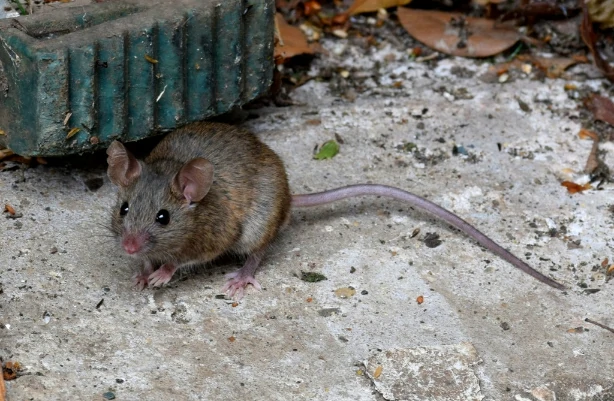
Many people try to deal with mice humanely by catching them alive and releasing them outside. This seems like a kind solution that doesn’t involve killing, but it raises an important question about whether the problem is actually solved.
Understanding whether released mice return can help you decide if catch-and-release is worth trying. But do mice come back if you release them?
Yes, mice usually come back if you release them too close to your home. Mice have excellent spatial memory and can navigate back from distances up to several miles. They’ll follow scent trails, remember routes, and return to familiar territory where they know food and shelter are available. To prevent return, you’d need to release them at least 2-3 miles away.
Mice aren’t randomly wandering into your home. They’re there because they found resources they need.
Even if you remove a mouse temporarily, it knows your home is a good survival spot. Unless you release it far enough away that it can’t find its way back, the mouse will return.
How Mice Navigate Back to Your Home
Mice have several ways of finding their way back to familiar territory. Their primary navigation tool is their sense of smell.
Mice constantly mark their travel routes with small amounts of urine that contains pheromones. These scent trails create chemical maps they can follow even in total darkness.

When you release a mouse nearby, it can detect and follow its own scent trails right back to your home. These trails can last for days or even weeks depending on weather conditions.
Rain can wash away outdoor trails, but scent markers in protected areas like under porches or in garages last much longer. Mice also use their excellent spatial memory.
Research shows that mice create mental maps of their environment. They remember where food sources are located, safe routes between areas, and the layout of their territory.
This mental map stays in their memory for a long time. If you release a mouse in an area it’s been before (even weeks earlier), it can access those stored memories and navigate back.
Distance Matters More Than Anything When Releasing Mice
The single biggest factor in whether a mouse returns is how far you release it from your home. If you release a mouse in your yard or even a few blocks away, it’ll almost certainly come back.
Within a few hundred feet, the mouse can easily follow its own scent trails or use its spatial memory to return. Most mice have a normal home range of 10-30 feet from their nest.
But their ability to navigate extends way beyond this daily range. Studies show mice can find their way back from distances of one to three miles or more.
To have a reasonable chance of preventing return, you need to release mice at least two to three miles away from your home. Even at this distance, there’s no guarantee.
Some mice are better navigators than others. Factors like age, experience, and motivation (like if the mouse has babies back in your home) all affect whether it’ll attempt the journey back.
Why Releasing Nearby Never Works
Some people think that releasing a mouse just outside their property will solve the problem. This doesn’t work for multiple reasons.
First, the mouse knows exactly where it is. Your yard is part of its territory.
It hasn’t actually been removed from familiar ground. Second, all the attractants that brought the mouse inside are still there.
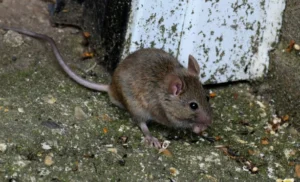
The food sources, entry points, and shelter that attracted it initially haven’t changed. The mouse will just come right back in.
Third, you haven’t addressed what drew the mouse in the first place. If one mouse found your home attractive, others will too.
Even if that specific mouse somehow doesn’t return, new mice will find the same entry points and resources. Some people release mice in nearby parks or wooded areas thinking this gives them a “natural” place to live.
But if these areas are only a few blocks away, the mice often return. Urban mice especially are adapted to living around humans and might not even be interested in staying in a park when they know there’s food and shelter available back at your house.
How Scent Trails Can Lead Mice Back
Understanding how scent trails work is key to knowing why released mice return. As mice move through their environment, they leave micro-droplets of urine everywhere.
These markers aren’t random, they’re purposeful communication and navigation tools. The pheromones in mouse urine tell other mice (and the same mouse) important information.
They mark safe routes, food locations, and territory boundaries. When you catch a mouse and release it, those scent trails don’t disappear.
They remain in and around your home, creating a chemical roadmap back. The mouse can pick up its own trail and follow it home like we’d follow GPS directions.
Scent trails are especially strong in protected areas. In the open air, wind and weather can disperse scents fairly quickly.
But under structures, in garages, inside walls, and along foundations, scent trails persist much longer. A mouse released in your backyard might pick up its trail along your foundation within minutes.
To break the scent trail connection, you’d need to release the mouse far enough away that it can’t detect the trail anymore. This usually means at least a mile or more, and even then, spatial memory can still guide the mouse back.
Mother Mice May Try Harder to Return to Their Babies
Female mice with babies in your home are especially likely to return if released. Maternal instinct is incredibly strong in mice.
A mother mouse will risk extreme danger to get back to her young. If you catch what you think is just one mouse but it’s actually a nursing female, she’ll be highly motivated to return.
She knows exactly where her nest is and will navigate back even from significant distances. Mother mice can hear and smell their babies from quite far away.

Baby mice make high-pitched sounds (often too high for humans to hear) that call to their mother. She can detect these calls and the scent of her nest.
This is why catching mice during breeding season (which is basically year-round for house mice in warm homes) often doesn’t work well. You might catch the mother, but she leaves babies behind.
If you release her nearby, she’ll return. If you release her far away, the babies will die without her care, which isn’t humane either.
The best approach if you suspect you have breeding mice is to find and remove the nest while also trapping all adults.
How Long Does It Take for Mice to Return?
If a mouse is going to return, how quickly does it happen? This depends on the distance you released it and how motivated it is.
A mouse released in your yard might be back within hours, even the same night. It doesn’t need to navigate, it’s still on familiar ground.
A mouse released a few blocks away might take a day or two to find its way back. It’ll use its scent trails and spatial memory but might take a more cautious, roundabout route.
At distances of half a mile to a mile, return might take several days to a week. The mouse will be in less familiar territory and might spend time exploring before recognizing landmarks or scent markers that lead home.
Beyond one to two miles, if the mouse returns at all, it could take a week or more. At this distance, the mouse is more likely to establish a new territory rather than attempt the journey back.
But there’s no magic distance where you can be 100% certain a mouse won’t return. Individual variation means some determined mice might navigate back from surprising distances, especially if they have strong motivation like babies in a nest.
The Problems With Catch-and-Release
Even if you release mice far enough away that they don’t return to your specific home, catch-and-release has several problems. First, you’re just making the mouse someone else’s problem.
That mouse will need to find food and shelter in its new location, which likely means someone else’s property or home. This doesn’t solve the rat problem, it just moves it.

Second, releasing urban or domestic mice into wild areas can be cruel. House mice have adapted to live with humans.
They might not survive well in truly wild environments. They could starve, fall victim to predators, or fail to compete with established wild mouse populations.
Third, you might be breaking laws. Many jurisdictions have regulations against releasing trapped rodents.
This is partly due to concerns about spreading disease and partly to prevent people from dumping their pest problems elsewhere. Check your local laws before releasing any trapped mice.
Fourth, and most importantly, catch-and-release doesn’t address why mice got into your home in the first place. Your house has entry points mice can use, food sources they want, and shelter they need.
Even if you successfully remove one mouse permanently, others will find the same attractants and move in.
Which Barriers Can Stop Mice From Returning?
Certain barriers can reduce the chances of a released mouse returning. Large bodies of water are effective.
Most mice can swim, but they won’t swim across rivers or lakes to get back to familiar territory. The effort and danger aren’t worth it when they can establish new territory on the side where they’re released.
Busy roads with heavy traffic can deter mice. While mice can cross roads, highways with constant traffic are dangerous.
Many mice won’t attempt the crossing, especially if resources are available on their current side. Physical barriers like tall walls or dense forest can slow mice down, though determined mice can often climb or go around these obstacles.
The most effective “barrier” is simply distance combined with unfamiliar territory. If you release a mouse several miles away in an area it’s never been, it has no scent trails to follow and no mental map to reference.
It’s more likely to establish a new territory than spend days trying to find its way back to an area it can’t locate.
Better Ways to Deal With Mice in Your Home
If catch-and-release is problematic, what are the alternatives? The most effective long-term solution is exclusion.
This means sealing every possible entry point so mice physically can’t get into your home. Mice can squeeze through openings as small as a dime (1/4 inch).
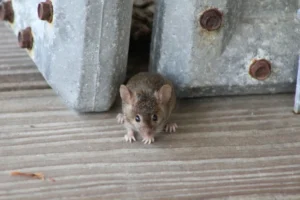
Inspect your home’s exterior thoroughly looking for gaps, cracks, and holes. Common entry points include spaces around pipes and utility lines, gaps under doors, cracks in foundations, damaged vent screens, and openings where different materials meet.
Seal these openings with materials mice can’t chew through like steel wool, hardware cloth, or sheet metal. Combine exclusion with sanitation.
Store all food in sealed containers, clean up crumbs immediately, take out garbage regularly, and fix water leaks. Without food and water, your home becomes much less attractive to mice.
If you need to remove mice that are already inside, snap traps are generally more effective and humane than live traps. They kill quickly rather than causing the stress of capture and uncertain fate after release.
If you prefer not to kill mice, some professional pest control services offer exclusion-focused approaches that drive mice out while sealing entry points behind them.
How to Tell If Mice Have Returned
If you’ve released mice and want to know if they’ve returned, there are signs to watch for. Fresh droppings in areas where you previously had mouse activity indicate mice are back.
Mouse droppings are small (about 1/4 inch), dark, and pellet-shaped. Fresh droppings are dark and moist, while old ones are gray and crumbly.
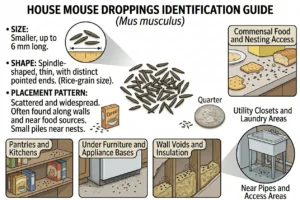
New gnaw marks on food packaging or baseboards show current activity. Fresh gnaw marks look lighter colored than old ones.
Scratching or scurrying sounds in walls or ceilings, especially at night, mean mice are active. Smudge marks along walls from oils on mouse fur getting darker suggest repeated use.
These signs don’t necessarily prove the same mouse returned. They could be new mice finding the same entry points and resources.
This is actually why sealing entry points is more important than worrying about whether a specific mouse returned.
Prevention Is Better Than Relocation
Rather than trying to solve a mouse problem through catch-and-release, preventing mice from entering in the first place is far more effective. Good home maintenance is key.
Regularly inspect your home’s exterior and seal any new gaps or cracks. Replace damaged weatherstripping on doors.
Fix screens on vents and windows. Keep vegetation trimmed back from your home’s exterior.
Store firewood away from the house. Good sanitation practices matter too.
Don’t leave food out overnight. Store pantry items in sealed containers.
Clean up spills immediately. Take garbage out regularly in sealed bins.
Don’t feed pets outside, or if you must, only put out what they’ll eat in one sitting. Fix leaky pipes and faucets.
Reduce clutter in basements, attics, and garages where mice could nest. These prevention measures make your home unattractive to mice in the first place, which is better than dealing with them after they’ve moved in.
The Reality Check
Here’s the honest truth about releasing mice: unless you’re committed to driving several miles away from your home, finding suitable habitat, and dealing with potential legal issues, the mouse is probably coming back. And even if that specific mouse doesn’t return, your home still has whatever attracted it in the first place.
New mice will find the same entry points and resources. You haven’t solved your mouse problem, you’ve just temporarily removed one mouse.
This cycle will continue indefinitely until you address the root causes through exclusion and sanitation. For many people, the time, effort, and gas money spent driving mice far away would be better spent on materials to seal entry points and proper food storage.
The emotional satisfaction of “saving” a mouse is understandable, but if you’re serious about solving a mouse infestation, exclusion and removal (whether through lethal traps or professional services) is more effective and often ultimately more humane than repeated catch-and-release cycles.
Conclusion
Mice do come back if you release them too close to your home. Their excellent navigation abilities, spatial memory, and ability to follow scent trails mean that mice released within a mile or two will likely return.
To prevent return, you’d need to release them at least 2-3 miles away, across barriers, in unfamiliar territory.
But even then, you’re facing other problems like spreading your pest issue elsewhere, potentially violating laws, and not addressing what attracted the mouse initially.
The only permanent solution to a mouse problem is exclusion. Seal all entry points, remove food and water sources, and eliminate nesting sites.
This prevents both released mice from returning and new mice from entering in the first place. Catch-and-release might seem humane, but it’s rarely effective and doesn’t solve the underlying problem.
Focus your efforts on making your home inaccessible to mice rather than trying to relocate them one at a time.

Hi, my name is Ezra Mushala, i have been interested animals all my life. I am the main author and editor here at snakeinformer.com.