
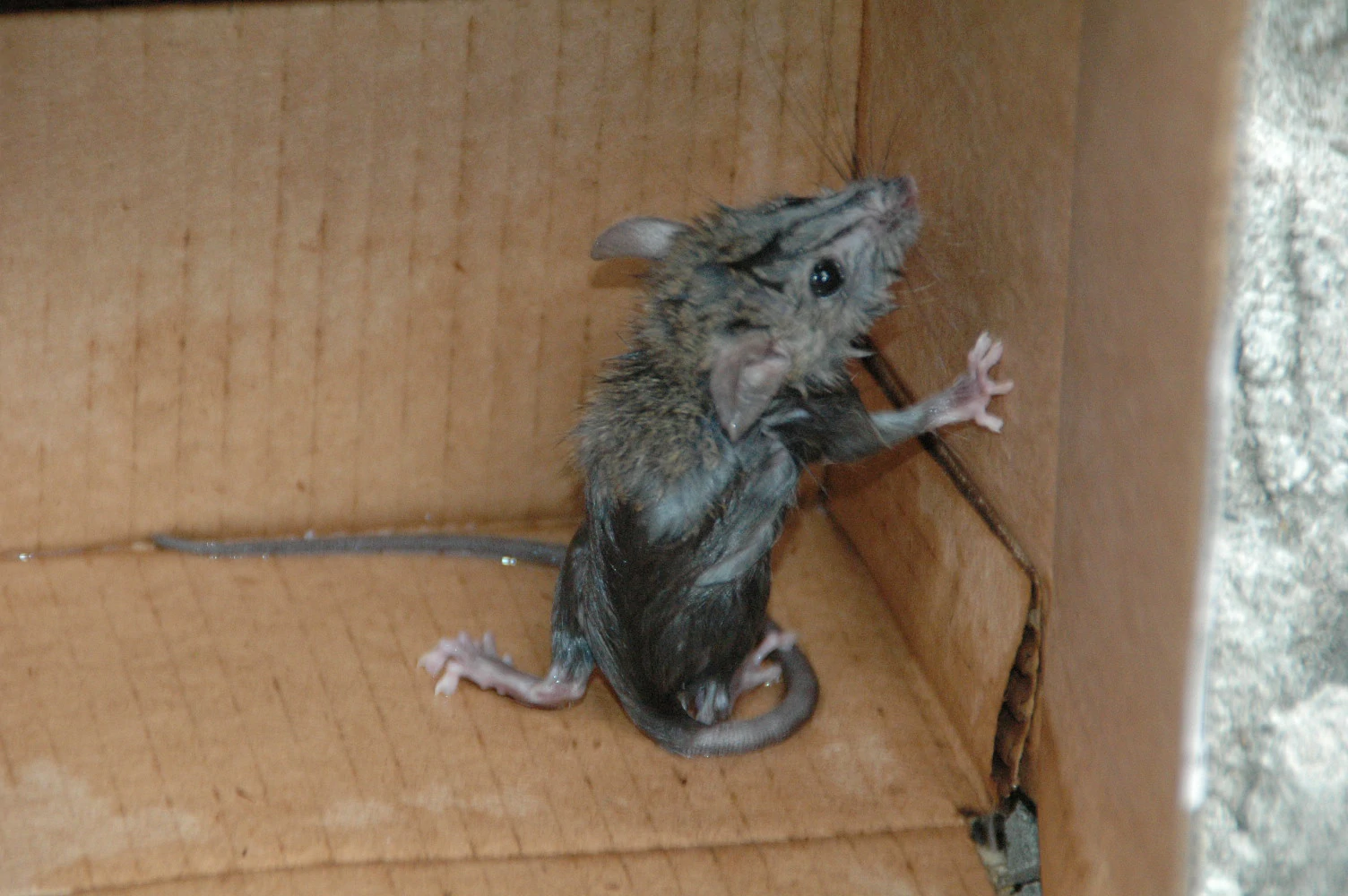
Sometimes you need to catch a rat but you don’t have any traps on hand, or maybe you don’t want to use traditional traps for whatever reason.
Whether you’re trying to catch a pet rat that escaped or you’re dealing with a wild rat and you want to avoid killing it, you might be wondering what your options are. How can you catch a rat without using a rat trap?
You can catch a rat without a trap by using a bucket or trash can baited with food. Set up a ramp leading to the edge, put bait inside, and the rat will fall in and can’t climb out. You can also try cornering the rat in a small space and catching it with a towel, or using a live-catch cage made from household items.
These DIY methods can work, but they’re not as reliable as actual traps. You’ll need patience, and you might not catch the rat on your first try.
The Bucket Method for Catching Rats
The bucket method is probably the easiest way to catch a rat without buying any special equipment. You just need a bucket, some bait, and something to use as a ramp.
Get a five-gallon bucket or a deep trash can. The sides need to be tall and smooth enough that a rat can’t climb out once it falls in. Put some really tempting bait at the bottom of the bucket. Peanut butter, bacon, chocolate, or sunflower seeds all work well.
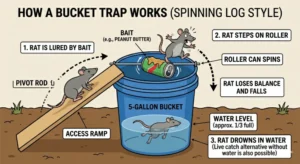
Now build a ramp that leads up to the edge of the bucket. You can use a piece of wood, a thick book, a stack of magazines, or really anything sturdy that the rat can climb. Make sure the ramp is stable and leads right to the rim of the bucket.
Put the whole setup in an area where you’ve seen the rat or where you know it’s been traveling. Against a wall is usually best, since rats like to move along walls rather than out in the open.
The idea is that the rat smells the bait, climbs the ramp to investigate, looks down into the bucket, and either falls in while trying to reach the bait or jumps in because it wants the food. Once it’s in, the smooth sides of the bucket keep it from climbing back out.
Check the bucket regularly, at least a couple times a day. You don’t want to leave a rat trapped in there for a long time because it’ll get stressed, dehydrated, and scared.
Using a Towel or Blanket to Catch a Rat by Hand
If you can see the rat and it’s in a relatively small space, you might be able to catch it using a towel or thick blanket. This works better with pet rats that have escaped than with wild rats, but it’s possible either way.
First, you need to corner the rat. Close off escape routes so the rat is trapped in one area. A bathroom, closet, or small room works well. The smaller the space, the easier this will be.
Get a thick bath towel or a blanket. Wear thick gloves, like leather work gloves, to protect your hands in case the rat bites. Rats can bite hard, and wild rats might carry diseases.

Move slowly and calmly. If you rush at the rat, it’ll panic and become much harder to catch. Try to guide it into a corner where it can’t run past you.
Once the rat is cornered, quickly drop the towel over it. The rat will usually freeze for a second when it’s suddenly in the dark. Use that moment to scoop up the towel with the rat inside, bundling it so the rat can’t get out.
Hold the bundle firmly but not too tight (you don’t want to hurt the rat), and transfer it to a secure container like a plastic storage box with air holes punched in the lid, or a pet carrier if you have one.
This method takes practice and quick reflexes. Don’t be surprised if the rat gets away the first few times you try it. Wild rats especially are fast and good at escaping.
Making a Live-Catch Cage From Household Items
You can build a simple live-catch trap using things you probably already have at home. This is basically a DIY version of commercial live traps.
One method uses a cardboard box. Get a box that’s big enough for a rat to walk into but not so big that it’s got lots of extra space. Cut a small doorway in one end, just big enough for a rat to squeeze through.
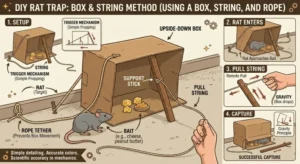
Put bait at the far end of the box, opposite the doorway. Attach a string to the box near the doorway. When the rat goes in to get the bait, you pull the string to slam the doorway shut, trapping the rat inside.
The problem with this method is you have to sit there and watch the box constantly, waiting for the rat to go in. This can take hours or even days.
Also, rats can chew through cardboard pretty quickly, so once you’ve caught the rat, you need to transfer it to a more secure container right away.
Another DIY trap uses a see-saw design. Balance a board on a cylinder (like a rolling pin or a soda bottle) so one end is on the ground and the other end is in the air.
Put bait on the elevated end. When the rat walks up to get the bait, its weight tips the board and the rat slides into a bucket or box positioned at that end.
These homemade traps can work, but they’re not as reliable as the bucket method or commercial traps. They’re more of a last resort if you really have no other options.
Cornering the Rat in a Small Space First
Before you try any of these catching methods, it really helps to limit where the rat can go. This is especially important if you’re trying to catch it by hand or with a towel.
Close doors to other rooms so the rat can’t leave the area you’re working in. Block off any gaps under furniture where the rat could hide. Use towels, cardboard, or boards to seal off escape routes.
If the rat is in a large open room, try to herd it toward a smaller space. Move furniture to create barriers and narrow paths that lead where you want the rat to go. You’re basically creating a funnel that ends in a corner or small area where the rat can’t escape.
Turn off lights in areas you don’t want the rat to go, and turn on lights in the area where you’re trying to catch it. Rats don’t like bright light, so they’ll tend to move away from it.
Remove any food sources from the area except for your bait. The rat should have only one appealing option, which is whatever bait you’re using to lure it into your trap or catching zone.
This prep work takes time, but it makes actually catching the rat much easier. You’re controlling the environment instead of chasing the rat all over the place.
What Kind of Bait Works Best for Catching Rats?
The bait you use can make or break your attempt to catch a rat. Rats are attracted to strong smells and high-calorie foods.
Peanut butter is the classic choice because it smells strong and rats really seem to love it. It also has the advantage of being sticky, so if you’re using a bucket trap, you can smear it on something and the rat has to work to get it rather than just grabbing it and running.
Bacon or bacon grease works great too. The salty, fatty smell is really appealing to rats. You can put actual pieces of bacon in your trap, or just use a paper towel soaked in bacon grease.
Chocolate is another good option. Rats have a sweet tooth, and chocolate has a strong smell that carries well. Small pieces of chocolate bar or chocolate chips work fine.
Nuts and seeds are natural foods that rats would eat in the wild. Sunflower seeds, peanuts, or almonds can all work well. These work better for wild rats than for pet rats, since pet rats are used to processed foods and might not be as interested.
Fruits like apples, grapes, or berries can work, but they don’t smell as strong as peanut butter or bacon, so they’re not as effective at attracting rats from a distance.
Whatever bait you choose, use enough that the rat can smell it, but not so much that it can grab some and leave. You want the rat to have to fully commit to going into your trap or catching zone to get the reward.
How Long It Usually Takes to Catch a Rat This Way
Catching a rat without proper traps usually takes longer than you’d like. You need to be patient.
If you set up a bucket trap, it might catch the rat the first night, or it might take several days. Rats are cautious about new things in their environment.
They’ll often check out the setup, smell the bait, and then leave without going for it. After a day or two, once they’ve decided the bucket isn’t dangerous, they’re more likely to try for the bait.
If you’re trying to catch the rat by hand with a towel, it could take hours just to corner it in the right spot, and then you might miss when you try to throw the towel. Be ready for multiple attempts.
The key is not to give up after one try. Leave your bucket trap set for at least three or four days before deciding it’s not working.
Keep checking it twice a day so you don’t leave a caught rat sitting in there too long.
If you’re not having any success after a week, try changing your bait or moving your trap to a different location. The rat might not be traveling through the area you thought it was.
What to Do With the Rat Once You’ve Caught It
So you’ve caught the rat. Now what?
If this was a pet rat that escaped, just put it back in its cage. Make sure the cage is secure so it doesn’t escape again.
If this is a wild rat and you were trying to catch it without killing it, you need to release it somewhere. But this isn’t as simple as just letting it go outside your back door.

Rats have excellent navigation skills and can find their way back from pretty far away. If you release a rat anywhere near your house, it’ll probably come back. You need to take it at least a mile or two away, preferably more.
Also, think about where you’re releasing it. Don’t release it near someone else’s house or in a park where it could become a problem for other people. If possible, release it in a wooded area or field away from buildings.
Keep in mind that a rat you’ve caught might not survive well in the wild, especially if it’s been living in your house and eating your food.
It might not know how to find food and shelter in a natural environment. This is a hard truth, but relocating wild animals often just delays their death rather than saving them.
Some areas have laws against relocating pest animals because of concerns about spreading disease or disrupting local ecosystems. Check your local regulations before you release a caught rat.
Why Traditional Traps Are Usually Better Than DIY Methods
Even though you can catch rats without traps, it’s worth understanding why actual traps are usually a better choice.
First, traps are designed specifically for the job. They’ve been tested and refined over many years to be as effective as possible. A snap trap or live-catch trap is just going to work better than a homemade bucket setup.
Second, traps are usually more humane. A good snap trap kills instantly, which is better than leaving a rat stressed in a bucket for hours. Even live-catch traps are designed to hold the animal safely until you release it.
Third, traps are more reliable. You can set a trap and forget about it (except for checking it regularly), whereas DIY methods often require you to watch them or actively participate in the catching.
Fourth, traps aren’t that expensive. You can get a decent snap trap for just a few dollars. Unless you really have nothing available and you need to catch a rat right now, it’s worth just buying a proper trap.
The DIY methods in this article are really meant for emergency situations where you don’t have access to traps, or for people who want to try catching a rat without harming it and don’t want to wait for a live-catch trap to arrive in the mail.
Common Mistakes People Make When Trying to Catch Rats Without Traps
There are some typical errors that make catching rats without traps even harder than it already is.
The biggest mistake is rushing. People see a rat, panic, and try to catch it right away without any preparation. This almost never works. The rat just runs away and hides, and then it becomes even more cautious and harder to catch later.
Another mistake is using too little bait or bait that doesn’t smell strong enough. You need the rat to be really motivated to go for your trap. A tiny piece of cheese isn’t going to cut it. Use something smelly and appealing in a generous amount.

People also tend to put their traps in the wrong places. They’ll put the bucket in the middle of the room because that’s convenient, but rats travel along walls and avoid open spaces. Put your trap where the rat actually goes, not where it’s easy for you to access.
Not checking the trap often enough is another problem. If you catch a rat and leave it trapped for twelve hours, it might die from stress or dehydration. Check at least twice a day, morning and evening.
Finally, people give up too soon. They set up a bucket trap, don’t catch anything the first night, and decide it doesn’t work. Rats need time to get comfortable with new objects in their environment. Give it several days before you decide a method isn’t working.
Safety Precautions When Catching Rats by Hand or With DIY Methods
Catching rats, especially wild ones, comes with some health risks that you need to take seriously.
Always wear thick gloves. Wild rats can carry diseases like leptospirosis, hantavirus, and rat-bite fever. If a rat bites you, those diseases can be transmitted through the bite wound. Even if the rat doesn’t bite, it might urinate on you, and rat urine can transmit disease.
Leather work gloves are best because they’re thick enough that rat teeth can’t easily punch through. Thin rubber gloves or gardening gloves aren’t good enough.
Don’t get your face close to the rat. Rats can jump, scratch, and bite surprisingly well when they’re scared. Keep your face and body back from the rat as much as possible.
After you’ve caught the rat and released it or put it in a container, wash your hands thoroughly with soap and hot water. Even if you were wearing gloves the whole time, wash up as a precaution.
If you get bitten, wash the wound immediately with soap and water, then see a doctor. Rat bites can get infected, and you might need antibiotics or other treatment.
Don’t let kids try to catch wild rats. This is something adults should handle with proper safety gear and knowledge.
Conclusion
You can catch a rat without a trap using methods like the bucket setup, towel catching, or DIY live-catch cages. The bucket method is probably your best bet because it requires the least effort and can work while you’re not actively watching it.
Whatever method you try, use good bait, place your setup in areas where the rat actually travels, and be patient. It might take several days to catch the rat.
That said, if you can get actual rat traps, that’s almost always a better option. They’re more reliable, often more humane, and specifically designed for the job. These DIY methods work in a pinch, but they’re not a replacement for proper equipment if you’re dealing with a real rat problem.

Hi, my name is Ezra Mushala, i have been interested animals all my life. I am the main author and editor here at snakeinformer.com.