

When most people think about rats, they picture disease-carrying pests invading homes and spreading filth.
But rats actually have many positive qualities that often get overlooked because of their bad reputation. These intelligent, social animals serve important roles in nature, science, and even as companion animals. So what are the reasons why rats are good?
Rats are good because they’re highly intelligent problem-solvers, serve critical roles in ecosystems as prey and seed dispersers, have advanced medical research through laboratory testing, make affectionate and trainable pets, help clean up organic waste in nature, and show remarkable social bonds and empathy toward other rats.
Understanding the positive side of rats doesn’t erase the problems wild rats can cause in human environments.
But it does give you a more complete picture of these animals and why they’ve been so successful as a species.
Rats aren’t just pests, they’re complex creatures with abilities and behaviors worth recognizing.
Rats Are Incredibly Intelligent Animals
One of the most impressive things about rats is their intelligence, which rivals many animals we consider smart.
Rats can solve complex problems and learn from experience.
Studies have shown they can navigate mazes, figure out puzzles, and remember solutions to problems they’ve encountered before. Their problem-solving abilities are comparable to dogs and even some primates.

They can learn their names and come when called.
Pet rat owners consistently report that their rats recognize their names and respond to them, just like dogs or cats. This shows advanced cognitive ability and memory that many people don’t expect from rodents.
Rats understand cause and effect relationships.
They can figure out that pulling a lever gives them food, or that certain actions lead to specific consequences. This ability to connect actions with outcomes shows real thinking, not just instinct.
They can be trained to perform tricks and tasks.
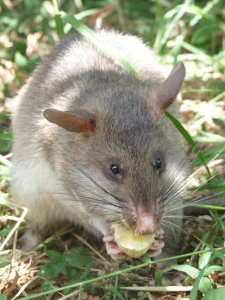
Rats can learn to fetch, jump through hoops, navigate obstacle courses, and even play simple games. Some rats have been trained to detect landmines and tuberculosis, showing how their intelligence can be useful to humans.
Their memory is impressive, especially for spatial layouts.
Once a rat has explored an area, it remembers the layout really well. This helps them navigate in the dark and find food sources they discovered days or weeks ago.
Rats can learn by watching other rats.
If one rat figures out how to solve a problem, other rats can learn the solution just by watching. This social learning shows advanced cognitive abilities and is pretty rare in the animal kingdom.
They show metacognition, which means they know what they know.
In experiments, rats have demonstrated they can assess their own knowledge. If they’re uncertain about something, they’ll choose to skip a difficult test rather than guess and risk getting it wrong. This self-awareness is really advanced.
Rats Play Critical Roles in Ecosystems
Beyond being smart, rats serve important functions in the natural world that benefit other animals and plants.
Rats are a vital food source for many predators.
Hawks, owls, snakes, foxes, coyotes, and many other animals depend on rats and mice as a major part of their diet. Without rats, these predator populations would struggle to survive.
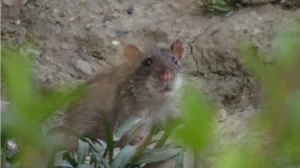
They help disperse seeds throughout their environment.
Rats carry seeds away from parent plants while gathering food. Some of these seeds get dropped or buried and forgotten, allowing new plants to grow in different locations. This helps forests and other ecosystems regenerate and spread.
Rats aerate soil through their burrowing activities.
When rats dig tunnels and burrows, they mix and loosen the soil. This improves drainage, allows oxygen to reach plant roots, and helps organic matter decompose faster, making nutrients available for plants.
They help clean up dead organic matter.
Rats are opportunistic scavengers that eat dead animals, rotting fruit, and other organic waste. This cleanup crew role helps recycle nutrients back into the ecosystem faster than if the material just sat and decayed slowly.
Their burrows provide shelter for other small animals.

When rats abandon burrows, other creatures move in. Insects, spiders, small reptiles, and even some birds use old rat burrows for shelter and nesting sites.
Rats help control insect populations.
While rats are omnivores that mainly eat plant material, they also eat insects, snails, and other invertebrates. This helps keep these populations in balance naturally.
They contribute to nutrient cycling in ecosystems.
Through their feeding, digging, and waste production, rats help move nutrients around in the environment. Their droppings fertilize soil, and their activities help break down organic matter into forms other organisms can use.
How Rats Have Advanced Medical Research
Probably the most significant positive contribution rats make to human society is through medical and scientific research.
Rats have been used in medical research for over 150 years.
Scientists chose rats because they’re mammals with biology similar enough to humans that research findings often apply to human medicine. Their organs, systems, and genetic makeup share many features with ours.
Countless medical breakthroughs happened because of rat research.
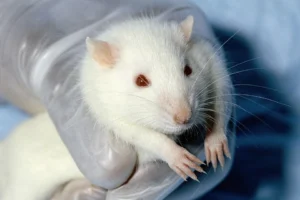
Treatments for cancer, diabetes, heart disease, Alzheimer’s, and many other conditions were developed and tested using rats. The insulin we use to treat diabetes was perfected through rat studies.
Rats help researchers understand how diseases work.
Scientists can study disease processes in rats that would be impossible or unethical to study in humans. This helps them understand what causes diseases and how to stop them.
They’re used to test new medications for safety and effectiveness.
Before any drug gets approved for human use, it’s tested in animals, often rats. These tests help identify dangerous side effects and determine proper dosing before human trials begin.
Rat studies have led to improvements in surgery techniques.

Surgeons practice and develop new surgical procedures using rats before trying them on humans. This has led to safer, more effective surgeries for everything from transplants to brain operations.
Psychology and behavior research relies heavily on rats.
Scientists studying learning, memory, addiction, stress, and other psychological factors often use rats. This research has improved our understanding of human behavior and led to better treatments for mental health conditions.
Rats are used in nutrition and diet studies.
Research on vitamins, nutrients, and dietary requirements often involves rats. This work has helped establish nutritional guidelines and understand how diet affects health.
They’ve helped in developing treatments for spinal cord injuries.
Recent research using rats has led to promising treatments that might help paralyzed people walk again. Rats with spinal injuries that received experimental treatments regained some movement, showing these approaches could work in humans.
Rats Make Wonderful Pets
Many people who’ve owned pet rats say they’re among the best pets they’ve ever had, which surprises people who’ve only known wild rats.
Pet rats are affectionate and bond strongly with their owners.
They recognize their owners, get excited when they see them, and often seek out physical contact like sitting on shoulders or cuddling. Many rats will “groom” their owners by gently nibbling fingers, which is a sign of affection.
They’re very clean animals despite their reputation.

Pet rats groom themselves constantly, often several times per hour. They’re actually cleaner than many other pets and can even be litter trained to use a specific area for bathroom needs.
Rats are playful and entertaining to watch.
They love toys, enjoy wrestling with each other, and will play games like chase or tug-of-war. Their playful nature and curious personalities make them fun companions.
They’re relatively easy to care for compared to other pets.
Rats don’t need to be walked, they’re quiet (mostly), they don’t take up much space, and their basic needs are simple. Food, water, a clean cage, and social interaction are the main requirements.
Pet rats rarely bite and are gentle with humans.
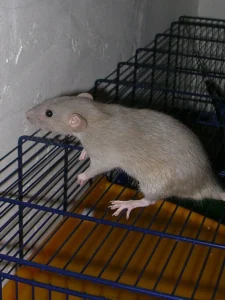
Well-socialized pet rats are friendly and tolerant. They’re good with children (under supervision) and rarely show aggression. Even when startled, they’re more likely to run and hide than bite.
They show real personality and individual quirks.
Some rats are bold adventurers, others are shy and cautious. Some love to be held, others prefer to explore. Each rat has its own distinct personality that emerges as you get to know them.
Rats can learn to do tricks and respond to training.
They can be trained with positive reinforcement just like dogs. Many pet rats know how to come when called, stand on hind legs, spin in circles, and other cute tricks.
They’re social with each other and humans.
Rats are happiest when kept in pairs or small groups. Watching rats interact with their cage mates and with their human family provides endless entertainment and shows their complex social nature.
Rats Display Empathy and Compassion
Recent research has revealed that rats show emotional intelligence and care for other rats in ways that surprised scientists.
Rats will free trapped companions even when there’s no benefit to themselves.
In experiments, rats have opened cages to release other rats who were trapped, even when they weren’t rewarded for doing so. They did it purely to help their fellow rat.

They share food with rats who’ve helped them.
When a rat has been freed by another rat, it’s more likely to share food with that rat later. This shows they remember who helped them and reciprocate the kindness.
Rats show distress when they see other rats in pain.
Studies show that rats react emotionally when they observe another rat experiencing discomfort. Their stress hormones increase, and they show behavioral signs of concern.
They comfort each other after stressful experiences.
Rats that have been through something stressful receive more grooming and social contact from their cage mates. This comforting behavior shows awareness of emotional states in others.
Dominant rats sometimes let subordinate rats win at play.

During play fighting, researchers observed that larger, stronger rats often let smaller rats “win” sometimes. This self-handicapping suggests they understand the need to keep play fun and fair for everyone.
Rats remember acts of kindness and repay them.
Rats that receive help or food from another rat are more likely to help that specific rat later. This suggests they remember individual acts and have a sense of fairness or reciprocity.
They show what looks like regret after making bad decisions.
In choice experiments, rats that made a poor decision and missed out on a better reward showed behavioral signs similar to regret in humans. They paused, looked back, and seemed to reconsider their choice.
How Rats Adapt and Survive
The adaptability of rats is actually quite impressive and shows their resilience and intelligence.
Rats can survive in almost any environment on Earth.
From frozen tundra to tropical jungles, from deserts to cities, rats have figured out how to live and thrive. This adaptability shows remarkable flexibility in their behavior and diet.
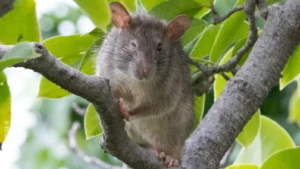
They have an amazing ability to learn what’s safe to eat.
Rats test new foods cautiously by eating just a tiny bit first. If they get sick, they’ll never eat that food again. This conservative approach to new foods helps them avoid poisoning and survive in varied environments.
Rats can squeeze through openings much smaller than their bodies.
If a rat can fit its head through a hole, the rest of its body can follow. This ability helps them access food and shelter in tight spaces that would keep other animals out.
They’re excellent swimmers and can tread water for days.
Rats can swim up to half a mile and tread water for 3 days straight if needed. This swimming ability helps them escape danger and access new territories.

Rats can fall from heights of 50 feet without serious injury.
Their small size and light weight mean they reach a relatively slow terminal velocity when falling. They can survive falls that would seriously hurt or kill larger animals.
Their teeth never stop growing, allowing them to gnaw on anything.
Rat teeth grow about 5 inches per year throughout their lives. This constant growth means they can gnaw through wood, plastic, concrete, and even lead without wearing their teeth down permanently.
They have incredible hearing and can detect ultrasonic sounds.
Rats communicate using sounds too high-pitched for humans to hear. This private communication channel helps them avoid attracting predators and allows complex social interactions.
Why Rats Are Important for Environmental Science
Rats serve as indicators of environmental health and help scientists understand ecosystems better.
Changes in rat populations can signal environmental problems.
If rat numbers suddenly increase or decrease dramatically, it often indicates changes in the environment like pollution, habitat destruction, or shifts in predator populations. Scientists monitor rat populations to track ecosystem health.

Rats are used as sentinel species for toxic contamination.
Because rats live in close proximity to humans and eat similar foods, studying wild rat populations can reveal environmental toxins before they affect humans. High levels of pollutants in rats warn scientists about contamination problems.
They help researchers understand urban ecology.
Studying how rats survive and thrive in cities teaches scientists about urban ecosystems. This knowledge helps urban planners create better waste management and understand how wildlife adapts to human environments.
Rat studies have revealed impacts of pollution and climate change.
Research on rat populations has shown how pollution affects reproduction, how climate change alters habitat use, and how environmental stressors impact animal populations generally.
They’re useful for studying invasive species impacts.
In places where rats are invasive (like many islands), studying their impact helps scientists understand how invasive species affect native ecosystems. This knowledge applies to conservation efforts worldwide.
Rats in Culture and History
Throughout human history, rats have played important roles beyond just being pests.
Rats are symbols of intelligence and resourcefulness in many cultures.
In Chinese astrology, people born in the Year of the Rat are considered clever, quick-thinking, and successful. The rat is actually the first animal in the Chinese zodiac.
They’ve been important in art, literature, and media.
From “Ratatouille” to “The Rats of NIMH,” rats appear as intelligent, sympathetic characters in many beloved stories. These portrayals help people see rats in a more positive light.
Rats helped shape modern psychology.
B.F. Skinner’s famous experiments with rats in “Skinner boxes” revolutionized our understanding of learning and behavior. The phrase “rat race” even comes from observing rats in laboratory experiments.
Working rats have saved thousands of lives.
In Africa, giant pouched rats are trained to detect landmines and tuberculosis. These “HeroRATs” have cleared millions of square meters of land and identified thousands of TB cases that human methods missed.
Rats were essential to understanding genetics.
The laboratory rat genome was fully sequenced in 2004, providing crucial insights into genetics. Comparing rat and human genomes has helped scientists understand human genetic diseases.
The Social Lives of Rats
Rats are highly social animals with complex relationships and communication methods.
Rats form close friendships with specific individuals.
Within a group, rats have preferred companions they spend more time with, groom more often, and sleep next to. These friendships can last for years.
They have complex communication including laughter.
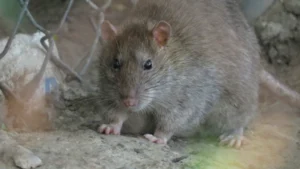
Rats make ultrasonic chirping sounds when playing that researchers call “laughter.” They also use scent marking, body language, and audible squeaks to communicate different messages.
Rat societies have social hierarchies but also cooperation.
While there’s usually a dominant rat in a group, rats also work together, share resources, and help each other. It’s not just about dominance, cooperation is common.
They teach their young important survival skills.
Mother rats teach babies what’s safe to eat, where dangers are, and how to navigate their environment. This cultural transmission of knowledge shows advanced social learning.
Rats mourn deceased companions.
When a cage mate dies, other rats show behavioral changes suggesting grief. They may become less active, eat less, and spend time near where their companion died.
They can recognize individual rats even after separation.
Rats remember other rats they’ve met and can recognize them even after months of separation. This shows sophisticated memory and social recognition abilities.
Conclusion
Rats are good for many reasons that get overlooked because of their pest reputation, including their high intelligence, important ecological roles, contributions to medical science, and capacity for empathy and social bonding.
These animals serve as prey for numerous predators, help disperse seeds, advance our medical knowledge, and even make affectionate pets for those willing to give them a chance. While wild rats in human environments cause legitimate problems, the species as a whole has value worth recognizing.
Understanding why rats are good doesn’t mean you have to welcome them into your home.
But it does help you appreciate these complex, intelligent animals and recognize that they’re more than just pests. Whether in laboratories, ecosystems, or as pets, rats contribute positively to the world in ways many people never realize.

Hi, my name is Ezra Mushala, i have been interested animals all my life. I am the main author and editor here at snakeinformer.com.