
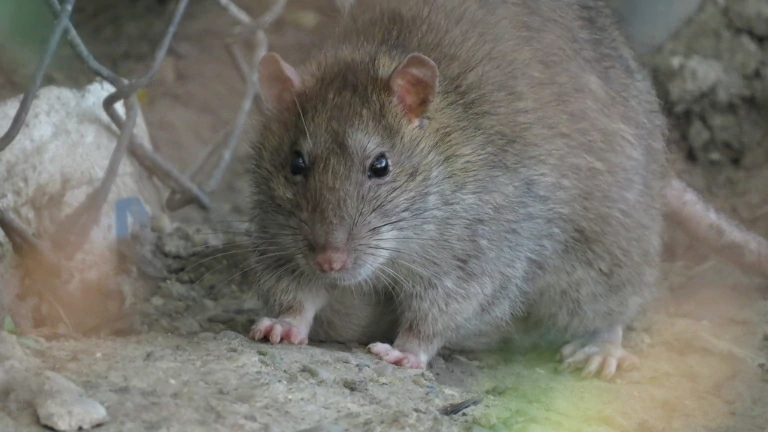
If you’ve ever looked closely at a rat, you’ve probably noticed their small, dark eyes staring back at you.
These beady black eyes are one of the most recognizable features of rats, but they actually serve some pretty interesting purposes beyond just looking a bit creepy. So why do rats have black eyes?
Rats have black eyes because of high levels of melanin (a dark pigment) in their eyes, which helps protect their sensitive vision from bright light and UV damage. The dark pigmentation is an evolutionary adaptation that benefits their nocturnal lifestyle and helps them see better in low-light conditions.
Most wild rats are active at night, so they don’t need eyes adapted for bright daylight.
The dark pigmentation in their eyes actually helps filter out harsh light that could damage their vision. This is pretty similar to how sunglasses protect your eyes from UV rays when you’re outside on a sunny day.
What Melanin Does in Rat Eyes
Melanin is the same pigment that gives color to your skin, hair, and eyes.
In rats, melanin is concentrated heavily in the iris (the colored part of the eye) and other structures inside the eye. This creates that distinctive black appearance you see when you look at a rat.
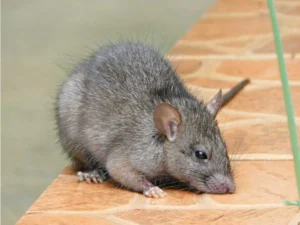
But melanin isn’t just there for looks. It actually absorbs excess light and protects the delicate tissues inside the eye from damage.
Think of it like a built-in shield that keeps harmful light rays from reaching the sensitive parts of the eye that help rats see.
The high concentration of melanin is especially helpful for rats because they have very sensitive eyes.
Their eyes are designed to pick up even tiny amounts of light in dark environments, which means they could easily be overwhelmed or damaged by bright light without this protection.
How Rat Vision Actually Works
Rats don’t see the world the way you do.
Their vision is adapted for a completely different lifestyle. While you rely heavily on your eyesight to get around, rats depend much more on their other senses like smell, hearing, and touch.

Rats are what scientists call “dichromatic,” which means they can only see two primary colors (blue and green) instead of the three that humans see.
They’re basically red-green colorblind. This is because they only have two types of color-detecting cells (called cones) in their eyes, while you have three types.
But here’s where it gets interesting. Even though rats can’t see as many colors as you, they’re really good at detecting movement and seeing in dim light.
Their eyes have a lot more rod cells (the cells that help you see in the dark) compared to cone cells. This trade-off means they sacrifice color vision and sharpness for the ability to see when there’s barely any light around.
Rats also have pretty poor depth perception because their eyes are positioned on the sides of their head.
This gives them a wide field of view (they can see almost all around them without turning their head), but it means they don’t have much binocular vision (where both eyes work together to judge distance). Still, this wide view helps them spot predators coming from almost any direction.
Why Dark Eyes Help Nocturnal Animals
Rats aren’t the only animals with dark eyes.
Many nocturnal creatures have similar dark pigmentation in their eyes for the same reasons. When you’re active at night, you need eyes that can handle both the darkness and sudden exposure to light.
The dark pigmentation acts like a built-in dimmer switch.

When a rat suddenly encounters bright light (like when you turn on a light in a room where they’ve been hiding), the melanin helps reduce the amount of light flooding into their eyes.
This prevents them from being temporarily blinded and helps protect the sensitive light-detecting cells.
Animals that are active during the day often have lighter-colored eyes because they don’t need this same level of protection.
Their eyes are already adapted to handle bright light, so they don’t need as much melanin. You can see this pattern across many different species, not just rats.
Do All Rats Have Black Eyes?
Not every single rat has completely black eyes.
While wild rats almost always have dark eyes, some fancy rats (the ones bred as pets) can have different eye colors. You might see pet rats with ruby red eyes, which is actually a lack of melanin similar to albinism.
These red-eyed rats are usually albino or have very light-colored fur.
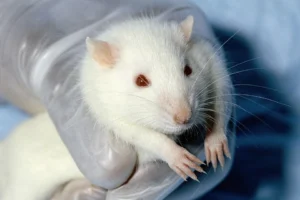
The red color you see is actually blood vessels showing through because there’s little to no pigment in the eye. These rats are much more sensitive to bright light and can have worse vision compared to their black-eyed cousins.
Some pet rats can also have what’s called “odd-eyed,” where one eye is black and the other is red or a different color.
This happens because of how certain genes are expressed during development. It doesn’t usually cause any health problems, but it does look pretty unusual.
The dark eye color in wild rats has been strongly selected for through evolution.
Rats with lighter eyes would have been at a disadvantage because they’d be more sensitive to light and might not survive as well. Over thousands of generations, the rats with the darkest, most protective eyes were the ones that survived and had babies.
How Rats Use Their Eyes to Survive
Even though rats don’t have the best eyesight, they still use their eyes in clever ways to stay alive.
Their ability to detect movement is really sharp, which helps them notice predators or other threats quickly. If something moves in their environment, they’ll spot it even if they can’t see fine details.
Rats also have a special layer in their eyes called the tapetum lucidum (which means “bright carpet” in Latin).
This reflective layer sits behind the retina and bounces light back through it, giving the light-detecting cells a second chance to absorb it.
This is why some animals’ eyes seem to glow when you shine a light at them in the dark, though this effect is less noticeable in rats than in animals like cats.
Their eyes are positioned to give them nearly 360-degree vision.
This means they can see almost everything around them without moving their head. The only blind spot is a small area directly behind them and a small area right in front of their nose.
This wide field of vision is really important for a small animal that’s constantly watching out for predators.
When rats are exploring new areas, they use their eyes along with their whiskers and sense of smell.
They’ll often move their head side to side in a scanning motion to get a better view of their surroundings. This head bobbing also helps them judge distances better, making up for their poor depth perception.
The Connection Between Eye Color and Behavior
Interestingly, eye color in rats can sometimes be linked to behavior.
Studies have shown that albino rats (with red eyes) can behave slightly differently than rats with dark eyes. Some research suggests that albino rats might be less anxious and more exploratory, though this isn’t always the case.
The reason for this possible behavioral difference isn’t completely clear.

It might be related to the same genes that control eye color also affecting brain chemistry, or it could be that rats with different vision capabilities interact with their environment differently. More research is needed to fully understand this connection.
In the wild, rats with black eyes are definitely better adapted to their environment.
They can handle the light changes they encounter when moving between dark burrows and areas with some light. Their eyes help them survive in cities, fields, forests, and just about anywhere else they’ve managed to thrive.
What This Means for Pet Rat Owners
If you have a pet rat, understanding their vision can help you take better care of them.
Rats with black eyes are generally hardier and have fewer vision problems than albino rats. But both types can make great pets if you understand their needs.
Keep in mind that all rats, regardless of eye color, are sensitive to bright light.
You shouldn’t keep their cage in direct sunlight or in a very brightly lit room. They’ll be much more comfortable in an area with moderate, indirect lighting.
If you have an albino rat with red eyes, you need to be extra careful about light exposure.
These rats can actually get eye damage from bright light more easily than black-eyed rats. Keep them in dimmer areas and avoid sudden bright lights that might hurt their eyes.
When you’re interacting with your rats, remember that they can’t see you as clearly as you can see them.
They’ll rely more on smell and sound to recognize you. Move slowly when you approach them so you don’t startle them, especially if you’re coming from their blind spot behind them.
Evolution and Rat Eye Color
The black eyes you see in rats today are the result of thousands of years of evolution.
Rats evolved from small mammals that were already mostly nocturnal, and over time, the ones with better adaptations for night vision were more successful.
Dark eyes provided multiple advantages.

They protected vision from occasional bright light, helped filter UV radiation, and supported the overall function of eyes designed for low-light conditions.
Rats with these traits were more likely to survive and have offspring, passing these genes down through generations.
In urban environments, rats have continued to thrive with their black eyes.
Cities provide plenty of dark hiding spots during the day and lots of food to find at night. The rats’ vision, combined with their excellent senses of smell and hearing, makes them perfectly suited for city life.
Interestingly, different species of rats around the world all tend to have dark eyes.
Whether you’re looking at Norway rats, black rats, or other species, the dark eye color is consistent. This shows that this trait is really important for rat survival across different environments and climates.
Comparing Rat Eyes to Other Rodents
Rats aren’t the only rodents with dark eyes, but there’s some variation among different species.
Mice, which are closely related to rats, also typically have black eyes for the same reasons. Hamsters and gerbils can have dark eyes too, though some species and color varieties have lighter eyes.
Squirrels are interesting because different species have different eye colors.

Tree squirrels often have dark eyes, while some ground squirrels might have lighter brown eyes. This probably relates to their different activity patterns and the environments where they live.
Guinea pigs and chinchillas can have various eye colors depending on their coat color and genetics.
Some have very dark eyes, while others have ruby or lighter brown eyes. Domestication has allowed for more variety in eye color in these animals compared to wild rats.
The common thread is that wild animals that are active at night or in low-light conditions tend to have darker eyes.
Domesticated animals bred in captivity often show more variety because the selective pressure for dark eyes has been removed. They’re not dealing with predators or harsh light conditions in the same way.
Conclusion
Rats have black eyes because of high melanin levels that protect their sensitive vision and support their nocturnal lifestyle.
This dark pigmentation helps filter harsh light, prevents eye damage, and works together with their other adaptations for seeing in the dark. While it might seem like a small detail, eye color actually plays a big role in helping rats survive and thrive in their environments.
Whether you’re dealing with wild rats or keeping them as pets, understanding their vision helps explain a lot about their behavior.
Their black eyes are just one piece of the puzzle that makes rats such successful and adaptable animals. The next time you see those beady black eyes looking back at you, you’ll know there’s actually some pretty cool biology behind them.

Hi, my name is Ezra Mushala, i have been interested animals all my life. I am the main author and editor here at snakeinformer.com.