
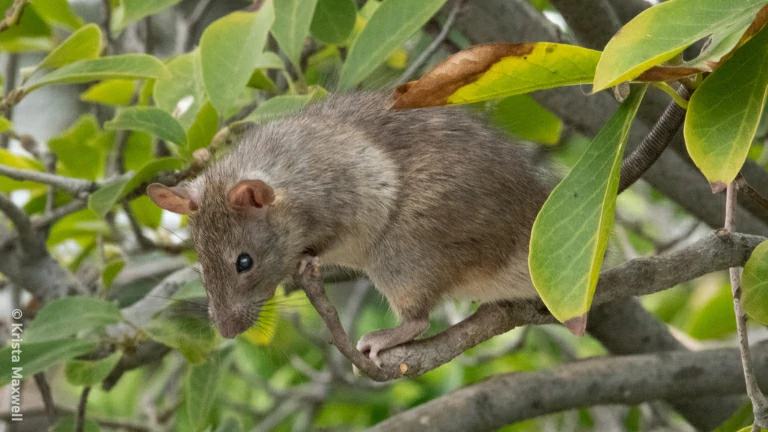
You might picture rats as creatures that only scurry along the ground or through sewers, but they’re actually excellent climbers. If you’ve ever spotted a rat high up in a tree and wondered how it got there, you’re not alone.
Many people don’t realize that rats can climb just as well as squirrels. So why do rats climb trees?
Rats climb trees to find food like fruits, nuts, and bird eggs, to escape from predators on the ground, and to find safe places to build nests. Tree climbing gives them access to resources they can’t get at ground level, and it helps them stay safe from threats.
When you see a rat in a tree, it’s usually there for a good reason. Trees offer everything rats need to survive: food sources, protection from animals that hunt them, and sheltered spots to raise their babies.
Some rat species are even better at climbing than others, and they spend most of their lives off the ground.
Rats Are Natural Climbers
Rats have bodies that are perfectly designed for climbing. Their toes have sharp claws that grip into bark, and their long tails help them balance when they’re moving along branches.
Unlike humans who need both hands to climb safely, rats can use all four legs independently. This gives them incredible control and lets them climb up vertical surfaces that seem impossible.

Their tails are especially important. A rat’s tail works like a fifth limb, wrapping around branches for extra stability. When a rat runs along a thin branch, you’ll see its tail moving constantly to keep it balanced.
Rats also have really strong leg muscles compared to their body size. They can jump up to three feet horizontally and climb straight up rough surfaces like brick walls or tree bark without any trouble.
Food Is the Main Reason Rats Climb
The biggest reason rats climb trees is to find food. Trees are basically grocery stores for rats, offering fruits, nuts, seeds, and other food sources that aren’t available on the ground.
In areas with fruit trees like orange, avocado, or fig trees, rats will climb up at night to eat ripe fruit. They’ll often take a few bites out of multiple fruits instead of eating one completely, which is why you might find partially eaten fruit still hanging on the tree.

Rats also raid bird nests for eggs and baby birds. They can smell nests from the ground and will climb up to get to them. This is really frustrating for people who put up birdhouses, because rats can easily climb up and destroy entire nests.
Nuts and seeds are another major food source. Rats will climb trees to get to acorns, walnuts, pecans, and other nuts before they fall to the ground. They’ll either eat them right there or carry them down to store for later.
Trees Offer Protection From Predators
On the ground, rats face threats from cats, dogs, coyotes, foxes, and other predators. Climbing trees gives them a huge advantage because most of these predators can’t follow them up.
When a rat feels threatened, it can run up a tree in seconds. Once it’s high enough, it’s basically safe from most ground-based predators. Even cats, which are good climbers, usually won’t chase a rat more than a few feet up a tree.
Trees also give rats escape routes that predators can’t follow. A rat can jump from one branch to another, or even leap to a nearby tree or roof. This network of aerial pathways helps them move around without ever touching the ground.
At night when rats are most active, the darkness and tree cover make them even harder for predators to spot. They can move through the branches quietly while staying hidden in the leaves.
Rats Build Nests in Trees
Many people don’t realize that rats will actually build nests high up in trees, similar to how squirrels do. These nests are made from leaves, twigs, and other materials, and they provide a safe place to sleep and raise babies.
Tree nests are appealing to rats because they’re away from ground-based predators and weather conditions. A nest 15 or 20 feet up in a tree stays drier during rain and is harder for predators to reach.
Female rats especially prefer tree nests when they’re pregnant or nursing. The elevation provides extra security for vulnerable babies, and the surrounding branches make it hard for predators to approach.
Rats will also use tree hollows (natural holes in the trunk) if they find them. These are even better than nests because they offer complete protection from weather and predators.
Roof Rats vs Norway Rats
Not all rats are equally good at climbing. The two most common rat species have very different climbing abilities.
Roof rats (also called black rats) are incredible climbers. They’re smaller and more agile than other rat species, with longer tails that help them balance. These rats actually prefer living off the ground and will choose trees and attics over ground burrows.

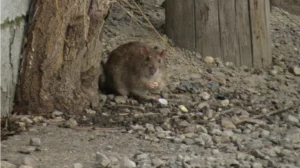
Norway rats (also called brown rats) are much bigger and heavier. They can still climb, but they’re not as good at it as roof rats. Norway rats usually stay on or near the ground and only climb when necessary.

If you see a rat moving easily through tree branches, it’s probably a roof rat. If you see a rat that looks awkward or hesitant in a tree, it’s more likely a Norway rat that climbed up for a specific reason.
How High Can Rats Climb?
Rats can climb as high as the tree allows. There’s no specific height limit, they’ll go as high as they need to reach food or safety.
Roof rats have been found nesting 30 feet or higher up in trees. They’re completely comfortable at these heights and move around just as confidently as they do on the ground.
The only thing that limits how high a rat will climb is the thickness of the branches. Once branches get too thin to support their weight, rats won’t go any further. But they’re surprisingly good at judging which branches are safe.
Rats can also climb down just as easily as they climb up. They’ll turn around and descend headfirst, using their claws to grip the bark and their tail for balance.
Trees Near Your House Are Rat Highways
One of the biggest problems with rats climbing trees is when those trees are close to your house. Rats will use tree branches as bridges to get onto your roof, into your attic, or through open windows.
If you have tree branches that touch or hang over your roof, you’re basically giving rats an easy path into your home. They’ll climb the tree and then walk right across the branches onto your roof.

Once they’re on your roof, rats can find small gaps in soffits, vents, or roof edges to get inside. Even a gap as small as half an inch is enough for a rat to squeeze through.
This is why pest control experts always recommend trimming tree branches so they’re at least 6 to 8 feet away from your house. Without that bridge, rats have a much harder time getting onto your roof.
What Attracts Rats to Specific Trees?
Rats don’t climb every tree they see. They’re attracted to trees that offer something useful, usually food.
Fruit trees are the biggest attractors. If you have citrus trees, apple trees, fig trees, or any other fruit-producing trees, you’re likely to have rats climbing them. Even if you pick the fruit regularly, rats will eat fallen fruit on the ground and climb up for fruit you missed.
Nut trees like oak, walnut, and pecan trees also attract rats. Rats love nuts because they’re high in fat and protein, and they can store them for later.
Trees with dense foliage or lots of hiding spots are more attractive to rats than sparse trees. Palm trees are particularly popular with rats because the dense fronds create perfect hiding spots and nesting areas.
Trees near water sources also attract more rats. Rats need to drink water regularly, so a tree near a pond, pool, or irrigation system is more likely to have rats climbing it.
Signs That Rats Are Climbing Your Trees
If you’re not sure whether rats are using your trees, there are several signs to look for.
The most obvious sign is seeing rat droppings on branches or around the base of the tree. Rat droppings are dark, pellet-shaped, and about the size of a grain of rice.
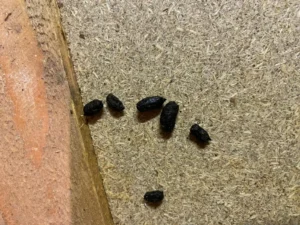
You might also notice gnaw marks on tree bark or branches. Rats will chew on bark to file their teeth down, leaving visible marks.
Partially eaten fruit still hanging on the tree is another clear sign. Rats usually take a few bites out of fruit and then move on to the next one, so you’ll find multiple damaged fruits instead of fruit completely eaten or missing.
At night, you might hear scratching or rustling sounds in your trees. Rats are most active after dark, so if you hear noises coming from your trees at night, it could be rats moving around.
If you see what looks like a nest made of leaves and twigs high up in your tree, that’s another sign. These nests look similar to squirrel nests but are usually messier.
Can Rats Climb Smooth Surfaces?
Rats are better at climbing rough surfaces like tree bark, but they can also climb some smooth surfaces if there’s any texture at all.
Brick walls, stucco, concrete blocks, and rough wood are all easy for rats to climb because their claws can find grip points. Even painted surfaces with any texture give rats enough grip to climb.
Very smooth surfaces like glass or polished metal are much harder for rats to climb. They need something for their claws to catch on, so if the surface is completely smooth, they can’t get up it.
However, rats are clever problem-solvers. If they can’t climb something directly, they’ll look for another route. They might climb a nearby rough surface and then jump across to where they want to go.
Trees Provide Moisture for Rats
Beyond food and shelter, trees also provide moisture that rats need to survive. Morning dew on leaves, sap, and fruit all contain water that rats can drink.
In dry climates, this moisture from trees can be really important for rat survival. Even if there aren’t water sources on the ground, rats can get enough moisture from eating fruit and licking dew off leaves.
Some trees also have natural hollows or spots where rainwater collects. Rats will climb up to these spots to drink, especially during dry periods when ground water sources might be limited.
How to Stop Rats From Climbing Your Trees
If you want to keep rats out of your trees, there are several things you can do.
The most effective method is installing metal tree guards around the trunk. These are smooth metal sheets that wrap around the tree trunk, usually about 2 to 3 feet high. Rats can’t climb the smooth metal, so they can’t get past it.

Trimming lower branches so the first branch is at least 4 feet off the ground also helps. This forces rats to climb the trunk to get into the tree, which is where tree guards are most effective.
Keep your yard clean of fallen fruit, nuts, and seeds. If there’s no food on the ground, rats are less likely to be attracted to your property in the first place.
You should also trim branches away from your house, power lines, fences, and other structures. Remove any “bridge” that rats could use to access your trees or your home.
Trees in Urban vs Rural Areas
Rats behave differently in trees depending on whether they’re in cities or rural areas.
In cities, rats use trees mainly as highways to get onto roofs and into buildings. Urban trees often have less food available, so rats climb them more for transportation and access than for food.

In rural or suburban areas with more fruit and nut trees, rats climb trees primarily for food. These areas usually have more natural food sources, so tree climbing is more about eating than traveling.
Urban rats also face fewer natural predators, so they might be bolder about climbing in daylight. Rural rats tend to be more cautious and stick to nighttime climbing when predators are less active.
Why Baby Rats Learn to Climb Early
Baby rats start learning to climb when they’re only a few weeks old. This skill is so important for their survival that mother rats actively teach their babies how to do it.
Young rats practice on low branches and gradually work their way higher as they get more confident. You might see juvenile rats climbing clumsily on lower parts of trees while they’re still learning.
By the time they’re fully grown, rats that live in areas with lots of trees are expert climbers. They can navigate complex branch systems in complete darkness using their whiskers and sense of touch.
This early learning is why rats are such successful climbers as adults. It’s not just instinct, it’s a learned skill that gets better with practice.
Conclusion
Rats climb trees because it gives them access to food, protection from predators, and safe nesting spots. Their bodies are perfectly designed for climbing, with sharp claws, strong legs, and long tails that help them balance.
Roof rats are especially good climbers and actually prefer living in trees and elevated spaces over ground burrows. Norway rats can also climb but usually stay closer to the ground unless they have a good reason to go up.
If you have trees near your house, it’s important to trim branches away from your roof and consider installing tree guards to prevent rats from using them as highways into your home.
Understanding why rats climb helps you protect your property more effectively and gives you a better appreciation for just how adaptable and skilled these animals really are.

Hi, my name is Ezra Mushala, i have been interested animals all my life. I am the main author and editor here at snakeinformer.com.