
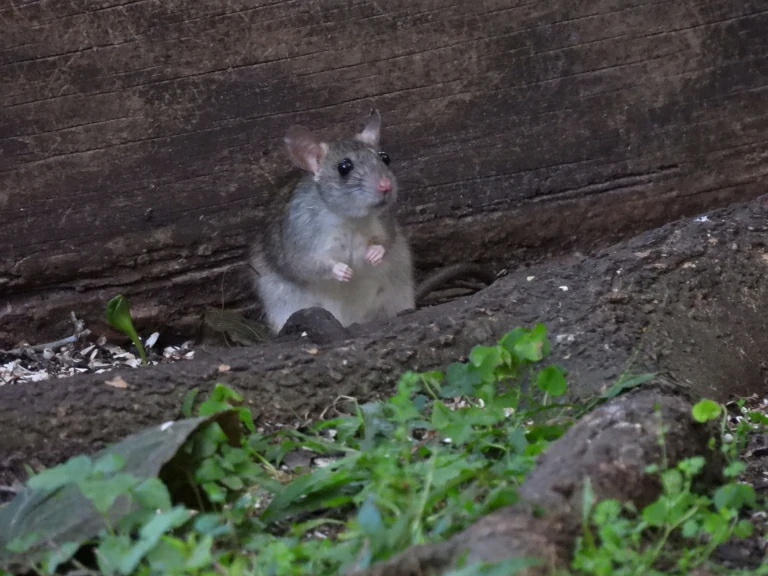
If you’ve ever watched a rat move through a space, you probably noticed it doesn’t just run across the middle of the room. Instead, it sticks close to walls, baseboards, and the edges of furniture.
This behavior is so consistent that you can actually predict where rats will travel just by looking at the walls and edges in a space. But why do rats run along walls instead of taking direct paths?
Rats run along walls because it makes them feel safer from predators. Keeping one side of their body against a wall means they only have to watch for danger from three directions instead of four. Walls also provide navigation landmarks and protection, making them the safest travel routes for rats.
This behavior is called thigmotaxis, which basically means the tendency to stay close to vertical surfaces. It’s hardwired into rat behavior and something they do instinctively.
Understanding why rats stick to walls helps you predict their movements, set better traps, and figure out where rats are traveling in your home.
How Walls Provide Protection from Predators
The main reason rats run along walls is protection from predators. In the wild, rats face constant threats from animals that want to eat them.
Running in open spaces is extremely dangerous for rats. When they’re out in the open, predators can attack from any direction: front, back, left, or right. This makes rats feel vulnerable and exposed.
Staying against a wall cuts the danger zones in half. With one side protected by the wall, rats only need to watch three directions. This gives them a much better chance of spotting danger before it’s too late.
Predatory birds like hawks and owls attack from above. When rats run along walls, especially under overhangs or near cover, they’re harder for birds to spot and grab. The wall provides some overhead protection too.
In narrow spaces between walls and furniture, rats are too cramped for larger predators to follow. Cats, dogs, and other predators can’t squeeze into the tight spaces rats use when running along walls. This gives rats escape routes that bigger animals can’t use.
The instinct to stay near walls is so strong that even pet rats in safe environments still do it. They’ve been bred in captivity for generations, but the behavior persists because it’s such a fundamental survival strategy.
How Rats Use Their Whiskers Along Walls
Rats have terrible eyesight, but their whiskers (called vibrissae) are incredibly sensitive. They use their whiskers to navigate, and walls make this much easier.
Whiskers can detect objects and surfaces through touch and air currents. When a rat runs along a wall, its whiskers stay in constant contact with the surface. This tells the rat exactly where it is and where it’s going.

Rats can navigate in complete darkness using just their whiskers. They don’t need to see the wall to follow it. The tactile feedback from their whiskers gives them all the information they need about the path ahead.
The whiskers on the side facing the wall do most of the work. As the rat runs, these whiskers brush against the wall constantly, sending signals to the rat’s brain about the surface texture, any obstacles, and changes in direction.
This navigation method is way more reliable than vision for rats. In dark basements, inside walls, or in dimly lit areas where rats are most active, whiskers work perfectly while eyes don’t help much.
If there’s a gap or opening in the wall, the rat’s whiskers detect it immediately. This is how rats find entry points, holes, and places where they can squeeze through to new areas.
Walls as Navigation Landmarks
Rats have good spatial memory and use walls as landmarks to remember routes between their nest and food sources.
Once a rat establishes a path along a wall, it will use that exact same route over and over. Rats are creatures of habit, and they prefer familiar paths where they know they’re safe.
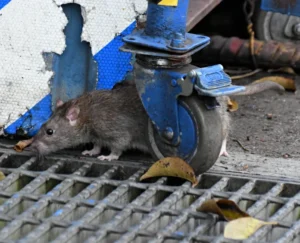
The wall itself becomes a mental map marker. When a rat is traveling, it remembers sequences like “follow this wall, turn at the corner, continue along the next wall.” This helps rats navigate complex spaces.
You can actually see evidence of rats using the same paths repeatedly. They leave grease marks on walls from the oils in their fur. The more a rat uses a particular route, the darker and more obvious these marks become.
Rats moving through walls and tight spaces rely even more on these landmarks. Inside walls, there are studs, pipes, and wires that create a maze. Following the outer wall helps rats not get lost in the maze.
In new environments, rats explore along walls first. They’ll follow the perimeter of a room before venturing into the middle. This systematic approach helps them build a mental map of the space.
Why Open Spaces Scare Rats
Understanding why rats avoid open spaces helps explain why they stick so close to walls.
Open spaces offer no cover or protection. In nature, open areas are where predators have the advantage. Birds can dive from above, and ground predators can see and chase prey easily.
Rats feel exposed and anxious in the middle of rooms. Their instincts tell them that being out in the open is dangerous, even if there are no actual predators around. The fear is hardwired.
Studies have shown that rats experience more stress in open spaces. Their heart rate increases, they move more cautiously, and they’re generally more nervous. Against a wall, they visibly relax.
This is why rats dart quickly across open areas when they have no choice. If a rat needs to cross a room to reach food, it will run as fast as possible and take the shortest route. Then it immediately heads back to the wall.
Even a small object in an open space can attract rats. A chair leg, a box, or anything that breaks up the open area gives the rat something to orient around and makes the space feel safer.
How Rats Create Travel Routes Along Walls
Rats don’t just randomly follow any wall. They establish specific routes that become their highways through your home.
The first rat to explore an area leaves a scent trail. When other rats come through, they smell this trail and follow it. Over time, more and more rats use the same path, reinforcing it with their own scent.
These scent trails are made up of urine, droppings, and oils from the rat’s fur. To us, it might not be obvious, but to other rats, it’s like a glowing neon sign saying “safe path this way.”
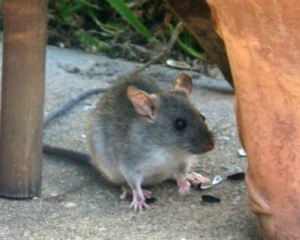
High-traffic rat routes develop along walls where there’s easy access to food and water. If you have pet food near a wall or a water source like a leaky pipe, rats will create a route directly to it.
Rats will modify their routes based on obstacles and danger. If you put a trap on their usual path, they’ll eventually find a way around it, still sticking to the wall but detouring around the trap.
You can identify rat routes by looking for signs along walls. Grease marks, droppings, urine stains, and chewed baseboards all indicate where rats are traveling regularly.
The Science Behind Thigmotaxis
Thigmotaxis is the scientific name for the behavior of staying close to walls and vertical surfaces. It’s not just rats that do this; many small prey animals show the same behavior.
The behavior is controlled by specific parts of the brain related to fear and anxiety. When these areas are activated, animals naturally seek out walls and edges. It’s an automatic response, not a conscious decision.
Researchers have tested this extensively with rats in mazes. When given a choice between running along walls or cutting across open spaces, rats choose the wall route almost every time, even if it takes longer.
Baby rats learn to follow walls within days of starting to explore outside the nest. It’s not something their parents teach them; it’s instinctive. Even rats raised alone without other rats to learn from will still follow walls.
The behavior is so strong that it persists even when there’s no actual danger. Lab rats kept in perfectly safe environments with no predators still hug walls when moving around.
Drugs that reduce anxiety in rats also reduce thigmotaxis. When researchers give rats anti-anxiety medication, they become more willing to venture into open spaces. This proves the behavior is linked to fear responses.
How to Use This Behavior for Rat Control
Knowing that rats follow walls gives you a huge advantage when trying to catch or monitor them.
Always place traps along walls, not in the middle of rooms. Rats will walk right past a trap in the middle of the floor, but they’ll run straight into one placed against a wall along their travel route.
Position traps perpendicular to the wall so the trigger is facing the path rats travel. Rats running along the wall will enter the trap naturally as they continue their route.

Look for grease marks and droppings to identify the exact spots where rats travel most. These are the best places to put traps because you know rats pass through there regularly.
Block off wall routes to funnel rats toward traps. If you can seal some paths and leave only one open route along a wall, rats will be forced to use that route and encounter your traps.
Use multiple traps along the same wall. Don’t just set one trap and hope for the best. Place several traps along the rat’s route to increase your chances of catching it.
Don’t put traps in open areas or the middle of rooms. You’re just wasting traps because rats won’t go there unless absolutely necessary. Stick to walls and edges.
Common Wall Routes in Homes
Certain areas in homes are especially common for rat travel routes because they combine walls with other attractive features.
Along kitchen walls near appliances is a hot spot. Rats love kitchens because of food, and they’ll run along walls behind or beside stoves, refrigerators, and dishwashers.
Basement walls near the foundation are major highways for rats. They can travel along the entire perimeter of a basement using these routes, and they’re hidden from view most of the time.

Behind washing machines and dryers, rats find perfect routes. These appliances are usually against walls, rarely moved, and often have gaps behind them that create protected pathways.
Along walls in garages where things are stored is another common route. Boxes, tools, and other items stored against garage walls create cover that makes rats feel even safer.
In attics, rats follow walls where the roof meets the floor. These edge spaces provide the security of a wall plus the cover of the sloped roof overhead.
Hallways are natural travel corridors for rats. Long walls with minimal furniture give rats clear routes from one end of a house to another.
Why Rats Prefer Certain Walls Over Others
Not all walls are equally attractive to rats. They choose specific walls based on several factors.
Walls with easy access to food get more traffic. If you have a pantry, kitchen, or pet food storage along a particular wall, that wall will be a major rat route.
Darker walls along shaded areas are preferred over well-lit walls. Rats feel safer in darkness, so walls in dim basements, closets, or areas without lights see more rat activity.
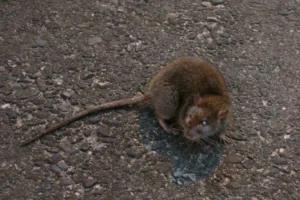
Walls with textures rats can feel easily are better for navigation. Rough walls, walls with baseboards, or walls with slight irregularities give rats more tactile feedback through their whiskers.
Exterior walls that connect to the outside are major routes. Rats often enter homes through foundations or wall gaps, and once inside, they follow that same wall to explore the rest of the space.
Walls near water sources attract more rats. Leaky pipes, water heaters, or any moisture along a wall will draw rats to that route because they need water daily.
Undisturbed walls in quiet areas get more use than walls in high-traffic areas. Rats avoid areas where humans are constantly present, so walls in rarely used rooms see more rat activity.
What Happens When Rats Can’t Follow Walls?
Sometimes rats have no choice but to cross open spaces. When this happens, their behavior changes dramatically.
Rats move much faster in open areas. They dash across at top speed to minimize the time they’re exposed. You might see a blur of movement as a rat races from one wall to another.
They stop frequently to assess danger. If a rat must cross an open space, it will pause multiple times, look around, and listen before continuing. Every few feet, it stops to check if it’s safe.
Rats take the shortest possible route across open spaces. They don’t wander or explore when exposed. They pick the quickest path from point A to point B and stick to it.
Some rats won’t cross large open spaces at all. If the open area is too big or too well-lit, rats might just avoid that part of your home entirely. They’ll find alternate routes that keep them close to walls.
This behavior is useful for rat control. If you can eliminate wall routes and force rats to cross open areas, they might abandon that part of your home as too dangerous.
Conclusion
Rats run along walls because it’s the safest way for them to travel. Walls provide protection from predators, landmarks for navigation, and tactile guidance through their whiskers.
This behavior is called thigmotaxis, and it’s hardwired into rat biology. Even rats in completely safe environments still follow walls because the instinct is so strong.
Understanding this behavior helps you predict where rats will travel and where to place traps. Always focus on walls when dealing with rats; never waste time or traps in the middle of rooms.
Look for grease marks, droppings, and other signs along walls to identify exact travel routes. These are the spots where your rat control efforts will be most effective.
The wall-following behavior is one of the most predictable things about rats, and you can use this to your advantage in getting rid of them.

Hi, my name is Ezra Mushala, i have been interested animals all my life. I am the main author and editor here at snakeinformer.com.