
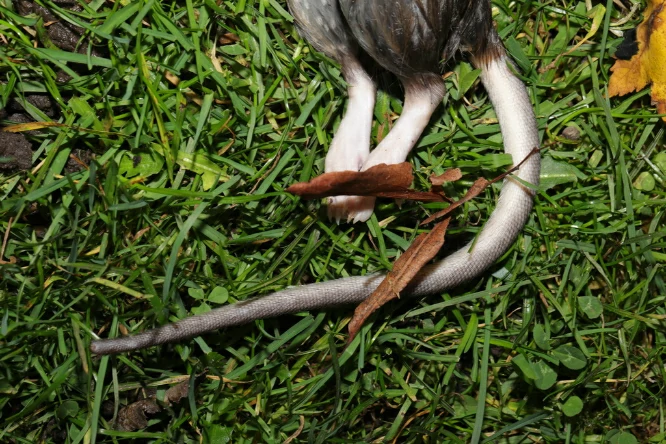
Rat tails are probably the most recognizable and, let’s be honest, the most off-putting part of these animals.
They’re long, scaly, hairless, and kind of pink or gray. A lot of people find them creepy or gross. But there’s actually a really good reason rats’ tails look the way they do. So why do rats’ tails look like that?
Rats’ tails are long, scaly, and mostly hairless because this design helps them balance, regulate body temperature, and navigate their environment. The scales provide grip, the length gives them stability, and the lack of fur helps them release heat. The tail is actually one of the most useful parts of a rat’s body.
That weird-looking tail isn’t a design flaw.
It’s actually a really well-designed tool that helps rats survive in all kinds of environments.
The Tail Helps Rats Balance
One of the main jobs of a rat’s tail is balance.
Rats are amazing climbers and jumpers. They can run across narrow pipes, walk along thin branches, and leap from one surface to another.
Without their tail, they’d fall all the time. The tail acts like a counterweight that shifts as the rat moves.
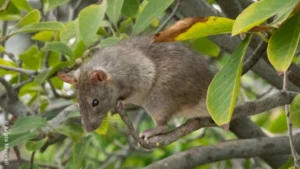
When a rat is running along something narrow, the tail moves from side to side to keep the rat steady. It’s constantly adjusting to help the rat stay balanced.
You can see this really clearly when rats are climbing. As they go up or down, the tail moves in the opposite direction of their body.
This helps distribute their weight more evenly. It’s the same principle as a tightrope walker using a long pole for balance.
The length of the tail matters too. A rat’s tail is usually about the same length as its body, sometimes even longer.
This extra length gives them more control over their balance. A shorter tail wouldn’t work as well.
Rats Use Their Tails to Regulate Temperature
Rats can’t sweat like humans do to cool down.
Instead, they use their tail to help control their body temperature. This is a really important function, especially since rats live in all kinds of climates.

The tail has a lot of blood vessels running through it, close to the surface. When a rat is too hot, blood flows to the tail.
The heat from the blood radiates out through the skin of the tail, cooling the blood down. Then the cooler blood goes back into the body.
This is why rat tails don’t have much fur. Fur would insulate the tail and stop heat from escaping.
The mostly hairless design lets heat leave the body efficiently. It’s like a built-in radiator.
In cold weather, rats can reduce blood flow to their tail to conserve heat. The tail might look paler or even slightly blue when this happens.
This prevents them from losing too much body heat through the tail. The rat can control this blood flow based on what their body needs.
The Scales Provide Grip and Protection
If you look closely at a rat’s tail, you’ll see it’s covered in scales arranged in a ring pattern.
These aren’t scales like a fish or reptile though. They’re actually just the outer layer of skin that’s hardened and organized in overlapping sections.
The scales give the tail texture, which helps with grip. When a rat wraps its tail around something (which they do surprisingly often), the scales help it hold on.
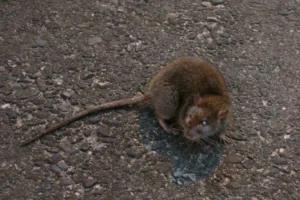
Without the scales, the tail would be too smooth and slippery. The rat wouldn’t be able to use it as effectively for gripping.
The scales also protect the tail from scrapes and minor injuries. Rats drag their tails along the ground, through dirt, and across rough surfaces.
The scales act like armor, preventing cuts and abrasions. They’re tough enough to handle this constant contact with rough stuff.
The scale pattern also allows the tail to bend and flex in all directions. If the skin was smooth, it might tear when the tail bent.
The overlapping scales can shift and move with the tail’s motion. It’s a really clever design.
Why Rat Tails Don’t Have Much Hair
The lack of fur on rat tails is totally on purpose from an evolutionary standpoint.
As we mentioned with temperature control, fur would trap heat and prevent the tail from working as a cooling system. But there are other reasons too.
Fur on the tail would collect dirt, debris, and moisture. Rats often move through tight spaces, sewers, and dirty environments.
A furry tail would get nasty really fast. It would mat up, collect waste, and potentially cause infections.
The hairless tail is much easier to keep clean. Rats groom their tails by licking them, just like they groom the rest of their body.
A smooth, mostly hairless tail is way easier to clean than a furry one would be. The rat can just run its paws and tongue along the tail to remove dirt.
There are a few tiny hairs on a rat’s tail if you look really close, but not many. Just enough to give them some sensory information.
These sparse hairs can detect touch and movement, which helps the rat know what their tail is touching or if something is touching their tail.
Rats Can Use Their Tails Like an Extra Limb
Rats have what’s called a prehensile tail, though it’s not as flexible as a monkey’s tail.
They can’t hang from their tail or pick up objects with it, but they can use it for support and stability in some situations.
When a rat is reaching for something, they’ll sometimes wrap their tail around a nearby object to anchor themselves. This gives them extra stability.

They can stretch farther and feel more secure because their tail is holding them in place. It’s like having a safety line.
Young rats especially use their tails this way. When baby rats are learning to climb and explore, their tail helps keep them from falling.
As they get older and more coordinated, they rely on it less for this purpose, but it’s still there as backup.
The tail can also help with sudden direction changes. When a rat is running and needs to turn quickly, the tail whips in the opposite direction.
This helps shift their momentum and makes the turn tighter. It’s similar to how cats use their tails when they’re jumping and turning.
The Tail Is Covered in Sensory Information
A rat’s tail has nerve endings all through it, making it a sensory organ as well as a tool.
Rats can feel when their tail touches something. This helps them navigate in tight spaces, especially in the dark.
When a rat is backing up or moving through a narrow tunnel, their tail touches the walls and floor behind them. This gives them information about the space.
They know how much room they have and whether there’s anything behind them. It’s like having eyes in the back of their head.
The tail can also detect changes in temperature and texture. If a rat’s tail touches something hot or sharp, they’ll pull it away immediately.
This protective reflex keeps the tail from getting injured. The nerves send signals to the brain faster than conscious thought.
Why Some People Find Rat Tails Gross
Let’s be real: a lot of people are creeped out by rat tails.
There are a few reasons for this. The scaly appearance reminds people of snakes, which a lot of people fear or dislike.
The combination of scales and pink skin can look diseased to some people, even though it’s totally healthy and normal for a rat.

The tail is also associated with dirt and disease because of where rats often live. Sewers, garbage, and dirty places are rat territory.
People imagine the tail dragging through all that filth, which isn’t exactly appealing. This association makes people view the tail as gross even when it’s clean.
The lack of fur makes it look more exposed and vulnerable too. We’re used to seeing furry animals.
A mostly hairless tail stands out as different and weird. Different often equals uncomfortable for a lot of people.
But if you can get past the initial reaction, rat tails are actually pretty cool from a biological perspective. They’re incredibly useful tools.
Not All Rat Tails Look the Same
While most rats have the classic scaly, pink or gray tail, there’s actually some variation.
The color can range from pink to gray to almost black, depending on the rat’s overall coloring. Darker-colored rats usually have darker tails.
Some fancy rats (domesticated rats bred as pets) have slightly different tails than wild rats. They might be a bit shorter or have less pronounced scales.
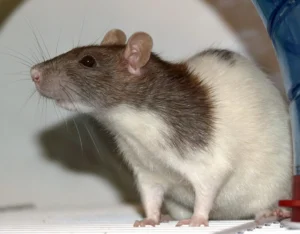
This is because of selective breeding over many generations. But the basic design is still the same.
Baby rat tails look different too. When rats are first born, their tails are really pink and the scales aren’t as visible.
As they grow, the scales become more defined and the tail gets longer. By the time they’re adults, the tail has its full scaly appearance.
Older rats sometimes have tails that look more wrinkled or darker. This is normal aging.
The skin loses some elasticity over time, just like with any animal. It doesn’t affect the tail’s function.
How Rats Keep Their Tails Clean
Even though rat tails are designed to be low-maintenance, rats still groom them regularly.
You’ll often see pet rats licking their tails and running their paws along them. This removes dirt, dead skin, and any other debris.
The scales can trap small particles, so this grooming is important. Without it, the tail could get dirty and potentially infected.
Rats are actually really clean animals despite their reputation. They spend a large part of their day grooming themselves and each other.
The tail gets just as much attention as the rest of their body. In rat colonies, rats will groom each other’s tails.
This social grooming helps keep everyone clean and also strengthens social bonds between rats. It’s a nice behavior to watch.
If a pet rat’s tail starts looking crusty, dirty, or discolored, it could be a sign of a health problem. Rats that are sick often stop grooming properly.
A healthy rat’s tail should look clean and the scales should be smooth and evenly colored (whatever color is normal for that rat).
Can Rats Survive Without Their Tail?
If a rat loses its tail due to injury, it can survive, but life becomes harder.
The rat will have trouble balancing, especially when climbing or running on narrow surfaces. They’ll fall more often and might avoid heights.
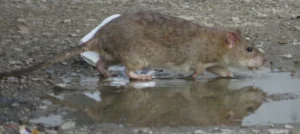
Temperature regulation also becomes more difficult. The rat loses a major way to cool down when it’s hot.
They’ll need to find other ways to manage their body heat, like staying in cooler areas or getting wet.
Some rats lose part of their tail (like the tip) due to fights, accidents, or being caught in something. Rats can adapt to partial tail loss better than complete loss.
They still have some of the tail’s function left. The remaining portion can still help with balance and temperature control.
In the wild, a rat without a tail has a lower chance of survival. The disadvantages are just too big.
But in captivity, where there are no predators and the environment is controlled, a rat can live a reasonably normal life even without a tail.
The Evolution of the Rat Tail
Rat tails evolved over millions of years to be exactly what they are today.
Early rodent ancestors had different tails, some with fur, some shorter. Over time, rats that had longer, scalier, less furry tails survived better.
They could balance better, which meant they could escape predators more effectively. They could also explore more diverse environments.
The temperature regulation feature became more important as rats spread to different climates. Rats now live everywhere from freezing cold areas to hot deserts.
Their tail helps them adapt to all these different temperatures. Natural selection favored the design we see today.
The tail also helped rats become excellent at living alongside humans. Our buildings, pipes, and structures are perfect for climbing rats.
The tail gives them the balance they need to navigate human-made environments. This adaptability is why rats have been so successful as a species.
Different Rodents Have Different Tails
Not all rodents have tails like rats.
Mice have similar tails, though usually a bit shorter in proportion to their body. The function is basically the same.
Gerbils have furry tails with a tuft at the end. Their tails serve similar purposes but they’re adapted for desert environments where they originally come from.
Squirrels have big, bushy tails that help with balance but also with warmth and communication. Their tails are very different from rat tails.

Hamsters have really short, stubby tails that don’t do much. They don’t need long tails because they’re not big climbers.
They live in burrows where a long tail would just get in the way. Each rodent’s tail evolved to fit its specific lifestyle.
Guinea pigs don’t really have visible tails at all. They’re basically tailless because they don’t climb and live in different environments than rats.
The diversity in rodent tails shows how evolution shapes body parts to fit specific needs. The rat tail is perfect for the rat lifestyle.
Tail Health in Pet Rats
If you have pet rats, you should check their tails regularly for health issues.
Look for any wounds, swelling, discoloration, or unusual bumps. These could be signs of injury or infection.
Sometimes rats get their tails caught in cage bars or bitten by cage mates. These injuries need to be cleaned and monitored.
If the wound is deep or doesn’t heal quickly, a vet visit is necessary. Tail infections can spread to the rest of the body.
Ring tail is a condition that affects baby rats. It happens when the air is too dry.
The tail becomes constricted by rings of dry skin, which can cut off circulation. If not treated, the tip of the tail can die and fall off.
Keeping humidity at proper levels (around 40-60%) prevents this. If you notice ring tail developing, increase humidity immediately and see a vet.
Tumors can also develop on rat tails, though it’s less common than tumors in other parts of the body. Any unusual growth should be checked by a vet.
Conclusion
Rats’ tails look the way they do because that design is incredibly useful for their survival.
The long, scaly, mostly hairless tail helps them balance, regulate temperature, grip surfaces, and sense their environment. It’s not gross; it’s actually a really well-adapted tool.
Understanding the function of a rat’s tail can help you appreciate these animals more, whether you’re a pet owner or just curious about wildlife. That weird-looking tail is actually pretty amazing when you know what it does.

Hi, my name is Ezra Mushala, i have been interested animals all my life. I am the main author and editor here at snakeinformer.com.