

You hear scratching in the walls at night. You find droppings in the back of a cabinet. Maybe you actually see one dart across the kitchen floor when you flip on the light.
Suddenly you’re dealing with rats in your house, and the question hits you hard. Why here? Why your house? You keep things relatively clean.
You don’t leave food sitting out. Yet somehow rats have decided your home is the perfect place to set up shop. Why do rats infest homes, and more importantly, why are rats in my house specifically?
Rats infest homes because houses provide everything they need to survive: easy access to food and water, warm shelter protected from weather and predators, and safe places to build nests and raise babies, all in close proximity without the dangers they’d face in the wild.
Your house isn’t being targeted specifically. It just happens to meet all the requirements rats look for when choosing where to live. Once they find their way in, they have no reason to leave.
What Are Rats Looking for When They Enter a Home?
Rats aren’t randomly wandering into houses for fun. They’re making calculated decisions based on survival needs, and homes check every box.
Food is the number one priority. Rats need to eat every day, and homes are packed with food sources. Your pantry, cabinets, pet food bowls, garbage cans, even crumbs on the floor are all fair game.

Water comes next. Rats need to drink daily, and homes provide easy access through leaky pipes, pet water bowls, dripping faucets, and condensation around appliances. They don’t need much, just a reliable source.
Shelter from weather is critical. Wild rats exposed to rain, snow, wind, and temperature extremes don’t live as long. Your climate-controlled house is infinitely better than anything they’d find outside.
Safety from predators matters too. Outside, rats face hawks, owls, cats, dogs, foxes, and snakes. Inside your walls, they’re protected from nearly all natural threats. It’s like having a fortress against everything that wants to eat them.
Nesting sites are easier to find in homes. Insulation, cardboard boxes, fabric, and paper provide perfect nest-building materials. Attics, basements, and wall cavities offer protected spaces to raise babies.
How Do Rats Actually Get Inside Houses?
Rats don’t need much of an opening to squeeze inside. Their bodies are more flexible than you’d think, and they’re excellent at finding weak points.
Gaps around pipes and utility lines are common entry points. When plumbers or electricians cut holes for pipes and wires, they often leave small gaps. Rats can squeeze through holes the size of a quarter if they’re determined enough.
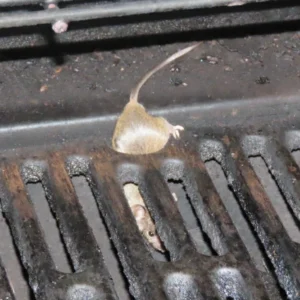
Foundation cracks develop over time as houses settle. Even small cracks can be chewed and enlarged. Rats have strong teeth that can chew through wood, plastic, and even soft concrete.
Vents without proper screening are basically invitations. Dryer vents, roof vents, and crawl space vents all provide access if they’re not properly covered with metal mesh.
Gaps under doors, especially garage doors and basement doors, give rats easy access. If you can slide a pencil under your door, a young rat can probably fit through the gap.
Roof access is more common than people think. Rats are excellent climbers. They can climb brick walls, drain pipes, and tree branches that touch or hang over the roof. Once on the roof, they look for gaps around soffits, fascia boards, or roof vents.
Why Are Some Houses More Attractive to Rats Than Others?
Not all houses have equal appeal to rats. Certain factors make some homes much more likely to be targeted than others.
Older homes typically have more entry points. Years of wear and tear create cracks, gaps, and holes that newer, tighter homes don’t have. The infrastructure just isn’t as sealed.
Houses near restaurants, grocery stores, or dumpsters are more at risk. These locations mean more rats in the general area, and some will eventually explore nearby homes.

Clutter provides hiding spots and nesting materials. Houses with lots of boxes, piles of stuff, and disorganized storage give rats places to hide and build nests. Minimalist homes are less appealing.
Poor garbage management attracts rats from blocks away. If your garbage cans are overflowing, not sealed properly, or stored too close to the house, you’re basically advertising free food.
Yards with dense vegetation give rats cover as they approach the house. Overgrown bushes right against the foundation, woodpiles, and tall grass all provide hiding spots rats use to safely scout your home.
Pet food left outside is a huge attractant. Dog bowls on the porch or cat food in the garage draw rats in. Once they’re close to the house eating pet food, they start looking for ways inside.
What Time of Year Do Rats Enter Homes Most Often?
Rats can move into homes any time, but certain seasons see more infestations than others. Understanding this pattern helps explain why rats might show up when they do.
Fall is the peak season for rats entering homes. As temperatures drop, outdoor food sources become scarce, and rats start looking for warm places to spend the winter. They’re literally preparing for winter like people do, just in your house instead of theirs.
Spring sees another increase, but for different reasons. This is breeding season, and pregnant female rats look for safe, warm places to have their babies. An attic or wall cavity is perfect for a nest.
Winter itself doesn’t see as many new infestations because rats are already settled wherever they’re going to spend the cold months. But if rats do get in during winter, they’re probably desperate and will be aggressive about staying.
Summer has fewer home infestations in many areas because outdoor conditions are good enough. Rats can find plenty of food and water outside without risking entry into occupied buildings. But in very hot climates, rats might seek air-conditioned spaces.
Why Are Rats in My House Instead of My Neighbor’s?
This is what everyone wants to know when they have rats but the house next door doesn’t. Usually it’s not about being dirty or unlucky. It’s about specific opportunities.
Your house might have an entry point theirs doesn’t. Maybe you have a gap around your dryer vent or a crack in your foundation that their house doesn’t have. Rats take the path of least resistance.
Food availability varies between houses. If you keep pet food out or have fruit trees in your yard, you’re providing attractants your neighbor isn’t. Even something as simple as a bird feeder can make a difference.

Timing and luck play roles too. Rats explore their territory constantly. Your house might have been the first one a particular rat found an entry point in. It’s not necessarily that your house is “worse” in some way.
Your house’s layout or age might matter. Older homes with more hiding spots are easier for rats to colonize successfully. Newer homes with open floor plans and less clutter are harder for rats to live in undetected.
Nearby attractants on your property specifically might be drawing rats to your area of the block. If you have compost bins, garbage issues, or ground-level water sources, rats concentrating around your property are more likely to eventually explore your house.
How Do Rats Decide Where to Nest Inside a House?
Once rats are inside, they don’t just wander randomly. They choose specific spots based on what makes a good home from their perspective.
Quiet, undisturbed areas are preferred. Rats don’t want to nest where there’s constant human activity. Attics, crawl spaces, and inside walls are perfect because people rarely go there.
Warmth attracts nesting rats. Areas near heating ducts, water heaters, or appliances that generate heat are prime real estate. This is especially true in winter.
Access to food and water determines where they stay. Rats won’t nest far from resources. If there’s food in the kitchen, they’ll try to nest as close to it as possible, maybe in the walls adjacent to the kitchen or in a nearby cabinet.
Materials for building nests influence location. If there’s insulation in the attic, cardboard boxes in the basement, or fabric in a storage area, rats will nest nearby so they can use these materials.
Height often appeals to rats. They feel safer up high where predators can’t easily reach them. Attics are especially popular for this reason. But basements work too if they provide enough hiding spots.
Can a Clean House Still Get Rats?
This is one of the biggest misconceptions about rat infestations. Cleanliness helps, but it doesn’t make you immune to rats.
Rats don’t need much food to survive. Even a spotless house has small amounts of food that fall behind appliances, crumbs in cabinets, and dry goods in the pantry. That’s more than enough for a few rats.
Entry points matter more than cleanliness. A perfectly clean house with a gap around a pipe will get rats. A slightly messy house with no entry points won’t. Access is the key factor.

Your neighbors’ habits affect you. If the house next door is attracting rats with garbage or pet food, those rats will explore your house too, regardless of how clean you keep things.
Water sources exist even in clean homes. Pipes can leak inside walls where you never see them. Condensation collects under refrigerators. These water sources are enough for rats.
The yard matters as much as the inside. A clean house with an overgrown yard full of hiding spots and fallen fruit is still at risk. Rats approach from outside, and what’s outside matters for whether they investigate the house.
How Fast Can a Rat Infestation Grow?
Understanding rat reproduction explains why a small problem can become a huge one shockingly fast. Time is not on your side when dealing with rats.
A female rat can have babies when she’s just 8 to 12 weeks old. Rats don’t waste time reaching sexual maturity. They’re ready to reproduce when they’re still barely out of infancy themselves.
Pregnancy lasts only 21 to 23 days. That’s three weeks from mating to birth. Compare that to larger mammals that carry babies for months. Rats can crank out new generations incredibly quickly.
Litters typically contain 6 to 12 babies, sometimes more. Each female can have 5 to 10 litters per year under ideal conditions. Do the math and it’s terrifying. One female can produce 60 to 120 offspring per year.

Those babies can start reproducing in just a few months. You’re not just dealing with one generation. By the time the first litter is having their own babies, mom is already on litter three or four.
Theoretically, one pair of rats could lead to hundreds within a year if conditions are perfect and nothing kills them. Real-world conditions limit this, but the growth potential is still explosive.
Why Don’t Rats Leave Once They’re Inside?
You might think rats would eventually leave on their own, but that’s not how it works. Once established, they have no incentive to go.
They’ve found a successful territory. In nature, animals don’t abandon good territory unless forced to. Your house provides food, water, and shelter reliably. Why would they leave that?
Rats are territorial once established. They defend their space against other rats and consider it home. The effort they put into establishing the territory makes them reluctant to abandon it.
Outside is dangerous from a rat’s perspective. Predators, weather, competition from other rats, and uncertain food supplies all make the outside world riskier than your house.
Babies keep them anchored. If a female has given birth and has young in a nest, she won’t leave willingly. She’s invested in that location and will defend it.
They adapt to human presence. After initial caution, rats get used to the patterns of when humans are active and when they’re not. They learn to stay hidden and only come out when it’s safe.
What Health Risks Come From Rats in the House?
Beyond the disgust and property damage, rats in your home pose genuine health risks that make getting rid of them urgent.
Diseases spread through rat droppings and urine. Hantavirus, leptospirosis, and salmonella can all be transmitted this way. You don’t even have to touch the rat. Just disturbing old droppings can release particles you breathe in.

Parasites hitch rides on rats. Fleas, ticks, and mites living on rats can spread to pets and humans. These parasites carry their own diseases, creating secondary health problems.
Contamination of food and surfaces happens constantly. Rats walk through sewers and garbage, then across your countertops and stored food. They spread bacteria everywhere they go.
Allergies and asthma can be triggered by rat dander, droppings, and urine. People with respiratory issues may find their symptoms getting worse when rats are in the house.
Bites are rare but possible, especially if you accidentally corner a rat or reach into a space where one is hiding. Rat bites can become infected and require medical treatment.
How Can You Tell Rats Are in Your House?
Sometimes the signs are obvious, but other times rats can be in your house for weeks before you realize it. Knowing what to look for helps catch problems early.
Droppings are usually the first sign people notice. Rat droppings look like dark grains of rice, about half an inch long. Finding them in cabinets, along walls, or under sinks means rats are present.
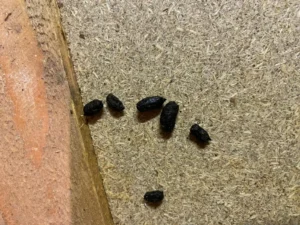
Scratching or scurrying sounds at night indicate rat activity. They’re nocturnal, so noises in walls or ceilings after dark are suspicious. The sounds might be rhythmic as they move around.
Gnaw marks appear on food packaging, wood, wires, and pipes. Rats chew constantly, and their tooth marks are distinctive. Fresh gnaw marks are lighter in color than the surrounding material.
Grease marks along walls show where rats travel repeatedly. Their oily fur leaves dark smudges on walls and baseboards along their regular routes.
Nests made of shredded paper, fabric, or insulation turn up in storage areas, behind appliances, or in walls when you’re doing repairs or moving things around.
An actual sighting is the most obvious sign, but seeing a rat usually means the infestation is already established. Rats are cautious and avoid humans when possible.
Conclusion
Rats infest homes because houses provide perfect living conditions: abundant food, reliable water, protection from weather and predators, and safe nesting sites. Your house specifically has rats because it has accessible entry points and meets these needs well enough for rats to move in.
This isn’t about you doing something wrong or being dirty. It’s about rats being incredibly good at exploiting human environments. They’ve evolved for thousands of years to live alongside us, and modern houses are just the latest version of human structures they’ve learned to colonize.
The good news is that understanding why rats are in your house tells you how to get them out and keep them out.
Remove food sources, seal entry points, eliminate nesting sites, and you make your house unsuitable for rats. They’ll move on to find somewhere that better meets their needs.
Prevention is always easier than treatment when it comes to rats. A little work now sealing gaps and managing attractants can save you from the nightmare of an active infestation later.

Hi, my name is Ezra Mushala, i have been interested animals all my life. I am the main author and editor here at snakeinformer.com.