
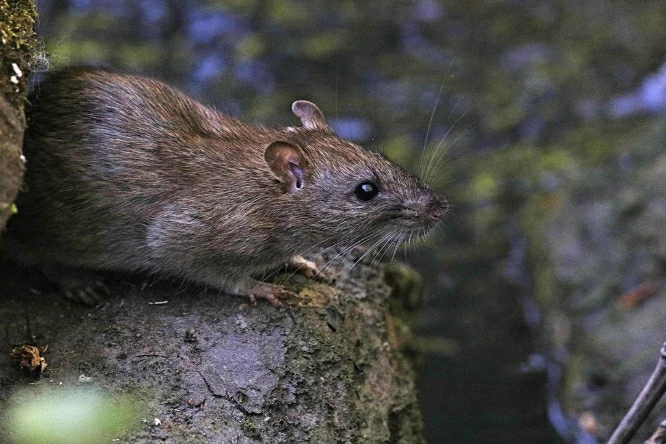
Watch a rat move around in dim light and you’ll notice something interesting. Its whiskers are constantly moving, sweeping forward and back like little antennas. They’re not just decorative.
Those long, stiff hairs sticking out from their face are doing serious work. Rats use them to gather information about their environment in ways that might seem almost magical if you don’t understand the science.
Cats have whiskers too, and so do dogs, seals, and many other mammals. But rats rely on theirs more than most animals. Why do rats have whiskers?
Rats have whiskers because they’re a main sensory tool that helps them navigate in the dark, judge distances and gaps, detect air movements and nearby objects, and build a detailed mental map of their surroundings, which is critical for survival in tight, dark spaces where vision doesn’t work well.
Their whiskers are so sensitive that they can detect tiny changes in air current and texture. For an animal that lives in sewers, walls, and underground burrows, this kind of sensory input is just as important as vision, maybe even more so.
What Are Whiskers Made Of?
Whiskers aren’t normal hairs. They’re technically called vibrissae (pronounced vie-BRISS-ee), which is just a fancy scientific word for specialized sensory hairs.
Each whisker is made of keratin, the same protein that makes up your fingernails and regular hair. But whiskers are much thicker and stiffer than regular fur. They’re embedded deeper into the skin too.
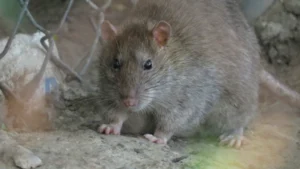
The base of each whisker sits in a special follicle (the pocket in the skin where hair grows from) that’s packed with nerve endings and blood vessels. This follicle acts like a sensor that detects even the tiniest movement of the whisker.
When something touches the whisker or even when air moves past it, the whisker bends slightly. This bending triggers the nerves at the base, which send signals to the rat’s brain. It’s like having dozens of tiny motion detectors on your face.
The whiskers themselves are tapered, meaning they’re thicker at the base and thinner at the tip. This shape makes them more sensitive to touch at the end while staying strong at the base.
Where Are a Rat’s Whiskers Located?
Most people notice the big whiskers on a rat’s snout, but rats actually have whiskers in several places. Each location serves a slightly different purpose.
The mystacial whiskers (the big ones on the muzzle) are the most obvious. Rats have about 30 to 35 of these on each side of their face, arranged in rows. These are the main navigation tools.

There are shorter whiskers above the eyes called supraorbital whiskers. These help protect the eyes by detecting objects that might poke into them. If something touches these whiskers, the rat automatically blinks or pulls back.
Some rats have whiskers on their cheeks and even a few on their wrists. The wrist whiskers are tiny but help rats sense when they’re squeezing through tight spaces.
The arrangement isn’t random either. The whiskers are positioned to create a kind of sensory field around the rat’s head. When all the whiskers are working together, the rat gets a 3D sense of nearby objects.
How Do Rats Move Their Whiskers?
Unlike human hairs, rat whiskers can move on purpose. Rats have muscles connected to the whisker follicles that let them sweep their whiskers forward, back, and to the sides.
This movement is called whisking, and it’s constant when a rat is exploring. The whiskers move back and forth several times per second, sweeping through the space ahead of the rat like radar.

When a rat is moving through a new area, the whisking gets more intense. The whiskers sweep faster and through a wider range. This helps the rat gather as much information as possible about its surroundings.
In familiar territory, the whisking slows down. The rat already knows what’s there, so it doesn’t need to scan as actively. The whiskers are still working, just not as obviously.
Rats can also move their whiskers independently on each side of their face. If something interesting is on the left, the left whiskers might become more active while the right side stays calmer.
What Information Do Whiskers Provide?
Whiskers tell rats way more than you’d think. They’re picking up multiple types of information at the same time.
Touch is the most obvious function. When a whisker bumps into something, the rat knows there’s an object there. The rat can tell how hard or soft it is based on how much the whisker bends.
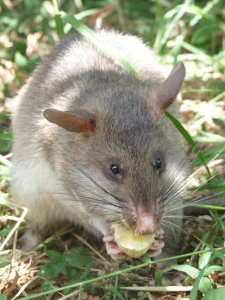
Texture comes through the whiskers too. As whiskers drag across a surface, the vibrations tell the rat whether it’s rough or smooth, sticky or slick. This helps them identify materials and surfaces.
Distance and spatial information is critical. By sweeping their whiskers and noting when they touch something, rats can judge how far away objects are. This works kind of like echolocation but with touch instead of sound.
Air currents are detected by whiskers even when nothing touches them. If there’s a wall nearby, it changes how air flows around the rat. The whiskers pick up these subtle changes and tell the rat something solid is close by.
Shape and size information comes from combining inputs from multiple whiskers. If several whiskers on top touch something but the bottom ones don’t, the rat knows it’s dealing with something tall and narrow rather than wide and flat.
Why Is Navigation in the Dark So Important for Rats?
Rats are most active at night and often live in places where there’s little or no light. Their whiskers evolved to handle these conditions.
In complete darkness, vision is useless. But whiskers work just as well in pitch black as they do in bright light. This lets rats move confidently through dark sewers, inside walls, and in underground burrows.

Dark places are also safer for rats. Predators have a harder time spotting them, and rats can move around without being seen by humans. Being able to navigate well in darkness is a huge survival advantage.
Their eyes are adapted for low light, but not for complete darkness. Whiskers fill in the gaps and provide information that vision can’t, even when there is some light available.
Many of the tight spaces rats squeeze through are dark by nature. Inside walls, under floors, in pipes. These environments select for rats with excellent whisker-based navigation skills.
How Do Whiskers Help Rats Judge Gaps and Openings?
One of the coolest things whiskers do is help rats figure out if they can fit through a space before they try to squeeze through it.
A rat’s whiskers extend out roughly as wide as its body (not counting the tail). When the rat approaches a gap or hole, it sweeps its whiskers forward to measure the opening.
If the whiskers fit through easily on both sides, the rat knows its body will probably fit. If the whiskers hit the edges, the rat knows it’s too tight and won’t waste energy trying.
This prevents rats from getting stuck, which could be deadly. A stuck rat is vulnerable to predators and can’t escape if threatened. The whiskers act as a built-in measuring system.
Young rats learn to trust their whiskers through trial and error. Occasionally a young rat will misjudge and get stuck briefly, but this teaches them to pay better attention to what their whiskers are telling them.
Can Rats Sense Objects Without Touching Them?
This sounds impossible, but whiskers can actually detect objects before making contact. It’s all about air movement.
When a rat moves forward, it pushes air ahead of it. This moving air hits objects and bounces back. The whiskers detect these air currents and can tell the rat something is nearby even before the whiskers touch it.

Water works even better for this. When rats swim (which they do surprisingly well), their whiskers detect water currents and pressure changes. They can sense fish, underwater objects, and the edges of pools or streams without touching them.
This kind of remote sensing isn’t as precise as direct touch, but it gives rats advance warning. They can slow down or change direction before they bump into something.
In experiments, rats with their whiskers cut off bumped into things much more often. They could still see, but without the advance warning from whisker-sensed air currents, they were clumsier.
What Happens If a Rat Loses Its Whiskers?
Whiskers don’t last forever. They fall out and get replaced naturally throughout a rat’s life, kind of like baby teeth. But losing all whiskers at once would be a major problem.
A rat without whiskers becomes much less confident in the dark. It moves more slowly and bumps into things. It’s like suddenly losing a sense you’ve relied on your whole life.
Balance can be affected too. Whiskers provide feedback that helps rats adjust their posture and movement. Without them, rats are slightly clumsier and less graceful.
Hunting and eating might be harder. Rats use their whiskers to locate food in the dark and to manipulate objects with their paws. Losing this sensory input makes these tasks more difficult.
Social interactions could change. Rats touch whiskers with other rats as a form of communication and recognition. A rat without whiskers might have trouble reading social cues from other rats.
Fortunately, whiskers grow back if they’re lost. Within a few weeks, new whiskers replace the old ones, and the rat’s navigation abilities return to normal.
How Do Rat Whiskers Compare to Other Animals?
Many mammals have whiskers, but rats are particularly dependent on theirs. Comparing them to other animals shows what makes rat whiskers special.
Cats have prominent whiskers too, but they rely more on vision and hearing than rats do. Cat whiskers are important, but a cat without whiskers gets by better than a rat without whiskers.

Seals have incredibly sensitive whiskers that can detect fish in murky water from far away. In some ways, seal whiskers are even more impressive than rat whiskers for underwater sensing.
Dogs have whiskers but barely use them. Most dog breeds rely overwhelmingly on smell and hearing. Their whiskers probably did more back when their wild ancestors were hunting in dens and burrows.
Mice have whiskers that work basically the same way as rat whiskers, just scaled down. They’re just as dependent on them as rats are.
Humans don’t have functional whiskers at all. We lost them somewhere in our evolutionary history because we developed better hands and vision instead. We can’t even imagine what it would be like to sense the world through whiskers.
Do Whiskers Help With Social Behavior?
Rats are social animals that live in groups. Their whiskers play a role in how they interact with each other.
When two rats meet, they often touch whiskers. This is part of how they recognize individuals and gather information about each other. It’s like shaking hands but more informative.
Whisker touching helps establish dominance hierarchies. Dominant rats might push their whiskers forward aggressively, while submissive rats pull theirs back. It’s subtle body language that matters in rat society.

Mother rats use their whiskers to keep track of babies in the nest. When babies are tiny and can’t see well yet, mom can locate them in the dark by sweeping her whiskers across the nest area.
Play fighting between rats involves a lot of whisker contact. Young rats in particular use whiskers to gauge distance and position when they’re roughhousing with siblings.
Grooming behaviors include whisker maintenance. Rats will clean each other’s whiskers as part of social bonding. This keeps the whiskers working properly and strengthens social connections.
How Does the Brain Process Whisker Information?
The whisker system is so important to rats that a huge portion of their brain is dedicated to processing whisker signals.
Each whisker has its own representation in the brain. Scientists can actually map out which part of the brain corresponds to which whisker. This creates a detailed whisker map in the rat’s head.
The barrel cortex is a special part of the rat brain that only processes whisker information. It’s called that because under a microscope, the cells are arranged in little barrel-shaped clusters, one for each major whisker.
Information from the whiskers is processed incredibly fast. The time between a whisker touching something and the rat’s brain knowing about it is just a few milliseconds. This speed is critical for navigation and quick reactions.
The brain combines information from all the whiskers to create a unified picture of the environment. It’s not just processing each whisker separately but building a 3D map from all the inputs together.
Memory and learning involve the whisker system too. Rats can remember the texture and shape of objects they’ve touched with their whiskers, even weeks later. This helps them navigate familiar territory more efficiently.
Can Rats Survive Without Good Whisker Function?
In the wild, a rat with damaged or missing whiskers would be at a serious disadvantage. Survival would be much harder.
Finding food would take longer. Without whiskers, rats can’t efficiently locate food in the dark or identify edible items by texture. They’d have to rely more on smell and vision, which don’t work as well in their usual environments.
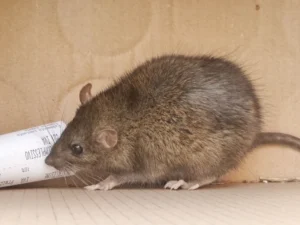
Avoiding predators would be riskier. Rats use whiskers to sense approaching threats and to navigate escape routes in the dark. Without them, they’d be more likely to run into dead ends or fail to detect danger until it’s too late.
Reproduction might suffer too. Males use whiskers during mating behavior, and females use them to care for babies. Rats with poor whisker function might be less successful at passing on their genes.
In captivity, pet rats can get by with damaged whiskers better than wild rats. The environment is safer, food is provided, and there are no predators. But even pet rats with whisker problems show more anxiety and clumsiness.
Do Whiskers Change as Rats Age?
Like the rest of the body, whiskers go through changes as rats get older. These changes can affect how well they work.
Young rats have thinner, more flexible whiskers. As rats mature, their whiskers get thicker and stiffer. This probably makes them more sensitive and useful for navigation.
In very old rats, whiskers might become more brittle. They break more easily and might not transmit sensation as effectively. This is one of several reasons why old rats sometimes seem more cautious and move more slowly.
The number of whiskers can decrease slightly with age. Not dramatically, but older rats might have a few fewer whiskers than young adults. This doesn’t usually cause major problems unless many are missing.
The nerve endings at the base of whiskers might become less sensitive in old age, similar to how other senses decline. This would make the whiskers less effective even if they’re physically intact.
Conclusion
Rats have whiskers because they’re an incredibly effective sensory system for animals that live in tight, dark spaces where vision doesn’t work well. Each whisker is a sophisticated sensor that detects touch, texture, distance, and even air currents.
These aren’t just decorative hairs. They’re precision instruments that feed detailed information to a brain that’s specifically designed to process whisker signals. For rats, whiskers are as important as eyes are for humans.
The whisker system evolved over millions of years to solve specific problems that rats face: navigating in darkness, squeezing through tight spaces, detecting threats, finding food, and interacting with other rats. It does all these jobs remarkably well.
Understanding why rats have whiskers and what they do with them gives us insight into how these animals experience the world.
They’re not just seeing and smelling their environment. They’re constantly touching and sensing it through dozens of mobile, sensitive hairs that we can barely imagine using.

Hi, my name is Ezra Mushala, i have been interested animals all my life. I am the main author and editor here at snakeinformer.com.