
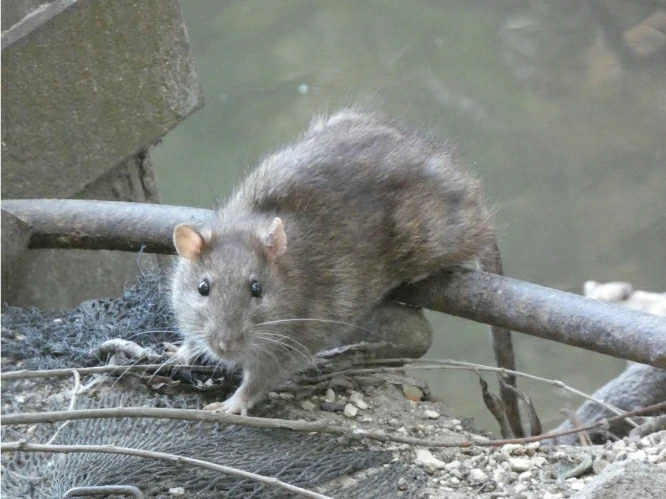
The relationship between cats and rats is one of the most famous predator-prey dynamics in the animal kingdom.
We’ve all heard that cats are natural rat hunters, and there’s a reason people have kept cats around for thousands of years specifically to control rodent populations.
If you’ve ever watched a rat’s reaction to a cat, you know the fear is very real. But why do rats fear cats so much?
Rats fear cats because cats are natural predators that have hunted rats for millions of years. This fear is both learned and instinctive. Rats can smell, hear, and sense cats, and these cues trigger an immediate fear response that tells them to hide or run. Cats have the size, speed, hunting skills, and weapons to kill rats easily, making them one of the most dangerous predators rats face.
This fear isn’t just about cats being bigger or more aggressive. It’s built into the rat’s biology through evolution.
Rats that were better at detecting and avoiding cats survived longer and had more babies, passing down this survival instinct to future generations. Today, even rats that have never seen a cat in their lives will react with fear to cat-related cues.
The Evolutionary History Between Cats and Rats
Cats and rats have been locked in a predator-prey relationship for millions of years. This long history has shaped both species in fundamental ways.
Cats evolved specialized hunting skills for catching small, fast-moving prey like rats. Rats evolved specialized fear responses and avoidance behaviors to escape cats.
This evolutionary arms race created what scientists call “coevolution,” where two species evolve in response to each other. As cats became better hunters, rats that were more cautious and fearful survived.
As rats became better at hiding and escaping, cats that were more skilled and persistent hunters survived.
The result is that modern rats have deeply ingrained instincts that tell them cats are dangerous.
This isn’t something rats need to learn through experience, though experience can strengthen the fear. It’s hardwired into their nervous system.
Research has shown that rats have specific neural pathways in their brains that respond to predator cues.
When these pathways are activated by the sight, sound, or smell of a cat, the rat’s body automatically prepares to flee or freeze.
How Rats Detect Cats Before They Attack
Rats have several sophisticated senses that help them detect cats before an attack happens. Their survival depends on noticing cats early enough to escape, so evolution has given rats some impressive detection abilities.
Smell is probably the most important sense for detecting cats. Rats have an incredibly powerful sense of smell, and they can detect specific chemical compounds in cat urine and cat saliva.
These compounds include proteins that are unique to cats and trigger fear responses in rats.

Studies have shown that rats will avoid areas where cat urine has been placed, even if there’s no cat present. Just the smell is enough to tell rats that a cat has been in the area and might return. This allows rats to avoid dangerous areas entirely.
Rats can also hear cats. Their hearing is sensitive to a wide range of frequencies, including some ultrasonic sounds that humans can’t hear.
They can detect the soft padding of cat paws on various surfaces, the rustling of a cat moving through vegetation, and the breathing sounds cats make while hunting.
Vision plays a role too, though rats don’t have great eyesight overall. They’re better at detecting movement than details, which actually works well for spotting cats.
A stalking cat creates subtle movements that rats can pick up on, even in low light conditions where rats are most active.
What Makes Cats Such Effective Rat Predators
Cats are purpose-built killing machines when it comes to hunting rats. Their body structure, senses, and instincts all work together to make them incredibly dangerous predators for rats.
Cats have retractable claws that stay sharp because they’re not worn down by walking. These claws can grip and hold struggling prey, making it nearly impossible for a rat to escape once caught.

Their teeth are designed for delivering killing bites, with long canine teeth that can pierce vital organs or sever the spinal cord.
A cat’s flexible spine and powerful hind legs give them explosive acceleration and the ability to pounce from a standstill.
They can leap several times their own body length to catch fleeing prey. Their reflexes are incredibly fast, with reaction times measured in milliseconds.
Cats also have excellent senses for hunting. Their night vision is much better than a rat’s, giving them a huge advantage during nighttime hours when rats are most active.
Their hearing can pinpoint the location of sounds with remarkable accuracy, letting them track rats they can’t even see.
Perhaps most importantly, cats are patient hunters. They’ll wait motionless for long periods, watching for the perfect moment to strike.
This patience combined with their explosive speed makes them extremely dangerous to rats.
The Chemical Fear Signal in Cat Urine
One of the most fascinating aspects of rat fear is their response to a specific protein found in cat urine. This protein is called Fel d 4, and it’s part of a larger group of proteins that cats produce.
When rats smell this protein, it triggers an immediate fear response in their brain. The rats don’t need to learn that this smell means danger.
The response is automatic and instinctive, similar to how humans instinctively pull their hand away from something hot.
Scientists have studied this response in laboratory settings and found that rats exposed to cat urine show increased stress hormone levels, elevated heart rates, and behavioral changes like freezing or seeking shelter.
These responses happen even in rats that have been bred in laboratories for generations and have never encountered a cat.
Interestingly, this fear response isn’t triggered by urine from other predators in the same way.
Rats can smell the difference between cat urine and dog urine or fox urine, and the cat urine produces a stronger fear response. This suggests that rats have evolved a specific sensitivity to cats as predators.
How Rats Change Their Behavior Around Cats
When rats detect cat presence, either through smell, sound, or sight, their behavior changes dramatically. These behavioral changes are all about survival and reducing the chance of being caught.
First, rats become much more cautious. They move more slowly and carefully, pausing frequently to listen and smell the air. They stick closer to walls and cover rather than venturing into open spaces where they’d be vulnerable.
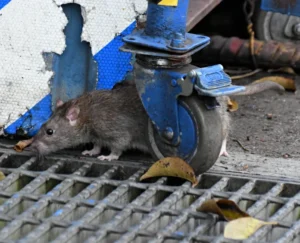
Rats also change when they’re active. If cats are hunting in an area at certain times, rats will adjust their schedules to avoid those times. For example, if a cat patrols an area at dusk, rats might wait until later at night to come out and forage.
Feeding behavior changes too. Rats normally prefer to eat in the open where they can watch for predators while feeding, but when cats are around, they’ll grab food and take it back to their burrows to eat in safety. This is slower and less efficient, but it’s safer.
Social behavior also shifts. Rats might huddle together more when they detect cat scent, finding safety in numbers. Or they might spread out more to avoid having the whole colony in one vulnerable location.
The Freeze Response vs. The Flight Response
When a rat comes face-to-face with a cat, it has two main options: freeze or flee. The choice depends on the situation and happens instinctively in a split second.
Freezing is useful when the cat hasn’t noticed the rat yet. Cats are very sensitive to movement, and a motionless rat might go undetected, especially if the rat is in shadow or against a background that helps it blend in.
Rats will often freeze completely, not even breathing visibly, hoping the cat will pass by.
However, if the cat has already spotted the rat or is too close for freezing to work, the rat switches to flight mode. Rats are surprisingly fast and agile.
They can run at speeds up to 8 to 10 miles per hour and can change direction instantly. They’ll run for the nearest cover, whether it’s a hole, a crack in a wall, or dense vegetation.
Rats can also climb, jump, and swim when escaping from cats. They’ll use whatever escape route is available. A rat can squeeze through openings as small as a quarter, which gives them access to escape routes that cats can’t follow.
The decision to freeze or flee happens in the amygdala, the fear center of the rat’s brain. This part of the brain processes predator cues and triggers the appropriate survival response before the rat consciously “decides” what to do.
Why Some Rats Seem Less Afraid of Cats
While most rats show strong fear responses to cats, you might notice that some rats seem bolder or less afraid. This variation exists because individual rats have different personalities and experiences.
In areas where cats and rats coexist but cats aren’t actively hunting (for example, well-fed pet cats that don’t bother hunting), rats might learn through experience that these particular cats aren’t dangerous.
This doesn’t mean the rats have lost their fear of cats in general, just that they’ve learned these specific cats aren’t threats.
Some rats are naturally bolder than others due to genetic variation. Just like people have different levels of anxiety and fear, rats have individual differences in how reactive they are to threats. Bolder rats might take more risks and not flee as quickly when they detect cat scent.
Rats that are starving or desperate for resources might also override their fear responses. The drive to find food can be strong enough to make rats venture into areas they know are dangerous. It’s not that they’re not afraid, but hunger is temporarily overriding the fear.
In areas with very high rat populations and limited cat populations, rats might become somewhat habituated to cat presence simply because avoiding cats all the time would mean never being able to forage or live normally.
The Impact of Domestication on This Relationship
Interestingly, domestication has changed both cats and rats in ways that affect this predator-prey relationship.
Modern house cats are descended from wild cats that were incredibly effective hunters, but thousands of years of domestication have produced some cats that have reduced hunting instincts.
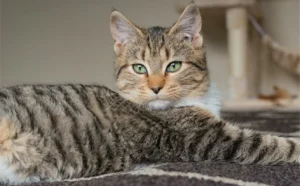
Pet cats that are well-fed might not bother hunting rats even when opportunities arise. They might show interest in rats as moving objects to play with, but not actually try to kill and eat them.
However, even these cats can trigger fear responses in rats just by their presence and scent.
Similarly, fancy rats (pet rats) that have been bred in captivity for generations might show somewhat reduced fear responses compared to wild rats.
But even fancy rats will typically react with fear to cat scent or cat presence, showing that this instinct is still very much alive.
Some cat breeds have been specifically bred for hunting ability and maintain strong rat-hunting instincts. Working farm cats, for example, are often selected for their mousing ability across generations, keeping their predatory skills sharp.
How Cat Presence Affects Rat Populations
The presence of cats in an area has measurable effects on rat populations. Buildings, farms, or neighborhoods with active cat populations typically have fewer rats than similar areas without cats.
This happens through two mechanisms. First is direct predation. Cats kill rats, reducing the population. But second, and often more important, is what scientists call the “landscape of fear.”
This refers to how rats modify their behavior and habitat use to avoid cats, which can limit their reproductive success even without direct killing.
Rats that are constantly stressed by cat presence don’t reproduce as well. They spend more time hiding and less time foraging, which can reduce their body condition.
Pregnant or nursing females might abandon nests if they detect cats nearby. Young rats might not survive as well if their mothers are too stressed to care for them properly.
However, it’s important to note that cats alone won’t eliminate a rat problem if the underlying conditions that attract rats (food, water, shelter) are still present.
Rats can adjust to cat presence over time, and in areas with abundant resources, rat populations can persist despite active cat hunting.
The Public Health Angle of Cat-Rat Dynamics
The relationship between cats and rats has important implications for public health. Rats carry diseases that can be transmitted to humans, including leptospirosis, hantavirus, and plague.
Anything that reduces rat populations or limits rat contact with human food and living spaces can help reduce disease transmission.
Historically, cats have been valued specifically for this public health benefit. Before modern pest control methods, cats were one of the few effective tools for controlling rats in granaries, food storage areas, and homes.
However, the relationship is complicated. Cats themselves can carry diseases, some of which can be transmitted to humans.
And in some environments, free-roaming cats can have negative effects on wildlife, particularly bird populations.
Modern pest control approaches use integrated strategies that might include cats as one component along with sanitation, exclusion (sealing entry points), trapping, and other methods.
Relying solely on cats for rat control isn’t considered best practice anymore, but cats can still play a supporting role.
Conclusion
Rats fear cats because this fear has been hardwired into them through millions of years of evolution.
Cats are one of the most effective predators rats face, with specialized senses, hunting skills, and physical abilities that make them incredibly dangerous to rats.
This fear is triggered by multiple cues including cat scent, sounds, and visual presence, and it causes rats to change their behavior in ways that help them survive.
Even in modern environments where both cats and rats have been partially domesticated, this ancient predator-prey relationship persists.
Rats still react with instinctive fear to cat presence, and cats still possess the hunting instincts that make them effective rat predators.
Understanding this relationship helps explain rat behavior and provides insight into natural pest control methods that have worked for thousands of years.

Hi, my name is Ezra Mushala, i have been interested animals all my life. I am the main author and editor here at snakeinformer.com.