
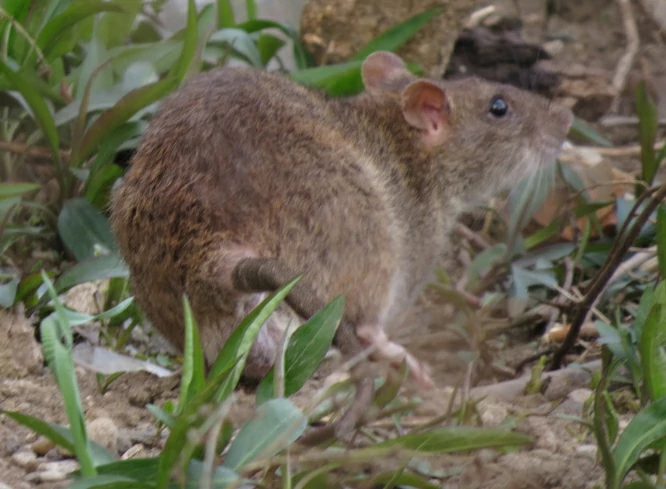
If you’ve ever kept pet rats or seen wild rats interacting, you’ve probably noticed that they don’t always get along peacefully. Rats will sometimes fight each other, and these fights can range from brief scuffles to serious battles that result in injuries.
It might seem strange that rats would attack their own species, especially since they’re social animals that live in groups. So why do rats fight each other?
Rats fight each other to establish social rank, defend their territory, compete for food and mates, or protect their young. These fights are usually about resources and social status within the group. While some fighting is normal and helps maintain order in rat colonies, serious fights can happen when resources are scarce or when unfamiliar rats meet.
Fighting between rats serves important social and survival purposes. It’s not random violence. These conflicts help rats figure out who’s in charge, who gets first access to food, who gets to mate, and who controls valuable territory.
Understanding why rats fight can help you prevent problems if you keep pet rats, and it can give you insight into how wild rat colonies function.
Establishing the Social Hierarchy
Rats live in complex social groups with clear hierarchies. Some rats are dominant (the “alphas”), some are in the middle of the social ladder, and some are subordinate (lower-ranking).
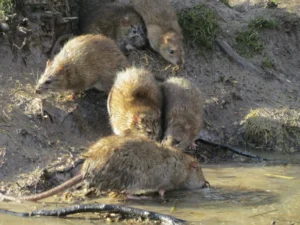
These positions aren’t decided through democracy or negotiation. They’re established through physical confrontation.
When rats first meet or when a new rat joins an existing group, there’s usually a period of testing where rats push each other around to figure out who’s stronger and more assertive.
This often involves wrestling, boxing with their front paws, and chasing. The rat that wins these confrontations becomes the more dominant animal.
Once the hierarchy is established, there’s usually less fighting because every rat knows its place. The dominant rats get benefits like first access to food, better sleeping spots, and mating opportunities.
Lower-ranking rats accept their position and avoid challenging the dominant rats most of the time.
However, this hierarchy isn’t permanent. Rats will occasionally test the social order again, especially if a dominant rat shows signs of weakness, age, or illness.
Young rats that are growing and getting stronger might challenge older rats for higher positions.
Territory Defense and Competition
Rats are highly territorial animals. A rat colony will claim a specific area as their territory and defend it aggressively against rats from other colonies.
If a strange rat enters another colony’s territory, the resident rats will often attack the intruder.
These territorial fights can be extremely violent. Rats defending their home territory will gang up on intruders, biting and chasing them. The intruder rat is usually seriously injured or killed unless it can escape quickly.
Within a single colony, rats might also fight over smaller territories or valuable resources within the larger group territory. For example, a rat might claim a particularly good nesting spot and defend it from other rats in the colony
. Or a rat might guard a food source and attack other rats that try to access it.
In the wild, territory size depends on how much food is available. When food is plentiful, rats can afford to share territory peacefully. When food is scarce, territorial disputes increase and fighting becomes more common.
Competition for Food Resources
Food is one of the biggest triggers for fights between rats. When food is limited, rats become much more aggressive toward each other because access to food is literally a matter of survival.
Dominant rats usually eat first when food is found. If a lower-ranking rat tries to eat while a dominant rat is feeding, it might get bitten or chased away.
This is especially common when the food source is small or concentrated in one location.
In laboratory settings where pet rats are kept, fights over food are less common because the rats are fed regularly and food is usually plentiful.
But even pet rats will sometimes squabble over particularly desirable treats or new foods they’re excited about.
Interestingly, rats will also fight to protect food they’ve cached (stored) for later. If a rat hides food in a secret spot and another rat tries to steal it, a fight often breaks out.
Rats have good memories for where they’ve hidden food, and they’ll defend those caches aggressively.
Mating Competition Between Male Rats
Male rats (called bucks) will fight with other males when females (called does) are available for mating. This competition is especially fierce when a female goes into heat (becomes receptive to mating).
These fights between males can be brutal. Male rats will bite, scratch, and wrestle with rivals. They target vulnerable areas like the back, sides, and rear end.
The goal is to make the other male retreat and acknowledge defeat.
The winner of these fights gets mating access to the female. In rat colonies with multiple males, usually only the most dominant males successfully mate, while lower-ranking males get excluded or have to wait for opportunities when the dominant males aren’t around.
Male rats also sometimes fight over pregnant females or females that have recently given birth. Even though these females aren’t ready to mate immediately, males might compete for the chance to be near them when they do become receptive again.
Female rats can also fight with each other, though it’s less common than male-male fighting. Females might compete for nesting sites, especially when they’re pregnant or have babies. A female with young will aggressively defend her nest from other rats.
Maternal Aggression and Protection of Young
Female rats with babies become extremely aggressive, even toward rats they normally get along with. This maternal aggression is a protective instinct that helps keep the babies safe from potential threats.
A mother rat will attack any rat (male or female) that comes too close to her nest. She doesn’t care if it’s a rat from her own colony or a mate she was friendly with before. Her priority is protecting her vulnerable babies.
This is especially important because rats (particularly males) sometimes kill and eat babies that aren’t theirs. This behavior, called infanticide, happens for various reasons.
Sometimes males kill babies to bring the mother back into heat sooner. Sometimes rats kill babies during resource shortages to reduce competition.
Because this threat is real, mother rats are hyper-vigilant and aggressive during the first few weeks after giving birth. As the babies get older and more independent, the mother’s aggression usually decreases.
Stress and Overcrowding Effects
When rats are kept in overcrowded conditions, fighting increases dramatically. Rats need personal space, and when too many rats are forced into a small area, stress levels rise and aggression becomes more common.
Overcrowding creates competition for all resources, including sleeping spots, food, water, and even fresh air. Rats in crowded conditions can’t establish normal territories or hierarchies, which leads to constant conflict and fighting.
This is a major problem in situations like rat infestations in buildings where populations boom without enough space. Rats in these situations are under chronic stress, and the constant fighting weakens the entire colony.
Rats become more prone to disease, injuries, and early death.
In pet rat situations, overcrowding happens when people keep too many rats in too small of a cage. Pet rat experts recommend a minimum of 2 cubic feet of cage space per rat, and more is always better. Without adequate space, even normally friendly pet rats will start fighting.
Stress from other sources can also trigger fighting. Loud noises, predator presence, sudden environmental changes, or illness can all make rats more irritable and aggressive toward each other.
Age-Related Fighting Patterns
The age of rats affects how and why they fight. Young rats (pups and juveniles) engage in play fighting, which looks aggressive but is actually social learning.
They’re practicing fighting techniques, testing their strength, and figuring out social dynamics without seriously hurting each other.

This play fighting is normal and healthy. You can tell it’s play rather than real fighting because the rats take turns “winning,” there’s no serious biting, and they don’t show signs of stress or fear.
As rats mature and reach sexual maturity (around 5 to 6 months old), their fighting becomes more serious. This is when hormones kick in and rats start competing for real stakes like mating opportunities and territory.
Older rats sometimes fight less because they’ve already established their position in the social hierarchy and don’t need to keep proving themselves.
However, elderly rats might also become targets for younger, stronger rats that see them as easy to overthrow.
How Rats Fight and What Injuries Result
When rats fight, they use several techniques. They’ll box with their front paws, standing on their hind legs and striking at each other. They’ll wrestle and roll around, trying to pin each other down. Most dangerously, they’ll bite.
Rat bites during fights typically target the back, sides, base of the tail, and rear end. These are vulnerable areas that the defending rat can’t easily protect.
Dominant rats attack from behind or from the side, where they have the advantage.
The injuries from rat fights can range from minor to severe. Minor fights might leave small scratches or superficial bite marks that heal quickly.
Serious fights can cause deep puncture wounds, torn skin, damaged tails, eye injuries, or even broken bones.
One particularly common injury is damage to the tail. Rats will sometimes bite and pull on each other’s tails during fights, which can cause the skin to strip off the tail (called degloving). This is extremely painful and requires veterinary treatment in pet rats.
Wounds from rat fights can easily become infected because rat mouths contain bacteria. Even a small bite can lead to abscesses (pockets of pus under the skin) that need medical treatment.
The Difference Between Play and Real Fighting
It’s important to be able to tell the difference between play fighting and real fighting, especially if you keep pet rats. Play fighting is normal social behavior, but real fighting can cause injuries and needs to be stopped.
During play fighting, rats don’t make aggressive vocalizations. Real fighting often includes loud squeaking, screaming, or chattering sounds.
Play fighting involves both rats participating willingly, while in real fighting one rat is clearly trying to escape or defend itself.
In play fighting, the rats will switch roles, taking turns being the “aggressor” and the “defender.” In real fighting, one rat consistently dominates and attacks while the other tries to get away.
Body language is also different. Play fighting rats have relaxed body postures and will often pause to rest before continuing.
Real fighting rats have tense, stiff bodies, and the fighting is continuous and intense until one rat escapes or submits.
Preventing Fights in Pet Rat Colonies
If you keep pet rats, there are several strategies you can use to minimize fighting and keep your rats safe. The most important is providing adequate space. Overcrowding is one of the biggest causes of fighting in pet rats.
Make sure your rats have multiple food and water sources so they don’t need to compete. Offer treats scattered in different areas rather than in one spot.
Provide multiple hiding spots and sleeping areas so rats can get away from each other when needed.
When introducing new rats to an existing colony, do it gradually. Never just throw a new rat into a cage with established residents. Instead, use a process called “introductions” where rats meet in neutral territory first, then gradually increase their time together.
Neutering male rats can significantly reduce fighting related to hormones and mating competition. Neutered males are usually calmer and less aggressive toward other rats.
Watch for early signs of conflict, like one rat constantly chasing another, mounting behaviors, or food guarding. Address these issues before they escalate into serious fights.
When to Separate Fighting Rats
Sometimes rats simply can’t live together peacefully, and separation is necessary for their safety. If rats are causing injuries to each other despite your efforts to reduce conflict, they need to be housed separately.
Repeated serious fights that draw blood, fights where one rat won’t stop attacking even after the other submits, or fights that happen constantly throughout
the day are all signs that rats should be separated.
Some rats are just incompatible. This is especially common with adult rats that didn’t grow up together or rats that have had bad experiences with other rats in the past.
Forcing incompatible rats to live together creates chronic stress and risks serious injury.
However, don’t separate rats at the first sign of conflict. Some pushing and shoving is normal when establishing hierarchy. Give the rats time to work things out unless someone is getting hurt.
The Role of Smell in Rat Conflicts
Rats use scent marking to communicate and establish territory, and this plays a role in fighting behavior. Rats have scent glands that they use to mark their territory with their unique smell.
They also leave scent trails through urine.
When a rat encounters an unfamiliar scent in their territory, it can trigger aggressive behavior. This is why introducing new rats is tricky. The new rat smells different and represents a potential threat to the established rats.
You can sometimes reduce fighting during introductions by using scent swapping. This involves rubbing bedding from one rat’s cage on rats from another cage, gradually getting them used to each other’s scent before they meet face-to-face.
Rats also use scent to recognize individuals. If a rat’s scent changes (for example, if it’s been to the vet and picked up new smells), other rats might not recognize it immediately and could react aggressively until they figure out who it is.
Conclusion
Rats fight each other for many reasons, including establishing social rank, defending territory, competing for food and mates, and protecting their young.
While some level of conflict is normal in rat colonies and helps maintain social order, serious fighting usually indicates problems like overcrowding, resource scarcity, or incompatible personalities.
Understanding the causes of rat fighting can help you create better living conditions for pet rats and can give you insight into wild rat behavior.
The key is recognizing the difference between normal social interactions and dangerous aggression, then addressing the underlying causes rather than just separating rats at the first sign of conflict.
Proper space, adequate resources, and careful introductions can prevent most serious fighting and keep rat colonies peaceful.

Hi, my name is Ezra Mushala, i have been interested animals all my life. I am the main author and editor here at snakeinformer.com.