
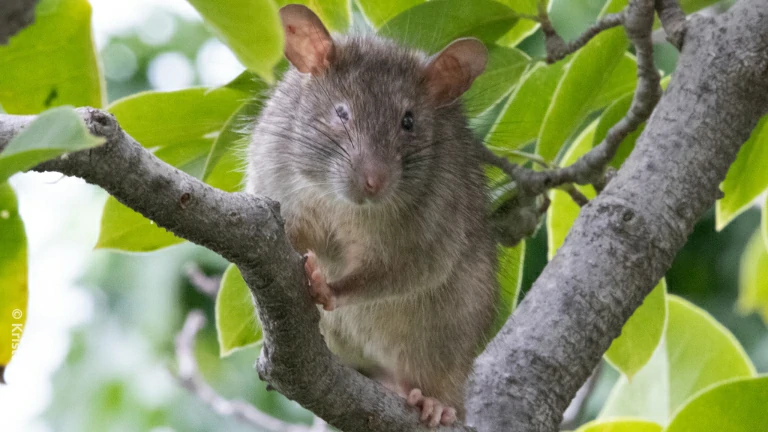
Rabbits and rats are both popular small pets that people sometimes keep in the same household. They’re both furry, have long ears (though rabbits’ ears are much more prominent), and they both need similar care like cages, bedding, and fresh vegetables.
Because they seem similar in some ways, some people wonder if these two animals could mate and produce offspring. Can rabbits and rats breed together?
No, rabbits and rats can’t breed together. They’re not just different species but belong to completely different orders of mammals. Rabbits are lagomorphs while rats are rodents, and their genetics are so different that crossbreeding is absolutely impossible. They’re about as different from each other as cats are from horses.
This isn’t just unlikely or difficult. It’s biologically impossible at every level. Rabbits and rats split from a common ancestor over 60 million years ago, which means they’ve been on separate evolutionary paths for an enormous amount of time.
Their DNA, reproductive systems, and basic biology are fundamentally incompatible.
Rabbits Aren’t Even Rodents
One of the biggest misconceptions is that rabbits are rodents. They’re not. Rabbits belong to the order Lagomorpha, which includes rabbits, hares, and pikas.
Rats belong to the order Rodentia, which includes mice, squirrels, beavers, and thousands of other species.
These orders split apart evolutionarily over 60 million years ago. That’s an incredibly long time for their genetics to become completely different.
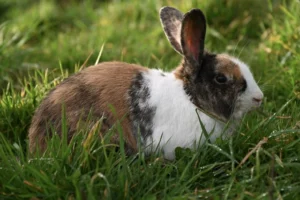
To put this in perspective, humans and lemurs split apart about 60 million years ago. You wouldn’t expect humans and lemurs to be able to breed, and the same logic applies to rabbits and rats.
Rabbits were once classified as rodents because they have continuously growing front teeth and similar diets to many rodents. But scientists discovered they’re actually more distantly related than originally thought.
They have different skeletal structures, different digestive systems, and completely different genetics.
This fundamental classification difference alone makes breeding impossible. You’d have better luck trying to breed a dog with a seal than trying to breed a rabbit with a rat.
Massive Genetic Differences
The genetic incompatibility between rabbits and rats is enormous. Rabbits have 44 chromosomes arranged in 22 pairs. Rats have 42 chromosomes in 21 pairs. But the chromosome count difference is just the beginning.
The actual genetic code, the genes on those chromosomes, the way genes are organized, and how they function are all completely different.
Rabbit DNA has about 3 billion base pairs, rat DNA has about 2.75 billion base pairs, and they share relatively little genetic similarity compared to closely related species.
When closely related animals breed (like horses and donkeys), their chromosomes can at least attempt to pair up, even if the resulting offspring have problems. With rabbits and rats, the chromosomes couldn’t even begin to pair. They’re too different in size, shape, and gene content.
Even the basic cellular machinery is different. The proteins that control DNA replication, cell division, and embryonic development are species-specific. Rabbit proteins and rat proteins don’t work together properly.
Physical and Reproductive Anatomy Differences
The reproductive systems of rabbits and rats are structured differently in fundamental ways. Female rabbits have a duplex uterus with two separate uterine horns that don’t connect. Female rats have a different uterine structure with horns that connect to a single cervix.
The placentas (which connect developing babies to the mother) are completely different between these orders. Rabbit placentas are discoid and hemodichorial, meaning they have two layers of tissue between maternal and fetal blood. Rat placentas are different in structure and function.
These differences mean that even if (impossibly) fertilization occurred, an embryo couldn’t develop. A rabbit embryo needs a rabbit placenta to survive, and a rat embryo needs a rat placenta. Neither could develop in the wrong type of uterus.
Size differences are also massive. Adult rabbits typically weigh 2-6 kilograms (4-13 pounds) depending on breed, while rats weigh 300-500 grams (less than a pound). This size difference alone would make the physical act of mating impossible or harmful.
They Don’t Recognize Each Other as Potential Mates
Beyond all the biological barriers, rabbits and rats wouldn’t even try to mate with each other. Animals recognize potential mates through species-specific signals like smell, sound, appearance, and behavior.
Rabbits communicate through body language, scent marking, and subtle vocalizations. When female rabbits are ready to breed, they show specific behaviors and release pheromones that attract male rabbits. These chemical signals are unique to rabbits.
Rats use completely different pheromones and communication methods. Male rats are attracted to female rats in heat through rat-specific scents. These pheromones wouldn’t trigger any mating response in rabbits, and vice versa.
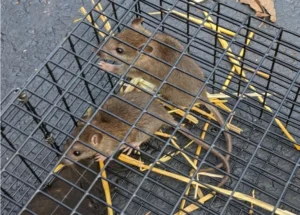
The courtship behaviors are also totally different. Rabbits have elaborate courtship rituals involving chasing, circling, and specific mounting behaviors. Rats have their own distinct mating patterns. Neither species would recognize or respond to the other’s courtship behaviors.
In reality, if you put a rabbit and rat together, they’d more likely ignore each other or potentially fight than show any mating interest.
Examples of Animals That Can Crossbreed
To understand why rabbits and rats can’t breed, it helps to look at animals that can crossbreed. These examples show how closely related species need to be for breeding to work.
Horses and donkeys can breed to create mules. Both are in the genus Equus and the family Equidae. They’re very closely related, with similar chromosome numbers (horses have 64, donkeys have 62). Even so, mules are almost always sterile.
Lions and tigers can breed to create ligers or tigons. Both are in the genus Panthera and are closely related big cats. But the offspring often have health problems and shortened lifespans.
Different species of rabbits sometimes can interbreed within the genus Oryctolagus or closely related genera. For example, European rabbits and some hare species are similar enough that occasional hybridization happens, though it’s rare.
Notice the pattern. All successful crossbreeding happens between animals in the same genus or very closely related species within the same family. Rabbits and rats aren’t even in the same order, let alone the same family or genus.
Why People Might Think It’s Possible
The misconception that rabbits and rats could breed probably comes from several sources. First, people often mistakenly think rabbits are rodents. If both animals were rodents, people might assume they could interbreed, though this still wouldn’t be true.
Second, both animals are common small pets. People see them in pet stores together and might assume they’re closely related. The fact that they’re sold in similar cages and eat similar foods reinforces this misconception.
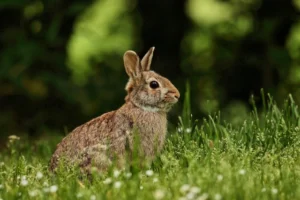
Third, both rabbits and rats breed prolifically. People know both species reproduce quickly, which might lead to assumptions that they could breed with each other.
Finally, there are occasional internet hoaxes or false claims about impossible animal hybrids. These stories spread even though they have zero scientific basis.
What Would Actually Happen
If you somehow forced a rabbit and rat into a mating situation (which would be unethical and wouldn’t happen naturally), absolutely nothing would result reproductively.
The size difference alone would make the act difficult or impossible. A male rabbit trying to mate with a female rat could seriously injure or kill the rat due to the size and weight difference. A male rat couldn’t physically mate with a much larger female rabbit.
Even if the physical act somehow occurred, the sperm and egg are completely incompatible. Rat sperm couldn’t fertilize a rabbit egg, and rabbit sperm couldn’t fertilize a rat egg.
The cellular mechanisms that allow fertilization are species-specific and wouldn’t work across such different orders.
No pregnancy would occur. No embryo would form. It’s not a matter of the pregnancy failing later. It would fail immediately at the cellular level, even before you could call it a pregnancy.
Rabbits and Rats Shouldn’t Live Together
Even though breeding isn’t possible, you shouldn’t house rabbits and rats together for many practical safety and welfare reasons. These animals have very different needs and behaviors.
Size differences create real dangers. An adult rabbit could easily injure or kill a rat, even unintentionally. Rabbits have powerful hind legs and can kick with tremendous force. A defensive rabbit kick could be fatal to a rat.

Rabbits can also bite, and rabbit bites are much more serious than rat bites due to the size difference. While rabbits aren’t usually aggressive, they can become territorial or defensive.
On the other hand, rats might bite or harass a rabbit, particularly if the rabbit is young, sick, or injured. While a single rat couldn’t seriously harm a healthy adult rabbit, the stress and annoyance wouldn’t be good for either animal.
Social needs are also completely different. Rabbits are social with other rabbits and bond strongly with rabbit companions. Rats are highly social with other rats. Neither species can meet the other’s social needs. A rabbit kept with rats instead of other rabbits would be lonely, and vice versa.
Different Care and Housing Needs
Rabbits and rats have very different requirements for proper care. Rabbits need much larger spaces than rats. A rabbit needs room to hop and run, with space to fully stretch out. Rats need vertical space with climbing opportunities but don’t need as much floor space.
Bedding needs differ too. Rabbits do best with hay-based bedding or fleece, and they need large litter boxes. Rats need different substrate that allows for burrowing and nesting. The bedding that works best for one species isn’t ideal for the other.
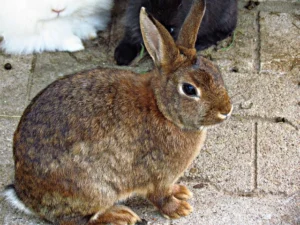
Diet requirements are also different. Rabbits need unlimited hay, fresh vegetables, and a small amount of pellets. Their digestive system requires constant fiber intake.
Rats need a different balance of protein, grains, and vegetables. Feeding them together would make it hard to control each animal’s individual diet.
Temperature preferences vary as well. Rabbits are sensitive to heat and do best in cooler temperatures (60-70°F). Rats tolerate a wider temperature range but prefer slightly warmer conditions. Creating an environment perfect for both would be challenging.
Health and Disease Concerns
Keeping rabbits and rats together could create health risks for both species. While they can’t breed, they can potentially share some diseases and parasites.
Rabbits and rats can both carry certain bacteria like Pasteurella, though different strains affect each species. Cross-contamination of living spaces could potentially spread bacteria between species.
Parasites like mites can sometimes affect multiple species. If one animal has mites, keeping them together could spread the infestation to the other animal.
Stress from improper housing also weakens immune systems. A rabbit stressed by the presence of rats (or vice versa) would be more vulnerable to illness. Proper housing that meets each species’ needs separately promotes better health.
If either animal gets sick, treating them would be complicated if they’re housed together. Medications prescribed for rabbits might not be safe for rats in the same space, and vice versa.
Behavioral Incompatibility
Beyond physical and health concerns, rabbits and rats have incompatible behaviors that make cohabitation stressful for both. Rabbits are prey animals and are naturally nervous around smaller, quicker animals that might seem predatory to them.
Rats are curious and explorative. They might investigate and bother a rabbit, causing stress. Rabbits startle easily, and a rat’s quick movements could trigger fear responses.
Rabbits communicate through body language like ear positions, posture, and stamping. Rats use different communication methods including ultrasonic vocalizations that humans can’t hear. Neither species would understand the other’s signals.
Play behaviors are different too. Rabbits do “binkies” (jumping and twisting in the air) when happy, which could startle rats. Rats engage in rough-and-tumble play with wrestling and chasing, which would terrify most rabbits.
These behavioral mismatches mean constant stress for both animals if housed together.
The Importance of Species-Appropriate Care
Understanding that rabbits and rats are completely different animals helps you provide better care for each species. They’re not interchangeable, and they shouldn’t be treated as if they’re similar.
If you want to keep both rabbits and rats, house them in completely separate areas. Ideally, keep them in different rooms so they can’t see, hear, or smell each other. This prevents stress and allows you to create appropriate environments for each species.
Learn about the specific needs of rabbits and the specific needs of rats. Read species-specific care guides, join species-specific forums, and find veterinarians who are experienced with each animal type.
Provide species-appropriate companionship. Get at least two rabbits so they can bond with each other. Get at least two rats so they can socialize together. Don’t try to substitute one species for the other as companions.
Conclusion
Rabbits and rats can’t breed together. They’re not just different species but belong to completely different orders of mammals. Rabbits are lagomorphs, rats are rodents, and they’re separated by over 60 million years of evolution. Their genetics are so different that crossbreeding is absolutely impossible at every biological level.
Beyond the genetic impossibility, rabbits and rats don’t recognize each other as potential mates, have massive size differences, and completely incompatible reproductive systems. Even in a laboratory setting with advanced genetic technology, creating a rabbit-rat hybrid isn’t possible.
If you keep both rabbits and rats as pets, house them separately and provide species-specific care for each. They have different social needs, different housing requirements, and different health considerations. Treating them as the completely different animals they are will help you be a better pet owner for both species.

Hi, my name is Ezra Mushala, i have been interested animals all my life. I am the main author and editor here at snakeinformer.com.