
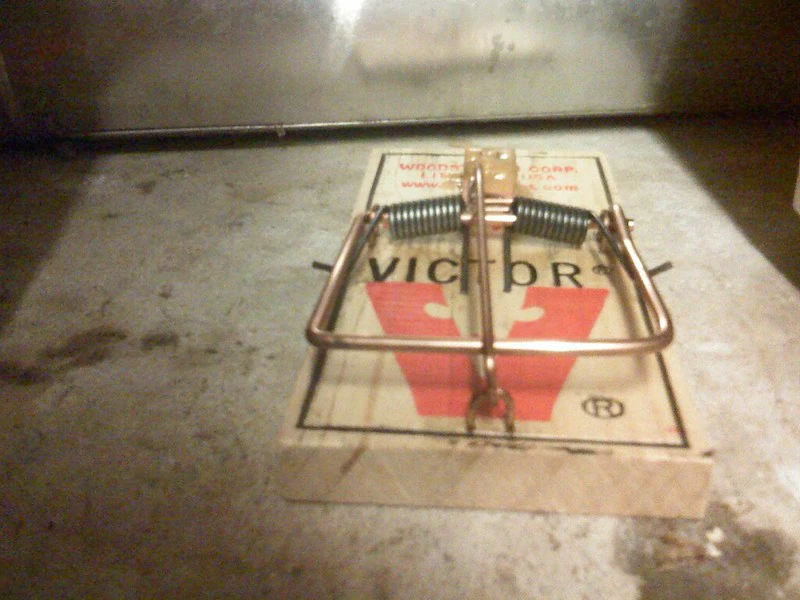
You’ve set out snap traps, baited them carefully, and placed them in all the right spots. But days go by, and the traps sit there untouched while you’re still hearing rats scurrying around at night.
It’s frustrating when rats seem to outsmart your traps, but there are specific reasons why this happens. So why is the rat avoiding your snap trap, and what can you do about it?
Rats avoid snap traps because they’re naturally cautious of new objects in their environment (called neophobia). They might also avoid traps if another rat was caught nearby, if the trap is in the wrong location, if the bait isn’t appealing, or if they can smell human scent on the trap. The key is to make the trap less threatening and more appealing.
Understanding why rats avoid traps is the first step to catching them. Once you know what’s going wrong, you can fix it.
Neophobia: Why Rats Are Scared of New Things
The main reason rats avoid traps is something called neophobia, which basically means fear of new things. Rats are suspicious of anything new that suddenly appears in their environment.
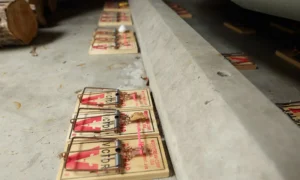
When you put a trap in an area where a rat has been traveling, the rat notices it immediately. Instead of rushing over to check it out, the rat will often avoid it for days or even weeks until it feels safe.
This is a survival instinct. In the wild, rats that are cautious about new things are more likely to survive. The ones that aren’t cautious might eat poisoned food or walk into dangerous situations.
Young rats tend to be less cautious than older rats. If you have an older, experienced rat, it might take longer to catch because it’s learned to be extra careful.
How to Overcome Neophobia and Get Rats to Trust Your Traps
The best way to get past a rat’s natural caution is to let the trap sit unset for a few days with bait on it. This lets the rat get used to seeing the trap and associate it with free food.
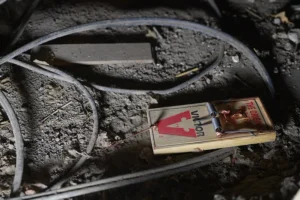
Place the trap in the area where you’ve seen rat activity, but don’t set it. Put bait on the trigger plate just like you normally would. Check it every day and replace the bait when the rat takes it.
After the rat has taken the bait 2-3 times without anything bad happening, it’ll start to trust the trap. Then you can set it, and the rat will be much less cautious.
This approach takes patience, but it’s one of the most effective ways to catch trap-shy rats.
The Wrong Location Will Keep Rats Away
Even the best trap won’t work if it’s not in the right spot. Rats have specific travel routes they use over and over again, and if your trap isn’t on one of those routes, they’ll never find it.
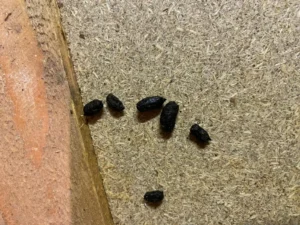
Look for signs of rat activity like droppings, gnaw marks, greasy rub marks along walls, and urine stains (you can see these with a blacklight). These signs show you where the rats are traveling.
Rats almost always run along walls and edges rather than out in the open. They use their whiskers to feel their way along surfaces. If your trap is sitting in the middle of the floor, rats will go around it.
Place traps with the trigger plate facing the wall, perpendicular to the baseboard. This way, when the rat runs along the wall, it steps right onto the trigger.
How Human Scent Can Scare Rats Away
Rats have an extremely good sense of smell, and they can detect human scent on traps. If you’ve handled a trap with bare hands, the rat might avoid it because it smells like you.
Always wear gloves when setting traps. Use disposable latex or nitrile gloves, and throw them away after you’re done. This keeps your scent off the trap.
If you’ve already touched a trap with bare hands, wash it thoroughly with unscented soap and water. Let it air dry completely before you set it again.
You can also try rubbing the trap with dirt or leaves from outside to mask any human smell. This makes it blend in better with the rat’s environment.
Why the Bait You’re Using Might Not Be Working
If rats are avoiding your trap, the bait might be the problem. Not all baits are equally attractive to rats, and different rats have different preferences.
Contrary to popular belief, cheese isn’t the best bait for rats. Rats actually prefer high-protein and high-fat foods. Peanut butter is one of the best options because it smells strong and rats love it.
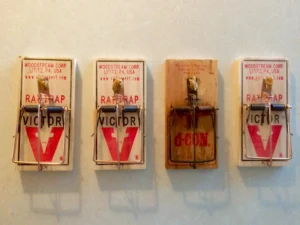
Other good baits include bacon, dried fruit, nuts, chocolate, or small pieces of hot dog. Try switching up your bait every few days to see what works.
Make sure you’re only using a small amount of bait (about the size of a pea). Too much bait lets the rat eat without triggering the trap.
Also, check your bait daily. If it’s dried out or moldy, rats won’t be interested. Fresh bait is always more appealing.
Competition from Other Food Sources
If there’s other food available nearby, rats might not be interested in your trap bait at all. They’ll just go for the easier food source.
Look around the area where you’ve placed traps. Are there open garbage cans, pet food bowls, bird feeders, or spilled food on the floor? If so, the rats have no reason to risk going near your trap.
Clean up all other food sources as much as possible. Store food in sealed containers, clean up crumbs and spills immediately, and don’t leave pet food out overnight.
When rats have no other options, your trap bait becomes much more appealing.
When Another Rat Was Caught in a Nearby Trap
If you’ve already caught a rat in a trap that’s near where you’re trying to catch another one, the surviving rats might avoid the area completely. They can smell the blood and distress scent from the caught rat.
This is why it’s important to clean traps thoroughly after each catch. Use hot soapy water and a disinfectant to remove all traces of blood and scent.
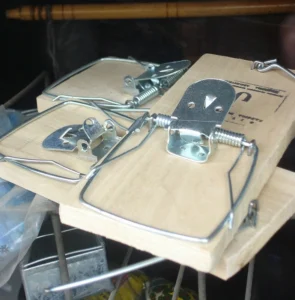
You can also try moving the trap to a slightly different location, maybe 5-10 feet away from where you caught the first rat. This gives the surviving rats a chance to forget about the danger.
Some experts recommend using completely new traps after you’ve caught several rats, especially if the remaining rats seem to be avoiding all your traps.
The Trap Itself Might Be the Problem
Sometimes the trap is the issue, not the placement or bait. Old or poorly made traps can scare rats away or simply not work well.
Check the spring tension on your trap. If it’s weak or doesn’t snap quickly, the rat might sense something is off. Rats can feel vibrations and changes in air pressure, so a trap that doesn’t snap fast might alert them.
Wooden traps can absorb odors over time, including the smell of previously caught rats. If you’ve been reusing the same wooden trap, try switching to a new plastic or metal trap.
Make sure the trigger mechanism is sensitive enough. If it takes too much pressure to set off the trap, the rat might be able to steal the bait without triggering it.
Using Multiple Traps Increases Your Chances
Don’t rely on just one or two traps. Rats are smart, and they’ll figure out how to avoid a single trap. When you use multiple traps, you’re covering more ground and giving yourself better odds.
Place traps every 10-15 feet along the walls where you’ve seen rat activity. In small rooms, use 2-3 traps. In larger rooms like kitchens or basements, use 6-12 traps.
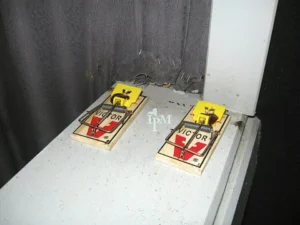
When you have multiple traps, even if the rat avoids a few of them, there’s a good chance it’ll eventually encounter one it can’t avoid.
You can also use different types of traps (snap traps, electronic traps, and even glue traps) in the same area. This gives you multiple ways to catch the rat.
Try Pre-Baiting to Build Trust
Pre-baiting is a technique professional pest control companies use to catch cautious rats. It’s basically letting the rat eat from the trap several times before you actually set it.
Place unset traps with bait in areas where rats are active. Check them daily, and when the bait is gone, replace it. Do this for 3-5 days.
During this time, the rat is learning that the trap is a reliable food source with no danger. Once it’s comfortable, set the trap.
The rat will approach with confidence, expecting another free meal, and that’s when you catch it.
This takes more time, but it’s extremely effective for trap-shy rats that won’t go near set traps.
Changing the Trap Position Can Make a Big Difference
Even if you’ve placed the trap along a wall, the exact position matters. Rats might be avoiding it because it’s in an awkward spot or because the angle isn’t right.
Try moving the trap a few feet in either direction. Sometimes just shifting it to the other side of a doorway or closer to a corner makes all the difference.
Experiment with placing the trap in tight spaces like behind appliances, under furniture, or in corners. Rats feel safer in enclosed spaces, so they’re more likely to approach a trap that’s tucked away.
You can also try placing the trap inside a cardboard box with two holes cut in opposite ends. This creates a tunnel effect that rats love to explore.
Why Electronic Traps Might Work Better
If snap traps aren’t working, electronic traps might be the solution. These traps look like small boxes with an entrance, and rats are often less suspicious of them.
Electronic traps deliver a quick electric shock when the rat enters, killing it instantly. They’re more expensive ($30-$60), but they’re also more consistent and humane.
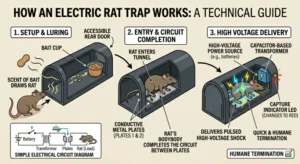
Rats seem to be less cautious about entering a box-style trap compared to stepping on a traditional snap trap. The enclosed design feels safer to them.
Plus, electronic traps don’t have the same sharp metallic smell that snap traps sometimes have, which might be another reason rats avoid traditional traps.
What to Do If Nothing Is Working
If you’ve tried everything and rats are still avoiding your traps, it might be time to call in a professional pest control company. They have experience dealing with trap-shy rats and access to tools and techniques that aren’t available to regular homeowners.
A professional can identify exactly where the rats are traveling, seal up entry points, and use a combination of traps and other methods to catch them.
They might also use tracking powder or motion-activated cameras to see where the rats are going, which can help you understand why your traps aren’t working.
The cost is usually between $200-$500 for an initial treatment, but if you’re at your wit’s end, it might be worth it.
Understanding Rat Behavior to Catch Them Better
The more you understand about how rats think and behave, the easier it is to catch them. Rats are creatures of habit and stick to the same routes night after night.
They rely heavily on their sense of smell and touch. They use their whiskers to feel their way along walls in the dark, which is why they always run along edges.
Rats are also social animals. If one rat finds a food source, others will follow. This is why using multiple traps in the same area can work well.
They’re most active at night, usually a few hours after sunset and before sunrise. If you want to know if rats are avoiding your traps, check them early in the morning.
Conclusion
Rats avoid snap traps because they’re naturally cautious, the trap might be in the wrong spot, the bait might not be appealing, or they can smell human scent on the trap. The solution is to make the trap less threatening by pre-baiting, using fresh attractive bait, wearing gloves when handling traps, and placing multiple traps along walls where rats actually travel.
Be patient, check your traps daily, and don’t give up. Even the smartest rat will eventually make a mistake.

Hi, my name is Ezra Mushala, i have been interested animals all my life. I am the main author and editor here at snakeinformer.com.