
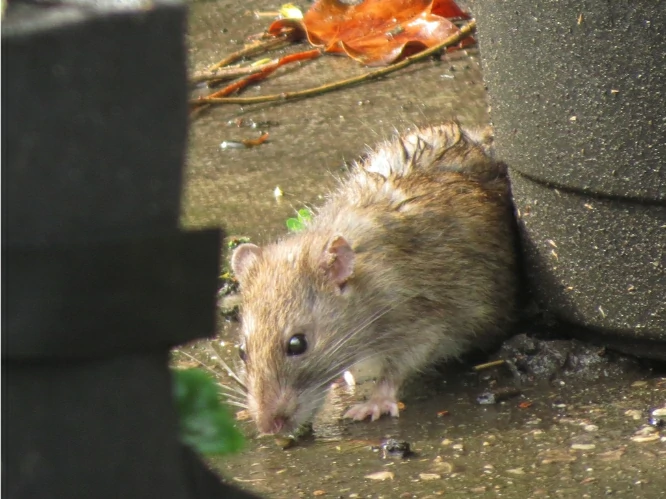
Bucket rat traps have become popular online, with lots of videos showing how to make them yourself using just a bucket, a soda can, and some bait.
They look simple and cheap, which makes them appealing when you’re dealing with rats. But does a bucket rat trap actually work?
Yes, bucket rat traps can work, but they’re not as reliable as regular snap traps. They work best for catching multiple mice rather than rats, and their success depends a lot on how you set them up and where you place them. For serious rat problems, traditional snap traps are usually a better choice.
Bucket traps can catch rats under the right conditions, but they’re not the magic solution that some YouTube videos make them look like. There are better options for most situations.
How Bucket Rat Traps Actually Work
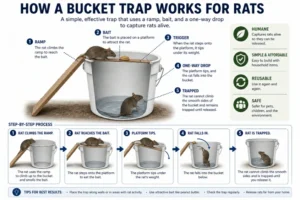
The basic design of a bucket rat trap is pretty simple. You take a five-gallon bucket and fill it partway with water.
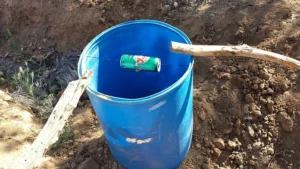
Then you run a wire or metal rod through the center of a soda can or plastic bottle and balance it across the top of the bucket.
You put bait (usually peanut butter) on the can.
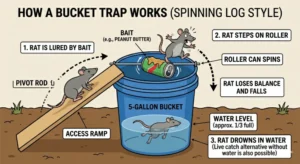
The idea is that the rat climbs up a ramp to reach the bait on the spinning can.
When the rat steps onto the can to get the bait, the can spins and the rat falls into the water below. The rat then drowns in the bucket because it can’t climb out.
Some versions don’t use water. They just have the rat fall into an empty bucket and get trapped there until you deal with it.
This makes it more of a live-catch trap.
The appeal of this design is that you can theoretically catch multiple rats with one trap.
Unlike a snap trap that needs to be reset after each catch, the bucket just keeps working as long as the bait is there and there’s room in the bucket.
Why Bucket Traps Work Better for Mice Than Rats
Here’s the thing that a lot of online videos don’t tell you: bucket traps were really designed for mice, not rats. They work much better on mice for a few reasons.
First, mice are lighter. When a mouse steps onto the spinning can, it spins easily and the mouse falls right in.
Rats are heavier, and depending on the setup, a rat might be able to steady the can enough to grab the bait without falling.
Second, mice are less cautious than rats. They’ll climb up that ramp and go for the bait without thinking too hard about it.
Rats are more suspicious, especially of new things in their environment.
A rat might look at your bucket setup and decide it’s not worth the risk.
Third, if you’re using the drowning version with water, a rat can swim a lot longer than a mouse. Mice will drown in a few minutes.
Rats can swim for two or three days if they have to. Unless you’ve got a really deep bucket with a lot of water, the rat might survive until you check the trap.
If you’ve got mice, bucket traps can actually work pretty well. But for rats, they’re less reliable.
The Biggest Problems With Bucket Rat Traps
Even when bucket traps do work, they come with some issues that make them less practical than traditional traps.
The first problem is that you need to check them constantly. If you’re using the water version, you’ve basically set up a drowning trap.
Drowning takes time, and it’s not a humane way to kill an animal. If you check your trap and find a rat that’s been swimming and struggling for hours, that’s pretty awful.

If you’re using the no-water version, you’ve got a live rat trapped in a bucket. Now you need to figure out what to do with it.
You can’t just let it go near your house, and killing it yourself isn’t easy if you’re not prepared for that.
The second problem is that bucket traps take up a lot of space. A five-gallon bucket sitting in your kitchen or garage is obvious and kind of in the way.
Snap traps are small and can fit into corners and tight spaces where rats actually travel.
The third problem is that rats might not fall for the trick. They’re smart enough to see that the can is balanced on a wire and might spin. Some rats will just avoid it completely.
When Bucket Traps Might Actually Be Worth Using
There are some situations where bucket traps make sense, even with their drawbacks.
If you’re dealing with a really bad infestation in a barn, shed, or outdoor area, a bucket trap might catch multiple rats over time.
In these settings, the trap isn’t in your way, and you can check it as often as you need to.
If you’ve already tried snap traps and you’re not catching anything, a bucket trap gives you a different approach.
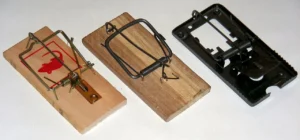
Sometimes rats get trap-shy after seeing other rats get caught in snap traps, and they’ll avoid those. A bucket looks different enough that it might work where snap traps failed.
If you’re trying to catch rats without killing them (though this creates its own problems), a bucket trap without water can work as a live-catch option.
You’ll need to check it really frequently though, because leaving a rat trapped in a bucket for hours is stressful for the animal.
For outdoor use in places where you don’t have electricity and you want to catch multiple rodents over time, bucket traps are more practical than electronic traps or other options that need power.
How to Set Up a Bucket Rat Trap If You Decide to Try It
If you want to try a bucket trap, here’s how to set it up for the best chance of success.
Get a five-gallon bucket. You can use a smaller bucket, but deeper is better. If you’re using water, fill the bucket about a third to halfway full. If you’re not using water, leave it empty.
Get a wire or metal rod that’s long enough to span the top of the bucket with a few inches on each side.
A metal coat hanger works if you straighten it out. So does a wooden dowel or even a piece of PVC pipe.
Get an empty soda can or water bottle. Poke holes through the center (top to bottom) so you can thread your wire through it. The can should spin freely on the wire.
Put peanut butter or another sticky bait on the can. You want it right in the middle where the rat will have to step onto the can to reach it.
Balance the wire across the top of the bucket with the can in the middle. Make sure the can spins when you touch it.
Build a ramp leading up to the edge of the bucket. You can use a piece of wood, a board, or even a stack of books. The rat needs a way to climb up to bucket level.
Put the whole setup in an area where you’ve seen rat activity. Against a wall is usually best.
What Happens When You Actually Catch a Rat in a Bucket Trap?
Let’s say your bucket trap works and you catch a rat. Now what?
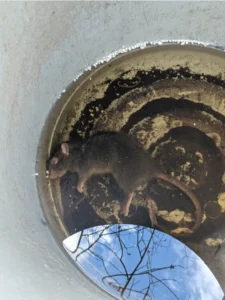
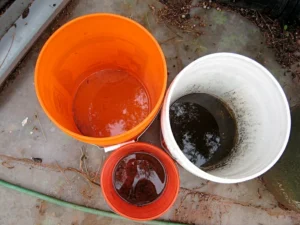
If you used water, the rat is probably drowned by the time you find it. You’ll need to dispose of the body. Put on thick gloves, pull the rat out of the bucket, and put it in a plastic bag.
Double-bag it and put it in your outdoor trash. Pour out the water somewhere outside (not down your kitchen sink), and clean the bucket with disinfectant before using it again.
If you didn’t use water, you’ve got a live rat in your bucket. You need to kill it humanely or release it far away from your house.
Killing it usually means putting a lid on the bucket and using carbon dioxide (like from dry ice) or drowning it by adding water.
Releasing it means taking it at least a couple miles away and hoping it doesn’t become someone else’s problem or die from injuries.
Either way, it’s not a fun situation to deal with. This is one reason why snap traps are more popular. They kill quickly, and you just dispose of the body without having to make hard decisions.
Why Some People Prefer Traditional Snap Traps Over Bucket Traps
For most people dealing with rats in their house, snap traps are just easier and more effective than bucket traps.
Snap traps are small and can fit anywhere. You can put them under sinks, behind appliances, in corners, and other spots where rats travel. Bucket traps need open floor space.
Snap traps kill instantly when they work right. There’s no drowning, no live animal to deal with, no ethical questions about what to do next. The rat is dead, you dispose of it, and you move on.
Snap traps are proven to work. They’ve been around for over a hundred years because they’re effective. Bucket traps are hit or miss, especially with rats.
Snap traps are also cheaper if you’re buying them instead of making them. You can get a good snap trap for a few dollars.
If you’re making a bucket trap, you need to buy or find a bucket, wire, a can, and build a ramp. Unless you already have all that stuff lying around, it’s not much cheaper than just buying snap traps.
The Humane Issues With Bucket Rat Traps
Animal welfare is something to think about with any kind of trap, and bucket traps have some real problems in this area.
If you’re using water, drowning is a slow death. It can take several minutes for a small animal to drown, and it’s definitely not painless. The rat is panicking and fighting for air the whole time. This is why a lot of people consider drowning traps to be inhumane.
If you’re not using water, you’ve got a stressed, scared animal trapped in a bucket. Rats don’t do well with that kind of stress.
They can literally die from fear even if they’re not physically hurt. And you’re putting yourself in the position of having to decide what to do with a live trapped rat.
Compare this to a snap trap that kills in a fraction of a second, or an electronic trap that kills instantly with electricity. Those are much more humane options.
Some people argue that bucket traps are fine if you check them every couple of hours, but let’s be real. Most people aren’t going to check a trap in the middle of the night or first thing when they wake up.
There’s going to be a delay, and that means more suffering for the animal.
What Pest Control Professionals Think About Bucket Traps
If you ask professional pest control operators about bucket traps, most of them will tell you they don’t use them and wouldn’t recommend them for serious rat problems.
The reason is simple: they’re not reliable enough. When you’re running a business, you need methods that work consistently every time.
Snap traps, electronic traps, and rodenticides (poison) are proven to work. Bucket traps are too unpredictable.
Professionals also don’t like the humane issues with drowning traps. There are better options that kill faster and more humanely.
That said, some pest control people might use bucket-style traps in specific situations, like catching multiple mice in a barn or warehouse. But for residential rat control, they’re going to reach for snap traps or other proven methods first.
How to Make a Bucket Trap More Effective for Rats
If you’re determined to use a bucket trap, there are ways to improve your chances of actually catching rats with it.
First, make the ramp and the bucket setup look as natural as possible. Rats are suspicious of anything that looks man-made or out of place. If you can camouflage the ramp or make it look like a natural pathway, the rat is more likely to use it.
Second, don’t use water right away. Set up the trap without water for a few days and let rats get used to climbing up, taking bait from the can, and leaving. This builds their confidence. Then add water after they’ve gotten comfortable with the setup.
Third, use really good bait. Peanut butter works, but you might have better luck with bacon grease, chocolate, or even nesting material like cotton balls soaked in vanilla extract. Different rats like different things.
Fourth, put the trap in a high-traffic rat area. Look for droppings, gnaw marks, and greasy smudge marks on walls. That’s where the rats are traveling, and that’s where your trap should be.
Even with all these improvements, you’re still probably not going to catch as many rats as you would with properly placed snap traps. But these tips will increase your odds.
Conclusion
Bucket rat traps can work, but they’re not the best option for most people dealing with rats.
They’re more effective for mice, they have humane concerns, and they’re less reliable than traditional snap traps.
If you want to try a bucket trap because you’ve got the materials on hand or you’re dealing with rats in a barn or outdoor area, go ahead.
Just be prepared to check it often and to deal with either drowned or live trapped rats.
For most rat problems, especially in homes, you’ll have better results with snap traps or electronic traps. They’re more reliable, more humane, and easier to manage.
Save the bucket trap for situations where you need to catch multiple rodents over time in areas where other traps aren’t practical.

Hi, my name is Ezra Mushala, i have been interested animals all my life. I am the main author and editor here at snakeinformer.com.