
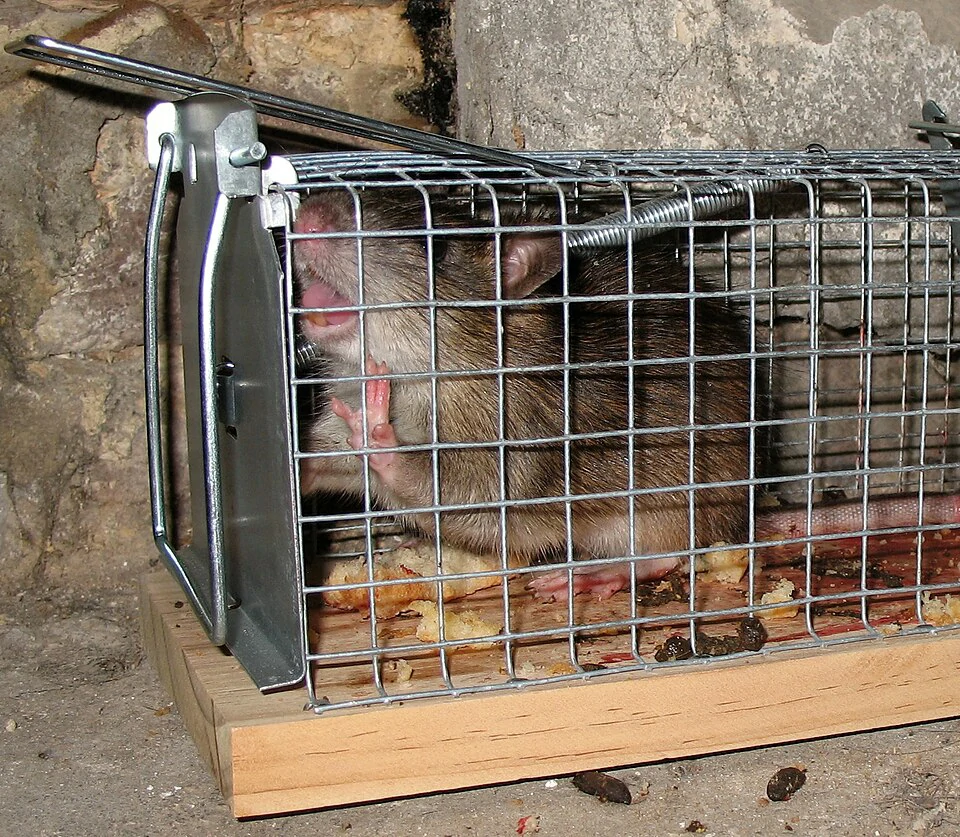
Cage traps offer a way to catch rats alive without killing them, which makes them appealing if you want a more humane pest control option.
These metal or plastic boxes look simple on the outside, but there’s a clever mechanism inside that catches rats reliably when set up correctly. How does a rat cage trap work?
A rat cage trap works by luring a rat inside with bait placed at the back of the cage. When the rat steps on a trigger plate or pulls the bait, it releases a spring-loaded door that snaps shut behind the rat, trapping it inside alive. The rat can’t escape because the door only opens one way or locks shut after closing.
These traps have been used for decades and remain popular because they’re effective, reusable, and let you deal with rats without killing them if that’s your preference.
The Basic Design of a Cage Trap
Most rat cage traps are rectangular boxes made from wire mesh or metal bars. The cage has solid sides, a top, and a bottom, with one open end where the door is located.
The door is usually a flat piece of metal or heavy wire that slides up and down or swings on hinges. When the trap is set, this door is held in an open position by the trigger mechanism.
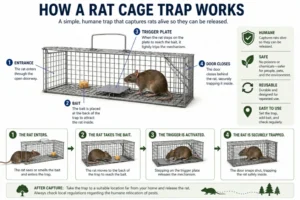
Inside the cage, there’s a trigger plate. This is a flat metal piece connected to the door mechanism by a rod or lever system. When weight is placed on the trigger plate, it releases the door.
At the back of the cage, opposite the door, there’s usually a spot to secure bait. Some traps have a little hook or spike where you can impale food, while others just have a flat area where you place it.
The whole design is simple but effective. Once you understand how the parts work together, setting the trap becomes easy.
How the Trigger Mechanism Works
The trigger plate is the heart of the system. It’s a flat piece of metal positioned somewhere in the middle or back section of the cage.
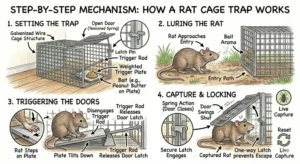
This plate is balanced on a pivot point and connected to the door by a rod. When the trap is set, the door is held open by tension from a spring, and the trigger plate is holding everything in place.
When a rat steps on the trigger plate, its weight pushes the plate down. This movement releases the catch that’s holding the door open.
The spring immediately pulls or pushes the door shut. The whole thing happens in a fraction of a second, fast enough that the rat can’t escape.
Some traps use a slightly different system where pulling the bait triggers the door instead of stepping on a plate. But the basic principle is the same: the rat’s action releases a mechanism that closes the door.
The Role of the Spring Mechanism
The spring is what provides the force to close the door quickly. Without it, the door would just fall slowly, giving the rat time to escape.
Most cage traps use a coiled spring attached to the door. When you set the trap, you compress this spring by holding the door open. The trigger mechanism keeps it compressed.
When the trigger is released, the spring expands rapidly, pulling or pushing the door shut with enough force that it snaps closed.
The spring tension is carefully calibrated. It needs to be strong enough to close the door quickly but not so strong that it damages the door mechanism or makes the trap hard to set.
Over time, springs can weaken from repeated use. If you notice your trap’s door closing slowly or not latching properly, the spring might need to be replaced.
One-Way vs. Two-Way Cage Traps
One-way cage traps have a single door at one end. The rat enters through this door, triggers the mechanism, and the door closes behind it.
These are simpler and usually more reliable because there’s only one mechanism that can fail. They’re also easier to set up and position.
Two-way cage traps have doors at both ends. The rat can enter from either side, which can be useful in some situations.
The advantage of two-way traps is that you can place them in the middle of a rat’s path. The rat doesn’t have to turn around to enter; it can just walk straight through.
However, two-way traps are more complex because both doors need to work properly. If one door sticks or doesn’t close completely, the rat can escape.
Placing Bait to Attract Rats Inside
The bait needs to be placed at the very back of the cage, as far from the entrance as possible. This ensures the rat walks all the way inside and onto the trigger plate before reaching the food.
If you put the bait too close to the entrance, a smart rat might reach in with its paws and grab it without fully entering the cage. This is especially true for larger traps with bigger openings.
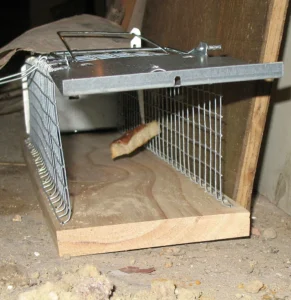
Secure the bait so it can’t be easily removed. Many cage traps have a hook or spike at the back where you can stick a piece of food.
If your trap doesn’t have a bait hook, you can tie the bait in place with string or wire. This forces the rat to work at it, keeping it in the trap longer and making sure it steps on the trigger.
Good bait options include peanut butter (smear it on the bait hook), bacon tied to the hook, nuts in shells, dried fruits, or small pieces of cheese. The key is using something with a strong smell that travels through the air.
Why the Trigger Plate Needs to Be Sensitive
The trigger plate has to be sensitive enough that a rat’s weight will activate it, but not so sensitive that it goes off from wind, vibrations, or the trap being bumped.
Most commercial rat cage traps are pre-calibrated at the factory to work with animals in a certain weight range. Rats typically weigh 5 to 16 ounces, and the trigger is set for that.
If the trigger is too stiff, light rats or young rats might not be heavy enough to activate it. They’ll eat the bait and walk out without getting caught.
If it’s too sensitive, the trap might snap shut from the breeze when a rat walks past, vibrations from nearby activity, or even from being set down too hard.
You can sometimes adjust the sensitivity on better quality traps. There’s usually a small screw or lever that changes how much weight is needed to release the trigger.
How the Door Locks After Closing
Once the door closes, it needs to stay closed. Otherwise, the rat could push it back open from inside.
Most cage traps use a simple latch system. When the door snaps shut, a small hook or catch on the door drops into a notch on the cage frame.

This latch only works in one direction. The rat can push against the door from inside all it wants, but the latch prevents it from opening.
Some traps have gravity locks, where the weight of the door itself keeps it closed. These work fine as long as the trap is sitting level.
Better quality traps have positive locking mechanisms that you need to manually release. These are more secure and ensure the rat can’t escape even if the trap gets knocked around.
Setting Up the Trap Step by Step
First, make sure the trap is clean and the mechanism moves smoothly. Check that the spring isn’t rusty and the trigger plate pivots freely.
Place your bait at the very back of the cage, securing it to the bait hook or tying it in place so it can’t be easily removed.
Hold the door open with one hand. With your other hand, position the trigger plate so it’s ready to release.
There’s usually a small notch or hook that holds the door in the open position. Carefully engage this while keeping tension on the door. This is the tricky part that takes practice.
Once the door is caught on the trigger mechanism, slowly let go and make sure it’s stable. Give the cage a gentle tap to test it. If it goes off, you need to set it again more carefully.
Where to Position Cage Traps for Best Results
Rats travel along walls and edges rather than crossing open spaces. Place your cage trap with one end against a wall or in a corner where you’ve seen rat activity.
Look for rat droppings, which are about the size of a raisin with pointed ends. Wherever you see a concentration of droppings, that’s a good spot for a trap.
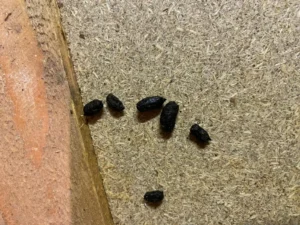
Grease marks or rub marks along baseboards show where rats are traveling regularly. These dark, oily smudges come from the rat’s fur brushing against surfaces.
Place the trap so the entrance faces the direction rats are approaching from. If they’re traveling along a wall, position the trap so they walk right into it as they follow their usual path.
In attics, basements, or garages, place traps near food sources or nesting areas. Rats stick close to these important locations and will encounter traps set nearby.
What Happens After You Catch a Rat?
Once the trap closes with a rat inside, you need to decide what to do with it. This is where cage traps differ from kill traps.
If you want to release the rat, you’ll need to transport it somewhere far from your home. Rats have a strong homing instinct and can find their way back from quite a distance.
Release it at least a mile away, preferably in a wooded area or field away from other homes. Wear gloves when handling the trap, and be careful when opening the door.
Some people choose to euthanize rats caught in cage traps rather than releasing them. This can be done by placing the entire cage in a container with carbon dioxide or taking it to a vet.
A third option is to contact animal control or a pest removal service. Some areas have professionals who will pick up trapped rats and dispose of them for you.
Checking Your Traps Regularly
You should check cage traps at least once a day, preferably twice. A rat trapped in a cage without food or water will become stressed and can die within a day or two.
Set a regular schedule for checking, like first thing in the morning and again in the evening. This ensures you don’t leave a rat trapped for too long.

If you’ve caught a rat, deal with it right away. Don’t leave it in the trap for hours while you decide what to do. This is stressful for the animal and defeats the purpose of using a humane trap.
Mark your calendar or set a reminder on your phone so you don’t forget to check. It’s easy to get busy and overlook this, but regular checking is important.
Cleaning and Maintaining Your Cage Trap
After catching and releasing a rat, clean the trap thoroughly before using it again. Rats leave behind scent markers that can warn other rats to avoid the area.
Spray the entire cage with a disinfectant solution. A mixture of one part bleach to nine parts water works well for killing bacteria and eliminating odors.
Scrub the wire mesh and all surfaces with a brush to remove droppings, urine, and any other contamination. Pay special attention to corners and crevices where waste can collect.
Rinse the trap completely with clean water to remove all traces of bleach and disinfectant. These chemical smells can deter rats from entering.
Let the trap dry completely in the sun if possible. UV light helps kill remaining bacteria and fresh air helps eliminate odors.
Check the mechanism after cleaning. Make sure the trigger plate still moves smoothly and the spring hasn’t been weakened by water exposure. Oil any squeaky or stiff parts with a light machine oil.
Advantages of Cage Traps Over Snap Traps
Cage traps don’t kill the rat, which many people prefer for ethical reasons. You can release the animal unharmed if you want to.
They’re safer around children and pets. There’s no spring-loaded bar that could injure a curious finger or paw. The worst that can happen is something gets trapped, and you can release it easily.
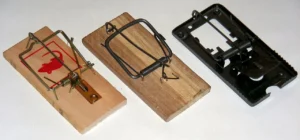
Cage traps are reusable and can last for years with proper care. A good quality cage trap is an investment that pays off if you need to catch multiple rats over time.
You can see exactly what you’ve caught. With snap traps or poison, you might catch non-target animals accidentally. With a cage trap, you can identify what’s inside and release it if it’s not a rat.
They work well for capturing rats that are trap-shy or have learned to avoid snap traps. These experienced rats might be cautious around new objects, but they’ll eventually enter a cage trap if the bait is appealing enough.
Common Problems and How to Fix Them
If your trap keeps going off without catching anything, it might be too sensitive. Try adjusting the trigger mechanism to require more weight before releasing.
If rats are taking the bait without getting caught, you’re not securing it properly. Move the bait farther back or tie it more securely to the bait hook.
When the door doesn’t close fully or pops back open, check the spring tension. A weak spring needs to be replaced for the trap to work reliably.
If rats won’t enter the trap at all, they might be suspicious of it. Try pre-baiting: put food inside without setting the trap for a few days. Let the rats get comfortable eating from it, then set it.
Rust or corrosion can make the mechanism stick. Clean rusty parts with steel wool and apply a light coating of oil to keep things moving smoothly.
Cage Traps vs. Other Humane Options
Electronic traps kill rats quickly but still result in a dead rat you need to dispose of. Cage traps let you avoid handling dead animals entirely if you release them alive.
Ultrasonic repellents claim to drive rats away without catching them, but effectiveness varies widely. Many rats ignore these devices completely, while cage traps work reliably.
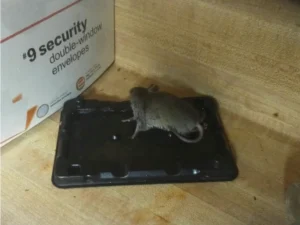
Catch-and-release glue traps exist, but removing a rat from a glue trap without injuring it is very difficult. Cage traps are more truly humane.
One-way exclusion doors prevent rats from re-entering your home but don’t actually catch them. Combining exclusion with cage traps gives you the best of both approaches.
Legal and Ethical Considerations
In some areas, it’s illegal to release rats into the wild. Check your local regulations before deciding to relocate trapped rats.
Releasing rats in public parks, nature preserves, or near other people’s homes can be prohibited and might result in fines.
If local laws don’t allow release, your options are to euthanize the rat humanely or contact a licensed pest control service to handle it.
Consider the ethics of relocation. Rats released into unfamiliar territory might struggle to survive, especially if food and shelter are limited. This might not be more humane than a quick kill.
If you’re uncomfortable killing rats yourself but can’t release them, look for pest control services that use humane euthanasia methods. This balances your desire to avoid cruelty with the reality of needing to control pests.
Conclusion
Rat cage traps work by using a spring-loaded door mechanism triggered by a rat’s weight on a plate or by pulling at bait.
When the rat enters the cage and activates the trigger, the door snaps shut behind it, trapping it alive inside. The mechanism is simple, reliable, and allows you to catch rats without killing them.
These traps are reusable, safe around children and pets, and give you options for how to deal with caught rats.
With proper placement, good bait, and regular checking, cage traps can effectively control rat populations while offering a more humane alternative to snap traps or poison.
Understanding how the mechanism works helps you set traps correctly and troubleshoot problems when they arise.
Whether you plan to release rats elsewhere or euthanize them humanely, cage traps give you control over the process while treating the animals as ethically as possible.

Hi, my name is Ezra Mushala, i have been interested animals all my life. I am the main author and editor here at snakeinformer.com.