
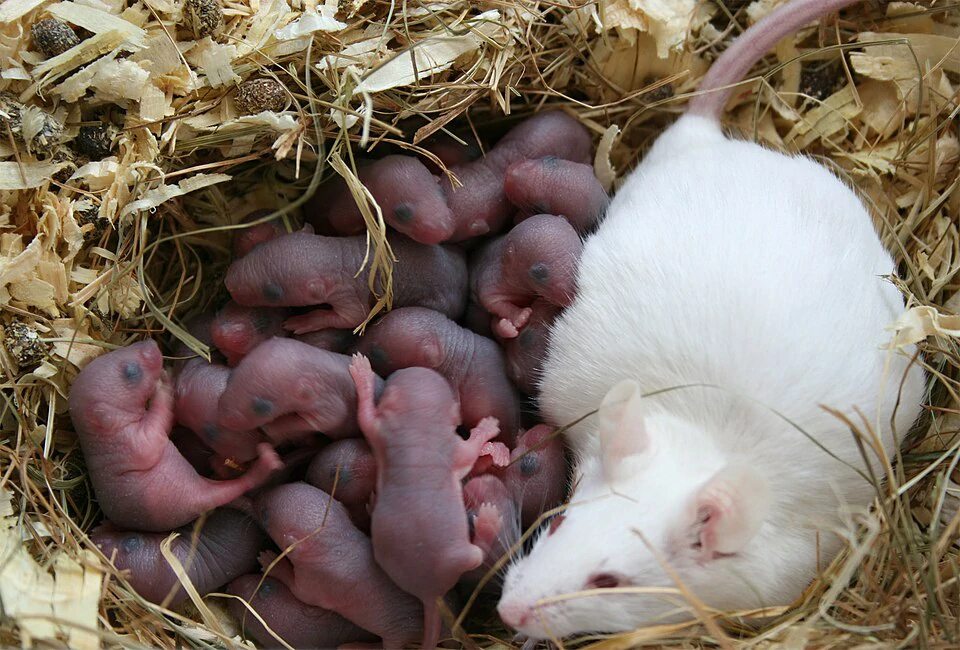
Most people picture rats as brown or gray animals scurrying around in alleys or sewers. But if you’ve spent any time in pet stores or science labs, you’ve probably seen rats that are completely white with pink or red eyes.
These white rats look totally different from the wild rats most people are familiar with. So why are some rats white while others are brown or gray?
Some rats are white because of selective breeding by humans, genetic mutations that affect pigment production, or albinism. White rats are almost always domestic fancy rats that have been bred for specific color traits, not wild rats. True albino rats lack all pigment and have pink eyes, while some white rats have dark eyes and are just very light-colored.
White coloring in rats doesn’t happen naturally in the wild very often. Wild rats need to blend in with their environment to avoid predators, so white fur would actually be dangerous for them.
The white rats you see today are the result of hundreds of years of humans breeding rats for specific traits, especially for use in laboratories and as pets.
The Genetics Behind White Rat Coloring
White coloring in rats comes down to genetics and how pigment is produced in their bodies. Understanding the basics helps explain why some rats are white and others aren’t.
Rats have genes that control melanin production. Melanin is the pigment that gives color to fur, skin, and eyes. Different combinations of these genes create all the different rat colors you see.

White rats usually have one of two things going on genetically. Either they have the albino gene, which completely stops melanin production, or they have genes that dilute color so much the rat looks white even though it’s technically not a true albino.
The albino gene is recessive, which means a rat needs to get the gene from both parents to actually be albino. If it only gets the gene from one parent, the rat will look normal but can still pass albinism to its babies.
Some white rats have what’s called the Himalayan gene. These rats are white with darker points on their nose, ears, feet, and tail. The darker points develop because those areas are cooler, and the gene responds to temperature.
Pink-eyed dilute (PED) is another genetic trait that can make rats look very light or white. These rats have pink or ruby-colored eyes but aren’t true albinos.
Breeders can predict what colors baby rats will be by knowing the genetics of the parents. This is how they’ve created so many different color varieties in fancy rats.
True Albino Rats vs. Other White Rats
Not all white rats are albinos, and it’s actually pretty easy to tell the difference once you know what to look for.
True albino rats have zero melanin anywhere in their body. This means they have pure white fur with no markings at all, and their eyes are pink or red. The pink color comes from blood vessels showing through because there’s no pigment in the eye.
Albino rats also have pink skin, pink ears, pink noses, and even pink feet. Everything about them lacks color completely.
White rats that aren’t albinos might look white at first glance, but they’ll have dark eyes. Usually these eyes are black or very dark ruby red. This is the big giveaway that the rat isn’t a true albino.
Some “white” rats are actually very pale versions of other colors. They might be called cream, beige, or champagne depending on the exact shade. These rats still have some pigment, just very little.
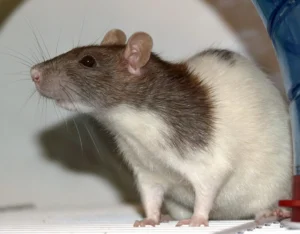
Marked white rats have patches of color somewhere on their body, even if most of their fur is white. These definitely aren’t albinos since they have pigment in those colored areas.
The genetic difference matters for breeding. Two albino rats will only have albino babies. But two white rats with dark eyes might have babies in lots of different colors depending on what other genes they’re carrying.
Why Humans Bred White Rats
White rats didn’t just appear randomly. Humans specifically bred for white coloring, and there were some pretty practical reasons why.
Scientists wanted white rats for laboratory research because they’re easier to see and work with. You can spot changes in skin color, see veins more clearly, and notice health problems faster on a white rat than a dark one.
White rats also stand out in cages and observation areas. When you’re running experiments or studying behavior, having animals that are easy to see and tell apart makes the work simpler.
The temperament of albino rats also played a role. Early breeders noticed that albino rats tended to be calmer and less aggressive than wild-type colored rats. This made them safer and easier to handle in laboratory settings.
Pet breeders continued selecting for white and light colors because people thought they were cute and unique. White rats with pink eyes looked different from anything people associated with “gross” wild rats.
Some cultures also had superstitions or beliefs about white animals being special or lucky. This made white rats more desirable as pets in certain places.
Over time, breeding for white coloring became so common that white rats are now one of the most popular color varieties in the fancy rat world.
Health Considerations for White Rats
White coloring, especially true albinism, can come with some health issues that other colored rats don’t deal with.
Albino rats have more sensitive eyes because they lack pigment to protect them from light. Bright lights can hurt their eyes or damage them over time. This is why albino rats often prefer dimmer environments.
You might notice albino rats swaying their head from side to side more than other rats. This is because their vision isn’t as good, and the head movement helps them figure out distances and see their surroundings better.
Skin cancer is more of a risk for albino rats if they’re exposed to a lot of sunlight or UV light. The lack of melanin means their skin has no natural protection from harmful rays.
Some studies suggest albino rats might be more prone to certain tumors, though this could be related to the specific lab strains used rather than albinism itself.
White rats in general can get sunburned if they’re kept in areas with too much direct sunlight. Their light skin doesn’t handle UV exposure well.
Despite these issues, white rats can live perfectly healthy lives if you give them proper care. Keeping them in environments with moderate lighting and no direct sun exposure prevents most problems.
White Rats in the Wild
You almost never see white rats in the wild, and there’s a really good reason for that.
White fur makes a rat stand out like a spotlight in most natural environments. Predators like hawks, owls, cats, and foxes can spot a white rat way easier than a brown or gray one.
Baby white rats born in the wild usually don’t survive long enough to have babies of their own. They get picked off by predators before they can pass on their genes.
Even if a white rat manages to avoid predators, it would struggle to sneak up on prey or stay hidden while foraging for food. That bright white color is a huge disadvantage.
There have been occasional reports of white rats surviving in cities, usually because they’re escaped or released pet rats. But even in urban environments, they don’t do as well as normal-colored rats.
The few white rats that do exist in wild populations are usually recent additions, either pets that got loose or their immediate offspring. They don’t establish long-term wild populations.
This natural selection against white coloring is exactly why wild rats have stuck with brown, gray, and black colors for thousands of years. Those colors work for survival.
The History of White Rats in Science
White rats have been used in scientific research for over 150 years, and they’ve played a huge role in medical and psychological discoveries.
The first laboratory rats were bred in the 1800s, and researchers quickly started selecting for albino and white rats because they were easier to work with.
By the early 1900s, albino rats had become the standard laboratory animal for all kinds of research. Everything from nutrition studies to psychology experiments used white rats.
The Wistar rat, one of the most common lab rat strains, is usually albino. This strain was developed in 1906 and has been used in countless research studies since then.
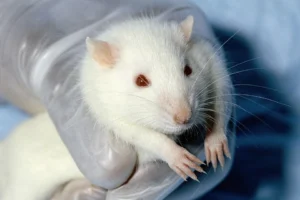
Sprague Dawley rats, another super common lab strain, are also typically albino or have very light coloring. These rats have contributed to research on everything from cancer to brain function.
The use of white rats in labs has helped scientists make discoveries about human biology, disease, and behavior. Pretty much every medical advance in the last century involved white rats at some point.
Animal rights concerns have led to changes in how lab rats are bred and treated, but white rats continue to be important in research today.
White Rats as Pets
In the pet world, white rats are popular and come in several different varieties that breeders have developed.
Pink-eyed white (PEW) rats are true albinos. They’re pure white with pink eyes and are one of the most common pet rat colors. Many people choose them because they look gentle and friendly.
Black-eyed white (BEW) rats have white fur but dark eyes. These rats aren’t albinos but have been bred to have white coats while keeping pigment in their eyes.
Himalayan rats are white with colored points. Baby Himalayans are born completely white, and the points develop as they grow. The points can get darker or lighter depending on temperature.
Some white rats have unique markings like a white body with a colored head (called a hooded rat) or white with colored spots (called a spotted or dalmatian rat).
Pet owners often don’t care whether their white rat is a true albino or not. Both types make great pets with similar personalities and care needs.
White rats are especially popular with first-time rat owners because they look less “rat-like” than brown or gray rats. This helps people get over any fears or prejudices about rats.
Do White Rats Have Different Personalities
There’s a common belief that white rats, especially albinos, have different personalities than other colored rats. The truth is a bit more complicated.
Many people say albino rats are calmer and more docile than other colors. There might be some truth to this because lab strains of albino rats have been bred for easy handling for generations.
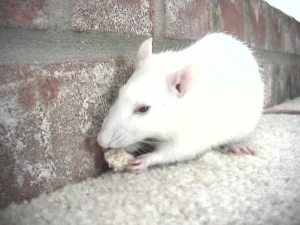
However, personality in rats is way more about individual variation and how they’re raised than it is about color. You can find mellow brown rats and hyper white rats just as easily as the reverse.
Rats from certain breeding lines might share personality traits, but that’s because they’re related, not because of their color specifically.
White rats with vision problems might seem more cautious or less active, but that’s due to their poor eyesight rather than their color affecting their personality.
Pet rats of any color that are handled regularly from a young age tend to be friendly and social. The early socialization matters way more than genetics for personality.
If you’re choosing a pet rat, you’re better off looking at the individual rat’s behavior rather than assuming things based on color.
Breeding White Rats
If you’re interested in breeding rats, understanding white genetics can help you predict what colors you’ll get in a litter.
Breeding twos together will always give you albino babies. There’s no other genetic option when both parents have two copies of the albino gene.
Breeding a white rat with dark eyes to another white rat with dark eyes can give you all sorts of colors. Those dark eyes mean other color genes are hiding in there.
If you breed an albino rat to a colored rat, the babies will all carry the albino gene but might not look albino themselves. They’ll be carriers who can produce albino babies if bred to another carrier or albino.

Some breeders specifically work to create new white varieties with different markings or eye colors. This takes a lot of planning and understanding of genetics.
You need to be careful about breeding for white markings like blazes (white stripes on the face) because the same genes can cause serious health problems if you get too much white. This is called megacolon and it’s a deadly condition.
Responsible breeders track genetics carefully and avoid combinations that might cause health issues in the babies.
Common Myths About White Rats
There are lots of misconceptions about white rats floating around. Let’s clear up some of the biggest ones.
Myth number one is that all white rats are albinos. As we’ve covered, plenty of white rats have dark eyes and aren’t true albinos at all.
Another myth is that albino rats are blind. They’re not blind, though their vision is worse than rats with normal pigmentation. They can still see, just not as sharply.
Some people think white rats are weaker or sicker than other colors. This isn’t true. With proper care, white rats are just as healthy and strong as any other color.
There’s also a weird belief that white rats are smarter because they’re used in labs. Intelligence has nothing to do with color. Lab rats are smart because rats in general are smart animals.
The idea that white rats bite more or are more aggressive is completely false. Temperament is about breeding and handling, not color.
Some people avoid white rats because they think the pink eyes are creepy or that the rats look like “lab rats.” This is purely aesthetic preference and doesn’t say anything about the rat’s quality as a pet.
Conclusion
White rats exist because humans bred them that way, selecting for traits that made rats useful in labs and appealing as pets. Whether they’re true albinos with no pigment at all or just very light-colored rats with dark eyes, white rats are a human-made variation.
In the wild, white coloring would be a death sentence because rats need camouflage to survive. But in our homes and laboratories, white rats thrive and have become some of the most recognizable and beloved rats around.
If you’re thinking about getting a white rat, don’t let myths or concerns hold you back. With proper care and attention to their specific needs (especially lighting for albinos), white rats make just as wonderful pets as any other color.
They’re beautiful, friendly, and just as smart and fun as their brown and gray cousins.

Hi, my name is Ezra Mushala, i have been interested animals all my life. I am the main author and editor here at snakeinformer.com.